• Skip to primary navigation
  • Skip to main content
  • Skip to footer

OHMSITE

News Blogs

  • Home
  • Tech Blogs
  • Non-Tech Blogs
  • Finance
  • About us
    • Privacy Policy
    • Contact us
    • Terms & Conditions
    • Disclaimer
      • Login
        • login page

Non-technical blogs provide a space for writers to share their experiences and opinions with others, in an accessible and engaging way

Non-technical blogs can cover a variety of topics, such as personal stories, food and drink reviews, travel experiences, lifestyle tips, entertainment news, and more. The tone of these blogs is typically conversational and informal, which helps to build a sense of community between the blogger and the reader.

One of the advantages of non-technical blogs is their accessibility. They are easy to read and understand, which makes them a great source of information for people who may not have a lot of technical knowledge or expertise. Non-technical bloggers often use humor, storytelling, and personal anecdotes to engage their readers and make their content more relatable.

Weather and Climate Patterns: Unraveling Monsoons, El Niño, and Jet Streams

October 18, 2025 By kundan Leave a Comment

Weather and Climate Patterns: The Powerful Forces Shaping Our Planet
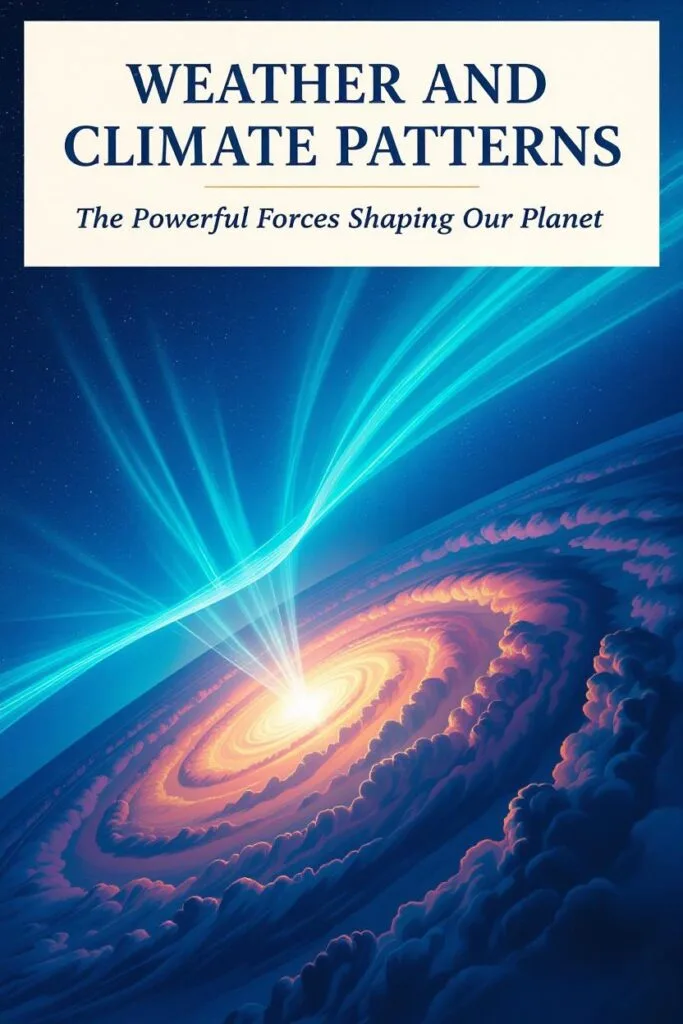
Weather and Climate Pattern

Weather and climate patterns are the complex, dynamic engines that drive our planet’s atmospheric system. While weather tells you what to wear today, climate patterns predict the trends that shape ecosystems, agriculture, and economies over seasons and years. Understanding these forces is key to deciphering why some years are abnormally wet, dry, hot, or cold.

This guide demystifies the world’s most influential weather and climate patterns, breaking down how monsoons, the El Niño-Southern Oscillation (ENSO), and jet streams work, and why they matter to you.

Table of Contents

  1. The Monsoon: A Seasonal Deluge

  2. El Niño & La Niña: The Ocean’s Climate Seesaw

  3. Jet Streams: The Atmospheric Superhighways

  4. How These Patterns Interconnect

  5. Conclusion: A Delicate Balance


1. The Monsoon: A Seasonal Deluge

One of the most dramatic weather and climate patterns is the monsoon. It’s not just a heavy rainstorm; it’s a complete seasonal reversal of wind directions that brings a distinct wet season to tropical regions.

How Does a Monsoon Work?

The process is a giant sea breeze driven by temperature differences between land and sea:

  • Summer: Land masses heat up much faster than the ocean. The hot air over the continent rises, creating a region of low pressure. Meanwhile, the cooler air over the ocean, with higher pressure, rushes in to fill the void. This moisture-laden ocean air travels over the land, rises, cools, and condenses into massive thunderstorms and relentless rain.

  • Winter: The pattern reverses. The land cools down faster than the ocean, creating high-pressure over the land. Winds now blow from the land out to the sea, resulting in a dry season.

The most famous is the Asian Monsoon, vital for agriculture from India to Southeast Asia. Its failure can lead to drought and famine, while its intensity can cause devastating floods.

2. El Niño & La Niña: The Ocean’s Climate Seesaw

In the tropical Pacific Ocean, the most significant weather and climate pattern for predicting global changes is the El Niño-Southern Oscillation (ENSO). It has two opposite phases: El Niño and La Niña.

El Niño (The Warm Phase)

  • What Happens: The usual easterly trade winds weaken or even reverse. Instead of being pushed towards Asia and Australia, warm water sloshes back east towards the coast of South America.

  • Global Impacts:

    • Peru & Ecuador: Heavy rainfall and flooding.

    • Australia & Southeast Asia: Severe drought and increased wildfire risk.

    • North America: Can lead to a warmer, drier winter in the northern US and Canada and a wetter one in the southern US.

    • Atlantic Hurricane Season: Tends to suppress hurricane formation due to increased wind shear.

According to the National Oceanic and Atmospheric Administration (NOAA), El Niño events typically occur every 2-7 years.

La Niña (The Cool Phase)

  • What Happens: The trade winds are stronger than normal, pushing more warm water westward and causing more upwelling of cold, nutrient-rich water off the South American coast.

  • Global Impacts:

    • Australia & Southeast Asia: Wetter than average conditions, with increased flood risk.

    • Western Americas: Drier conditions in the southern U.S. and parts of South America.

    • Atlantic Hurricane Season: Tends to enhance hurricane formation by creating a more conducive environment.

This oscillation between warm and cool phases is a primary driver of seasonal climate variability worldwide, making it a critical focus for scientists at institutions like the NASA Jet Propulsion Laboratory.

3. Jet Streams: The Atmospheric Superhighways
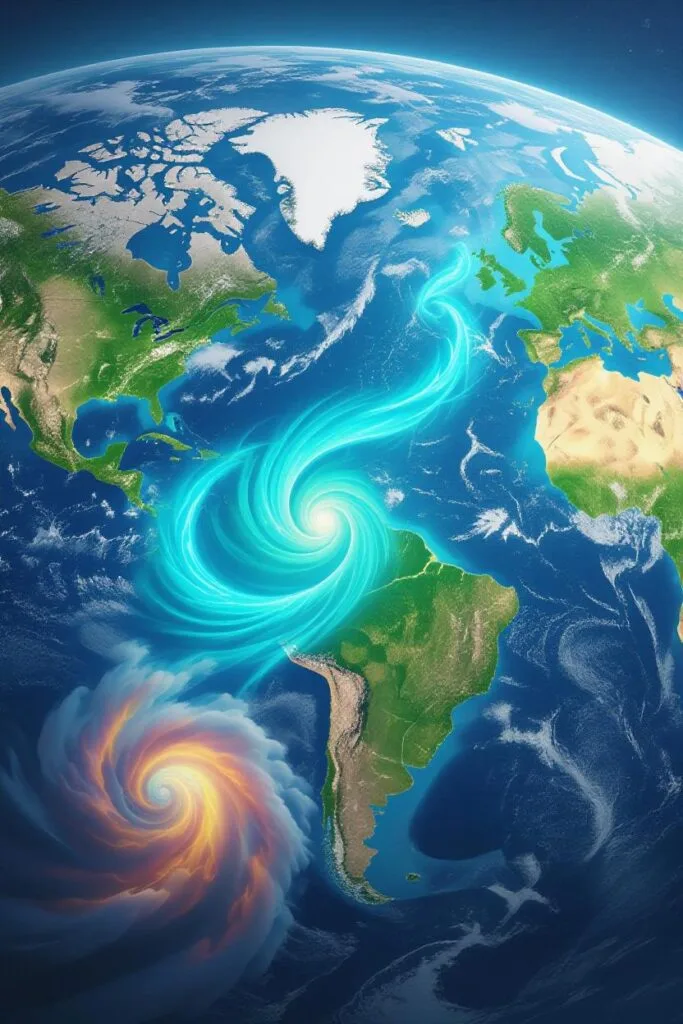
Visual representation of global weather and climate patterns, showing a wavy jet stream

High up in the troposphere, between 5 and 9 miles above the Earth, are fast-flowing, narrow air currents known as jet streams. These are pivotal weather and climate patterns that steer weather systems around the globe.

Key Characteristics:

  • They are Fast: Winds can exceed 200 mph.

  • They Act as a Boundary: The Polar Jet Stream, for instance, forms at the boundary between cold polar air and warm tropical air.

  • They Steer Storms: Storms and weather fronts tend to follow the path of the jet stream.

How the Jet Stream Influences Your Weather

The shape of the jet stream is everything. A fast, straight jet stream leads to predictable, quick-moving weather. However, when it becomes wavy and “blocky,” it can cause extreme weather:

  • Ridges (Northward Bulges): Bring warm, dry, and calm weather. A persistent ridge can lead to heatwaves and drought.

  • Troughs (Southward Dips): Bring cold, stormy, and unsettled weather. A deep, stalled trough can cause prolonged cold spells and flooding.

4. How These Powerful Weather and Climate Patterns Interconnect
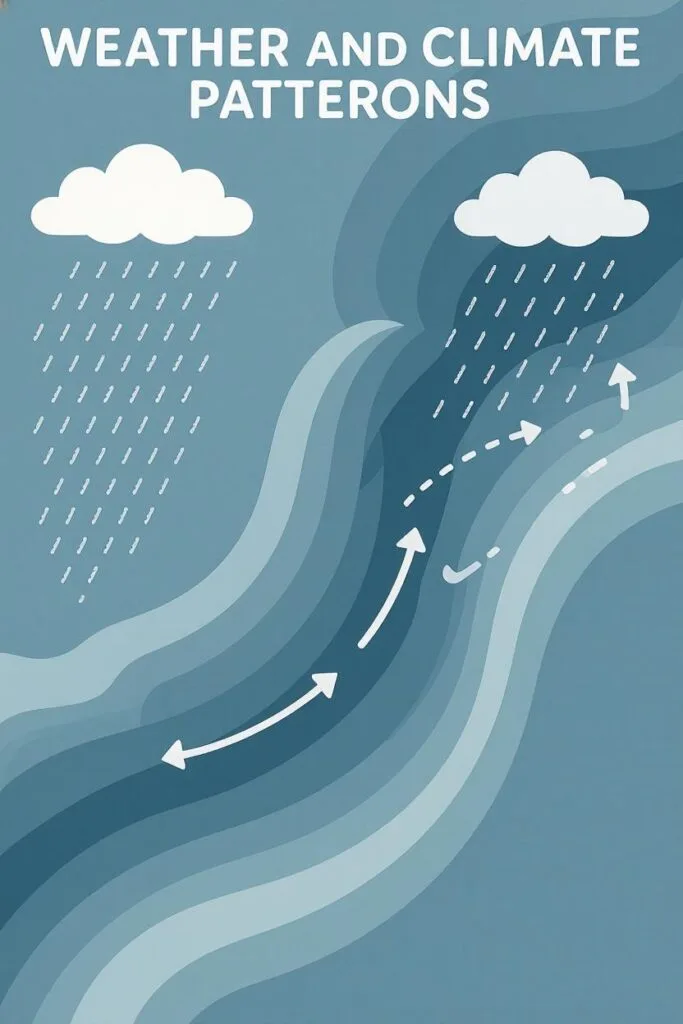
Diagram illustrating the weather and climate patterns of a monsoon, showing seasonal wind and rain shifts.

These systems do not operate in a vacuum. They are deeply interconnected. For example:

  • An El Niño event can alter the position and strength of the jet stream over the Pacific Ocean, which in turn influences temperature and precipitation patterns across North America.

  • A persistent jet stream pattern can either enhance or weaken the intensity of a monsoon season by blocking or steering moisture-carrying systems.

  • Some research suggests climate change may be increasing the frequency of extreme La Niña events, demonstrating how long-term climate shifts can influence shorter-term patterns.

Conclusion: A Delicate Balance

Understanding these major weather and climate patterns—the life-giving monsoons, the far-reaching influence of El Niño and La Niña, and the steering currents of the jet streams—is crucial for everything from farming and water management to disaster preparedness.

These patterns illustrate the delicate balance of Earth’s climate system. As our climate changes, the behavior of these patterns is also evolving, making their study more important than ever. By learning the language of these global forces, we can better anticipate the weather of tomorrow and the climate of the future.


Frequently Asked Questions (FAQs)

1. What is the basic difference between weather and climate?
Weather refers to short-term atmospheric conditions in a specific place and time (e.g., a rainy afternoon). Climate refers to the long-term average of weather patterns over a significant period (typically 30 years or more) in a region.

2. What is the main driver of the monsoon cycle?
The monsoon is primarily driven by the temperature difference between land and sea. In summer, land heats up faster than the ocean, causing air to rise over the land and draw in moist air from the ocean, resulting in heavy rains.

3. What does ENSO stand for?
ENSO stands for El Niño-Southern Oscillation. It is a recurring climate pattern involving changes in the temperature of waters in the central and eastern tropical Pacific Ocean, along with shifts in surface air pressure.

4. What is the key difference between El Niño and La Niña?
El Niño is the warm phase of ENSO, characterized by weakened trade winds and warm water pooling in the eastern Pacific. La Niña is the cool phase, with stronger-than-usual trade winds and cooler waters in the eastern Pacific.

5. How can an El Niño event in the Pacific affect hurricane season in the Atlantic?
El Niño tends to suppress Atlantic hurricane activity by increasing vertical wind shear, which tears apart developing storms. Conversely, La Niña reduces wind shear, creating a more favorable environment for hurricanes to form and intensify.

6. What are jet streams?
Jet streams are fast-flowing, narrow air currents located high in the troposphere. They act as “atmospheric superhighways” that steer weather systems and storms around the globe.

7. How does a “wavy” jet stream lead to extreme weather?
A wavy jet stream, with large northward bulges (ridges) and southward dips (troughs), can get stuck in place. Ridges lead to prolonged heatwaves and droughts, while troughs cause extended cold spells, storms, and flooding.

8. Are monsoons only found in India?
No, monsoons are not exclusive to India. While the Asian monsoon is the most famous, other major monsoon systems affect regions including West Africa, northern Australia, and parts of North America.

9. Can climate change influence these patterns like El Niño and the jet stream?
Yes, scientific research indicates that climate change can alter the intensity, frequency, and behavior of these patterns. For example, a warming planet may be linked to more frequent extreme La Niña events and can contribute to a more meandering jet stream.

10. Where can I find reliable updates on the status of El Niño or La Niña?
Reputable sources like the National Oceanic and Atmospheric Administration (NOAA) and NASA’s Jet Propulsion Laboratory (JPL) provide regular updates, forecasts, and detailed explanations on the state of the ENSO cycle.


Multiple Choice Questions (MCQs)

1. What is the primary cause of the seasonal monsoon winds?
a) The rotation of the Earth
b) The gravitational pull of the moon
c) The temperature difference between land and sea
d) Volcanic eruptions

2. During an El Niño event, what happens to the trade winds in the tropical Pacific?
a) They become much stronger.
b) They weaken or reverse direction.
c) They remain completely unchanged.
d) They shift to the north pole.

3. What type of weather is typically associated with a strong, persistent ridge in the jet stream?
a) Cold and stormy
b) Warm, dry, and calm (heatwaves)
c) Hurricane formation
d) Monsoon rains

4. The term “La Niña” refers to which of the following?
a) The warm phase of the Pacific Ocean temperature cycle
b) The cool phase of the Pacific Ocean temperature cycle
c) A type of monsoon in South America
d) A fast-flowing jet stream

5. How does La Niña typically affect weather in Australia and Southeast Asia?
a) It causes severe drought.
b) It leads to wetter-than-average conditions.
c) It has no significant impact.
d) It triggers a reversal of the monsoon.

6. What is the primary role of jet streams in global weather?
a) To cause precipitation directly
b) To heat the Earth’s surface
c) To steer weather systems and storms
d) To create the ozone layer

7. The El Niño-Southern Oscillation (ENSO) is a climate pattern centered in which ocean?
a) Atlantic Ocean
b) Indian Ocean
c) Pacific Ocean
d) Arctic Ocean

8. What is the most likely global impact of a strong El Niño event on the Atlantic hurricane season?
a) A significant increase in the number of hurricanes
b) A suppression of hurricane activity
c) It causes hurricanes to form in the Pacific instead.
d) It has no measurable impact.

9. Which of the following best describes a “trough” in the jet stream?
a) A northward bulge that brings warm weather
b) A southward dip that brings cold, stormy weather
c) The point where the jet stream is straightest
d) The boundary between two ocean currents

10. Why is understanding patterns like ENSO crucial for humanity?
a) It helps us predict the weather for a single day.
b) It is vital for long-term forecasting, agriculture, water management, and disaster preparedness.
c) It explains why the sky is blue.
d) It helps us locate jet streams.


Answer Key for MCQs:

  1. c

  2. b

  3. b

  4. b

  5. b

  6. c

  7. c

  8. b

  9. b

  10. b

Read Non-Tech Blog…

Filed Under: Geography, Non-Tech Blogs

The 4 Types of Evidence That Proved Continental Drift Was Real

October 17, 2025 By kundan Leave a Comment

Continental Drift: The Groundbreaking Theory That Explained Our World

Continental Drift

Look at a map of the world. Have you ever noticed that the coastlines of South America and Africa look like they could fit together? This isn’t a coincidence—it’s the most famous clue that launched a scientific revolution. The story of continental drift is a tale of one man’s brilliant intuition, decades of rejection, and its ultimate triumph as the foundation for our modern understanding of the Earth.

This is the story of how a jigsaw puzzle map evolved into the powerful theory of plate tectonics.

What is the Continental Drift Theory?

In the early 20th century, German meteorologist Alfred Wegener proposed a radical idea. In his 1915 book, The Origin of Continents and Oceans, he hypothesized that the Earth’s continents were not fixed in place. Instead, he suggested that about 300 million years ago, all the continents were joined together in a single, massive supercontinent called Pangea (meaning “all Earth”).

Wegener’s continental drift theory proposed that over millions of years, Pangea broke apart, and the continents slowly “drifted” to their current positions. He believed this movement was still ongoing.

Alfred Wegener’s Evidence for Continental Drift

Wegener didn’t just have a hunch; he compiled a compelling body of evidence from across different scientific fields. His key proofs for continental drift included:

1. The Jigsaw Fit

The most obvious clue was the remarkable fit of the continents, particularly the Atlantic coastlines of South America and Africa.

2. Fossil Evidence

How could the same fossilized plants and animals be found on continents separated by vast oceans?

  • The freshwater reptile Mesosaurus was found only in eastern South America and southern Africa.

  • The fern-like plant Glossopteris left its fossils across South America, Africa, India, Antarctica, and Australia.

Land bridges were the old explanation, but Wegener’s theory provided a more elegant solution: these continents were once connected.

3. Geologic and Rock Formations

Mountain belts and rock sequences matched up perfectly across oceans. The Appalachian Mountains of North America, for instance, lined up geologically with mountains in Scotland and Scandinavia when the continents were reassembled into Pangea.

4. Paleoclimatic Evidence

Wegener found evidence of ancient climates that didn’t match a continent’s current location. For example:

  • Glacial deposits from a past ice age were found in warm regions like India, South Africa, and Australia.

  • Coal deposits (which form in tropical swamps) were discovered in cold climates like Antarctica.

On a Pangea map, these anomalies made perfect sense, as these continents were once located near the South Pole and equator, respectively.

Why Was the Continental Drift Theory Initially Rejected?

Continental Drift: The Groundbreaking Theory That Explained Our World

Despite the compelling evidence, Alfred Wegener’s continental drift hypothesis was widely mocked and rejected by the scientific community for decades. The biggest problem was the “How?”.

Wegener proposed that continents plowed through the ocean floor like ships through ice, driven by the Earth’s rotation and tidal forces. Geophysicists quickly calculated that these forces were far too weak to move massive continents. Without a plausible mechanism, the entire theory of continental drift was dismissed as mere speculation.

From Continental Drift to Plate Tectonics: A Vindication

Wegener died in 1930, never seeing his idea accepted. It wasn’t until the 1950s and 1960s that new evidence emerged, leading to the theory of plate tectonics—the modern successor to continental drift.

Key discoveries included:

  • Seafloor Spreading: Mapping of mid-ocean ridges revealed that new oceanic crust was being formed, pushing plates apart.

  • Paleomagnetism: The magnetic history of ocean floor rocks provided a recorded “tape” of the continents moving over time.

Scientists realized that Wegener was right about the “what” (continents move) but wrong about the “how.” They discovered that continents don’t plow through the ocean; they are passengers on massive, moving tectonic plates.

Conclusion: Wegener’s Legacy

While the term “continental drift” has been largely superseded by “plate tectonics,” its importance cannot be overstated. Alfred Wegener was a visionary who saw the big picture that others missed. He connected the dots across disciplines and challenged a fixed, unchanging view of our planet.

His work is a powerful reminder that science often advances through bold ideas that, even if incomplete, point the way toward a greater truth. The next time you look at a world map, remember that it’s just a snapshot in a long, dynamic, and incredible journey.


Frequently Asked Questions About Continental Drift

Q: What is the main difference between continental drift and plate tectonics?
A: Continental drift was the original hypothesis that continents move. Plate tectonics is the comprehensive theory that explains how they move—on large plates of lithosphere that include both continents and ocean basins, driven by mantle convection.

Q: What was the name of the supercontinent?
A: The supercontinent proposed by Alfred Wegener was called Pangea.

Q: What was the main reason scientists rejected Wegener’s theory?
A: The primary reason for rejection was that Wegener could not provide a convincing mechanism for how the continents moved. The forces he proposed were proven to be far too weak.

Q: Are the continents still drifting today?
A: Yes! Using GPS technology, we can now measure the continents moving at about the same speed your fingernails grow. The Atlantic Ocean is still widening, and the Himalayas are still rising.


Test Your Knowledge: Continental Drift MCQ

1. Who first proposed the theory of continental drift?
a) Charles Darwin
b) Isaac Newton
c) Alfred Wegener
d) James Hutton

2. What was the name of the ancient supercontinent?
a) Gondwana
b) Laurasia
c) Pangea
d) Tethys

3. Which of the following was NOT used as evidence for continental drift?
a) Fossil matches
b) Rock formation matches
c) Satellite images of plate movement
d) Paleoclimatic evidence
(Explanation: Satellite technology came decades after Wegener’s theory.)

4. The modern theory that developed from continental drift is:
a) Seafloor Spreading
b) Plate Tectonics
c) Continental Shift

Filed Under: Geography, Non-Tech Blogs

The 3 Biggest Impacts of Plate Tectonics: From Creation to Destruction

October 17, 2025 By kundan Leave a Comment

The Theory of Plate Tectonics: Earth’s Unseen Engine.

plate tectonics

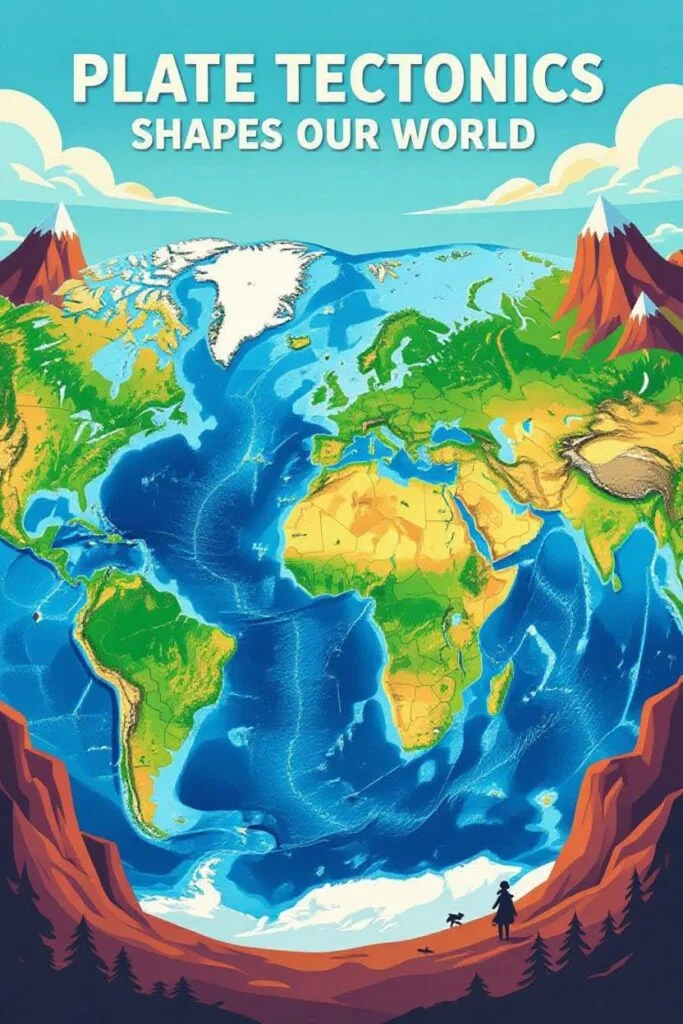
Look at a map of the world. Have you ever noticed how the coastlines of South America and Africa look like they could fit together, like pieces of a giant jigsaw puzzle? This isn’t a coincidence. It’s the most visible clue to one of the most powerful and fundamental forces shaping our planet: Plate Tectonics.

For centuries, this was just a curious observation. Today, we know it’s the key to understanding nearly everything about Earth’s geography, from the highest mountains to the deepest ocean trenches, and even why we have earthquakes and volcanoes.

So, what exactly is this grand, geological dance?

The Basics: Earth’s Skin is Cracking

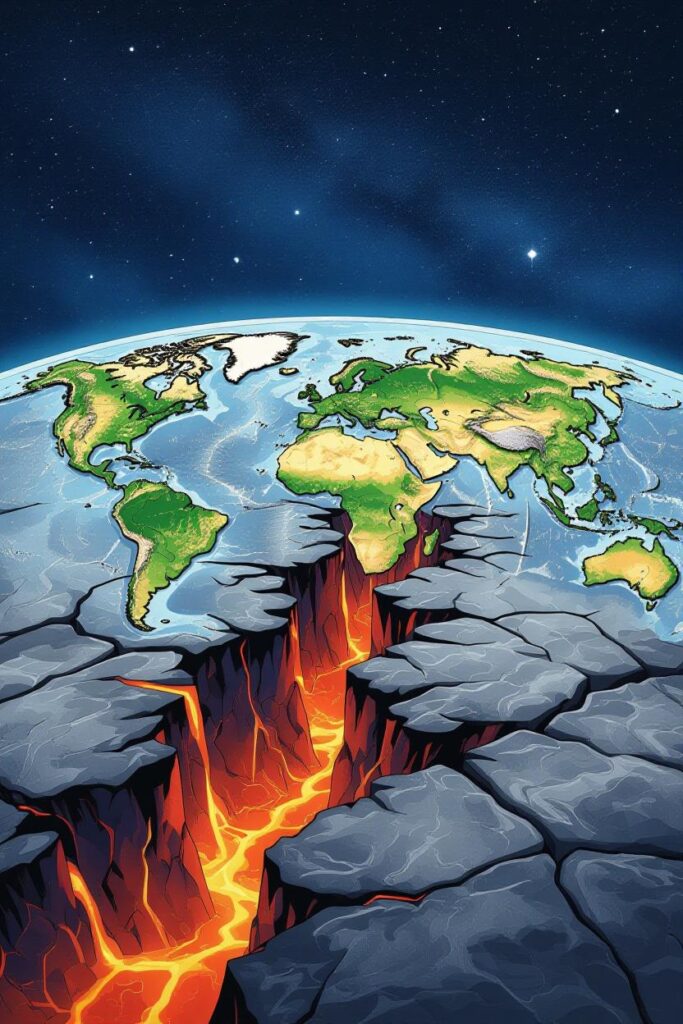
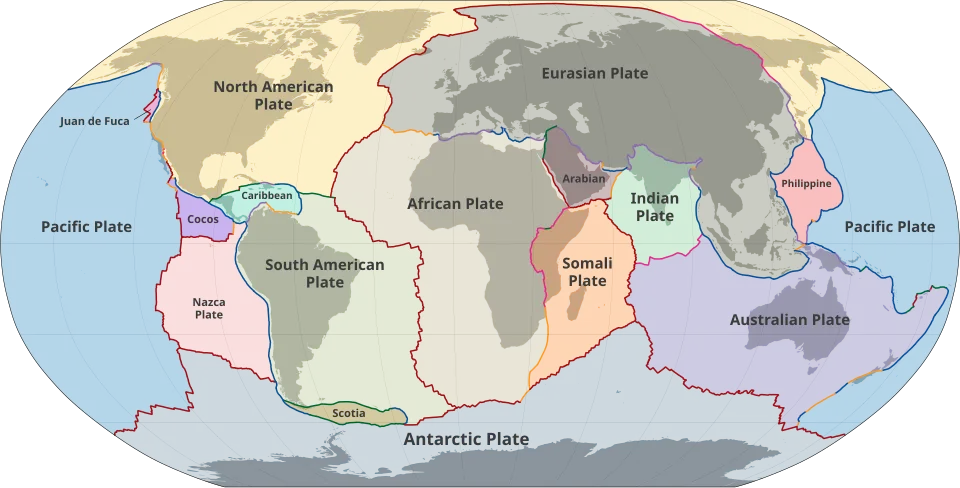
Imagine the Earth is a hard-boiled egg. The shell isn’t one solid piece; it’s cracked into several fragments. The Earth’s outer layer, the lithosphere, is the same. It’s broken into massive, irregularly shaped slabs of rock called tectonic plates. These plates are not stationary; they are constantly moving, floating on the hot, semi-fluid layer of the mantle beneath them.

This movement is slow—about the same speed your fingernails grow—but over millions of years, it has completely reshaped the face of our planet.

The Three Main Moves: Boundaries

The real action happens where these plates meet. These borders, called plate boundaries, are the epicenters of Earth’s most dramatic geological events. There are three main types of interactions:

1. Divergent Boundaries: The Creators

plate tectonics

  • What happens: Two plates pull away from each other.

  • The Result: As they separate, magma from the mantle rises to fill the gap, creating new crust. This mostly happens under the oceans at mid-ocean ridges, forming vast underwater mountain ranges. On land, this process can create massive rift valleys, like the East African Rift.

  • Think of it as: The Earth’s crust being stretched thin, like pulling apart a piece of warm toffee.

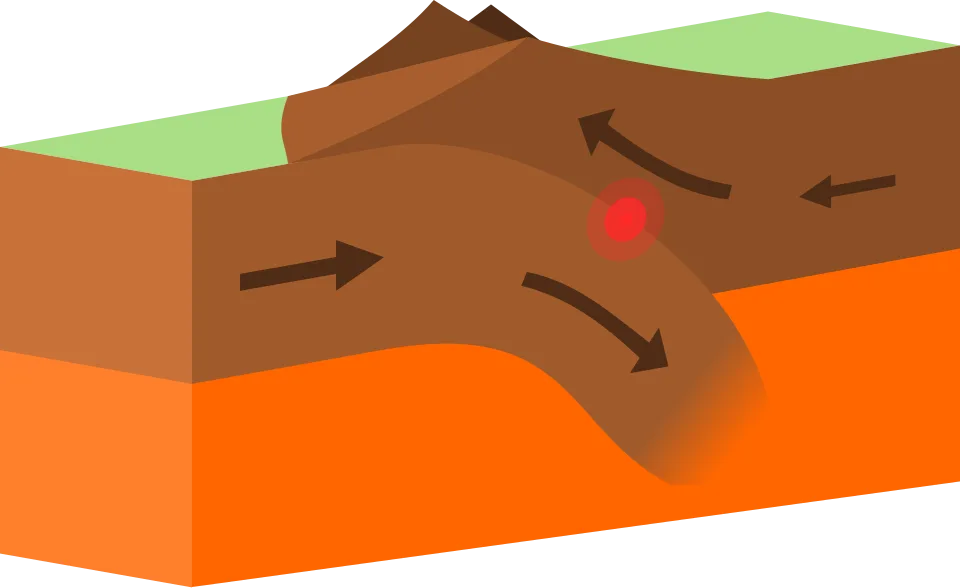
2. Convergent Boundaries: The Destroyers (and Builders)

plate tectonics

  • What happens: Two plates collide. This is where things get explosive, and the outcome depends on the type of crust involved.

    • Oceanic vs. Continental: The denser oceanic plate slides beneath the continental plate in a process called subduction. This creates a deep ocean trench and forces molten rock upward, fueling massive chains of volcanoes on the continent, like the Andes or the Cascades.

    • Continental vs. Continental: Neither plate wants to sink, so they crumple and fold, pushing Earth’s crust upward to form towering mountain ranges. The Himalayas, home to Mount Everest, are the spectacular result of the Indian plate smashing into the Eurasian plate.

  • Think of it as: A slow-motion car crash on a planetary scale.

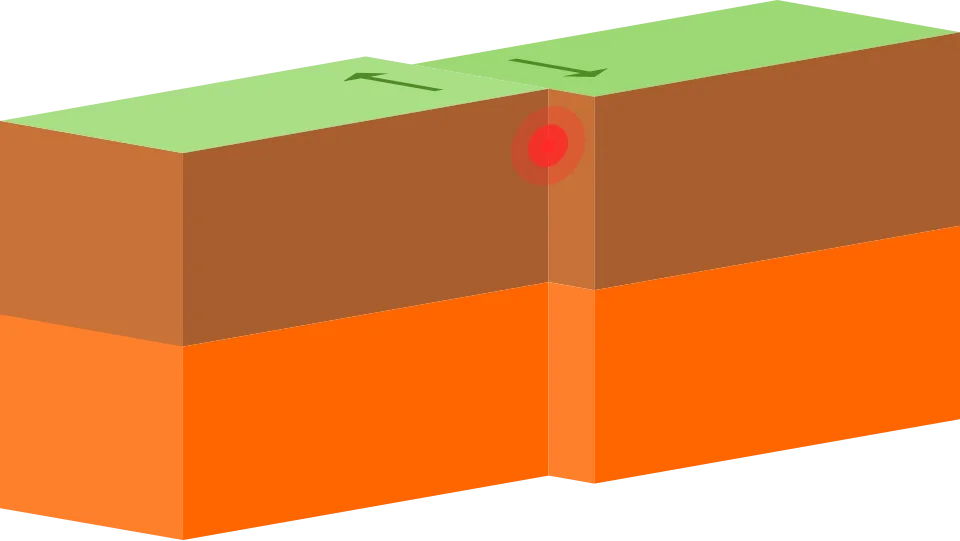
3. Transform Boundaries: The Grinders

plate tectonics

  • What happens: Two plates slide past one another horizontally.

  • The Result: They don’t slide smoothly. The plates get stuck, build up immense pressure, and then suddenly lurch forward, releasing energy as an earthquake. The most famous example is the San Andreas Fault in California, where the Pacific Plate is grinding past the North American Plate.

  • Think of it as: Rubbing two rough blocks of wood together—they stick, slip, and stick again.

Why Should You Care? The Power of a Unified Theory

Before the theory of plate tectonics was widely accepted in the 1960s, geologists struggled to explain how the same fossil could be found on continents separated by vast oceans. Plate tectonics provided the missing link. It’s the grand unifying theory of geology that explains:

  • The Distribution of Earthquakes and Volcanoes: Plot them on a map, and they will almost perfectly outline the plate boundaries. This knowledge is crucial for hazard preparedness and saving lives.

  • The Formation of Mountains and Oceans: It answers the “how” behind the world’s most iconic landscapes.

  • The Recycling of Earth’s Crust: The planet is in a constant state of renewal. New crust is created at divergent boundaries, while old crust is destroyed at convergent ones. This cycle is essential for regulating Earth’s climate and chemistry over geological time.

  • The History of Life: By moving continents, plate tectonics has changed ocean currents and global climate, creating and destroying habitats and driving the evolution of life. It’s the reason Australia has such unique wildlife!

A Planet in Motion

plate tectonics

The ground beneath our feet feels solid and permanent. But plate tectonics reveals a different truth: we are living on a dynamic, ever-changing planet. The Atlantic Ocean is still widening, the Himalayas are still rising, and California will one day (in millions of years) be a suburb of Alaska.

It’s a humbling and powerful reminder that our world is alive with geological forces that operate on a timescale far beyond our own. The next time you feel an earthquake, see a volcanic eruption on the news, or simply look at a world map, remember the incredible, unseen engine driving it all.


FAQs on Plate Tectonics

1. What is the “engine” that drives plate tectonics?
The primary driving force is the heat from Earth’s interior. The mantle, though mostly solid, can flow very slowly over geological time due to this heat, creating convection currents. These currents act like a conveyor belt, dragging the tectonic plates along. The weight of a subducting (sinking) plate also helps pull the rest of the plate behind it.

2. How many tectonic plates are there?
There are seven or eight major plates (e.g., Pacific, North American, African, Eurasian) and many more minor microplates (e.g., Juan de Fuca, Cocos, Caribbean). The exact number can vary slightly depending on how scientists define the boundaries of smaller plates.

3. Can plate tectonics cause tsunamis?
Yes, absolutely. The most powerful tsunamis are generated by large earthquakes at subduction zones, where one plate lurches underneath another, violently displacing a massive amount of water.

4. Was there life on Earth before plate tectonics started?
This is a topic of active research. Plate tectonics as we know it likely began around 3 billion years ago. Life existed before that, but it was mostly microscopic and in the oceans. The start of plate tectonics was crucial for creating diverse environments and regulating the climate, which may have paved the way for more complex life.

5. Do the other planets in our solar system have plate tectonics?
As far as we know, Earth is the only planet with active plate tectonics. Venus shows some evidence of past tectonic activity, but it seems to have stalled. Mars has a static, single-plate crust. This uniqueness is a key reason why Earth is so geologically active and habitable.

6. Will the continents ever collide again?
Yes! Based on the current direction of plate movements, scientists project that in about 250 million years, the continents will merge again to form a new supercontinent, sometimes called Pangaea Proxima or Neopangaea.


MCQs on Plate Tectonics

1. The theory that describes the large-scale motion of Earth’s lithosphere is called:
a) Continental Drift
b) Seafloor Spreading
c) Plate Tectonics
d) Mantle Convection

Answer: c) Plate Tectonics
Explanation: While Continental Drift was the precursor idea, Plate Tectonics is the comprehensive modern theory that includes seafloor spreading and mantle convection as key mechanisms.

2. Which of the following is a result of two continental plates colliding at a convergent boundary?
a) A mid-ocean ridge
b) A deep ocean trench
c) A volcanic island arc
d) A massive mountain range

Answer: d) A massive mountain range
Explanation: When two buoyant continental plates collide, neither can sink easily. Instead, they crumple and fold, pushing up the crust to form vast mountain ranges like the Himalayas.

3. The San Andreas Fault in California is a famous example of what type of plate boundary?
a) Divergent
b) Convergent
c) Transform
d) Subductive

Answer: c) Transform
Explanation: The San Andreas Fault is where the Pacific Plate and the North American Plate slide horizontally past each other, making it a classic transform boundary.

4. New oceanic crust is primarily formed at which geological feature?
a) Subduction zones
b) The Mariana Trench
c) Mid-ocean ridges
d) The Himalayas

Answer: c) Mid-ocean ridges
Explanation: At divergent boundaries like mid-ocean ridges, plates pull apart, allowing magma from the mantle to rise, cool, and form new oceanic crust.

5. What process occurs when one tectonic plate is forced underneath another?
a) Transformation
b) Divergence
c) Subduction
d) Convection

Answer: c) Subduction
Explanation: Subduction is the specific term for the process where a denser oceanic plate sinks beneath a less dense continental or oceanic plate at a convergent boundary.

6. The early 20th-century hypothesis that continents move apart was initially supported by the observation that:
a) Earthquakes are common along coastlines.
b) The continents look like they fit together like a puzzle.
c) Volcanoes are found in a “Ring of Fire.”
d) Fossils of the same species are found on different continents.

Answer: b) The continents look like they fit together like a puzzle.
Explanation: The jigsaw-fit of the continents, especially the coastlines of South America and Africa, was the most obvious initial evidence for Alfred Wegener’s Continental Drift hypothesis.

7. What is the name of the rigid, outer layer of the Earth that is broken into tectonic plates?
a) The Mantle
b) The Asthenosphere
c) The Lithosphere
d) The Core

Answer: c) The Lithosphere
Explanation: The lithosphere is the Earth’s cool, rigid outer shell, which includes the crust and the uppermost part of the mantle. It is broken into the tectonic plates.

Filed Under: Geography, Non-Tech Blogs

The Restless Earth: Understanding the Forces of Earthquakes, Volcanoes, Tsunamis, and Floods

October 16, 2025 By kundan Leave a Comment

The Restless Earth: Understanding the Forces of Earthquakes, Volcanoes, Tsunamis, and Floods

Understanding the Forces of Earthquakes, Volcanoes, Tsunamis, and Floods

Our planet is a dynamic, living system. The same forces that create majestic mountains and fertile plains can also unleash incredible destruction. Natural disasters like earthquakes, volcanoes, tsunamis, and floods are powerful reminders of Earth’s raw, untamed power. But by understanding them, we can move from fear to respect and, most importantly, preparedness.

Let’s delve into the science behind these four major phenomena.

1. Earthquakes: When the Earth Shakes

What They Are: An earthquake is a sudden, violent shaking of the ground caused by the breaking and shifting of massive rock beneath the Earth’s surface.

The Science: The Earth’s crust is made up of tectonic plates that are constantly, slowly moving. When these plates get stuck at their edges due to friction, stress builds up. When the stress finally exceeds the friction, it releases in a burst of energy that travels in waves, causing the ground to tremble. The point underground where it starts is the hypocenter; the point directly above it on the surface is the epicenter.

Key Impact: The shaking can collapse buildings, trigger landslides, and devastate infrastructure. The 2011 earthquake in Tōhoku, Japan, is a stark example of its raw power.

2. Volcanoes: The Earth’s Pressure Valves

What They Are: A volcano is a vent in the Earth’s crust through which molten rock (magma), ash, and gases erupt.

The Science: Volcanoes are primarily found at the boundaries of tectonic plates. When plates collide, one can be forced beneath another in a process called subduction, melting rock and creating magma. When plates pull apart, magma can also rise. This magma, less dense than the surrounding rock, works its way to the surface, collecting in a magma chamber. Pressure builds until the volcano erupts, expelling lava (magma on the surface), ash, and toxic gases.

Key Impact: Eruptions can bury landscapes in ash, spark wildfires, cause fast-moving pyroclastic flows of hot gas and rock, and even alter the global climate by releasing ash and sulfur dioxide into the atmosphere. The 1980 eruption of Mount St. Helens in the USA reshaped an entire region.

3. Tsunamis: The Ocean’s Fury

What They Are: A tsunami is a series of enormous ocean waves caused by large-scale disturbances underwater.

The Science: While often triggered by earthquakes (especially those with vertical seafloor movement), tsunamis can also be generated by volcanic eruptions, landslides, or even large meteorite impacts. The displaced water forms waves that travel across the deep ocean at the speed of a jet plane. As these waves approach the shallow coast, they slow down and their height increases dramatically, creating a towering wall of water that can inundate the shoreline.

Key Impact: Tsunamis are not normal waves; they are massive walls of water that can flood miles inland, causing catastrophic destruction and loss of life. The 2004 Indian Ocean tsunami remains one of the deadliest natural disasters in recorded history.

4. Floods: The Power of Water

Understanding the Forces of Earthquakes, Volcanoes, Tsunamis, and Floods

What They Are: A flood is an overflow of water that submerges land that is usually dry.

The Science: Floods are the most common and widespread of all natural disasters. They can be slow-onset or flash floods, arriving with little warning. Causes are varied:

  • Heavy Rainfall: From storms, hurricanes, or monsoons that overwhelm drainage systems and cause rivers to overflow.

  • Storm Surges: Coastal flooding driven by hurricanes or cyclones pushing ocean water onto land.

  • Snowmelt: Rapid melting of snow and ice, often combined with rain, can overwhelm rivers.

  • Dam or Levee Failure: The catastrophic breach of human-made structures.

Key Impact: Floods destroy homes, crops, and infrastructure, contaminate drinking water, and create breeding grounds for disease. The widespread flooding in Pakistan in 2022 submerged a third of the country.

The Interconnected Web of Disasters

It’s crucial to understand that these disasters are often linked. An earthquake can trigger a landslide, which can block a river and cause a flood. That same undersea earthquake can generate a tsunami. A volcanic eruption can melt glaciers, causing massive floods (called jökulhlaups), and its ash can lead to landslides.

Knowledge is Power: The Path to Preparedness

While we cannot prevent these natural forces, we are not helpless. Science gives us the tools to understand, monitor, and warn.

  • Seismometers detect earthquakes.

  • Satellites and sensors monitor volcanic activity.

  • Deep-ocean buoys and warning systems provide critical tsunami alerts.

  • Weather forecasting and river gauges predict potential flooding.

As individuals, knowing the risks in your area, having an emergency plan, and building a disaster supply kit are the most important steps you can take. Understanding the “why” behind these events is the first step in building a more resilient future for ourselves and our communities.


FAQ: Your Questions Answered

Q1: What is the main cause of most earthquakes?
Most earthquakes are caused by the sudden release of stress along faults, or fractures, in the Earth’s crust. This happens when the massive tectonic plates that make up the Earth’s surface get stuck while moving and then suddenly slip past one another.

Q2: What’s the difference between magma and lava?
It’s the same substance, just in a different location. Magma is molten rock beneath the Earth’s surface. When it erupts and flows onto the Earth’s surface, it is called lava.

Q3: Can we predict when earthquakes or volcanic eruptions will happen?
We cannot predict the exact time and location of an earthquake with reliable accuracy. For volcanoes, scientists can monitor for warning signs like ground swelling, gas emissions, and small earthquakes, which allow for general forecasts and evacuations, but not a precise prediction.

Q4: Why are tsunamis so powerful and destructive?
Tsunamis are powerful because they involve a massive amount of water displaced from the entire water column, from the ocean floor to the surface. As they reach shallow coastlines, all this energy gets compressed into a towering wall of water that can flood far inland.

Q5: What is the most common type of natural disaster?
Floods are the most common and widespread natural disaster worldwide. They can occur in coastal areas, along rivers, in cities with poor drainage, and even in deserts from sudden heavy rains.

Q6: How are these disasters connected?
Natural disasters can be part of a chain reaction. For example:

  • An earthquake under the ocean can trigger a tsunami.

  • A volcanic eruption can melt snow and ice, causing a massive flood.

  • Heavy rains from a storm can cause flooding, which can also trigger landslides.


Test Your Knowledge: Quick MCQs

1. What is the point on the Earth’s surface directly above where an earthquake starts called?
a) Hypocenter
b) Tectonic Point
c) Epicenter
d) Fault Line

2. Molten rock that has erupted onto the Earth’s surface is known as:
a) Magma
b) Ash
c) Lava
d) Geyser

3. What is the most common cause of a tsunami?
a) A hurricane over the ocean
b) An underwater volcanic eruption or landslide
c) The gravitational pull of the moon
d) A large sea animal splashing

4. Which of the following is NOT a common cause of floods?
a) Heavy rainfall
b) Rapid snowmelt
c) Dam failure
d) Low atmospheric pressure

5. Why can’t we predict earthquakes accurately?
a) They happen too deep underground.
b) The forces involved are immense and complex, with no reliable precursor signals.
c) Scientists are not interested in predicting them.
d) Earthquakes are completely random events.

6. The process where one tectonic plate is forced beneath another is called:
a) Convection
b) Subduction
c) Divergence
d) Transformation


Answers:

  1. c) Epicenter (The hypocenter is the point inside the Earth where the rupture starts.)

  2. c) Lava (Magma is the name for it while it’s still underground.)

  3. b) An underwater volcanic eruption or landslide (While these can cause tsunamis, the most common cause is a large, undersea earthquake.)

  4. d) Low atmospheric pressure (While low pressure is associated with storms, it is not a direct cause of flooding like the other options.)

  5. b) The forces involved are immense and complex, with no reliable precursor signals.

  6. b) Subduction (This process is a primary driver of volcanic activity and powerful earthquakes.)

Non Tech


What natural disaster is most common in your region? Have you and your family created an emergency plan? Share your thoughts and tips in the comments below to help others prepare.

Filed Under: Geography, Non-Tech Blogs

The Goldilocks Zone: Where Life Finds Its Sweet Spot

October 15, 2025 By kundan Leave a Comment

🌍 The Goldilocks Zone: Where Life Finds Its Sweet Spot

Have you ever wondered why Earth is the only known planet with life? The answer lies in a very special place in space called the Goldilocks Zone — a region where conditions are “just right” for life to exist.


Exoplanets in the Goldilocks Zone

🌞 What Is the Goldilocks Zone?

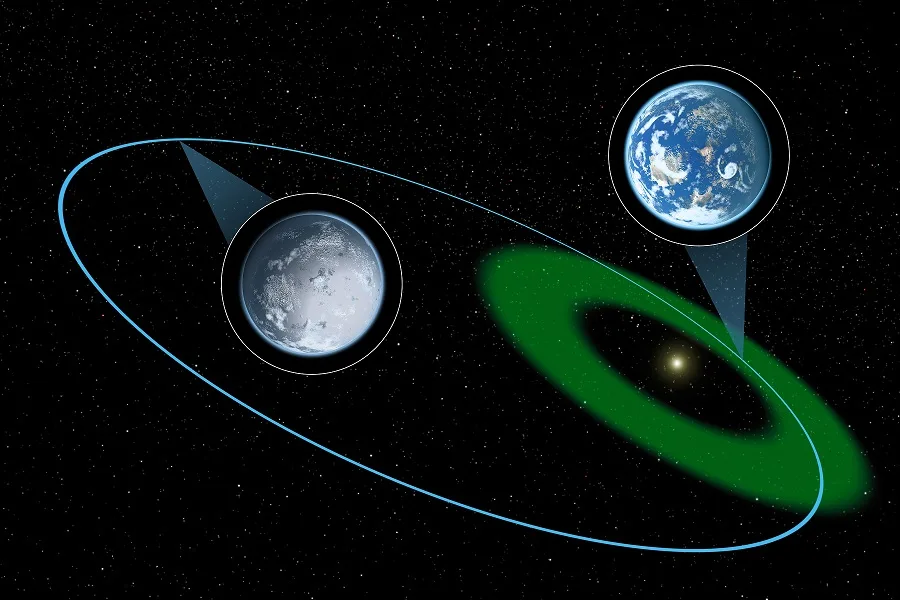
The Goldilocks Zone, also called the habitable zone, is the distance from a star where the temperature allows liquid water to exist on a planet’s surface.

Why is it called “Goldilocks”?
It comes from the fairy tale “Goldilocks and the Three Bears.” In the story, Goldilocks finds the porridge that’s not too hot and not too cold — but just right. Similarly, in astronomy, planets in the Goldilocks Zone are not too hot and not too cold — but just right for life.


💧 Why Water Is the Key

Water is the foundation of all life as we know it.

  • If a planet is too close to its star, water would evaporate because of extreme heat (like Venus).

  • If it’s too far, water would freeze into ice (like Mars).

  • Only within a specific distance — the habitable zone — can water remain liquid, creating the right environment for life to form and evolve.


🌎 The Goldilocks Zone in Our Solar System

Let’s look at our own neighborhood — the Solar System.

PlanetPosition from SunIn the Goldilocks Zone?Reason
MercuryToo close❌Extremely hot — water instantly evaporates
VenusNear inner edge❌Runaway greenhouse effect, 465°C surface
🌍 EarthPerfect spot✅Liquid water, moderate atmosphere, ideal for life
MarsNear outer edge⚠️ PartialOnce had liquid water, now mostly frozen

Earth sits comfortably in the middle of the Sun’s Goldilocks Zone — which is why it can support oceans, clouds, and breathable air.


🌌 Exoplanets in the Goldilocks Zone

Exoplanets in the Goldilocks Zone

Astronomers have discovered thousands of exoplanets (planets orbiting other stars). Some of these lie in their stars’ Goldilocks Zones — exciting candidates in the search for alien life!

Top examples:

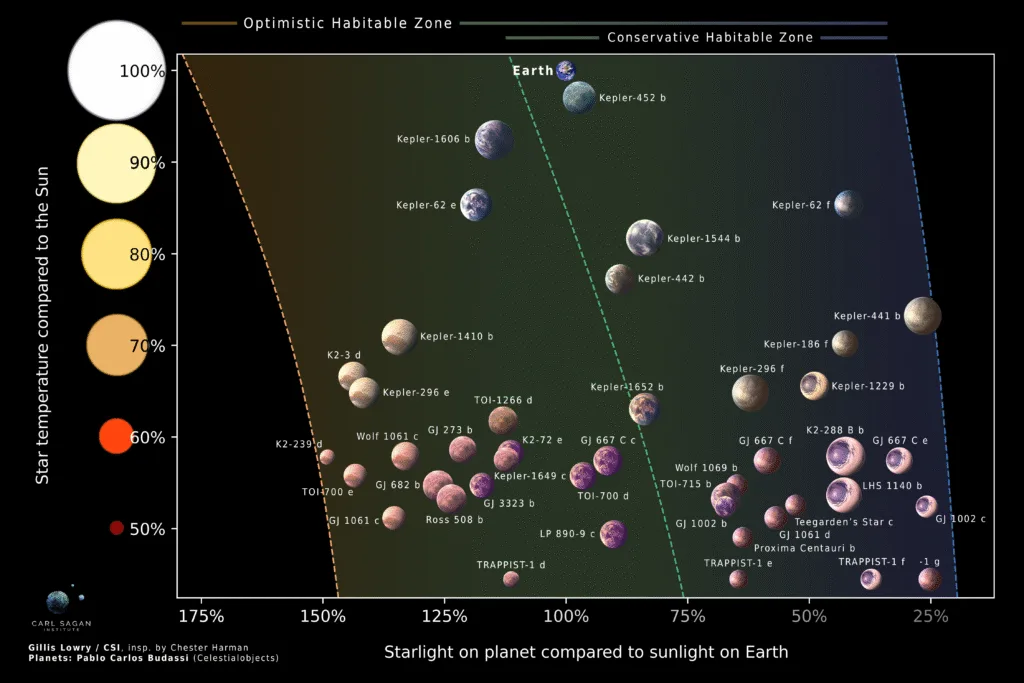
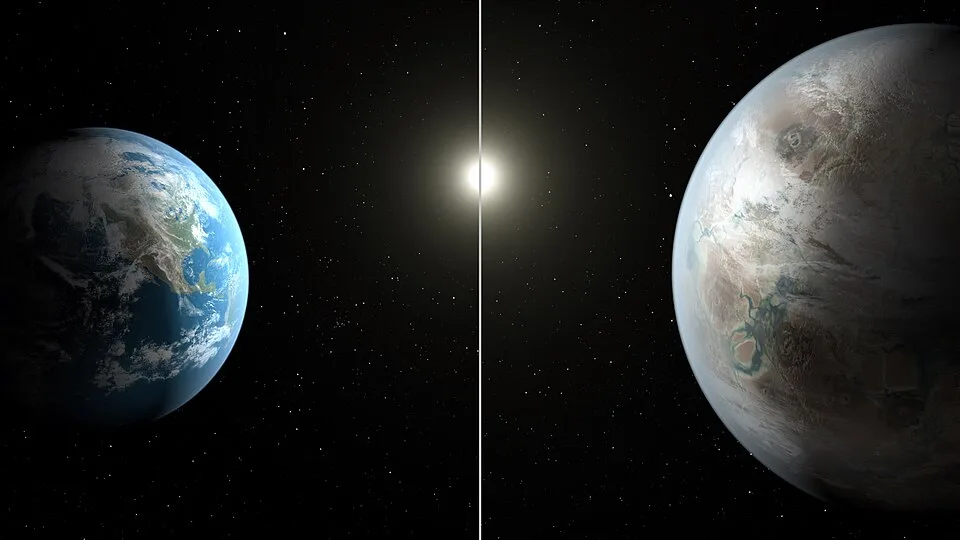
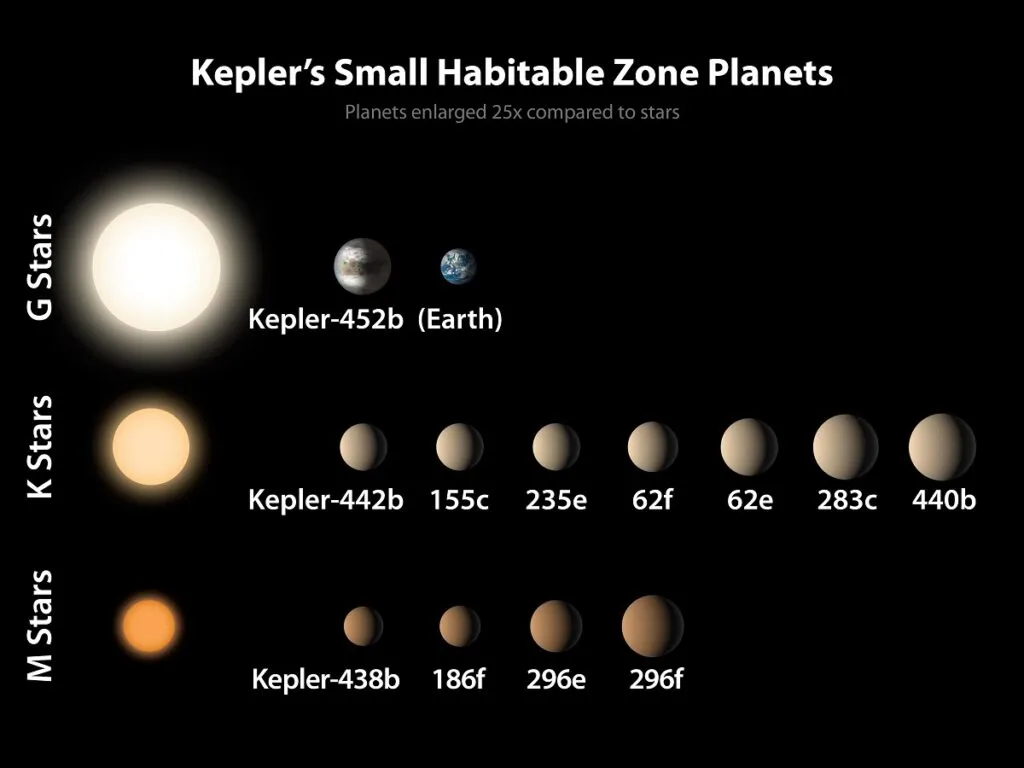
  1. Kepler-452b – Often called “Earth’s cousin.” It orbits a Sun-like star in the habitable zone, about 1,400 light-years away.

  2. Proxima Centauri b – The nearest exoplanet (4.2 light-years away) in the habitable zone of our nearest star.

  3. TRAPPIST-1 system – Has seven Earth-sized planets; at least three lie within the habitable zone.


🌡️ Not Just Distance – Other Factors Matter Too

Being in the Goldilocks Zone doesn’t guarantee life. Other factors are equally important:

  • Atmosphere: Protects from radiation and maintains temperature.

  • Magnetic Field: Shields from harmful solar wind.

  • Planet Size: Needs enough gravity to hold an atmosphere.

  • Chemical Composition: Must have elements like carbon, hydrogen, oxygen, and nitrogen.

So, even if a planet is in the habitable zone, it may still be lifeless — or, who knows, may hold some form of microbial life we haven’t found yet!


🚀 Fascinating Facts

  1. The Sun’s habitable zone stretches roughly from 0.95 to 1.37 AU (Astronomical Units — 1 AU = distance from Earth to Sun).

  2. Earth’s average distance from the Sun is 1 AU, placing it perfectly in the middle!

  3. Venus might have been habitable billions of years ago before a runaway greenhouse effect made it a furnace.

  4. Scientists estimate that the Milky Way alone could contain 300 million habitable planets.

  5. NASA’s Kepler and TESS telescopes have confirmed over 5,000 exoplanets, with dozens in the Goldilocks Zone.


🧠 Final Thoughts

The Goldilocks Zone reminds us how delicate and rare the conditions for life truly are. Earth’s perfect distance from the Sun, its protective atmosphere, and stable climate make it a cosmic miracle.

As telescopes and space missions improve, scientists hope to discover another “just right” world — perhaps one where life is waiting to be found.


✨ Summary:
The Goldilocks Zone is the region around a star where temperatures allow liquid water to exist — a key requirement for life. Earth sits in the Sun’s Goldilocks Zone, making it habitable, while missions like Kepler and James Webb Space Telescope continue searching for similar worlds beyond our Solar System.


🌍 Exoplanets in the Goldilocks Zone — The Search for Another Earth

🌌 What Are Exoplanets?

Exoplanets in the Goldilocks Zone

Exoplanets are planets that orbit stars outside our Solar System.
Just like Earth orbits the Sun, these planets orbit other stars in our galaxy — the Milky Way.

So far, scientists have discovered more than 5,000 confirmed exoplanets (as of 2025), and many more are waiting to be verified.
They come in all sizes — some are gas giants like Jupiter, while others are rocky and Earth-sized.


☀️ The “Goldilocks Zone” or Habitable Zone

The Goldilocks Zone is the region around a star where the temperature is “just right” — not too hot, not too cold — so that liquid water can exist on the planet’s surface.

Since water is essential for life as we know it, planets in this zone are the best candidates for hosting life.

However, just being in this zone doesn’t guarantee life. The planet must also have:

  • A proper atmosphere

  • The right chemical elements

  • A stable orbit and magnetic field


🪐 Some Famous Exoplanets in the Goldilocks Zone

Let’s look at a few well-known and exciting examples discovered by NASA’s Kepler, TESS, and other space missions.


1. 🌎 Kepler-452b – “Earth’s Cousin”

Exoplanets in the Goldilocks Zone

  • Distance from Earth: ~1,400 light-years away (in the constellation Cygnus)

  • Star Type: Sun-like (G-type star)

  • Orbital Period: 385 Earth days (almost same as Earth’s year)

  • Size: About 60% larger than Earth

  • Fact:

    • It’s one of the first Earth-sized planets found in a Sun-like star’s habitable zone.

    • Scientists think it might have a rocky surface and could have once had liquid water.

🟢 Interesting note: It’s often called “Earth 2.0” — but it might be a bit older and hotter than Earth.


2. 🌍 Proxima Centauri b – Our Closest Neighbor

  • Distance: Just 4.2 light-years away (the closest exoplanet to Earth!)

  • Star: Proxima Centauri (a red dwarf star)

  • Orbital Period: 11.2 Earth days (very close orbit)

  • Size: About 1.17 times Earth’s mass

  • Fact:

    • Lies in the star’s Goldilocks Zone.

    • It could have liquid water if it has the right atmosphere.

    • But the star gives off powerful radiation — so life might struggle to survive on the surface.

🟡 Still, it’s our best nearby target for future exploration.


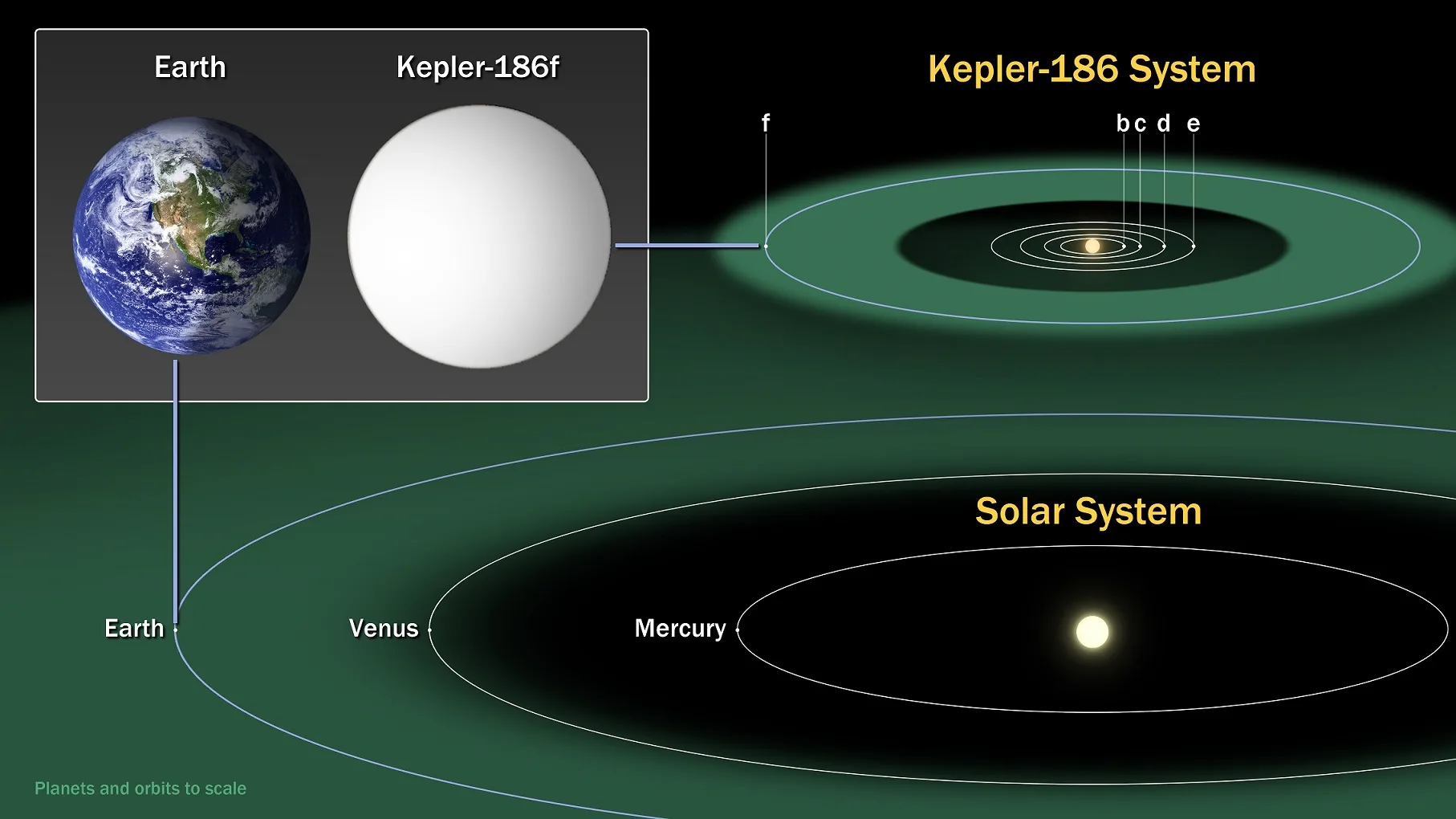
3. 🌏 Kepler-186f – The First Earth-sized Planet in a Habitable Zone

  • Distance: ~500 light-years away

  • Star Type: Red dwarf (smaller and cooler than the Sun)

  • Orbital Period: 130 Earth days

  • Size: Similar to Earth

  • Fact:

    • It was the first true Earth-sized planet found in the habitable zone of another star.

    • It receives less light than Earth, so it might be cooler — but still warm enough for liquid water.

🟢 Kepler-186f proved that Earth-sized planets can exist in habitable zones!


4. 🌍 TRAPPIST-1 System – A Family of Seven Earth-like Worlds

  • Distance: ~40 light-years away

  • Star: TRAPPIST-1 (ultra-cool red dwarf)

  • Planets: Seven Earth-sized planets (named TRAPPIST-1b to TRAPPIST-1h)

  • Fact:

    • At least three planets (e, f, and g) are in the Goldilocks Zone.

    • These planets could have water and rocky surfaces.

    • All seven planets are so close together that they would appear huge in each other’s skies!

🟢 TRAPPIST-1 is one of the most exciting discoveries in the search for alien life.


5. 🌎 Kepler-62f – A Super-Earth in a Calm System

  • Distance: ~1,200 light-years away

  • Star: Cooler than the Sun (K-type star)

  • Orbital Period: 267 days

  • Size: About 1.4 times Earth’s radius

  • Fact:

    • Located in the middle of its star’s habitable zone.

    • It could have oceans and a mild climate if it has an atmosphere like Earth’s.

🟢 A good candidate for habitability because it’s not too big or too close to its star.


🌠 How Scientists Find These Planets

Exoplanets in the Goldilocks Zone

Astronomers use powerful telescopes like Kepler, TESS, and James Webb Space Telescope (JWST) to detect exoplanets using methods such as:

  1. Transit Method:
    When a planet passes in front of its star, it blocks a tiny amount of light.
    Scientists measure this dip to find the planet’s size and orbit.

  2. Radial Velocity Method:
    The planet’s gravity slightly “wobbles” its star — by measuring this wobble, scientists can detect planets.

  3. Direct Imaging (Rare):
    Some large planets far from their stars can be photographed directly.


🧬 Could These Planets Have Life?

So far, no confirmed evidence of life has been found outside Earth.
But many of these planets have the right conditions — liquid water, rocky surfaces, and a comfortable temperature range.

Future missions like:

  • JWST (James Webb Space Telescope)

  • LUVOIR and HabEx (future NASA missions)
    aim to study exoplanet atmospheres to look for gases like oxygen, methane, and carbon dioxide — signs that might indicate life.


🌌 Amazing Facts

  1. The Milky Way could have 300 million habitable planets in the Goldilocks Zone.

  2. Red dwarf stars, though smaller, may have multiple habitable-zone planets.

  3. Some exoplanets could have two suns, like in Star Wars’ Tatooine!

  4. The James Webb Telescope has already started analyzing exoplanet atmospheres for water and carbon.

  5. Every year, new planets in habitable zones are being discovered — our “Earth 2.0” might not be far away.


🌎 Final Thoughts

The discovery of exoplanets in the Goldilocks Zone is one of humanity’s greatest scientific achievements.
It reminds us that Earth might not be the only home for life — somewhere in the universe, another planet could have oceans, clouds, and perhaps even living beings gazing back at the stars.

Non-Tech Blog

Filed Under: Geography, Non-Tech Blogs

The Greenhouse Effect: How It Warms Our Planet

October 15, 2025 By kundan Leave a Comment

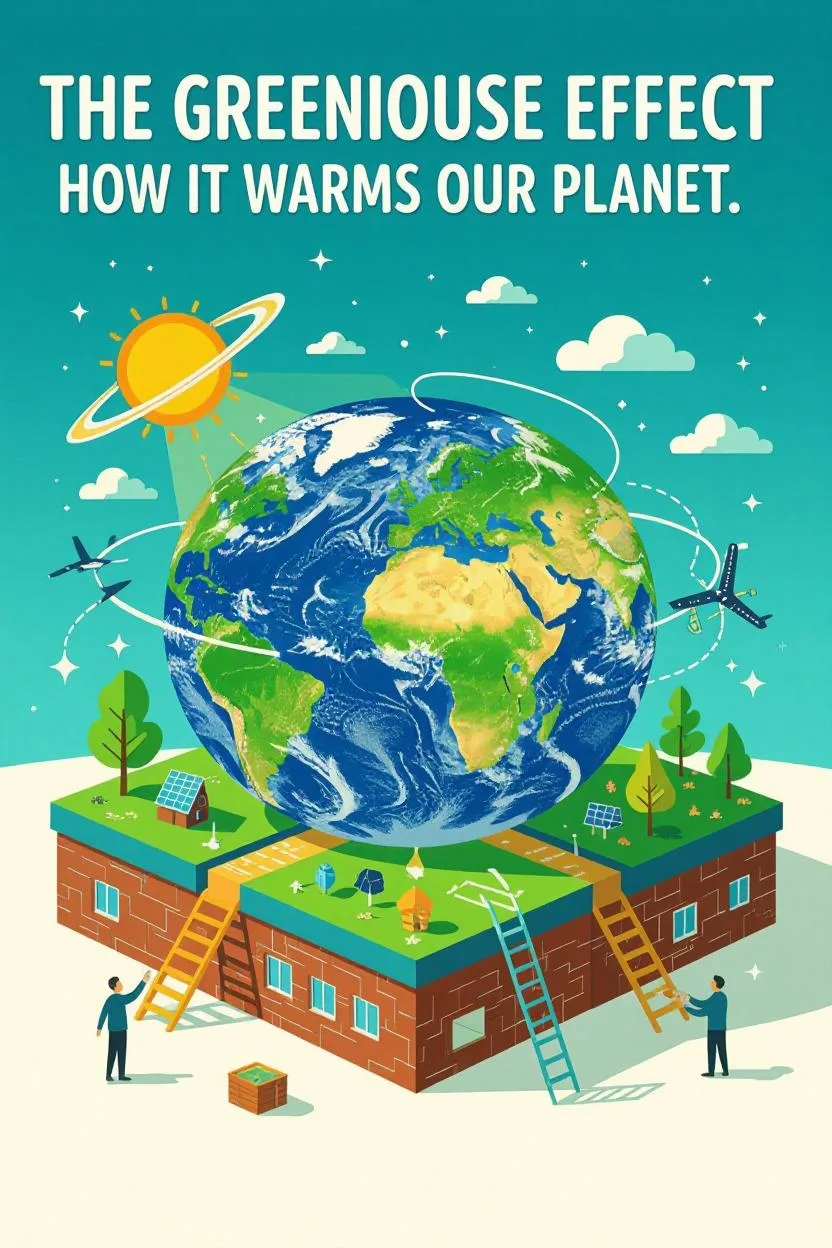
The Greenhouse Effect: How It Warms Our Planet

The Greenhouse Effect: How It Warms Our Planet

🌱 Introduction

Have you ever wondered why Earth is warm enough to live on, while other planets like Mars are freezing? The answer lies in something called the greenhouse effect. It’s a natural process that keeps our planet’s temperature just right for life. But when this effect becomes too strong, it can lead to serious problems — like global warming and climate change.


☀️ What Is the Greenhouse Effect?

The greenhouse effect is like wrapping Earth in a big, invisible blanket made of gases. When sunlight reaches Earth, part of it is absorbed by the ground, oceans, and plants. The rest bounces back toward space as heat (infrared radiation).

Now, gases in the atmosphere — such as carbon dioxide (CO₂), methane (CH₄), nitrous oxide (N₂O), and water vapor (H₂O) — trap some of this heat and keep it from escaping. These gases are called greenhouse gases because they work like the glass of a greenhouse, keeping heat inside.

Without It, Earth’s average temperature would be about -18°C instead of +15°C — too cold for humans, plants, or animals to survive.


💨 The Main Greenhouse Gases

  1. Carbon Dioxide (CO₂): Released by burning fossil fuels like coal, oil, and gas.

  2. Methane (CH₄): Comes from livestock, rice farming, and landfills.

  3. Nitrous Oxide (N₂O): Produced by fertilizers and industrial activities.

  4. Water Vapor (H₂O): The most abundant greenhouse gas, naturally present in the air.

  5. Ozone (O₃): Found in the upper atmosphere, it also traps some heat.


🔥 When the Greenhouse Effect Becomes a Problem

While it is necessary for life, human activities are making it too strong. Since the Industrial Revolution, the amount of greenhouse gases in the atmosphere has increased sharply.

This enhanced it traps extra heat, causing global temperatures to rise. As a result:

  • Glaciers and ice caps are melting.

  • Sea levels are rising.

  • Weather patterns are becoming more extreme — with stronger storms, droughts, and heatwaves.

  • Wildlife habitats are being destroyed.


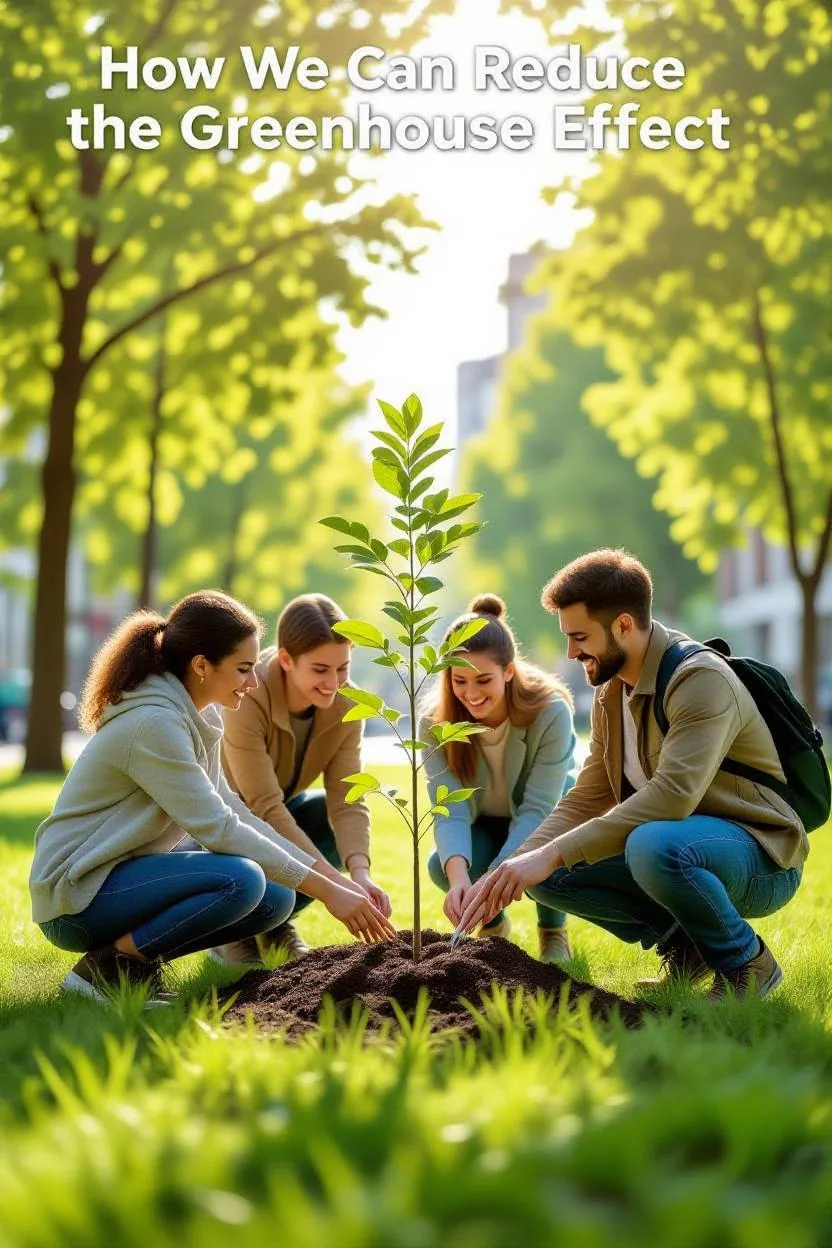
🌿 How We Can Reduce the Greenhouse Effect

How We Can Reduce the Greenhouse Effect

It’s not too late to make a difference. Here are a few ways to help:

  • Use renewable energy like solar, wind, or hydro power.

  • Plant trees — they absorb carbon dioxide from the air.

  • Use energy-efficient appliances and reduce electricity waste.

  • Use public transport, walk, or cycle instead of driving everywhere.

  • Reduce, reuse, and recycle to cut down on industrial emissions.


🌎 Conclusion

The greenhouse effect is both a gift and a challenge. It keeps our planet warm and alive, but when pushed beyond balance, it can turn into a threat. By understanding how it works and taking small steps to reduce our carbon footprint, we can protect the Earth for future generations.

Let’s keep our “blanket” comfortable — not too cold, and not too hot.


🌍 FAQs on the Greenhouse Effect

1. ❓What is the greenhouse effect?

It is a natural process that keeps the Earth warm. Certain gases in the atmosphere trap heat from the Sun, preventing it from escaping back into space. This helps maintain a temperature suitable for life on Earth.


2. ❓Why is it called the “greenhouse” effect?

It’s called the greenhouse effect because it works like a greenhouse used to grow plants. The glass of a greenhouse lets sunlight in and traps heat inside — the same way greenhouse gases trap heat in our atmosphere.


3. ❓Which gases are called greenhouse gases?

The main greenhouse gases are:

  • Carbon dioxide (CO₂)

  • Methane (CH₄)

  • Nitrous oxide (N₂O)

  • Water vapor (H₂O)

  • Ozone (O₃)


4. ❓Is the greenhouse effect good or bad?

The natural greenhouse effect is good — it keeps Earth warm enough for life.
However, the enhanced greenhouse effect, caused by human activities (like burning fossil fuels), makes Earth too warm and leads to global warming.


5. ❓How do humans increase the greenhouse effect?

Humans increase the GHG by:

  • Burning coal, oil, and gas for energy.

  • Cutting down forests (deforestation).

  • Using fertilizers and raising livestock.

  • Producing waste that releases methane.


6. ❓What are the effects of too much greenhouse gases?

Too many greenhouse gases cause:

  • Global warming and rising temperatures.

  • Melting glaciers and rising sea levels.

  • Extreme weather like heatwaves, floods, and droughts.

  • Disturbance in ecosystems and loss of biodiversity.


7. ❓How can we reduce the GHG?

We can reduce it by

  • Using renewable energy sources (solar, wind, hydro).

  • Planting more trees.

  • Saving electricity and using energy-efficient devices.

  • Reducing waste and recycling.

  • Choosing public transport or bicycles instead of cars.


8. ❓What is the difference between the greenhouse effect and global warming?

  • Greenhouse Effect: A natural process that keeps Earth warm.

  • Global Warming: The rise in Earth’s average temperature due to too much greenhouse effect caused by human activities.


9. ❓Can we completely stop It?

No, and we shouldn’t — because the natural greenhouse effect is essential for life. But we can control the extra greenhouse gases that cause harmful warming.


10. ❓Why should we care about tIt?

Because our climate, weather, food supply, and even health depend on it. If the greenhouse effect gets too strong, it can change life on Earth as we know it.

Filed Under: Geography, Non-Tech Blogs

Is Global Warming Fueling Our Extreme Weather?

October 15, 2025 By kundan Leave a Comment

Is Global Warming Fueling Our Extreme Weather? The Unavoidable Truth

Global Warming
Global Warming

It’s hard to miss the news these days: “Record-breaking heatwave hits the continent,” “Severe floods drown entire towns,” “Hurricanes stronger than ever.” If it seems like the weather is becoming more extreme and unpredictable, you’re right. The main reason behind all this is global warming.

For many years, global warming was seen as a problem of the future—something the next generation would deal with. But that future has already arrived. The Earth’s climate is changing right now, and we can see its effects everywhere—on the news and even outside our homes. The undeniable impact of global warming.

For decades, global warming was discussed as a future threat—a distant problem for the next generation. But the future is now. The Earth’s climate is changing, and the consequences are playing out in real time on our TV screens and, for many, on our doorsteps. This post will break down exactly how a warming planet is turning our weather more volatile and what it means for our future.

The Basics: What is Global Warming, Really?

Before we connect it to weather, let’s be clear on the core concept.

  • Global Warming: This is the long-term heating of Earth’s surface observed since the pre-industrial period (around 1850) due to human activities, primarily the burning of fossil fuels (like coal, oil, and gas).

  • The Mechanism: This burning releases vast amounts of greenhouse gases (GHGs), like carbon dioxide (CO2) and methane, into the atmosphere. These gases trap heat from the sun that would otherwise escape back into space, much like a blanket traps heat around the planet. This is the “greenhouse effect.”

The result? A steady rise in global average temperatures. But this average warming doesn’t just mean nicer summers; it fundamentally disrupts the planet’s complex climate systems, leading to the extremes we’re witnessing.

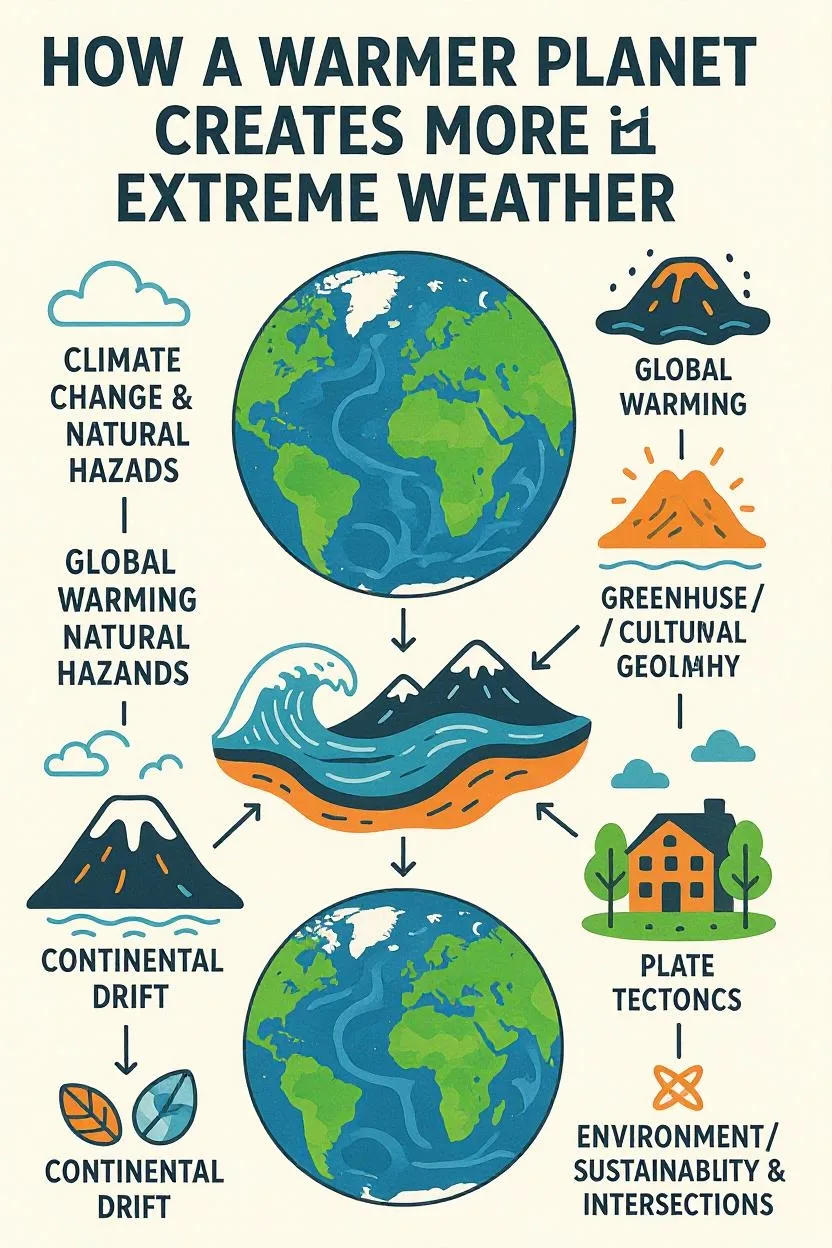
How a Warmer Planet Creates More Extreme Weather

Is Global Warming Fueling Our Extreme Weather?

1. More Intense Heatwaves and Droughts

This is the most direct link. As global temperatures rise, heatwaves become more frequent, last longer, and are more severe.

  • The Science: Higher baseline temperatures mean that what was once a rare heat event becomes common, and new, more extreme records are set.

  • The Impact: This leads to devastating droughts, crop failures, dangerous wildfires (like those seen in Australia and California), and thousands of heat-related deaths.

2. Stronger Storms and Hurricanes

Warmer ocean surfaces are like rocket fuel for storms.

  • The Science: Hurricanes and tropical cyclones draw their energy from warm ocean water. As sea surface temperatures rise, these storms have more energy to form, intensify rapidly, and carry more moisture.

  • The Impact: This results in more powerful Category 4 and 5 hurricanes that cause catastrophic wind damage and, crucially, much higher rainfall, leading to severe flooding.

3. Heavier Rainfall and Flooding

A warmer atmosphere can hold—and then release—more moisture.

  • The Science: For every 1°C (1.8°F) of warming, the atmosphere can hold about 7% more water vapor. This leads to more intense, heavy downpours when it rains.

  • The Impact: Increased risk of flash floods and river flooding, even in areas not traditionally prone to them, devastating communities and infrastructure.

4. Rising Sea Levels

This is a slow-moving but irreversible consequence that amplifies storm damage.

  • The Science: Sea levels are rising for two main reasons: 1) thermal expansion (warmer water takes up more space), and 2) the melting of land-based ice sheets and glaciers (in Greenland and Antarctica).

  • The Impact: Higher sea levels create more destructive storm surges during hurricanes and cyclones, pushing water further inland. They also lead to chronic “sunny day flooding” in coastal cities.

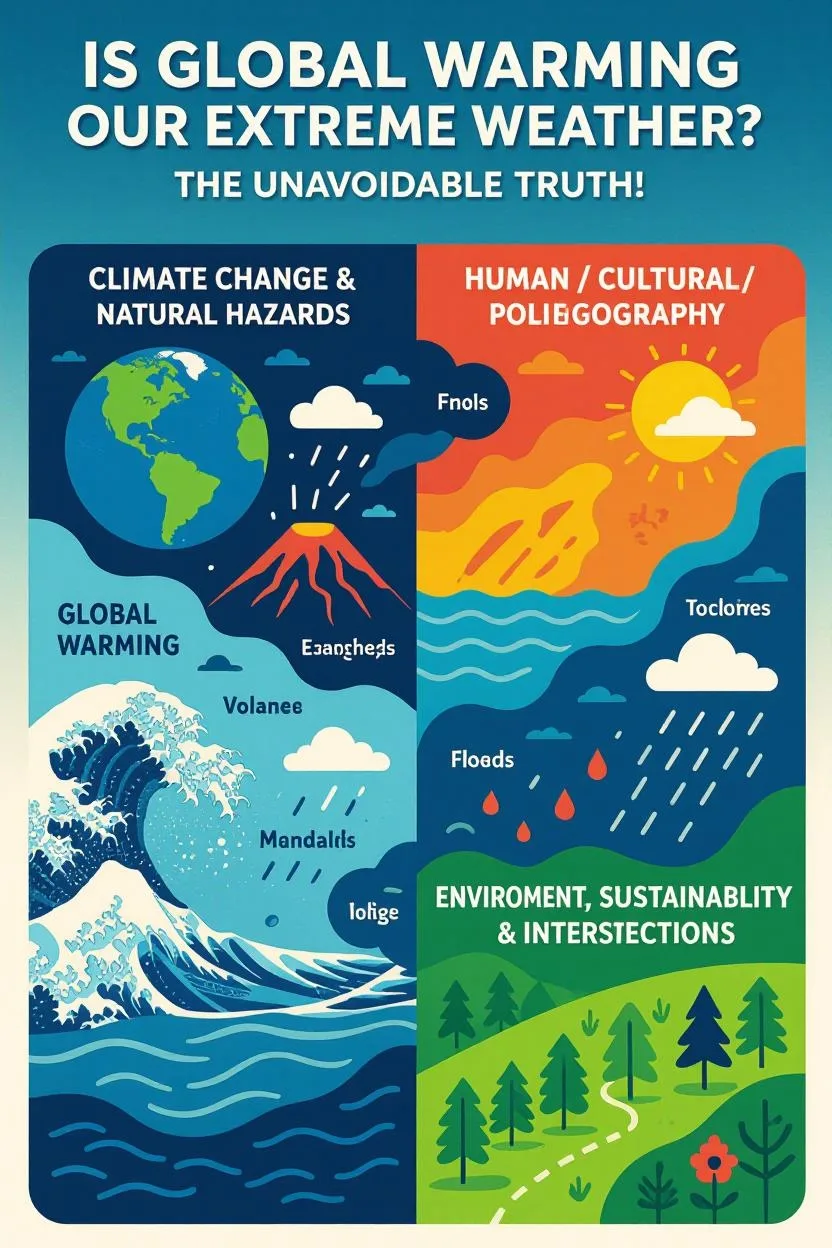
(Image: An infographic simply illustrating the four points above – a burning sun, a hurricane over warm water, dark clouds with heavy rain, and a wave hitting a city.)

The Evidence is In: What the Data Says

This isn’t just theory. The field of attribution science has advanced tremendously, allowing scientists to quantify global warming’s role in specific weather events. Studies have consistently found that:

  • The 2021 Pacific Northwest heatwave would have been “virtually impossible” without human-caused climate change.

  • Hurricane Harvey’s record-breaking rainfall over Houston in 201 was made three times more likely and 15% more intense by global warming.

What Can We Do? From Global Action to Personal Steps

The situation is serious, but it’s not hopeless. Addressing global warming requires a two-pronged approach:

  1. Systemic Change: This is the most critical part. We need a global transition to clean, renewable energy (solar, wind, geothermal) and strong government policies that prioritize reducing emissions.

  2. Individual Actions: While systemic change is key, our collective choices matter. You can:

    • Reduce your carbon footprint by conserving energy at home.

    • Consider your transportation (walk, bike, use public transit, or switch to an electric vehicle).

    • Reduce food waste and adopt a more plant-based diet.

    • Most importantly, use your voice. Vote for leaders who prioritize climate action and support businesses committed to sustainability.

Conclusion: A Crisis and an Opportunity

The link between global warming and extreme weather is no longer a future prediction; it is our present reality. The “new normal” is one of increasing volatility and risk. However, by understanding this connection, we are empowered to take action. The steps we take now to mitigate global warming—by cutting emissions and building more resilient communities—are not just about saving the planet for future generations; they are about safeguarding our way of life today.


What extreme weather event in your area has made you most concerned about climate change? Share your thoughts and experiences in the comments below. Let’s start a conversation.

Filed Under: Geography, Non-Tech Blogs Tagged With: Global Warming

Top Geography Topics for all exams

October 15, 2025 By kundan Leave a Comment

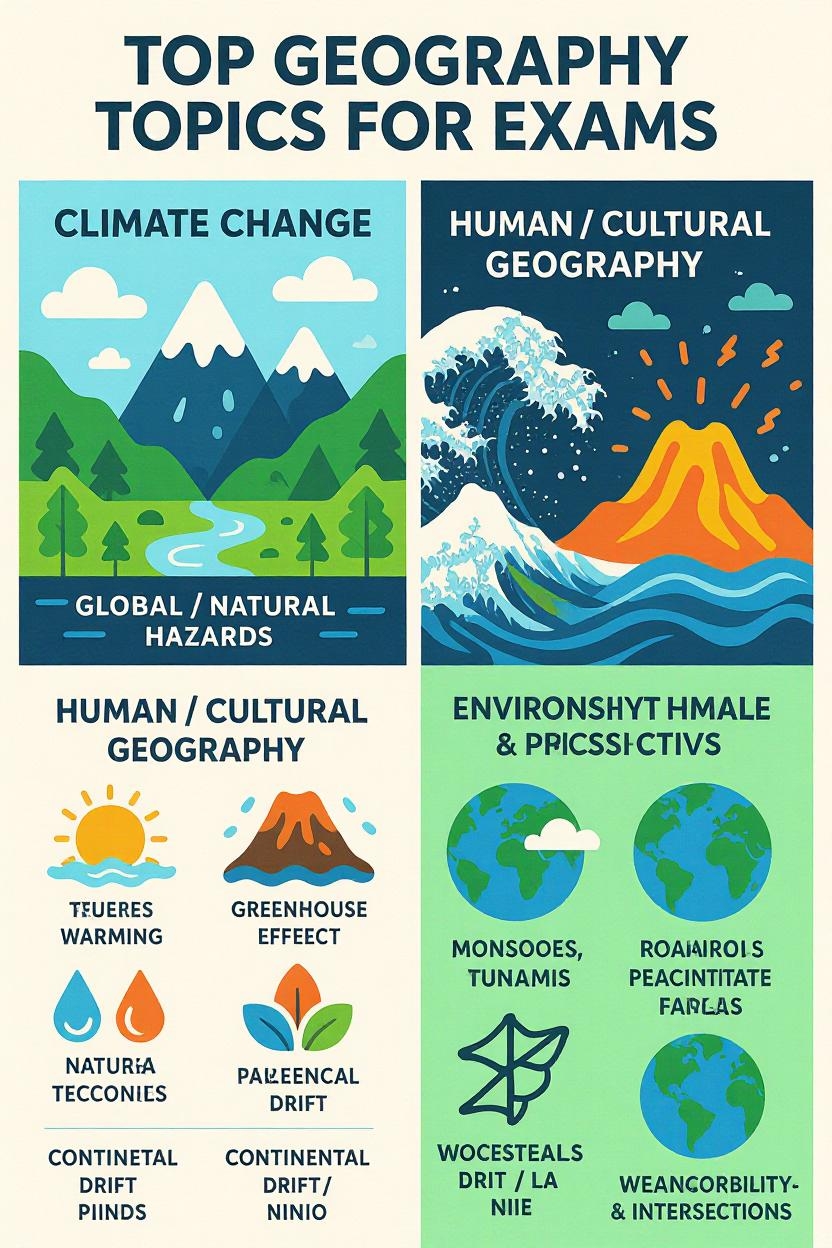
Top Geography Topics for all exams

Physical Geography & Natural Hazards

Top Geography Topics for all exams

  • Climate change, Global warming, greenhouse effect.

  • Natural disasters: earthquakes, volcanoes, tsunamis, floods.

  • Plate tectonics, continental drift.

  • Weather and climate patterns: monsoons, el Niño / la Niña, jet streams.

  • Oceans, sea level rise.

  • Glaciers, ice caps, polar regions.

  • Rivers, lakes, watersheds, and water management.

  • Soil types, landforms, deserts, and mountain ranges.

Human / Cultural / Political Geography

  • Migration, urbanization, population distribution.

  • Cities, their growth, megacities, slums.

  • Economic geography: agriculture, industry, natural resources.

  • Cultural geography: languages, religions, ethnic groups.

  • Geopolitics: borders, territorial disputes, political divisions.

  • Tourism geography: Sustainable tourism and travel trends.

Environment, Sustainability & Intersections

  • Biodiversity loss, species extinction, and conservation.

  • Forests, mangroves, ecosystems.

  • Sustainable development, green energy, renewable resources.

  • Human–environment interaction: how humans affect the environment & vice versa.

  • Water scarcity and water resource management.

Trending / Popular “Hook” Geography Topics

  • Maps, map-reading, GIS (Geographic Information Systems).

  • “Mysteries” or unusual physical geography phenomena.

  • Impact of climate on everyday life (rising heat, extreme weather).

  • Geography in news: e.g., places mentioned in current affairs (natural disasters, newly discovered islands, territorial claims).

  • Food Security and Agriculture in Changing Climates


Physical Geography & Natural Hazards

1. Climate Change, Global Warming, Greenhouse Effect

  • Climate Change: A long-term shift in global or regional climate patterns (e.g., increased extreme weather).

  • Global Warming: The specific, long-term increase in Earth’s average surface temperature, a major driver of climate change.

  • Greenhouse Effect: A natural process where gases in the atmosphere (like CO2, Methane, Water Vapor) trap heat, keeping the Earth warm. Human activities (burning fossil fuels, deforestation) have enhanced this effect, leading to accelerated global warming.

2. Natural Disasters

  • Earthquakes: Caused by the sudden release of energy along fault lines in the Earth’s crust. Measured on the Richter scale.

  • Volcanoes: Openings in the Earth’s crust through which molten rock (lava), ash, and gases erupt. Often found at tectonic plate boundaries.

  • Tsunamis: Giant sea waves generated by undersea earthquakes, volcanic eruptions, or landslides.

  • Floods: An overflow of water that submerges land that is usually dry. Causes include heavy rainfall, storm surges, and river overflow.

3. Plate Tectonics & Continental Drift

  • Continental Drift: The theory (by Alfred Wegener) that continents were once joined in a supercontinent (Pangaea) and have since “drifted” to their current positions.

  • Plate Tectonics: The modern theory that the Earth’s lithosphere (crust and upper mantle) is divided into large, moving plates. Their interaction (converging, diverging, transforming) causes mountains, earthquakes, and volcanoes.

4. Weather and Climate Patterns

  • Monsoons: Seasonal reversal of wind patterns that bring heavy rainfall to regions like South and Southeast Asia.

  • El Niño / La Niña: Opposite phases of the El Niño-Southern Oscillation (ENSO) cycle in the Pacific Ocean.

    • El Niño: Unusually warm ocean temperatures, disrupting global weather (causing droughts in some areas, floods in others).

    • La Niña: Unusually cool ocean temperatures, often with opposite effects of El Niño.

  • Jet Streams: Fast-flowing, narrow air currents in the atmospheres of some planets, including Earth. They influence weather patterns by steering storms and separating warm and cold air.

5. Oceans & Sea Level Rise

  • Oceans: Cover about 71% of the Earth’s surface and regulate global climate.

  • Sea Level Rise: Primarily caused by thermal expansion (water expanding as it warms) and the melting of glaciers and ice sheets. Threatens coastal communities and ecosystems.

6. Glaciers, Ice Caps, Polar Regions

  • Glaciers & Ice Caps: Massive, slow-moving rivers of ice. Their melting contributes to sea-level rise.

  • Polar Regions (Arctic & Antarctic): Act as the Earth’s “air conditioners.” The Arctic is an ice-covered ocean, while Antarctica is a ice-covered continent. They are warming faster than the global average (Polar Amplification).

7. Rivers, Lakes, Watersheds, and Water Management

  • Watershed (Drainage Basin): The area of land where all precipitation drains into a single river or lake system.

  • Water Management: The control and movement of water resources to minimize damage to life and property and to maximize efficient use. Includes dams, reservoirs, and conservation.

8. Soil Types, Landforms, Deserts, and Mountain Ranges

  • Soil Types: Vary by region (e.g., Alluvial, Black, Laterite). Influenced by climate, parent rock, and topography.

  • Landforms: Natural features of the Earth’s surface (e.g., mountains, plateaus, plains, valleys).

  • Deserts: Arid regions with low rainfall. Can be hot (Sahara) or cold (Gobi).

  • Mountain Ranges: Formed primarily by tectonic forces. Major ranges include the Himalayas, Andes, and Rockies.


Human / Cultural / Political Geography

1. Migration, Urbanization, Population Distribution

  • Migration: Movement of people from one place to another (can be internal/international, voluntary/forced).

  • Urbanization: The increasing percentage of a population living in urban areas (cities and towns).

  • Population Distribution: The pattern of where people live. Often uneven, influenced by physical geography, resources, and economy.

2. Cities, Megacities, Slums

  • Megacities: A metropolitan area with a population of over 10 million (e.g., Tokyo, Delhi, Shanghai).

  • Slums: Heavily populated urban informal settlements characterized by substandard housing, squalor, and lack of security of tenure.

3. Economic Geography

  • Agriculture: The cultivation of crops and rearing of animals. Types include subsistence and commercial.

  • Industry: The production of goods or related services within an economy. Location is influenced by resources, labor, and transport.

  • Natural Resources: Materials from the Earth that are used to support life and meet people’s needs (e.g., water, minerals, forests).

4. Cultural Geography

  • Languages, Religions, Ethnic Groups: The spatial distribution and interaction of cultural elements across the world.

5. Geopolitics

  • Borders & Political Divisions: The lines that define the territorial limits of a state.

  • Territorial Disputes: A disagreement over the possession/control of land between two or more states.

6. Tourism Geography

  • Sustainable Tourism: Tourism that takes full account of its current and future economic, social, and environmental impacts, addressing the needs of visitors, the industry, the environment, and host communities.


Environment, Sustainability & Intersections

1. Biodiversity Loss & Conservation

  • Biodiversity: The variety of life in the world or in a particular habitat or ecosystem.

  • Species Extinction: The permanent loss of a species. The current rate is 100-1000 times higher than the natural background rate, largely due to human activity.

  • Conservation: The preservation and careful management of the environment and natural resources.

2. Forests, Mangroves, Ecosystems

  • Ecosystem: A biological community of interacting organisms and their physical environment.

  • Mangroves: Salt-tolerant trees and shrubs that grow in coastal intertidal zones. They act as crucial nurseries for fish and buffer coastlines against storms and erosion.

3. Sustainable Development & Green Energy

  • Sustainable Development: “Development that meets the needs of the present without compromising the ability of future generations to meet their own needs.” (Brundtland Report)

  • Renewable Resources: Energy sources that are naturally replenished, such as solar, wind, hydro, and geothermal.

4. Human-Environment Interaction

  • How humans affect the environment (e.g., pollution, deforestation, urbanization).

  • How the environment affects humans (e.g., natural hazards, climate change, resource availability).

5. Water Scarcity

  • The lack of sufficient available water resources to meet the demands within a region. It is caused by overuse, pollution, and climate change.


Trending / Popular “Hook” Geography Topics

1. Maps & GIS

  • GIS (Geographic Information Systems): A computer system for capturing, storing, checking, and displaying data related to positions on Earth’s surface. Crucial for modern planning and analysis.

2. Unusual Physical Phenomena

  • Topics like “Ring of Fire” (Pacific earthquake/volcano zone), “Midnight Sun” (in polar regions), or mysterious sinkholes.

3. Impact of Climate on Everyday Life

  • Direct links such as rising urban heat, increased frequency of extreme weather events (heatwaves, floods), and impacts on agriculture and food security.

4. Geography in News

  • Always relevant. Connect geographical concepts to current events:

    • A major earthquake or hurricane -> Plate tectonics / Natural Hazards.

    • A new territorial dispute -> Geopolitics.

    • A report on melting Arctic ice -> Climate Change / Polar Regions.

    • Discovery of a new island -> Volcanism / Landforms.

Climate change

Filed Under: Geography, Non-Tech Blogs, world facts Tagged With: Geography Topics

Women Empowerment

May 16, 2025 By kundan Leave a Comment

Women Empowerment 

Women empowerment is one of the most important topics in today’s world. It means giving women the right to make decisions about their life, education, job, and family. It also includes giving equal opportunities to women in all fields such as education, employment, politics, and social life. Women empowerment is necessary not only for the progress of women but also for the development of society and the country as a whole.

Importance of Women Empowerment

Women form almost half of the population. If women are not given equal opportunities, then the nation cannot progress fully. When women are educated and empowered, they contribute to the economy, health, and education of the family and society. Empowered women can take better care of their children and family. They can also stand up against injustice and raise their voice against domestic violence, dowry, child marriage, and other social evils.

Ways to Empower Women

Women Empowerment

  1. Education: Education is the most powerful tool for empowering women. An educated woman knows her rights and can take informed decisions. She can also help in educating her children and contributing to the growth of the nation.

  2. Employment Opportunities: Women should be given equal opportunities in jobs. Financial independence gives them confidence and the power to take decisions. Companies and governments should support women entrepreneurs and workers.

  3. Awareness of Rights: Many women are unaware of their legal and constitutional rights. Awareness campaigns should be organized in rural and urban areas to educate women about their rights and the laws that protect them.

  4. Skill Development: Training women in various skills such as tailoring, computer education, teaching, handicrafts, etc., helps them earn a living and become self-reliant.

  5. Political Participation: Women should participate actively in politics and decision-making. Reservation of seats for women in panchayats and elections is a positive step toward this.

  6. Safe Environment: Women need a safe environment at home, in public, and at the workplace. Strict laws against sexual harassment, domestic violence, and other crimes must be implemented effectively.

Challenges in Women Empowerment

Although many steps have been taken, there are still several challenges:

  • Patriarchal Society: Our society is still male-dominated in many areas. People believe men are superior to women, which leads to discrimination.

  • Illiteracy and Lack of Education: In rural areas, many girls do not get a chance to complete their education due to poverty or early marriage.

  • Gender Discrimination: Women are often paid less than men for the same work. They are also not considered for leadership roles.

  • Violence Against Women: Domestic violence, sexual harassment, and dowry deaths are still common in many parts of the country.

Government Initiatives for Women Empowerment

The Indian government has launched many schemes and laws to promote women empowerment:

  • Beti Bachao Beti Padhao – To save and educate the girl child.

  • Sukanya Samriddhi Yojana – A savings scheme for the education and marriage of girl children.

  • Ujjwala Yojana – Provides free LPG connections to rural women.

  • One Stop Centres – For helping women who are victims of violence.

  • Reservation in Panchayats – One-third of the seats are reserved for women.

There are also several laws to protect women such as:

  • Protection of Women from Domestic Violence Act

  • Dowry Prohibition Act

  • Sexual Harassment of Women at Workplace Act

  • Maternity Benefit Act

Role of Society and Family

Family and society play a big role in empowering women. Families should treat boys and girls equally. Parents should encourage their daughters to study, work, and follow their dreams. Society should change its mindset and stop judging women based on what they wear or what job they do. Media and educational institutions can also help in spreading positive messages about women empowerment.

Success Stories

Today, many Indian women are achieving great success in various fields. Kalpana Chawla, the astronaut; Mary Kom, the boxer; Kiran Bedi, the first woman IPS officer; and Sudha Murty, the social worker and author, are some examples of empowered women who inspire millions.

Conclusion

Women empowerment is not just about giving rights to women, but about creating a world where women can live with dignity, equality, and freedom. It requires support from the government, society, and most importantly, from women themselves. When women are empowered, the whole society benefits. A nation can only progress when its women are strong, educated, and independent. Therefore, we must all work together to empower women and ensure a brighter future for all.


Essay on Gender Discrimination 

Filed Under: Essay, Essay, Non-Tech Blogs Tagged With: Women Empowerment

Understanding Climate Change: Earth’s Changing Weather

October 2, 2023 By kundan Leave a Comment

Understanding Climate Change: Earth’s Changing Weather


What is Climate Change?

Essay on climate change

Climate change is one of the most burning challenges facing humanity moment. It’s caused by mortal conditioning, primarily the burning of fossil energies, which releases hothouse feasts into the atmosphere. hothouse feasts act like a mask around Earth, enmeshing energy from the sun and causing the earth to warm.

The average global temperature has increased by about 1 degree Celsius(1.8 degrees Fahrenheit) since thepre-industrial period. This warming is formerly having a significant impact on the earth. Sea situations are rising, glaciers are melting, and extreme rainfall events are getting more common. still, the earth will continue to warm, If we don’t take action to reduce hothouse gas emigrations. This could have disastrous consequences for mortal society and the natural world. Then are some of the goods of climate change that we’re formerly seeing Rising ocean situations As the earth warms, the abysses expand and glaciers melt.

This is causing ocean situations to rise, which is submerging littoral areas and displacing people. further extreme rainfall events Climate change is making extreme rainfall events, similar as heat swells, famines, cataracts, and storms, further frequent and severe. Melting glaciers and ice wastes Glaciers and ice wastes are melting at an intimidating rate due to climate change. This is contributing to ocean position rise and dismembering ecosystems around the world. Changes in rush patterns Climate change is causing rush patterns to change.

Some areas are passing further famines, while others are passing further flooding. Impacts on mortal health Climate change is having a negative impact on mortal health. Heat swells are causing further heat- related deaths, and air pollution is adding . Climate change is also a trouble to our frugality. Extreme rainfall events can damage structure and beget billions of bones
in damage each time. Climate change is also dismembering businesses and causing profitable losses. We need to take action now to reduce hothouse gas emigrations and alleviate the goods of climate change. There are a number of effects that we can do, including Reduce our reliance on fossil energies We need to switch to renewable energy sources, similar as solar and wind power. We also need to ameliorate energy effectiveness in our homes and businesses. cover timbers timbers absorb carbon dioxide from the atmosphere, so it’s important to cover our timbers and plant new trees. Reduce food waste Food waste is a major source of hothouse gas emigrations. We need to reduce the quantum of food that we waste and eat further factory- grounded foods.

Support climate action programs We need to handpick leaders who are committed to taking action on climate change. We also need to support programs that reduce hothouse gas emigrations and promote renewable energy. Climate change is a serious trouble, but it isn’t too late to take action. By working together, we can cover our earth for unborn generations. In addition to the below, then are some other effects that individualities can do to help fight it Drive less and walk, bike, or take public transportation more frequently. Make your home more energy-effective by weatherizing it and installing energy-effective appliances.

Eat lower meat and further factory- grounded foods. Reclaim and compost. Support businesses and associations that are working to reduce their environmental impact. It is a complex problem, but it’s one that we can break if we work together. By taking action in our own lives, we can make a difference.

The Human Influence on Climate Change

The primary driver of it lies in human activities, with the burning of fossil fuels being a prominent culprit. When fossil fuels such as coal, oil, and natural gas are combusted, they release greenhouse gases into the atmosphere. These gases act like a thermal blanket around our planet, trapping heat from the sun and gradually causing global temperatures to rise.

The Warming of Our Planet


Essay on climate change


The evidence of it is irrefutable. Since the pre-industrial era, the average global temperature has surged by approximately 1 degree Celsius (equivalent to 1.8 degrees Fahrenheit). This seemingly modest increase in temperature is already wreaking havoc on our world. The consequences are dire, including rising sea levels, melting glaciers, and a surge in extreme weather events.

Effects of Climate Change

Let’s delve deeper into some of the visible effects of it:

1. Rising Sea Levels

As the Earth warms, the oceans expand, and glaciers melt, leading to a steady rise in sea levels. This surge in sea levels has dire consequences for coastal areas worldwide, causing flooding and displacing communities.

2. More Extreme Weather Events

It amplifies the occurrence and severity of extreme weather events. From scorching heat waves and prolonged droughts to devastating floods and intense storms, the world is witnessing a significant uptick in such events.

3. Melting Glaciers and Ice Sheets

Glaciers and ice sheets are melting at an alarming pace due to the effects of climate change. This rapid melting contributes directly to sea-level rise, posing a threat to ecosystems and communities around the globe.

4. Alterations in Precipitation Patterns

It disrupts established precipitation patterns, leading to varying outcomes in different regions. Some areas experience more frequent droughts, while others contend with increased instances of flooding, altering the balance of ecosystems and agriculture.

5. Impact on Human Health

It takes a toll on human health. Heatwaves are becoming more frequent and deadly, resulting in a surge in heat-related deaths. Additionally, air pollution is on the rise, further jeopardizing public health.

The Urgent Need for Action


Essay on climate change

In the face of these compelling facts, it is undeniable that it poses a severe threat to both our planet and our way of life. Failing to take swift and comprehensive action to reduce greenhouse gas emissions could have catastrophic consequences for the natural world and human society. The time to act is now. It is incumbent upon us to collectively work towards mitigating the effects of it and securing a sustainable future for generations to come.

Why Is it Happening?

One big reason is because of greenhouse gases. These are like invisible blankets around our Earth. They keep some of the heat from the sun trapped inside. It’s like when you wear a cozy jacket to stay warm.

But, humans are making too many of these gases by burning stuff like gasoline in cars and making electricity with coal. This extra heat is making the Earth’s temperature go up.

What’s Happening?

Because of this extra heat, some things are changing:

Melting Ice


Essay on climate change

Ice at the North and South Poles is melting. This is causing sea levels to rise, which can flood places where people live.

Weird Weather

The weather is becoming strange. There can be more powerful storms, like hurricanes and typhoons, and hotter heatwaves. Some places might not get enough rain, leading to droughts.

Animals and Plants

Some animals and plants might not survive because they can’t adapt to the changing weather. This affects the whole balance of nature.

Why Should We Care?


Essay on climate change

We should care because it affects us all. Hotter temperatures can make it hard to grow food, and rising seas can flood our homes. Also, it can make more people sick because of extreme weather and changing diseases.

We should care about it because it is a serious threat to our planet and our way of life. Climate change is already having a significant impact on the planet, and if we do not take action to reduce greenhouse gas emissions, the consequences will be catastrophic.

Here are some of the reasons why we should care about it:

  • It is a threat to human health. Heat waves, air pollution, and other it-related impacts are causing more heat-related deaths, asthma attacks, and other health problems.
  • It is a threat to food security. Changes in precipitation patterns and rising sea levels are disrupting agriculture and making it more difficult to produce food.
  • It is a threat to ecosystems. Coral reefs, forests, and other ecosystems are being damaged by it. This is threatening biodiversity and the services that ecosystems provide to humans.
  • It is a threat to infrastructure. Extreme weather events such as floods, storms, and droughts are damaging infrastructure and causing billions of dollars in damage each year.
  • It is a threat to our economy. It is disrupting businesses and causing economic losses.

In addition to these immediate threats, climate change is also a long-term threat to our planet. If we do not take action to reduce greenhouse gas emissions, the planet will continue to warm. This could lead to irreversible changes, such as the melting of the Greenland ice sheet and the collapse of the West Antarctic ice sheet. These changes would cause sea levels to rise by several meters, displacing millions of people and inundating coastal cities.

We should care about climate change because it is a threat to our planet, our way of life, and our future. We need to take action now to reduce greenhouse gas emissions and mitigate the effects of climate change.

Here are some things that we can do to care about climate change:

  • Reduce our reliance on fossil fuels by driving less, using public transportation, and switching to renewable energy sources.
  • Conserve energy at home and at work.
  • Eat less meat and more plant-based foods.
  • Recycle and compost.
  • Get involved in climate activism and advocate for policies that will reduce greenhouse gas emissions.

It is a complex problem, but it is one that we can solve if we work together. By taking action now, we can protect our planet and our future.

What Can We Do?


Essay on climate change

We can help slow down climate change:

  • Use less energy by turning off lights and using less hot water.
  • Use cars that don’t need as much gasoline, like electric cars.
  • Plant trees because they can absorb some of those greenhouse gases.
  • Tell our leaders to make rules to reduce greenhouse gases.

Conclusion

It is a bit like our Earth feeling sick because of too many greenhouse gases. But if we work together, we can help our planet get better. We can use energy wisely, drive cleaner cars, and protect nature. It’s our world, and we all need to take care of it.


Frequently Asked Questions (FAQs)

  1. How can I reduce my carbon footprint in daily life?
    • You can reduce your carbon footprint by conserving energy, using public transportation, and supporting eco-friendly products.
  2. What are the key goals of the Paris Agreement?
    • The Paris Agreement aims to limit global warming, enhance climate resilience, and facilitate financial support for climate-related actions.
  3. Is climate change reversible?
    • Climate change’s long-term impacts are challenging to reverse, but mitigation measures can slow its progression.
  4. How does climate change affect agriculture?
    • Climate change can lead to crop disruptions, altered growing seasons, and increased pests and diseases, impacting global food security.
  5. What is the role of renewable energy in combating climate change?
    • Renewable energy sources like solar and wind power reduce greenhouse gas emissions and promote a sustainable energy future.

Read more Essay Click Here

Filed Under: Essay, Geography Tagged With: Climate Change

  • Page 1
  • Page 2
  • Page 3
  • Page 4
  • Go to Next Page »

Footer

Categories

Founder of ohmsite

kundan MIT

About us

Copyright © 2020 ohmsite.com