Serotonin Hormone: The Happiness Hormone – Functions, Benefits, Symptoms, Levels, and Natural Ways to Increase It
Serotonin: Understanding the Happiness Hormone
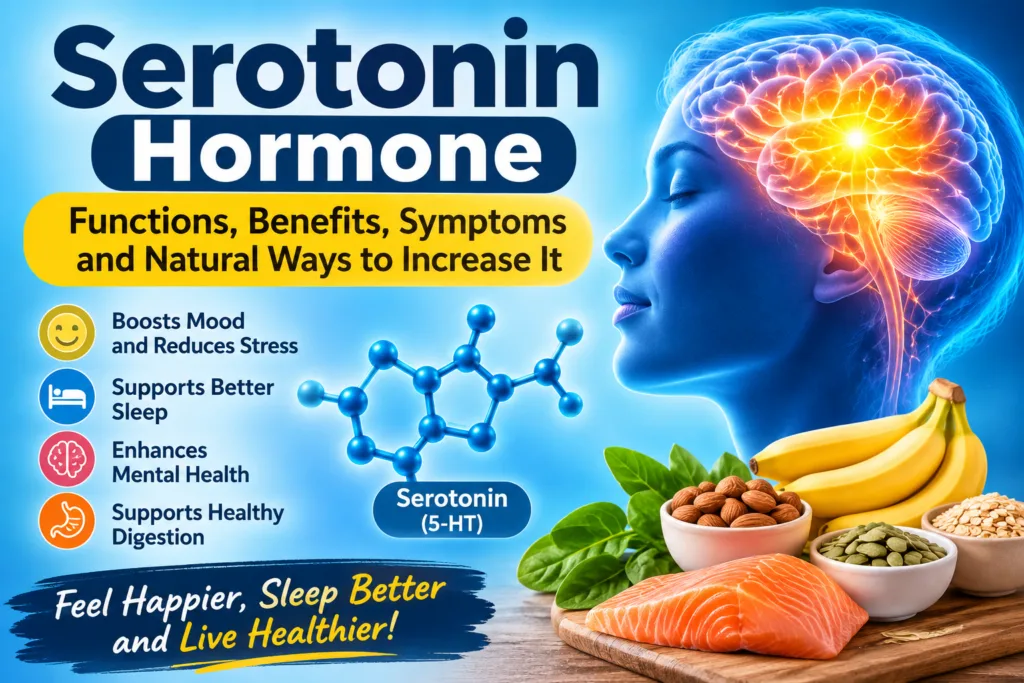
Serotonin Hormone, scientifically known as 5-hydroxytryptamine (5-HT), is an important chemical messenger that plays a significant role in maintaining the physical and mental well-being of the human body. It is commonly known as the happiness hormone because of its association with mood regulation, emotional stability, relaxation, and feelings of well-being.
However, serotonin does much more than influence happiness. It participates in several essential biological processes, including sleep regulation, digestion, appetite control, memory, learning, blood clotting, and the body’s response to stress.
Serotonin functions primarily as a neurotransmitter, which means it carries chemical messages between nerve cells. It also performs hormone-like and other signalling functions in different parts of the body.
Approximately 90% of the body’s serotonin is found in the gastrointestinal tract, while a smaller proportion is produced in the central nervous system. This demonstrates that serotonin is important not only for brain health but also for digestive and overall physiological functions.
Understanding serotonin helps us better appreciate the relationship between the brain, body, emotions, lifestyle, and overall health.
1. What Is Serotonin Hormone?
Serotonin is a naturally occurring chemical compound belonging to a group of substances called monoamine neurotransmitters. It is produced by the body from an essential amino acid called tryptophan, which we obtain through food.
Serotonin helps regulate communication between different cells and influences several important functions.
The major functions associated with serotonin include:
Mood regulation: Supports emotional balance and influences feelings of happiness and calmness.
Sleep regulation: Participates in the biological processes involved in the sleep-wake cycle.
Digestive health: Controls intestinal movement and digestive activity.
Appetite control: Influences hunger, food intake, and satiety.
Memory and learning: Participates in cognitive processes and information processing.
Pain perception: Helps regulate how the nervous system processes pain.
Blood clotting: Contributes to platelet activity and blood vessel responses.
Stress response: Influences how the brain responds to stressful situations.
Serotonin does not independently control happiness or mental health. Instead, it works alongside other neurotransmitters, hormones, neural pathways, and physiological systems.
2. Why Is Serotonin Called the Happiness Hormone?
Serotonin is popularly called the happiness hormone because it contributes to emotional regulation and psychological well-being.
When serotonin signalling functions appropriately, it supports several processes associated with a stable emotional state.
These include:
Emotional stability: Serotonin participates in regulating emotional responses and helps the brain process different experiences.
Mood regulation: It influences neural circuits associated with mood, anxiety, and emotional behaviour.
Stress management: Serotonin signalling contributes to the regulation of stress responses.
Sleep quality: It participates in the production of melatonin, a hormone that helps regulate the body’s sleep-wake rhythm.
Appetite and satisfaction: Serotonin influences eating behaviour and the feeling of fullness after meals.
It is important to understand that happiness is not determined by serotonin alone. Dopamine, oxytocin, endorphins, environmental conditions, physical health, relationships, and psychological experiences also contribute to emotional well-being.
Therefore, serotonin is better understood as an important regulator of mood and several other body functions rather than a chemical that directly creates happiness.
3. How Is Serotonin Produced in the Human Body?
The production of serotonin is a biochemical process that begins with the essential amino acid tryptophan.
Tryptophan cannot be produced naturally by the human body in sufficient amounts, so it must be obtained through dietary sources.
The body converts tryptophan into serotonin through two major biochemical reactions.
Step 1: Conversion of Tryptophan into 5-HTP
The first step involves converting tryptophan into 5-hydroxytryptophan (5-HTP).
This reaction is controlled by an enzyme called tryptophan hydroxylase.
Step 2: Conversion of 5-HTP into Serotonin Hormone
In the second step, 5-HTP is converted into serotonin through an enzyme called aromatic L-amino acid decarboxylase.
The resulting serotonin is then stored and released when required by the body’s signalling systems.
The biochemical pathway can be represented as:
Serotonin production pathway
Tryptophan
Essential amino acid from food
Tryptophan hydroxylase
5-Hydroxytryptophan (5-HTP)
Aromatic L-amino acid decarboxylase
Serotonin (5-HT)
Active chemical messenger
Melatonin production pathway
Serotonin is a precursor of melatonin
This process occurs in different tissues, particularly serotonin-producing cells in the gastrointestinal tract and specialised neurons in the brain.
4. Major Functions and Benefits of Serotonin Hormone
Serotonin performs several important functions throughout the human body. Its effects depend on where it is produced, which receptors it activates, and how the signalling system responds.
4.1 Serotonin Hormone and Mental Health
One of the most widely studied functions of serotonin is its involvement in mental health.
Serotonin signalling influences emotional processing, anxiety, stress responses, and mood regulation.
It is also an important target of certain antidepressant medications, particularly selective serotonin reuptake inhibitors (SSRIs).
These medicines increase serotonin availability in certain brain signalling pathways by reducing its reuptake into nerve cells.
However, depression is a complex medical condition. Current scientific evidence does not establish that depression is simply caused by low serotonin levels.
4.2 Serotonin Hormone and Sleep Regulation
Serotonin Hormone contributes to the regulation of the sleep-wake cycle.
It is also a biochemical precursor to melatonin, which plays an important role in controlling circadian rhythms.
The relationship between serotonin and melatonin helps coordinate biological processes associated with sleeping and waking.
Maintaining a regular sleep schedule, receiving appropriate daytime light exposure, and following healthy sleep habits can support normal circadian functioning.
4.3 Serotonin Hormone and Digestive Health
A major proportion of the body’s serotonin is produced in the gastrointestinal tract.
It helps regulate:
Intestinal movement.
Digestive secretions.
Gastric emptying.
Intestinal muscle activity.
Nausea and vomiting responses.
Serotonin plays an essential role in communication between the digestive system and the nervous system.
4.4 Serotonin Hormone and Appetite Control
Serotonin participates in the regulation of hunger and satiety.
It influences brain pathways associated with food intake and the feeling of fullness.
Appropriate serotonin signalling contributes to the complex biological mechanisms that regulate eating behaviour.
4.5 Serotonin and Memory
Serotonin is involved in learning, memory formation, and information processing.
It influences neural communication and participates in the regulation of brain circuits responsible for cognitive functions.
4.6 Serotonin Hormone and Blood Clotting
Serotonin Hormone is stored in blood platelets.
When platelets become activated during an injury, serotonin is released and contributes to blood vessel responses and platelet-related clot formation.
4.7 Serotonin Hormone and Pain Perception
Serotonin also participates in the regulation of pain signals.
Depending on the receptor type and location, it can increase or decrease pain-related signalling.
5. Serotonin Hormone and Possible Effects of Low Serotonin Activity

Serotonin Hormone signalling is involved in several physiological and psychological processes. Changes in serotonin activity may be associated with different symptoms, although these symptoms cannot independently confirm a serotonin deficiency.
Some commonly discussed symptoms include:
| Possible symptom | Explanation |
|---|---|
| Mood changes | Difficulty maintaining emotional balance |
| Sleep disturbances | Changes in sleep patterns or sleep quality |
| Anxiety | Increased feelings of nervousness or worry |
| Appetite changes | Changes in hunger and eating behaviour |
| Digestive problems | Alterations in gastrointestinal functioning |
| Difficulty concentrating | Problems with attention and cognitive functioning |
| Increased sensitivity to pain | Changes in pain-processing pathways |
| Reduced emotional well-being | Persistent feelings of sadness or low mood |
Important scientific consideration: There is no established routine blood test that can reliably determine the amount of serotonin activity in the human brain. Blood serotonin measurements do not directly represent brain serotonin levels.
Furthermore, symptoms such as depression, anxiety, and insomnia have multiple possible causes. A healthcare professional should evaluate persistent symptoms rather than assuming that they indicate low serotonin.
6. What Causes Changes in Serotonin Activity?
Serotonin Hormone signalling is influenced by several biological, environmental, and lifestyle factors.
The major contributing factors include:
1. Nutritional deficiencies: Inadequate dietary intake of tryptophan and certain nutrients may affect the biochemical processes involved in serotonin production.
2. Chronic stress: Long-term stress can influence brain signalling systems and emotional regulation.
3. Poor sleep habits: Irregular sleeping schedules can disturb circadian rhythms and affect several neurotransmitter systems.
4. Physical inactivity: Lack of regular physical activity may negatively affect overall mental and physical well-being.
5. Certain medications: Some medicines alter serotonin production, release, reuptake, or receptor activity.
6. Medical and psychological conditions: Different health conditions can influence the functioning of serotonin-related pathways.
It is important to remember that serotonin activity is regulated by several interconnected mechanisms. It cannot be explained by a single lifestyle factor.
7. Natural Ways to Support Healthy Serotonin Function

Maintaining a healthy lifestyle can support normal brain functioning and overall emotional well-being.
Although no natural method guarantees an increase in brain serotonin, several healthy habits can positively influence the biological systems associated with serotonin.
7.1 Regular Physical Exercise

Physical exercise is one of the most beneficial lifestyle practices for maintaining mental and physical health.
Activities such as walking, jogging, cycling, swimming, and yoga can support emotional well-being.
Regular exercise may influence neurotransmitter signalling, improve sleep quality, reduce stress, and support healthy brain functioning.
Recommended approach:
Walk regularly.
Include moderate-intensity aerobic exercise.
Practise yoga or stretching.
Avoid prolonged physical inactivity.
Increase exercise intensity gradually according to fitness levels.
7.2 Exposure to Natural Sunlight
Natural daylight helps regulate the body’s internal biological clock.
Daylight exposure supports circadian rhythm regulation, which is important for maintaining healthy sleeping and waking patterns.
Spending some time outdoors during daylight hours can therefore support sleep and overall well-being.
However, excessive exposure to ultraviolet radiation should be avoided. Appropriate sun protection is important.
7.3 Maintain a Healthy Sleep Schedule
Sleep is essential for maintaining normal brain and nervous system functioning.
Poor sleep can affect mood, concentration, stress responses, and emotional regulation.
To support healthy sleep:
Maintain consistent sleeping and waking times.
Avoid excessive caffeine late in the day.
Reduce screen exposure before bedtime.
Keep the bedroom comfortable and quiet.
Aim for approximately 7–9 hours of sleep for most adults.
7.4 Manage Stress Effectively
Long-term stress can negatively affect psychological well-being.
Activities such as meditation, deep breathing, yoga, relaxation exercises, and spending time with family can help manage everyday stress.
If stress becomes persistent or affects daily functioning, professional psychological support may be beneficial.
7.5 Maintain Social Connections
Healthy relationships and meaningful social interactions contribute to emotional well-being.
Spending quality time with friends and family, participating in community activities, and developing supportive relationships can help reduce feelings of loneliness and isolation.
8. Foods That Support Serotonin Production
Nutrition plays an important role in providing the raw materials required for serotonin synthesis.
The essential amino acid tryptophan is particularly important because the body uses it to produce serotonin.
The following foods provide tryptophan or other nutrients that support general nutritional health.
1. Bananas
Bananas contain tryptophan in small quantities, along with carbohydrates, vitamin B6, and other nutrients. They are a useful part of a balanced diet.
2. Nuts and Seeds
Almonds, walnuts, pumpkin seeds, and sesame seeds provide protein, healthy fats, and various essential nutrients.
3. Eggs
Eggs provide high-quality protein and contain tryptophan, vitamin B12, and other important nutrients.
4. Milk and Dairy Products
Milk, yoghurt, and cheese provide protein, calcium, and tryptophan.
5. Fish
Fish provides protein and, depending on the variety, omega-3 fatty acids that support general health.
6. Whole Grains
Oats, brown rice, and whole-wheat products provide fibre, carbohydrates, and important micronutrients.
7. Green Vegetables
Spinach, broccoli, and other green vegetables provide folate, fibre, and vitamins that support normal metabolic functions.
Can eating serotonin-rich foods directly increase brain serotonin?
Not necessarily. Dietary serotonin itself does not readily cross the blood-brain barrier. The brain produces its own serotonin using tryptophan transported from the bloodstream.
Therefore, a balanced diet containing adequate protein, fruits, vegetables, and whole grains is more useful than relying on individual foods as a direct serotonin booster.
9. Difference Between Serotonin and Dopamine
Serotonin Hormone and dopamine are two important neurotransmitters involved in brain communication. Both influence behaviour, emotions, and several physiological functions, but they have different primary roles.
| Feature | Serotonin | Dopamine |
|---|---|---|
| Common description | Happiness-related chemical | Reward-related chemical |
| Main functions | Mood, sleep, appetite | Motivation, reward, movement |
| Brain role | Emotional regulation | Reward and reinforcement |
| Sleep | Participates in sleep regulation | Influences wakefulness |
| Behaviour | Emotional processing | Motivation and goal-directed behaviour |
| Medical relevance | Depression and anxiety treatments | Parkinson’s disease and other conditions |
Both neurotransmitters work together with other chemical messengers to regulate brain activity.
It would be scientifically inaccurate to describe serotonin as responsible only for happiness and dopamine as responsible only for pleasure. Their functions are much more complex.
10. What Happens When Serotonin Levels Become Too High?

Although serotonin is essential for normal physiological functioning, excessive serotonin activity can become dangerous.
A serious condition associated with excessive serotonin activity is known as serotonin syndrome, also called serotonin toxicity.
It commonly occurs when medications or substances that increase serotonin activity are combined or used inappropriately.
Potential contributing substances include certain antidepressants, some migraine medicines, specific pain medicines, and particular recreational drugs.
Symptoms of Serotonin Syndrome
Symptoms may include:
Excessive sweating.
Shivering and tremors.
Increased heart rate.
Diarrhoea.
Agitation and restlessness.
Muscle twitching.
Increased body temperature.
Confusion and abnormal coordination.
Severe serotonin toxicity can cause high fever, muscle rigidity, seizures, irregular heartbeat, and loss of consciousness.
If serotonin syndrome is suspected, seek emergency medical attention immediately.
Do not attempt to treat it by taking additional medicines or supplements.
People taking antidepressants or other serotonin-affecting medications should not change or discontinue their treatment without medical advice.
11. Serotonin Syndrome: Causes, Diagnosis, and Treatment
Serotonin syndrome is a potentially life-threatening medical condition caused by excessive serotonin activity in the nervous system.
Major Causes
The condition may develop due to:
Taking multiple medications that increase serotonin activity.
Increasing the dosage of certain antidepressants.
Combining prescribed medicines with interacting substances.
Taking certain recreational drugs or supplements that affect serotonin signalling.
How Is Serotonin Syndrome Diagnosed?
Doctors generally diagnose serotonin syndrome through:
Reviewing the patient’s medication history.
Evaluating physical and neurological symptoms.
Checking muscle movements and reflexes.
Monitoring body temperature and heart rate.
Identifying recent changes in medications or drug combinations.
There is no single blood test that independently confirms serotonin syndrome.
Treatment
Treatment depends on the severity of the condition and may involve:
Stopping the responsible medication under medical supervision.
Intravenous fluids.
Temperature management.
Medicines to control agitation and muscle symptoms.
Hospital monitoring and intensive care in severe cases.
Early medical intervention is important to prevent serious complications.
12. How Is Serotonin Hormone Measured in the Human Body?
Serotonin Hormone can be measured in certain clinical situations, but testing requires careful interpretation.
Doctors may request specialised blood or urine tests when investigating particular medical conditions.
For example, urinary 5-hydroxyindoleacetic acid (5-HIAA) is a breakdown product of serotonin. Its measurement is sometimes used when investigating serotonin-producing neuroendocrine tumours, particularly certain carcinoid tumours.
However, these tests are not routinely used to diagnose depression, anxiety, or everyday mood changes.
It is also important to understand that peripheral serotonin levels do not accurately indicate serotonin activity in the brain.
Therefore, medical professionals generally evaluate symptoms, medical history, and clinical findings rather than relying on a simple serotonin-level test.
13. The Relationship Between Serotonin and Depression
Serotonin Hormone has been extensively studied in relation to depression and other mental health conditions.
Certain antidepressants, particularly SSRIs, work by blocking the serotonin transporter (SERT), reducing the reuptake of serotonin into presynaptic neurons.
This increases serotonin availability in the spaces between nerve cells.
Examples of SSRIs include:
Fluoxetine.
Sertraline.
Escitalopram.
Citalopram.
Paroxetine.
These medications are prescribed for various conditions, including depression, anxiety disorders, and obsessive-compulsive disorder.
However, it is important to recognise that the relationship betweenSerotonin Hormone and depression is complex.
Depression involves multiple biological and psychological mechanisms, including neural circuits, genetics, stress, environmental influences, and other neurotransmitter systems.
The low-serotonin theory should not be treated as a complete explanation of depression.
Antidepressants can be effective without proving that a patient’s depression was caused by a Serotonin Hormone deficiency.
Treatment should be selected according to individual medical needs and professional assessment.
14. Serotonin and the Gut-Brain Connection
One of the most interesting areas of serotonin research is the relationship between the digestive system and the brain.
This relationship is commonly known as the gut-brain axis.
The gut-brain axis refers to the communication network connecting the gastrointestinal system and the central nervous system.
Serotonin Hormone plays an important role in this communication.
The gastrointestinal tract contains specialised cells called enterochromaffin cells, which produce and release Serotonin Hormone.
This Serotonin Hormone helps regulate intestinal movement, digestive secretions, and communication with the enteric nervous system.
The gut microbiome may also influence serotonin-related pathways through interactions with intestinal cells, immune signalling, and metabolic processes.
However, gut-produced Serotonin Hormone does not simply travel into the brain because Serotonin Hormone cannot readily cross the blood-brain barrier.
The brain and gut therefore maintain distinct serotonin systems that participate in different physiological functions.
This connection highlights why digestive health, nutrition, stress management, and neurological functioning are important areas of ongoing scientific research.
15. Myths and Facts About Serotonin
Several misconceptions exist about Serotonin Hormone and its relationship with happiness and mental health.
| Myth | Scientific fact |
|---|---|
| Serotonin is responsible for all happiness. | Happiness involves multiple biological and psychological factors. |
| Low serotonin always causes depression. | Depression has complex causes and cannot be explained by Serotonin Hormone alone. |
| Eating bananas directly increases brain serotonin. | Dietary serotonin does not readily cross the blood-brain barrier. |
| More serotonin is always better. | Excessive serotonin activity can cause serotonin toxicity. |
| Serotonin is produced only in the brain. | Most of the body’s Serotonin Hormone is produced in the gastrointestinal tract. |
| Exercise guarantees increased serotonin. | Exercise supports mental health through several biological mechanisms. |
| A blood test can determine brain serotonin levels. | Peripheral measurements do not directly reflect brain serotonin activity. |
Understanding these facts helps us distinguish established scientific knowledge from popular health claims.
16. Frequently Asked Questions About Serotonin
Q1. What is serotonin in simple words?
Serotonin Hormone is a natural chemical messenger in the human body that helps regulate mood, sleep, digestion, appetite, and several other biological functions.
Q2. Why is serotonin called the happiness hormone?
Serotonin Hormone is commonly called the happiness hormone because it participates in emotional regulation and brain processes associated with mood and psychological well-being.
Q3. Which foods help support serotonin production?
Foods containing tryptophan, such as eggs, milk, yoghurt, fish, nuts, seeds, and other protein-rich foods, provide important building blocks for serotonin production.
Q4. Can exercise improve serotonin function?
Regular physical exercise supports brain health, emotional well-being, sleep quality, and several neurotransmitter systems, including serotonin-related pathways.
Q5. Does sunlight increase serotonin?
Daylight exposure is associated with healthy circadian functioning and may influence serotonin-related brain activity. However, the precise relationship is complex, and sunlight should not be considered a guaranteed serotonin booster.
Q6. What happens when serotonin levels are too high?
Excessive serotonin activity can cause serotonin syndrome, with symptoms including agitation, sweating, tremors, muscle twitching, increased heart rate, and, in severe cases, high fever and seizures.
Q7. Is serotonin responsible for good sleep?
Serotonin participates in sleep-wake regulation and serves as a precursor to melatonin, which helps control the body’s circadian rhythm.
Q8. What is the difference between serotonin and melatonin?
Serotonin is a neurotransmitter involved in mood, digestion, and other functions. Melatonin is a hormone primarily associated with regulating the sleep-wake cycle. The body can produce melatonin from Serotonin Hormone.
Q9. Can serotonin levels be increased naturally?
Healthy eating, regular exercise, adequate sleep, stress management, and appropriate daylight exposure support overall health and normal serotonin-related functioning. However, none guarantees a specific increase in brain serotonin.
Q10. Is serotonin a hormone or a neurotransmitter?
Serotonin Hormone primarily functions as a neurotransmitter in the central nervous system. It also performs hormone-like and other signalling functions in peripheral tissues.
Why Serotonin Is Essential for Human Health
Serotonin Hormone is one of the most important chemical messengers involved in maintaining the body’s physiological and psychological balance.
Although it is popularly known as the happiness hormone, its biological importance extends far beyond emotional well-being.
It participates in mood regulation, sleep, appetite, digestion, memory, pain perception, blood clotting, and communication between different body systems.
Maintaining a healthy lifestyle through balanced nutrition, regular physical activity, sufficient sleep, stress management, and meaningful social relationships can support overall neurological and psychological health.
At the same time, we must understand that Serotonin Hormone does not independently determine happiness, and mental health conditions cannot be explained simply by a deficiency of this chemical.
A scientifically informed understanding of serotonin helps us make better decisions about our health, recognise potential warning signs, and appreciate the complex relationship between the brain and the human body.
Ultimately, healthy Serotonin Hormone signalling is one important component of overall well-being, not the only measure of happiness or good health.
Scientific References and Further Reading
The following reliable scientific and medical resources provide additional information about serotonin, its biochemical pathways, physiological functions, and clinical significance.
1. O. A. Bamalan, M. J. Moore, and Y. Al Khalili, “Physiology, Serotonin,” StatPearls, National Center for Biotechnology Information, 2023. Read the scientific article.
2. A. Bakshi and P. Tadi, “Biochemistry, Serotonin,” StatPearls, National Center for Biotechnology Information, 2022. Read the scientific article.
3. Endocrine Society, “Brain Hormones.” Read the medical resource.
4. Healthdirect Australia, “Serotonin.” Read the health guide.
5. “Serotonin (5-Hydroxytryptamine): Metabolism, Signaling, Biological Functions, Diseases, and Emerging Therapeutic Opportunities,” MedComm, September 2025. Read the research review.
6. Cleveland Clinic, “Serotonin: What Is It, Function & Levels.” Read the medical guide.
Medical disclaimer: This article is intended for educational purposes only. It does not replace professional medical advice, diagnosis, or treatment. Consult a qualified healthcare professional regarding persistent mental health symptoms or concerns about medication.

Leave a Reply