• Skip to primary navigation
  • Skip to main content
  • Skip to footer

OHMSITE

News Blogs

  • Home
  • Tech Blogs
  • Non-Tech Blogs
  • Finance
  • About us
    • Privacy Policy
    • Contact us
    • Terms & Conditions
    • Disclaimer
      • Login
        • login page

technology

Physics in Your Home: Electromagnetism, Relativity & Quantum Effects Explained

October 18, 2025 By kundan Leave a Comment

Physics Made Practical: The Hidden Science in Your Home

Physics in Your Home: Electromagnetism, Relativity & Quantum Effects Explained

When you hear the words “physics,” what comes to mind? Complex equations scribbled on a chalkboard? Lab coats and particle accelerators? While that’s part of it, the truth is far more exciting. Physics is the operating system of our everyday reality.

It’s the reason your phone charges without a cable, your food heats in minutes, and your GPS can guide you anywhere. Let’s pull back the curtain on some of the most fascinating physics principles that are working for you right now.

Part 1: The Magic of Electromagnetism in Action

Physics in Your Home: Electromagnetism, Relativity & Quantum Effects Explained

Electromagnetism is the powerful union of electricity and magnetism. It’s one of the fundamental forces of the universe, and we’ve learned to harness it in incredible ways.

How Your Microwave Oven Works (It’s Not Just “Radiation”)

At its heart, your microwave is a clever electromagnetism machine.

  • The Core Component: Inside every microwave is a device called a magnetron. This tube takes electrical energy and converts it into high-powered electromagnetic waves, specifically microwaves.

  • The Target: These microwaves are perfectly tuned to interact with one thing: water molecules. Water molecules are “polar,” meaning they have a positive and a negative end, like tiny magnets.

  • The Dance: The rapidly oscillating electromagnetic field from the magnetron causes these water molecules to flip back and forth billions of times per second. This frantic vibration generates heat through friction, which cooks your food from the inside out.

In a nutshell: Microwaves use electromagnetic waves to make water molecules vibrate, creating heat that cooks your food quickly and efficiently.

Cutting the Cord: Inductive Charging & Wireless Power

Tired of plugging in cables? You’re using electromagnetism.

  • The Basic Principle: These technologies rely on electromagnetic induction, discovered by Michael Faraday. Simply put, a changing magnetic field can create an electric current in a nearby wire.

  • How it Works:

    1. Your charging pad has a coil of wire inside. When you plug it in, an alternating electric current (AC) flows through this coil, creating a fluctuating magnetic field around it.

    2. Your phone (or toothbrush) has its own coil of wire built into the back.

    3. When you place the phone on the pad, the magnetic field from the pad “cuts” across the coil in your phone.

    4. This action induces an electric current in your phone’s coil, which is then converted to direct current (DC) to charge the battery.

In a nutshell: A wireless charger creates an invisible magnetic field that transfers energy directly to your device’s battery, no physical connection needed.

Part 2: Demystifying the “Spooky” Physics

Physics in Your Home: Electromagnetism, Relativity & Quantum Effects Explained

Beyond our everyday gadgets, physics gets even weirder and more wonderful. Let’s break down two concepts that sound intimidating but are actually grounded in our reality.

Demystifying Relativity: It’s All Relative (and in Your GPS)

Albert Einstein’s theory of relativity isn’t just for astronauts. It’s correcting your drive to the grocery store right now.

  • Special Relativity: This tells us that time isn’t absolute. The faster you move, the slower time passes for you relative to someone who is stationary. This is called time dilation.

  • The GPS Connection: GPS satellites orbit the Earth at thousands of miles per hour. Due to Special Relativity, the atomic clocks on these satellites run slower than clocks on the ground by about 7 microseconds per day.

  • General Relativity: This adds gravity to the mix. It says that gravity also warps time. Since the satellites are in a weaker gravitational field than Earth’s surface, their clocks run faster due to General Relativity by about 45 microseconds per day.

The net effect is that the satellites’ clocks gain about 38 microseconds per day. Without correcting for both of Einstein’s theories, your GPS would be off by several miles within a single day!

The Takeaway: Relativity isn’t an abstract idea; it’s a practical engineering problem that must be solved for modern technology to work accurately.

Demystifying Quantum Effects: The Weird World of the Very Small

Quantum mechanics rules the world of atoms and particles, and its behavior is bizarre but incredibly useful.

  • Quantum Superposition: You’ve heard the famous thought experiment: Schrödinger’s Cat is both alive and dead until you open the box. This illustrates superposition—the idea that a quantum system can exist in multiple states at once until it is measured.

  • The Practical Use: Quantum Computers. Unlike classical computers that use bits (0 or 1), quantum computers use qubits. A qubit can be a 0, a 1, or both at the same time (superposition). This allows them to perform a massive number of calculations simultaneously, solving problems that are impossible for today’s supercomputers.

  • The Photoelectric Effect: This is how your solar panels and smartphone camera sensors work. Einstein showed that light isn’t just a wave; it also comes in little packets of energy called photons.

    • When a photon with enough energy hits certain materials (like silicon in a solar panel), it can knock an electron loose, creating an electric current.

    • In your camera sensor, this “knocked loose” electron is counted as a single point of light (a pixel) to build your digital image.

The Takeaway: Quantum mechanics isn’t just philosophy; it’s the physics behind the technologies that are shaping our future, from renewable energy to artificial intelligence.


The Universe is in Your Kitchen

The next time you heat up leftovers, charge your phone wirelessly, or use a map on your phone, take a moment to appreciate the invisible forces at work. From the electromagnetic dance in your microwave to the relativistic corrections in space and the quantum magic in your camera, physics isn’t just in a textbook—it’s the framework of your modern life.

What everyday technology amazes you the most? Share your thoughts in the comments below!


Frequently Asked Questions (FAQs)

1. Is it safe to stand in front of a microwave while it’s running?
Yes, modern microwaves are designed with strict safety standards and shielding that contains the microwaves inside the oven. The small amount of radiation that might leak is far below the level known to harm people.

2. Why can’t I charge my phone wirelessly if it’s slightly off the pad?
Wireless charging relies on close proximity for efficient electromagnetic induction. If the coils in the charger and your phone are too far apart, the magnetic field weakens significantly and fails to induce a sufficient current to charge the battery.

3. Do all phones support wireless charging?
No, not all phones support it. The phone must have the necessary internal charging coil and hardware to support the Qi (pronounced “Chee”) standard, which is the most common technology for inductive charging.

4. If relativity affects time, why don’t we notice it in daily life?
The effects of relativity are incredibly tiny at the speeds and gravitational forces we experience on Earth. They only become significant at very high velocities (close to the speed of light) or in very strong gravitational fields, which is why they are crucial for precise systems like GPS satellites.

5. How exactly does my GPS use relativity to be accurate?
The GPS satellites’ clocks run faster due to weaker gravity (General Relativity) and slower due to their high speed (Special Relativity). The net effect is a gain of about 38 microseconds per day. Engineers pre-program this correction into the system; without it, your GPS would be off by several miles in a single day.

6. Is Schrödinger’s Cat a real experiment?
No, it was a thought experiment designed by Erwin Schrödinger to highlight what he saw as the absurdity of applying quantum superposition (a property of particles) to large-scale, everyday objects. It was meant to provoke discussion, not to be performed in a lab.

7. What’s the main difference between a normal computer and a quantum computer?
A normal computer uses bits that are either 0 or 1. A quantum computer uses qubits (quantum bits), which can be 0, 1, or both at the same time (a state called superposition). This allows quantum computers to explore many possibilities simultaneously.

8. How is a photon related to a beam of light?
A beam of light is a stream of countless tiny, discrete packets of energy called photons. Think of a photon as a single “particle” of light.

9. Why do some materials work for solar panels and others don’t?
This is due to the photoelectric effect. A material must have electrons that can be knocked loose by the energy of incoming photons from sunlight. Silicon is perfect for this because its electrons require an amount of energy that photons in visible light can provide.

10. Are there other everyday uses for electromagnetism?
Absolutely! Electromagnetism is everywhere: in the speakers that make sound, the motors that spin in your blender or vacuum cleaner, the MRI machines in hospitals, and the electromagnets in junkyards that lift heavy cars.


Multiple Choice Questions (MCQs)

1. What is the primary component in a microwave oven that generates the microwaves?
a) Transformer
b) Diode
c) Magnetron
d) Capacitor

2. Wireless charging primarily works on the principle of:
a) Quantum Tunneling
b) Electromagnetic Induction
c) Static Electricity
d) Radioactive Decay

3. The primary quantum effect that allows a quantum computer’s qubit to be in multiple states at once is called:
a) The Photoelectric Effect
b) Superposition
c) Entanglement
d) Relativity

4. According to the blog, why is the Theory of Relativity crucial for the GPS in your smartphone?
a) It helps the GPS find a satellite signal faster.
b) It calculates the shortest route using curved spacetime.
c) It corrects time discrepancies in satellite clocks to ensure accuracy.
d) It allows the GPS to work without an internet connection.

5. What molecule in food do microwaves primarily target to create heat?
a) Fat Molecules
b) Water Molecules
c) Sugar Molecules
d) Protein Molecules

6. The photoelectric effect, explained by Einstein, demonstrates that light behaves as:
a) Only a wave
b) A particle (a photon)
c) Neither a wave nor a particle
d) A continuous stream of energy

7. In the context of wireless charging, what creates the magnetic field?
a) The battery in your phone
b) A small magnet in the pad
c) An alternating current running through a coil in the charging pad
d) The Earth’s magnetic field

8. Which theory of relativity explains why gravity affects the passage of time?
a) General Relativity
b) Special Relativity
c) Quantum Relativity
d) Newtonian Relativity

9. Schrödinger’s Cat was a thought experiment designed to illustrate the paradoxes of:
a) General Relativity
b) Electromagnetism
c) Quantum Superposition
d) Thermodynamics

10. What everyday device relies on the photoelectric effect to convert light into electricity?
a) A LED Light Bulb
b) A Solar Panel
c) A Toaster
d) A Fluorescent Lamp


Answer Key for MCQs:

  1. c, 2. b, 3. b, 4. c, 5. b, 6. b, 7. c, 8. a, 9. c, 10. b

Read Tech Blog…

Filed Under: Electrical, Tech Blogs Tagged With: #electromagnetism, #howitworks, #microwave, #physics, #quantumphysics, #relativity, #WirelessCharging, science, technology

Artificial Rain in New Delhi, Impact, Process, Cost, Benefits, Logical Facts

November 11, 2023 By kundan Leave a Comment

Artificial Rain in New Delhi


Artificial Rain in New Delhi

The Delhi government is exploring the possibility of employing “artificial rain” as a strategy to address the severe air pollution plaguing the city. Also recognized as cloud seeding, “artificial rain” involves a weather modification approach that employs chemicals to stimulate precipitation from clouds.

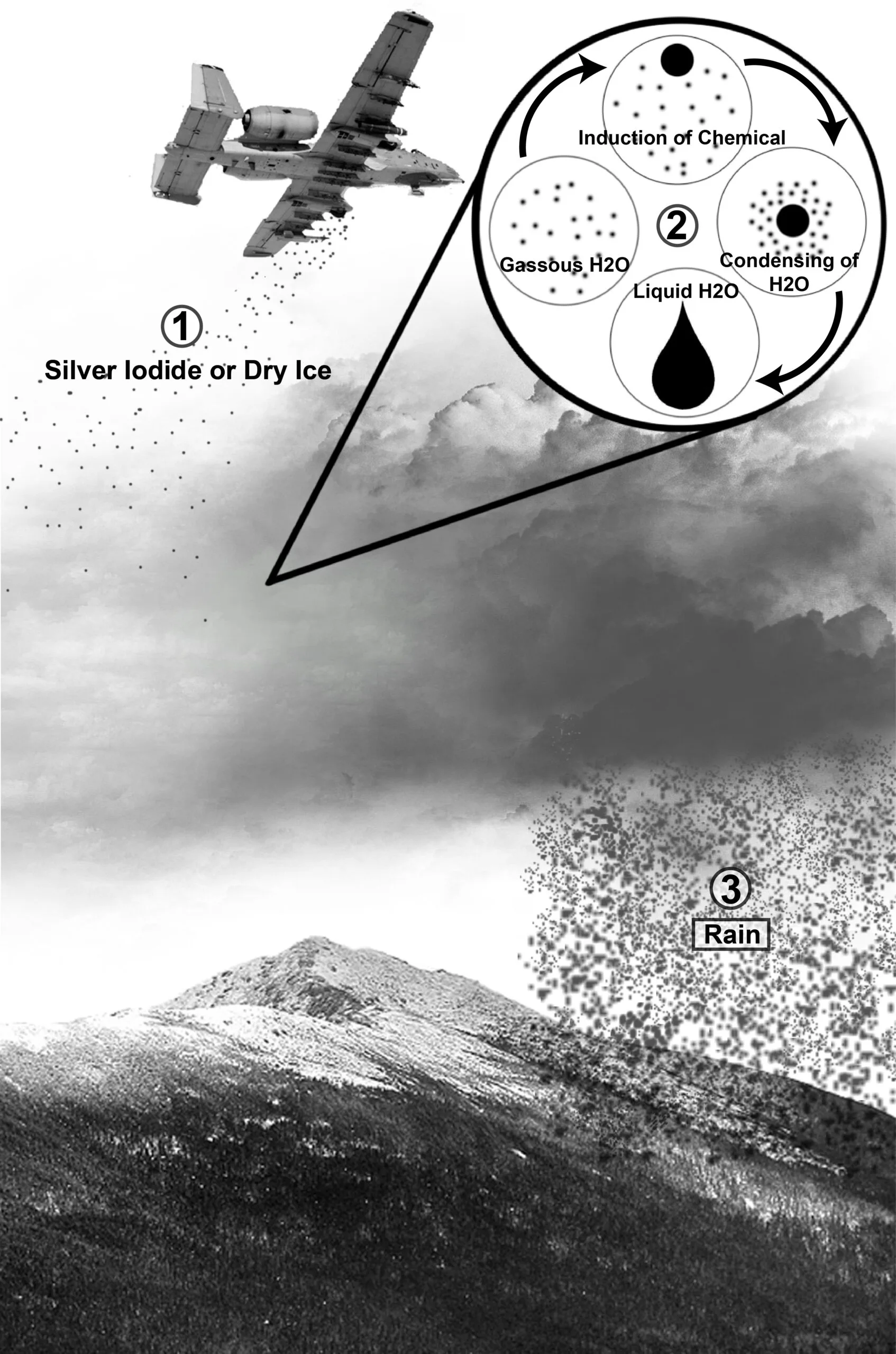
In this process, minute particles of silver iodide or potassium iodide are dispersed into the atmosphere. These particles serve as nuclei around which water vapor can condense, ultimately forming droplets that grow into raindrops.

Implementation of cloud seeding can be carried out using aircraft or helicopters to traverse clouds and disperse the chemicals. It is most effective when clouds are already present in the sky, but it can also contribute to cloud development.

Collaborating with experts from the Indian Institute of Technology (IIT) Kanpur, the Delhi government is in the process of formulating a plan for “artificial rain”. Pending approval, the utilization of cloud seeding in Delhi could commence as early as November 20-21, 2023.

Although the use of “artificial rain” to counter air pollution is a relatively novel and experimental technique, there is evidence indicating its efficacy in reducing particulate matter levels in the air. Notably, a cloud seeding operation in Beijing in 2018 successfully decreased PM2.5 levels by up to 20%.

Nevertheless, there are potential concerns associated with “artificial rain” usage. One worry is that it may disrupt the natural water cycle, potentially causing floods or droughts in other regions. Additionally, there are apprehensions about the environmental impact of the chemicals utilized in cloud seeding.

In summary, while the application of “artificial rain” to combat air pollution shows promise as a new technology, further research is imperative to comprehend its long-term effects.

Regarding the current status, the Delhi government has submitted a proposal to the Supreme Court of India, seeking permission to employ “artificial rain” in the fight against air pollution. The Supreme Court is scheduled to deliberate on the case on November 11, 2023.

Should the Supreme Court greenlight the proposal, the Delhi government plans to collaborate with IIT Kanpur to formulate a comprehensive plan for cloud seeding operations. This plan is anticipated to be finalized by the end of November, with cloud seeding potentially commencing as early as December 2023.


What is Artificial Rain


Artificial Rain in New Delhi

“Artificial rain”, also known as cloud seeding, is a fascinating technique that involves giving nature a little nudge to encourage rainfall when needed. This article explores the mechanics behind cloud seeding, its implementation, environmental implications, and its potential impact on various sectors.

The Mechanism Behind Cloud Seeding

Cloud seeding relies on the dispersal of tiny particles, such as silver iodide or potassium iodide, into the air. These particles serve as a starting point for water vapor to gather around, eventually forming droplets that grow into raindrops. This process is typically carried out by airplanes or helicopters flying through clouds, releasing these particles into the atmosphere.

Implementation of Cloud Seeding

Understanding the conditions for effective cloud seeding is crucial. This method works best when there are already clouds in the sky, but it can also contribute to the development of clouds. The choice of particles and the method of dispersal play a significant role in the success of the “artificial rain” process.

Addressing Environmental Issues

One of the most compelling aspects of cloud seeding is its potential to combat air pollution. In regions with severe air quality concerns, such as Delhi, authorities are contemplating the use of “artificial rain” to improve the situation. However, the concept is relatively new, and ongoing research is essential to ensure its safety and effectiveness.

Benefits and Controversies

The benefits of “artificial rain” extend beyond air quality improvement. It offers a potential solution to water scarcity and can positively impact agriculture. However, the controversial nature of manipulating weather patterns raises ethical concerns that must be carefully considered.

Global Initiatives and Projects

Around the world, several projects are actively implementing cloud seeding to address various challenges. Success stories and challenges faced by these initiatives provide valuable insights into the practical applications of “artificial rain”.

Impact on Agriculture

Cloud seeding has shown promising results in enhancing agricultural productivity. Case studies of regions benefiting from “artificial rain” in farming underscore its potential to revolutionize the agricultural sector.

Ethical Considerations

While cloud seeding presents numerous advantages, ethical considerations are paramount. The article delves into the ethical concerns related to manipulating weather patterns and the delicate balance between the benefits and potential drawbacks.

Future Prospects

Looking ahead, the article explores the future prospects of cloud seeding technology. It discusses potential advancements, applications, and the expanding role of “artificial rain” in addressing global water scarcity issues.

Costs for Artificial Rain


The expense associated with “artificial rain” varies based on factors such as the expanse of the targeted area, the equipment utilized, and the presence of clouds. Generally, inducing precipitation through cloud seeding proves to be a cost-effective method.

In Delhi, the approximate cost of cloud seeding is evaluated at ₹1 lakh per square kilometer. To illustrate, covering a region of 100 square kilometers would incur a total cost of ₹1 crore.

The Delhi government has expressed its commitment to covering the entire expenditure of “artificial rain”. Additionally, they have sought assistance from the central government for the successful implementation of this project.

A detailed breakdown of the projected costs for “artificial rain” in Delhi is as follows:

Equipment₹50 lakh
Chemicals₹25 lakh
Airplanes₹25 lakh
Total₹1 crore

Artificial Rain Methods


Artificial Rain in New Delhi

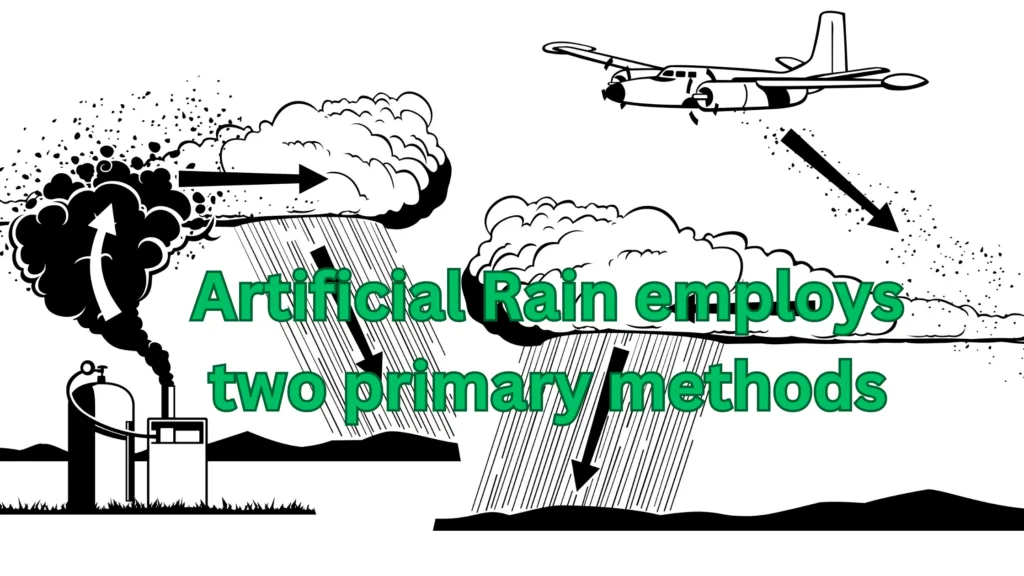
Artificial Rain employs two primary methods:

  1. Hygroscopic seeding
  2. Glaciogenic seeding.

Hygroscopic seeding targets warm clouds, dispersing hygroscopic salts like sodium chloride or potassium iodide. These salts attract water molecules, leading to the formation of larger droplets that eventually precipitate as rain.

Glaciogenic seeding, on the other hand, triggers precipitation in cold clouds by dispersing ice nuclei like silver iodide or dry ice. These nuclei serve as a foundation for ice crystals, which, as they grow, collide with water droplets, forming snowflakes that fall as snow or rain.

Various methods are employed to deliver “artificial rain” to clouds, including:

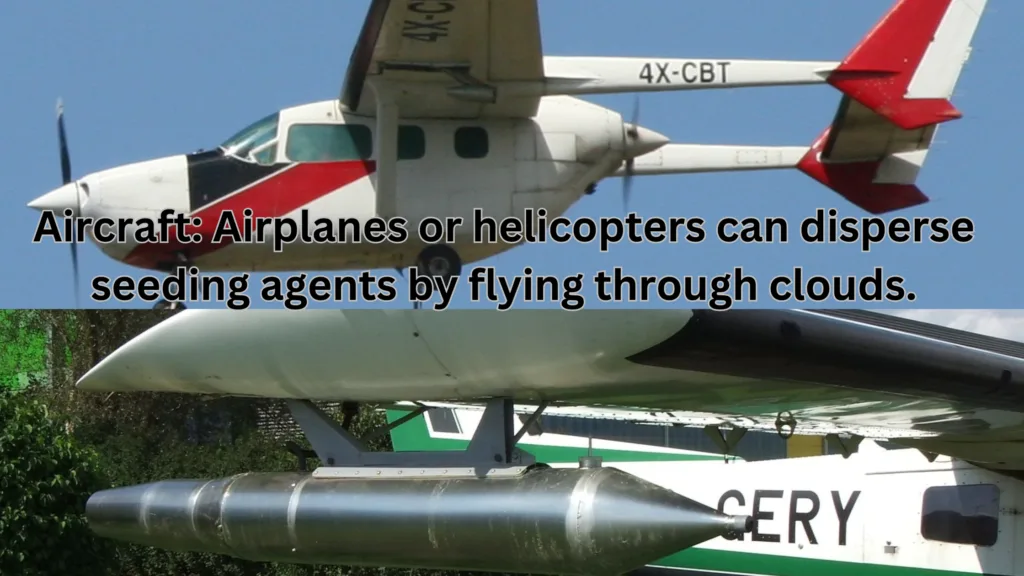
Aircraft: Airplanes or helicopters can disperse seeding agents by flying through clouds.
Ground-based generators: Devices on the ground release seeding agents into the air.
Rockets: Rockets are utilized to deliver seeding agents to high-altitude clouds.
The selection of a delivery method hinges on the cloud type and prevailing weather conditions.

The effectiveness of “artificial rain” remains a subject of debate. Some studies suggest cloud seeding can enhance precipitation by up to 20%, while others indicate minimal or no impact. Effectiveness is contingent on cloud type and weather conditions, with the process being most efficient when clouds are present, and the air is unstable.

Environmental concerns surround “artificial rain”, particularly regarding the potential negative impacts of the chemicals used in cloud seeding. For instance, silver iodide is recognized as a fish toxin. Another worry is the disruption of the natural water cycle; inducing precipitation in one area through cloud seeding could potentially reduce precipitation in other regions.


Benefits of Artificial Rains


“Artificial rain”, also known as cloud seeding, offers several potential benefits, such as:

Increased Precipitation: “Artificial rain” is a valuable tool for boosting precipitation in regions suffering from drought. This contributes to enhanced water availability for various purposes, including drinking, irrigation, and more.

Reduced Air Pollution: Cloud seeding can effectively reduce air pollution by washing pollutants out of the atmosphere. This process leads to improved air quality, lowering the risk of respiratory problems.

Enhanced Snowpack: In mountainous areas, “artificial rain” can be employed to enhance snowpack. This, in turn, improves water storage, particularly beneficial for the spring and summer months.

Reduced Flood Risk: By breaking up large raindrops and distributing precipitation over a wider area, “artificial rain” can help mitigate the risk of flooding.

Improved Crop Yields: During periods of drought, “artificial rain” proves valuable in improving crop yields by providing additional water.

Examples of how “artificial rain” has been utilized for the benefit of people and the environment include:

In 2008, cloud seeding successfully reduced air pollution in Beijing before the Olympic Games, resulting in a notable decrease in PM2.5 levels.

In 2018, cloud seeding was employed to increase precipitation in the drought-affected state of Maharashtra, India. This operation led to a 15-20% rise in precipitation, improving water availability for both drinking and irrigation.

In 2020, cloud seeding contributed to a 10-20% increase in snowpack in the Sierra Nevada mountains in California. This enhancement in snowpack positively impacted water storage for the upcoming spring and summer months.


Advantages of Artificial Rain


  1. Increased Precipitation in Drought-Stricken Areas: “artificial rain” helps address water scarcity by boosting precipitation in regions facing drought conditions.
  2. Reduced Air Pollution: Cloud seeding contributes to cleaner air by washing pollutants from the atmosphere, promoting improved respiratory health.
  3. Enhanced Snowpack: In mountainous areas, “artificial rain” enhances snowpack, crucial for water storage during spring and summer.
  4. Reduced Flood Risk: By breaking up raindrops and spreading precipitation, “artificial rain” aids in minimizing the risk of flooding.
  5. Improved Crop Yields: “artificial rain” provides essential water during drought periods, leading to improved agricultural productivity.
  6. Reduced Water Stress: The technology alleviates water stress by ensuring a more consistent and increased water supply.
  7. Improved Water Security: “artificial rain” contributes to enhanced water security, crucial for sustainable development and resilience.
  8. Increased Hydropower Generation: Adequate precipitation supports hydropower generation, promoting cleaner and more sustainable energy.
  9. Reduced Risk of Wildfires: “artificial rain” mitigates dry conditions, reducing the risk of wildfires in vulnerable areas.
  10. Improved Ecological Health: Adequate water supply positively impacts ecosystems, fostering improved ecological health.
  11. Increased Recreational Opportunities: Improved water resources create more opportunities for recreational activities, benefiting communities.


Disadvantages of Artificial Rain


Artificial Rain in New Delhi

  1. Potential Environmental Impacts: Concerns include water contamination, disruption of ecosystems, and alterations to weather patterns.
  2. High Costs: The implementation of “artificial rain” can be costly, posing financial challenges.
  3. Technical Challenges: The technology may face obstacles and complexities in its practical application.
  4. Ethical Concerns: Ethical issues revolve around potential abuse and the lack of international regulation, raising questions about responsible use.


Implementation of Artificial Rain by Countries


Artificial rain initiatives have been undertaken globally, including in:

  • Australia
  • China
  • India
  • Israel
  • Mexico
  • Morocco
  • Russia
  • Saudi Arabia
  • South Africa
  • Spain
  • Thailand
  • United Arab Emirates
  • United States

In the United States, cloud seeding has been employed for decades, notably by the Bureau of Reclamation to increase precipitation in drought-affected regions. China has utilized “artificial rain” to combat air pollution, launching a nationwide program in 2018. India has implemented cloud seeding programs to improve water availability in states like Maharashtra and Karnataka, addressing drought challenges. While artificial rain holds promise, careful consideration of its risks and benefits is essential before implementation.


FAQs


FAQs on “Artificial Rain in New Delhi”

Is there any “Artificial Rain in New Delhi”?
Answer: Not yet. As of November 10, 2023, the Delhi government has submitted a proposal to the Supreme Court of India seeking approval for using “artificial rain” to combat air pollution. The Supreme Court is expected to hear the case on November 11, 2023. If approved, the Delhi government plans to collaborate with IIT Kanpur to develop a comprehensive plan for cloud seeding operations, with implementation potentially starting as early as December 2023.

Why sudden Rain in New Delhi?
Answer: Sudden rain in New Delhi can be attributed to various factors, including Western disturbances originating in the Mediterranean Sea, Nor’westers bringing thunderstorms during the pre-monsoon season, the monsoon season from June to September, and the potential implementation of cloud seeding—a weather modification technique—in the future.

What is an example of artificial rain?
Answer: An example is the cloud seeding operation conducted in Beijing, China, before the 2008 Olympic Games, successfully reducing PM2.5 levels by up to 20%. Another example is the 2018 cloud seeding operation in Maharashtra, India, resulting in a 15-20% increase in precipitation, improving water availability for drinking and irrigation.

Is cloud seeding done in New Delhi? 
Answer: Currently, cloud seeding is not practiced in New Delhi. However, the Delhi government is exploring the possibility of using cloud seeding to address air pollution. Pending approval from the Supreme Court, cloud seeding operations could commence in Delhi as early as December 2023.

Is artificial rain possible in India?
Yes, “artificial rain”  possible in India In 2018, for example, a cloud seeding operation in Maharashtra, India was successful in increasing precipitation by up to 20%. The operation helped to improve water availability in drought-stricken areas and to reduce crop losses.

  1. Is cloud seeding safe for the environment?

Cloud seeding is currently under extensive research to determine its safety. Preliminary studies show promise, but ongoing evaluations are crucial.

  1. How does cloud seeding impact agriculture?

Cloud seeding has positive effects on agriculture by increasing precipitation, resulting in improved soil moisture for crops.

  1. What are the controversies surrounding “artificial rain” ?

The main controversies involve ethical concerns about manipulating natural weather patterns and the potential unforeseen consequences.

  1. Are there global projects successfully implementing cloud seeding?

Yes, several global initiatives have reported success in implementing cloud seeding to address specific challenges.

  1. What is the future of cloud seeding technology?

The future of cloud seeding looks promising, with potential advancements and expanded applications to address water scarcity on a global scale.


Read more Technical Blog Article

Filed Under: News Tagged With: Artificial Rain in New Delhi, science, technology

Chandrayaan: Unveiling India’s Lunar Mission

July 16, 2023 By kundan Leave a Comment

Unlocking the Mysteries of the Moon: Chandrayaan’s Incredible Discoveries


The Chandrayaan mission is an ambitious endeavor by the Indian Space Research Organisation (ISRO) to explore the Moon and advance India’s space exploration capabilities. This article provides an in-depth look at the various missions under the Lunar program, their objectives, achievements, and the impact on India’s space program.


Which Chandrayaan is successful? कौन सा चंद्रयान सफल है?

Chandrayaan

chandrayaan 2023

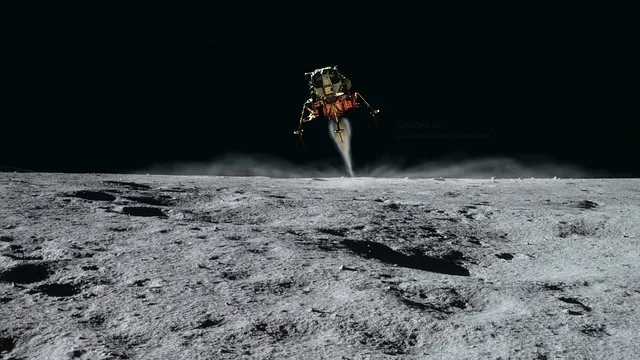
Chandrayaan-3 is the successful one. It is the third lunar exploration mission undertaken by the Indian Space Research Organisation (ISRO). The mission successfully soft-landed on the lunar surface on August 23, 2023, at 6:04 PM IST. It is the first country to land on the south pole of the Moon.

The previous Chandrayaan missions, Chandrayaan-1 and Chandrayaan-2, were also successful in their own way. Chandrayaan-1 orbited the Moon and made several important discoveries, including the presence of water ice on the lunar surface. Chandrayaan-2 was the first mission to attempt a soft landing on the Moon’s south pole, but it failed due to a technical glitch.

The success of Chandrayaan-3 is a major achievement for the ISRO and for India. It demonstrates the country’s growing capabilities in space exploration. The mission will help scientists to better understand the Moon’s geology and its potential for resources. It will also help to pave the way for future human missions to the Moon.

How many days Chandrayaan-3 will work?

Chandrayaan-3 is designed to work for 14 days, which is equivalent to one lunar day. This is because the Moon’s rotation period is 27.3 days, and the lander and rover will only be able to operate in the sunlight. After 14 days, the Moon will enter its night phase, and the lander and rover will become inactive.

However, the ISRO is hoping that the mission life of Chandrayaan-3 can be extended beyond 14 days. They are working on ways to improve the efficiency of the lander and rover, and they are also exploring the possibility of using solar panels to generate power during the night.

If the mission life of Chandrayaan-3 can be extended, it will be a major achievement for the ISRO. It will allow scientists to collect more data about the Moon, and it will also help to pave the way for future human missions to the Moon.

II. Historical Background

Chandrayaan: Unveiling India's Lunar Mission


Before delving into the specifics of the Lunar missions, it is important to understand the historical context of lunar exploration. Over the years, several nations have embarked on missions to the Moon, each contributing valuable knowledge and insights. India, too, has made significant strides in space exploration, setting the stage for its lunar missions.

Sure, here is a table of the differences between Chandrayaan-1, Chandrayaan-2, and Chandrayaan-3:

FeatureChandrayaan-1Chandrayaan-2Chandrayaan-3
Launch date22 October 200822 July 201914 July 2022
Launch vehiclePSLV-C11GSLV Mk-III M1LVM-3
Mass1,380 kg3,850 kg3,850 kg
OrbitLunar orbitLunar orbitLunar orbit
ComponentsOrbiter, Moon Impact Probe, Moon Mineralogy MapperOrbiter, Vikram lander, Pragyan roverOrbiter, Vikram lander
Landing statusSuccessfulFailedTBD
Main objectivesExplore the lunar surface, search for water ice, study the lunar atmosphereSoft-land on the Moon, deploy a rover, study the lunar surface and subsurfaceSoft-land on the Moon, conduct scientific experiments
Notes:
  • Chandrayaan-1 was the first Indian lunar mission.
  • Chandrayaan-2 was the first Indian mission to attempt a soft-landing on the Moon.
  • Chandrayaan-3 is the third Indian lunar mission and is designed to soft-land on the Moon and conduct scientific experiments.

III. Chandrayaan-1: The Maiden Mission

Chandrayaan-1 marked India’s first lunar mission and laid the foundation for subsequent endeavors. Launched in 2008, the mission aimed to study the Moon’s surface, mineral composition, and lunar atmosphere. Chandrayaan-1 carried a suite of scientific instruments and payloads, including a Moon Impact Probe (MIP) and a Moon Mineralogy Mapper (M3).

The mission achieved remarkable milestones, such as the discovery of water molecules on the lunar surface and mapping the distribution of various elements. These findings significantly contributed to our understanding of the Moon’s origin and evolution.

IV. Chandrayaan-2: India’s Ambitious Venture

Building upon the success of Chandrayaan-1, India embarked on an even more ambitious lunar mission with Chandrayaan-2. This mission consisted of an orbiter, a lander named Vikram, and a lunar rover called Pragyan. Chandrayaan-2 aimed to explore the Moon’s south polar region, which remained largely unexplored.

The Chandrayaan-2 mission was launched on July 22, 2019

A. Lunar Rover: Pragyan

Pragyan, the lunar rover aboard Chandrayaan-2, played a crucial role in conducting on-site experiments and collecting valuable data. It was designed to traverse the lunar surface, analyze soil samples, and send the findings back to Earth. Pragyan’s successful deployment would have made India the fourth country to land a rover on the Moon.

B. Lander: Vikram

Vikram, the lander module of Chandrayaan-2, was responsible for carrying Pragyan to the lunar surface. It housed various instruments and payloads to study the lunar environment and conduct experiments. Vikram aimed to land softly on the Moon, demonstrating India’s capability to achieve a controlled landing.

C. Orbiter: Chandrayaan-2

The orbiter module served as the communication link between Earth and the lander-rover duo. It facilitated the transmission of scientific data, images, and videos back to the ISRO ground station. The orbiter also carried its suite of scientific instruments to study the Moon’s atmosphere and provide valuable insights.

V. Challenges and Technical Aspects

Lunar missions faced several engineering and technical challenges. Landing on the lunar surface is a complex task, requiring precise navigation and control. The Chandrayaan-2 mission encountered difficulties during the descent phase, resulting in the loss of communication with the lander Vikram. Despite this setback, ISRO’s efforts demonstrated significant progress and showcased India’s capabilities in space exploration.

VI. Chandrayaan-3: India’s Future Lunar Endeavor- Recently launched


Chandrayaan: Unveiling India's Lunar Mission

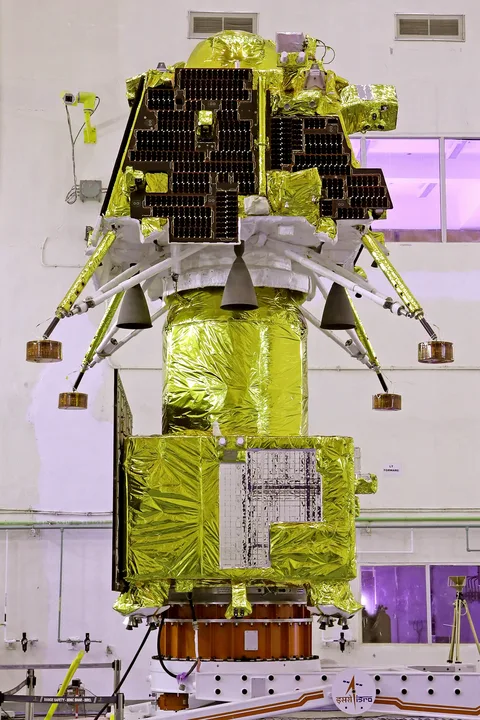
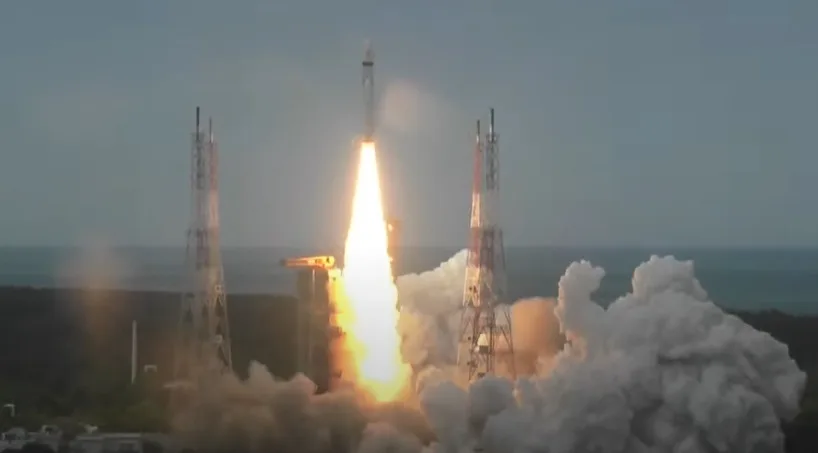
Chandrayaan 3, undertaken by the Indian Space Research Organization (ISRO), represents a pioneering lunar expedition. Its launch occurred on the momentous day of July 14, 2023, with an eagerly awaited touchdown anticipated on the Moon’s surface by August 23, 2023. The mission’s primary aim is to achieve a gentle descent and successful landing of both a lander and rover at the Moon’s southern pole. Loaded aboard the lander are an array of sophisticated scientific instruments, including an Alpha Particle X-ray Spectrometer (APXS), a Laser Induced Breakdown Spectroscope (LIBS), and a Terrain Mapping Camera (TMC). As for the rover, its payload comprises a Magnetometer, Methane Sensor, and Thermal Conductivity Probe, facilitating comprehensive exploration and data collection.

Chandrayaan-3 represents India’s ongoing commitment to lunar exploration. The mission aims to build upon the lessons learned from Chandrayaan-2 and overcome the technical challenges faced. With improved design and enhanced capabilities, Chandrayaan-3 endeavors to achieve a successful soft landing on the lunar surface and continue India’s exploration of the Moon.

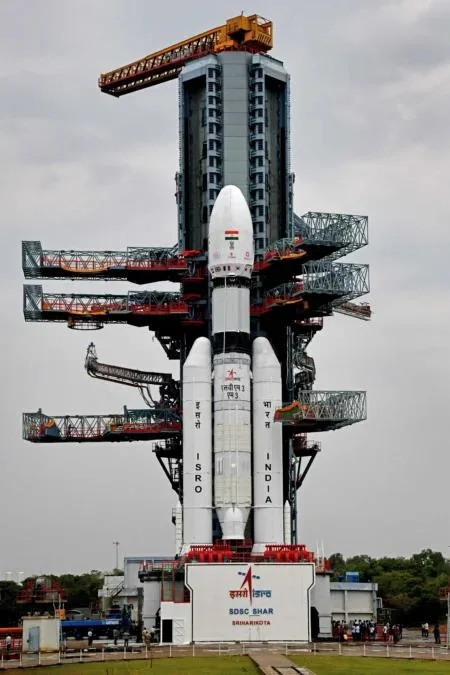
Chandrayaan 3, the upcoming lunar mission by the Indian Space Research Organization (ISRO), will be propelled into space using the Launch Vehicle Mark-III (LVM3), also known as the Geosynchronous Satellite Launch Vehicle Mark-III (GSLV Mk-III). This cutting-edge launch vehicle is characterized by its three-stage heavy-lift design, developed specifically to meet the demands of challenging space missions.

The LVM3 boasts impressive capabilities, allowing it to transport payloads of up to 4,000 kilograms to low Earth orbit (LEO) and 10,000 kilograms to geosynchronous transfer orbit (GTO). Its successful maiden launch took place in December 2014, and it has since been employed in three other missions, including the highly acclaimed Chandrayaan 2 endeavor. This track record speaks volumes about the reliability and power of the LVM3, making it the ideal choice for the upcoming Chandrayaan 3 mission.

Here are some noteworthy features of the LVM3:

Chandrayaan: Unveiling India's Lunar Mission

  1. Three-stage Configuration: The LVM3 incorporates a three-stage design. Its initial stage is equipped with solid rocket boosters (SRBs), followed by a liquid fuel core stage in the second stage, and finally, a cryogenic upper stage in the third stage. This arrangement ensures optimal performance throughout the journey to space.
  2. Impressive Lift Capacity: With its remarkable lifting capability, the LVM3 can carry payloads of up to 4,000 kilograms to LEO and 10,000 kilograms to GTO. Such significant capacity enables the launch of substantial payloads, paving the way for ambitious space exploration missions.
  3. Reliability and Power: The LVM3 has earned a reputation for being a reliable and powerful launch vehicle. It has maintained a flawless success rate of 100%, instilling confidence in ISRO’s ability to deliver payloads to space with precision and efficiency.

As a cornerstone of India’s space program, the LVM3 is poised to play a pivotal role in future lunar missions and endeavors beyond the Moon. Its exceptional capabilities and proven track record make it an invaluable asset in expanding our understanding of the cosmos and pushing the boundaries of space exploration.

VII. Scientific Discoveries and Contributions


Chandrayaan: Unveiling India's Lunar Mission

Lunar missions have yielded crucial scientific findings and contributed to our understanding of the Moon. It discovery of water molecules on the lunar surface challenged existing theories about the Moon’s composition. These findings opened avenues for further research on the presence of water and its potential for supporting future human missions.

Chandrayaan-2’s extensive mapping and analysis of the lunar surface revealed valuable insights into the Moon’s geology, topography, and mineral distribution. This information enhances our knowledge of the Moon’s evolution and provides a basis for future exploratory missions.

VIII. International Collaborations and Partnerships

India’s Lunar missions have fostered collaborations and partnerships with other space agencies. The ISRO has actively engaged in sharing data, resources, and technical expertise with international counterparts. Collaborations contribute to a more comprehensive understanding of the Moon and promote global cooperation in space exploration.

IX. Impact on India’s Space Program

These missions have had a profound impact on India’s space program. These endeavors have not only advanced India’s technological capabilities but have also inspired and motivated the younger generation to pursue careers in science, technology, engineering, and mathematics (STEM). Chandrayaan has become a symbol of India’s scientific prowess and its commitment to pushing boundaries in space exploration.

X. Future of Lunar Exploration

India envisions a future with continued lunar exploration and collaboration with other nations. The ISRO plans to undertake more ambitious missions to study the Moon’s south polar region and establish a sustainable human presence in space. India’s commitment to lunar exploration aligns with the global vision of further unlocking the mysteries of the Moon and preparing for future human missions.

Frequently Asked Questions (FAQs) on Chandrayaan


What is Lunar Mission and its significance?

Lunar Mission is India’s lunar exploration program. It consists of a series of missions aimed at studying the Moon and its various aspects, including its surface, atmosphere, and potential resources. The significance of Chandrayaan lies in its contribution to scientific knowledge, technological advancements, and enhancing India’s standing in the field of space exploration.

What were the objectives of Lunar Mission-1 and Lunar Mission-2?

The primary objective of Lunar Mission-1 was to create a detailed map of the Moon’s surface, study its mineral composition, and search for water ice in the permanently shadowed regions. Lunar Mission-2 aimed to further our understanding by attempting a soft landing on the lunar surface, deploying a rover, and conducting in-situ experiments.

How many missions has India conducted to the Moon?

India has conducted three missions to the Moon as part of the Lunar Mission. These missions include Lunar Mission-1, Lunar Mission-2, and the upcoming Lunar Mission-3.

What were the key findings and discoveries from Lunar Mission?

Lunar Mission have yielded significant findings. Chandrayaan-1 discovered water molecules on the lunar surface, confirmed the presence of hydroxyl and magnesium, and provided insights into the Moon’s geology. Lunar Mission-2, despite the lander not reaching its intended destination, still contributed valuable data on the lunar surface, including new insights on water molecules and the presence of noble gases.

What are the differences between Chandrayaan-1 and Chandrayaan-2?

Lunar Mission-1 was an orbiter mission that focused on remote sensing and mapping the lunar surface, while Lunar Mission-2 was an advanced mission consisting of an orbiter, a lander called Vikram, and a lunar rover named Pragyan. Lunar Mission-2 aimed to achieve a soft landing on the lunar surface and perform in-situ experiments.

What is the role of the lunar rover Pragyan?

The lunar rover Pragyan, carried by Lunar Mission-2, was designed to traverse the lunar surface, analyze the soil composition, and conduct experiments to provide valuable data about the Moon’s surface and environment. It was equipped with instruments to measure elemental composition and study the lunar regolith.

What are the functions of the lander module Vikram?

Vikram, the lander module of Chandrayaan-2, was designed to perform a soft landing on the lunar surface and act as a platform for deploying the rover Pragyan. Its primary functions included conducting experiments, studying the lunar atmosphere, and transmitting data back to Earth.

How does the orbiter module contribute to the mission?

The orbiter module plays a crucial role in both Chandrayaan-1 and Chandrayaan-2 missions. It remains in lunar orbit, collecting high-resolution images, mapping the lunar surface, analyzing mineral composition, and studying the Moon’s exosphere. The orbiter also serves as a communication link between the lunar mission and Earth.

What were the technical challenges faced during the missions?

The Lunar Mission faced several technical challenges, including complex navigation and trajectory calculations, ensuring a safe landing on the lunar surface, and managing communication between the spacecraft and Earth. Chandrayaan-2 specifically faced challenges during the descent phase, resulting in the loss of communication with the lander.

What advancements were made in India’s space program as a result of Lunar Mission?

Lunar Mission played a crucial role in advancing India’s space program. It led to advancements in spacecraft technology, including navigation systems, remote sensing instruments, and lunar lander technology. The missions also contributed to the development of expertise in mission planning, data analysis, and international collaborations.

How did Lunar Mission contribute to scientific understanding?

Lunar Mission significantly contributed to our scientific understanding of the Moon. They provided insights into the Moon’s geology, mineral composition, the presence of water ice, and the lunar exosphere. The missions also expanded our knowledge of the Moon’s surface features and potential resources, paving the way for future lunar exploration and research.

Which other countries collaborated with India on the lunar missions?

India collaborated with various countries on the Lunar Mission. These collaborations included partnerships with space agencies from the United States, European Union member states, Russia, and other countries. For instance, NASA provided support and instrumentation for Chandrayaan-1.

What is the impact of Lunar Mission on India’s space program?

Lunar Mission has had a significant impact on India’s space program. It has boosted the nation’s capabilities in space exploration, technology development, and scientific research. The success of the missions has also enhanced international collaborations and strengthened India’s position as a space-faring nation.

How does Lunar Mission inspire the younger generation?

Lunar Mission inspires the younger generation by showcasing India’s achievements in space exploration and igniting their interest in science and technology. The missions serve as a source of motivation, encouraging students to pursue careers in STEM fields and fostering a passion for space research and innovation.

What are India’s future plans for lunar exploration?

India has plans for future lunar exploration. The upcoming Chandrayaan-3 mission aims to land on the lunar surface and conduct in-situ experiments. Additionally, India has expressed interest in collaborating with other nations for lunar missions and is actively pursuing the development of advanced space technologies to support future lunar exploration endeavors.


Filed Under: Tech Blogs Tagged With: Chandrayaan 3, India, lunar mission, scientific advancements, space exploration, technology

Footer

Categories

Founder of ohmsite

kundan MIT

About us

Copyright © 2020 ohmsite.com