The Theory of Plate Tectonics: Earth’s Unseen Engine.
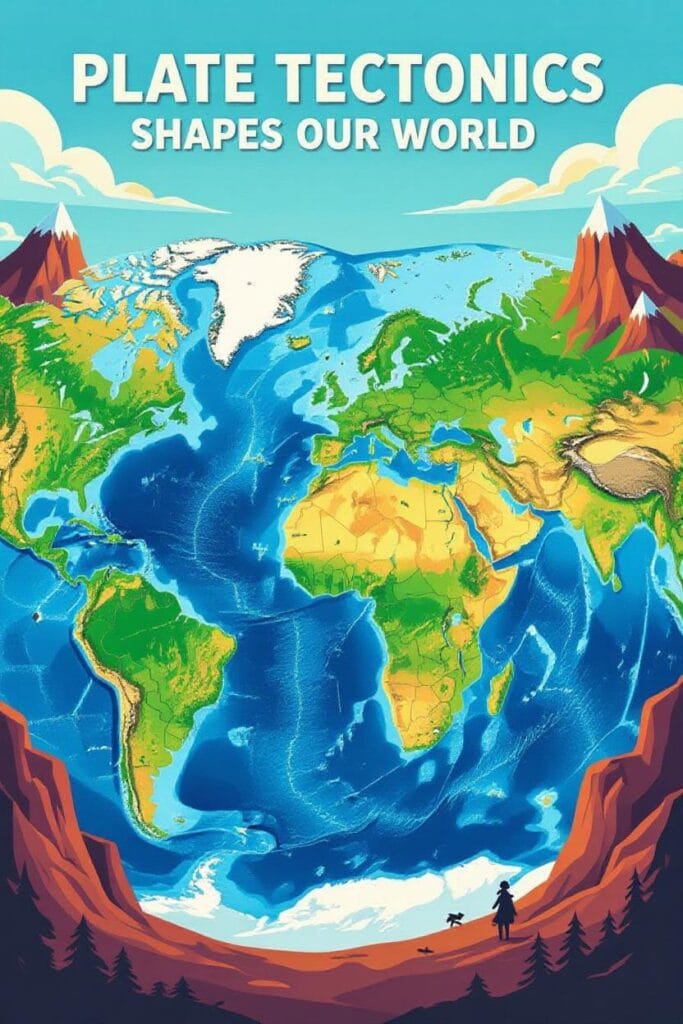
Look at a map of the world. Have you ever noticed how the coastlines of South America and Africa look like they could fit together, like pieces of a giant jigsaw puzzle? This isn’t a coincidence. It’s the most visible clue to one of the most powerful and fundamental forces shaping our planet: Plate Tectonics.
For centuries, this was just a curious observation. Today, we know it’s the key to understanding nearly everything about Earth’s geography, from the highest mountains to the deepest ocean trenches, and even why we have earthquakes and volcanoes.
So, what exactly is this grand, geological dance?
The Basics: Earth’s Skin is Cracking
Imagine the Earth is a hard-boiled egg. The shell isn’t one solid piece; it’s cracked into several fragments. The Earth’s outer layer, the lithosphere, is the same. It’s broken into massive, irregularly shaped slabs of rock called tectonic plates. These plates are not stationary; they are constantly moving, floating on the hot, semi-fluid layer of the mantle beneath them.
This movement is slow—about the same speed your fingernails grow—but over millions of years, it has completely reshaped the face of our planet.
The Three Main Moves: Boundaries
The real action happens where these plates meet. These borders, called plate boundaries, are the epicenters of Earth’s most dramatic geological events. There are three main types of interactions:
1. Divergent Boundaries: The Creators
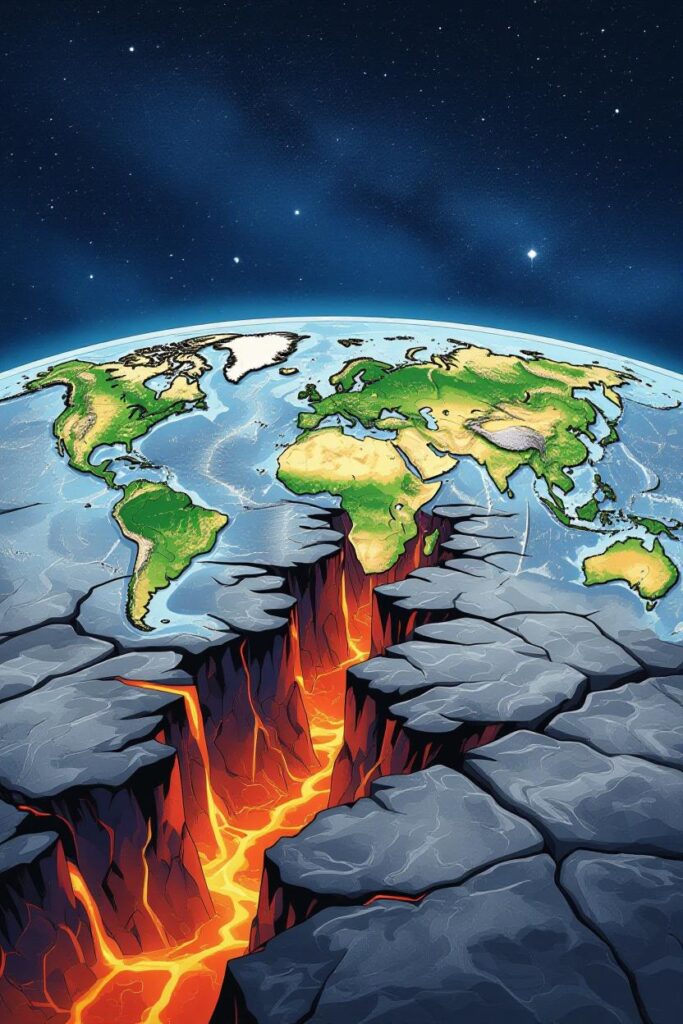
What happens: Two plates pull away from each other.
The Result: As they separate, magma from the mantle rises to fill the gap, creating new crust. This mostly happens under the oceans at mid-ocean ridges, forming vast underwater mountain ranges. On land, this process can create massive rift valleys, like the East African Rift.
Think of it as: The Earth’s crust being stretched thin, like pulling apart a piece of warm toffee.
2. Convergent Boundaries: The Destroyers (and Builders)
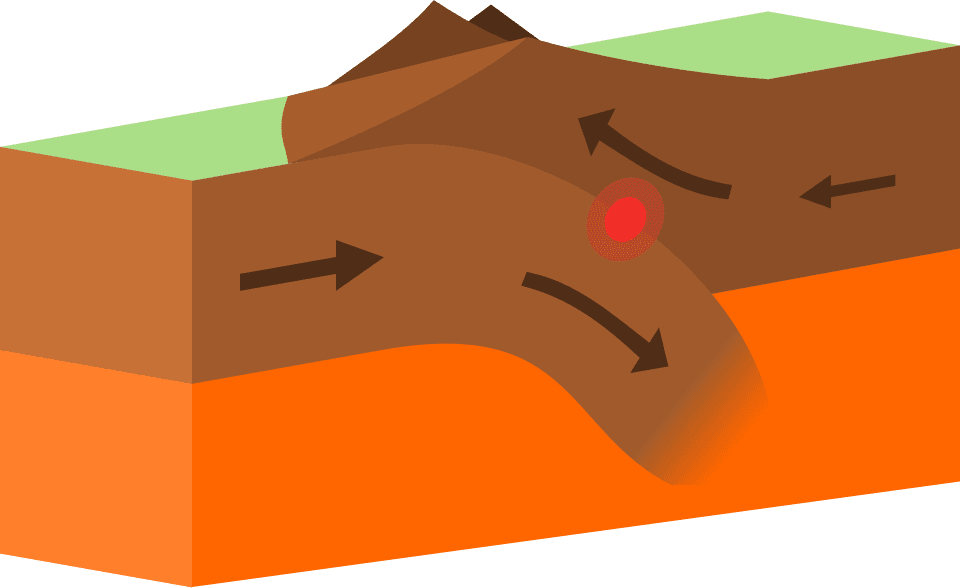
What happens: Two plates collide. This is where things get explosive, and the outcome depends on the type of crust involved.
Oceanic vs. Continental: The denser oceanic plate slides beneath the continental plate in a process called subduction. This creates a deep ocean trench and forces molten rock upward, fueling massive chains of volcanoes on the continent, like the Andes or the Cascades.
Continental vs. Continental: Neither plate wants to sink, so they crumple and fold, pushing Earth’s crust upward to form towering mountain ranges. The Himalayas, home to Mount Everest, are the spectacular result of the Indian plate smashing into the Eurasian plate.
Think of it as: A slow-motion car crash on a planetary scale.
3. Transform Boundaries: The Grinders
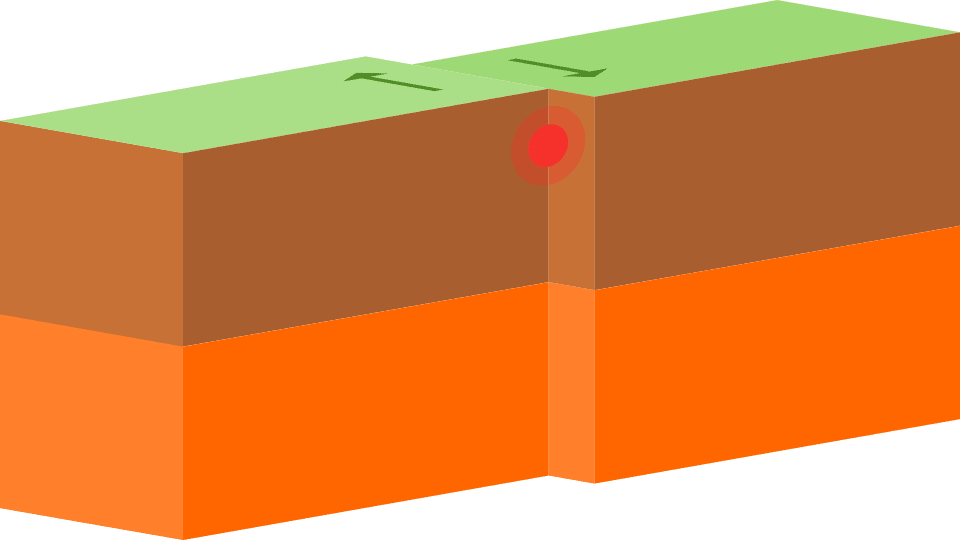
What happens: Two plates slide past one another horizontally.
The Result: They don’t slide smoothly. The plates get stuck, build up immense pressure, and then suddenly lurch forward, releasing energy as an earthquake. The most famous example is the San Andreas Fault in California, where the Pacific Plate is grinding past the North American Plate.
Think of it as: Rubbing two rough blocks of wood together—they stick, slip, and stick again.
Why Should You Care? The Power of a Unified Theory
Before the theory of plate tectonics was widely accepted in the 1960s, geologists struggled to explain how the same fossil could be found on continents separated by vast oceans. Plate tectonics provided the missing link. It’s the grand unifying theory of geology that explains:
The Distribution of Earthquakes and Volcanoes: Plot them on a map, and they will almost perfectly outline the plate boundaries. This knowledge is crucial for hazard preparedness and saving lives.
The Formation of Mountains and Oceans: It answers the “how” behind the world’s most iconic landscapes.
The Recycling of Earth’s Crust: The planet is in a constant state of renewal. New crust is created at divergent boundaries, while old crust is destroyed at convergent ones. This cycle is essential for regulating Earth’s climate and chemistry over geological time.
The History of Life: By moving continents, plate tectonics has changed ocean currents and global climate, creating and destroying habitats and driving the evolution of life. It’s the reason Australia has such unique wildlife!
A Planet in Motion
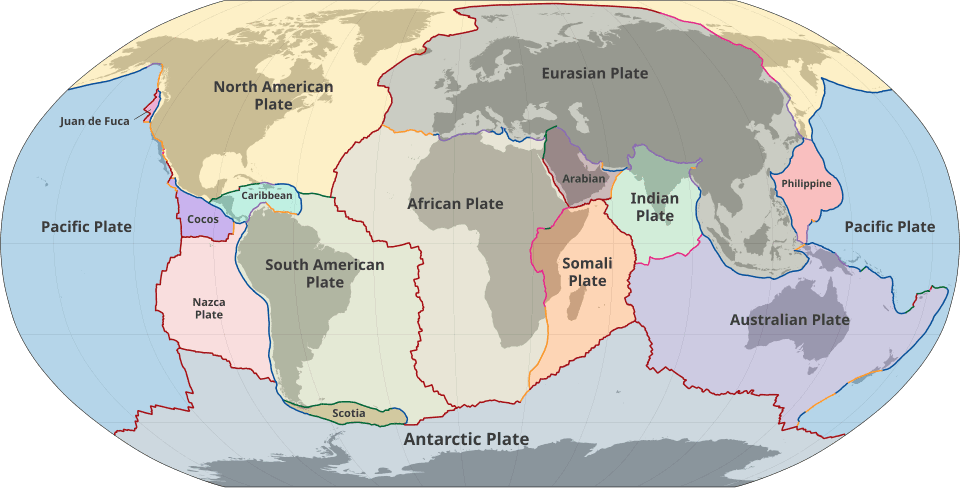
The ground beneath our feet feels solid and permanent. But plate tectonics reveals a different truth: we are living on a dynamic, ever-changing planet. The Atlantic Ocean is still widening, the Himalayas are still rising, and California will one day (in millions of years) be a suburb of Alaska.
It’s a humbling and powerful reminder that our world is alive with geological forces that operate on a timescale far beyond our own. The next time you feel an earthquake, see a volcanic eruption on the news, or simply look at a world map, remember the incredible, unseen engine driving it all.
FAQs on Plate Tectonics
1. What is the “engine” that drives plate tectonics?
The primary driving force is the heat from Earth’s interior. The mantle, though mostly solid, can flow very slowly over geological time due to this heat, creating convection currents. These currents act like a conveyor belt, dragging the tectonic plates along. The weight of a subducting (sinking) plate also helps pull the rest of the plate behind it.
2. How many tectonic plates are there?
There are seven or eight major plates (e.g., Pacific, North American, African, Eurasian) and many more minor microplates (e.g., Juan de Fuca, Cocos, Caribbean). The exact number can vary slightly depending on how scientists define the boundaries of smaller plates.
3. Can plate tectonics cause tsunamis?
Yes, absolutely. The most powerful tsunamis are generated by large earthquakes at subduction zones, where one plate lurches underneath another, violently displacing a massive amount of water.
4. Was there life on Earth before plate tectonics started?
This is a topic of active research. Plate tectonics as we know it likely began around 3 billion years ago. Life existed before that, but it was mostly microscopic and in the oceans. The start of plate tectonics was crucial for creating diverse environments and regulating the climate, which may have paved the way for more complex life.
5. Do the other planets in our solar system have plate tectonics?
As far as we know, Earth is the only planet with active plate tectonics. Venus shows some evidence of past tectonic activity, but it seems to have stalled. Mars has a static, single-plate crust. This uniqueness is a key reason why Earth is so geologically active and habitable.
6. Will the continents ever collide again?
Yes! Based on the current direction of plate movements, scientists project that in about 250 million years, the continents will merge again to form a new supercontinent, sometimes called Pangaea Proxima or Neopangaea.
MCQs on Plate Tectonics
1. The theory that describes the large-scale motion of Earth’s lithosphere is called:
a) Continental Drift
b) Seafloor Spreading
c) Plate Tectonics
d) Mantle Convection
Answer: c) Plate Tectonics
Explanation: While Continental Drift was the precursor idea, Plate Tectonics is the comprehensive modern theory that includes seafloor spreading and mantle convection as key mechanisms.
2. Which of the following is a result of two continental plates colliding at a convergent boundary?
a) A mid-ocean ridge
b) A deep ocean trench
c) A volcanic island arc
d) A massive mountain range
Answer: d) A massive mountain range
Explanation: When two buoyant continental plates collide, neither can sink easily. Instead, they crumple and fold, pushing up the crust to form vast mountain ranges like the Himalayas.
3. The San Andreas Fault in California is a famous example of what type of plate boundary?
a) Divergent
b) Convergent
c) Transform
d) Subductive
Answer: c) Transform
Explanation: The San Andreas Fault is where the Pacific Plate and the North American Plate slide horizontally past each other, making it a classic transform boundary.
4. New oceanic crust is primarily formed at which geological feature?
a) Subduction zones
b) The Mariana Trench
c) Mid-ocean ridges
d) The Himalayas
Answer: c) Mid-ocean ridges
Explanation: At divergent boundaries like mid-ocean ridges, plates pull apart, allowing magma from the mantle to rise, cool, and form new oceanic crust.
5. What process occurs when one tectonic plate is forced underneath another?
a) Transformation
b) Divergence
c) Subduction
d) Convection
Answer: c) Subduction
Explanation: Subduction is the specific term for the process where a denser oceanic plate sinks beneath a less dense continental or oceanic plate at a convergent boundary.
6. The early 20th-century hypothesis that continents move apart was initially supported by the observation that:
a) Earthquakes are common along coastlines.
b) The continents look like they fit together like a puzzle.
c) Volcanoes are found in a “Ring of Fire.”
d) Fossils of the same species are found on different continents.
Answer: b) The continents look like they fit together like a puzzle.
Explanation: The jigsaw-fit of the continents, especially the coastlines of South America and Africa, was the most obvious initial evidence for Alfred Wegener’s Continental Drift hypothesis.
7. What is the name of the rigid, outer layer of the Earth that is broken into tectonic plates?
a) The Mantle
b) The Asthenosphere
c) The Lithosphere
d) The Core
Answer: c) The Lithosphere
Explanation: The lithosphere is the Earth’s cool, rigid outer shell, which includes the crust and the uppermost part of the mantle. It is broken into the tectonic plates.

Leave a Reply