• Skip to primary navigation
  • Skip to main content
  • Skip to footer

OHMSITE

News Blogs

  • Home
  • Tech Blogs
  • Non-Tech Blogs
  • Finance
  • About us
    • Privacy Policy
    • Contact us
    • Terms & Conditions
    • Disclaimer
      • Login
        • login page

official

SMART GRID TECHNOLOGY
April 30, 2026 By kundan Leave a Comment

SMART GRID TECHNOLOGY 

Smart Grid Technology: Future Intellengent of Energy/ohmsite


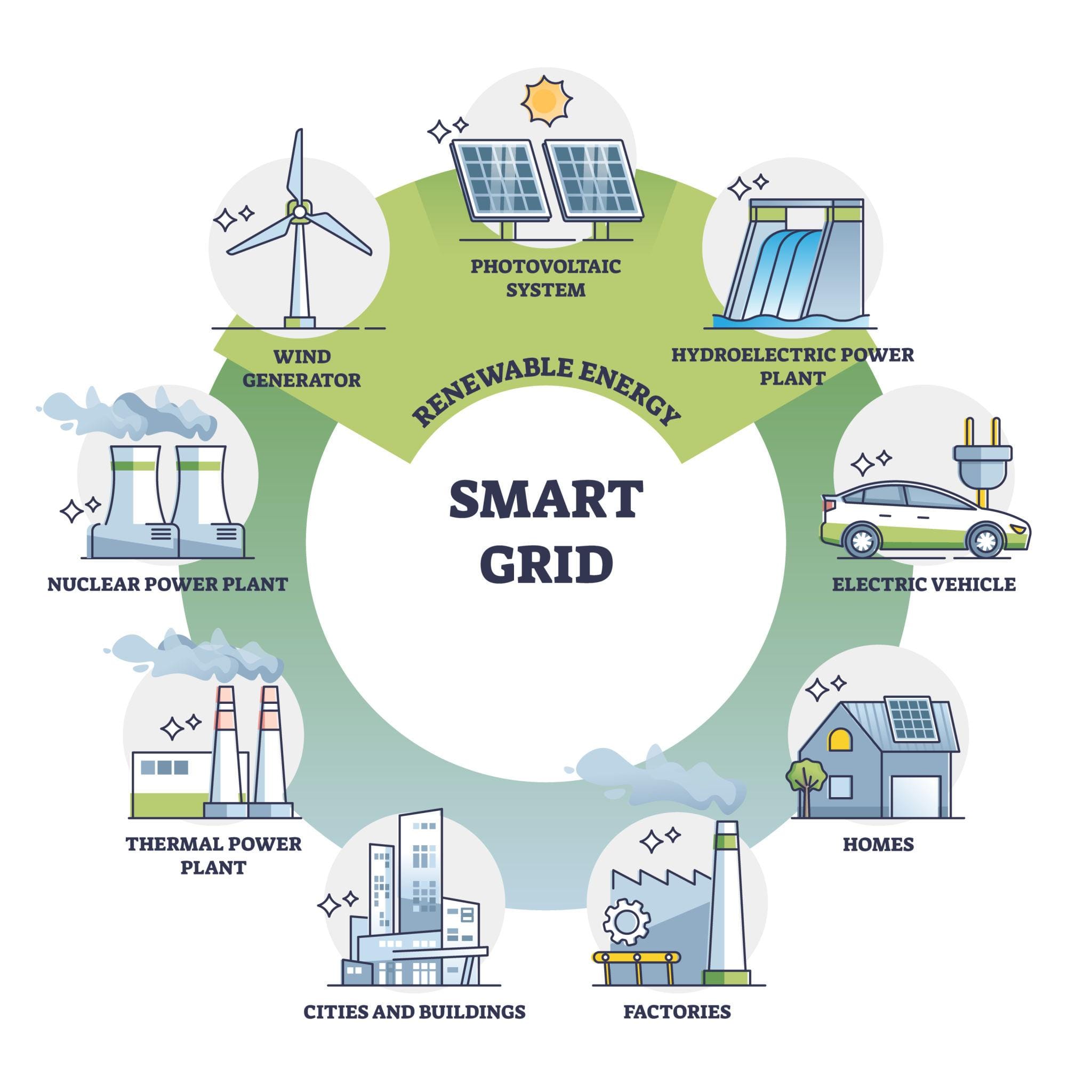
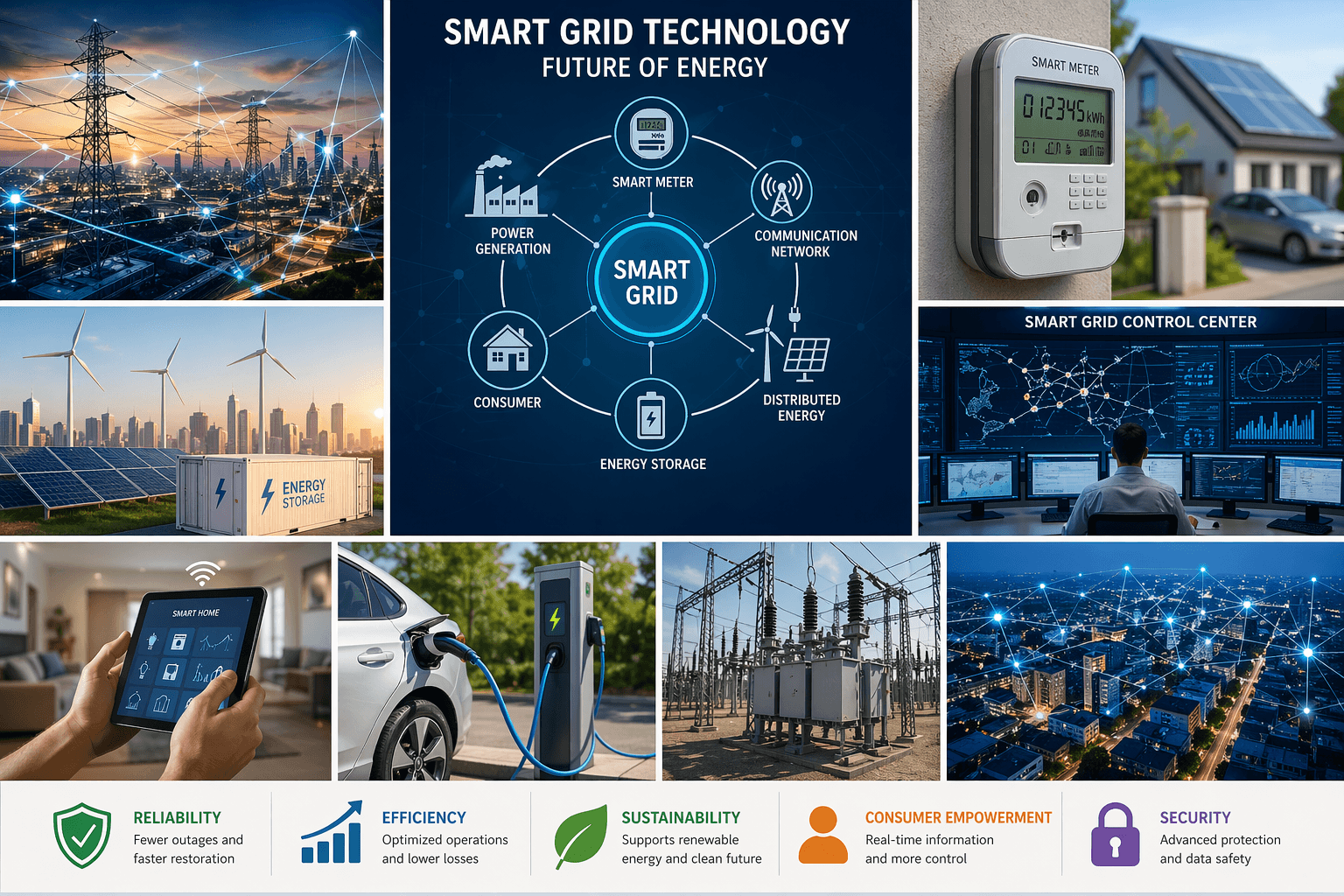
A Smart Grid is an advanced electricity network that uses digital communication, automation, sensors, and control systems to monitor and manage the generation, transmission, distribution, and consumption of electricity efficiently. It supports two-way flow of electricity and information.

It improves:

  • Reliability
  • Efficiency
  • Power quality
  • Renewable energy integration
  • Consumer participation

It helps in efficient management of electricity from generation to consumption.


How Smart Grid Works 
Smart Grid Technology: Future Intellengent of Energy/ohmsite

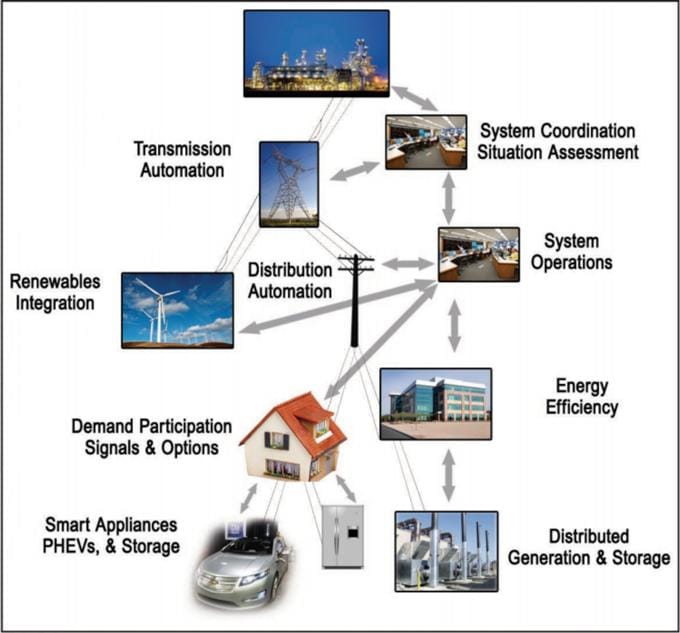
A Smart Grid works by combining electric power flow + real-time data + automated control to balance generation and demand efficiently.


1. Power Generation

Electricity is generated from:

  • Conventional sources (coal, hydro, petroleum)
  • Renewable sources (solar, wind, Tidal, Biogas, Geothermal)

These sources are connected to the grid and supply power continuously.


2. Data Collection (Sensing Layer)

  • Smart meters and sensors (PMUs) collect real-time data:
    • Voltage
    • Current
    • Frequency
    • Power consumption

This data is collected from generation, transmission, and consumer sides.


3. Communication System

  • Data is sent through communication networks (Wi-Fi, fiber optics, GSM, IoT)
  • Enables two-way communication:
    • Utility → Consumer
    • Consumer → Utility

4. Data Processing & Control

  • Control centers analyze data using:
    • AI algorithms
    • SCADA systems
    • Energy Management Systems (EMS)
  • Based on analysis, the system:
    • Adjusts power generation
    • Controls load demand
    • Detects faults

5. Power Distribution

  • Electricity is distributed to consumers based on demand
  • Voltage and frequency are automatically maintained

6. Demand Response

  • Smart Grid manages load by:
    • Shifting non-essential loads
    • Reducing peak demand
    • Sending price signals to users

7. Integration of Renewable Energy

  • Solar and wind are variable sources
  • Smart Grid balances them using:
    • Energy storage (batteries)
    • Backup generation
    • Load adjustment

8. Real-Time Power Balance

Pgeneration​=Pload​+Ploss​

The Smart Grid continuously maintains this balance automatically.


9. Fault Detection & Self-Healing

  • Sensors detect faults instantly
  • The system isolates the faulty section
  • Power is restored quickly

10. Consumer Interaction

  • Consumers can:
    • Monitor energy usage
    • Use smart appliances
    • Sell excess solar energy (net metering)

Working Flow 

Generation → Sensors → Communication → Control Center → Decision → Distribution → Consumer → Feedback → Repeat

👉 This creates a self-healing system


Components of Smart Grid
 

Smart Grid Technology: Future Intellengent of Energy/ohmsite

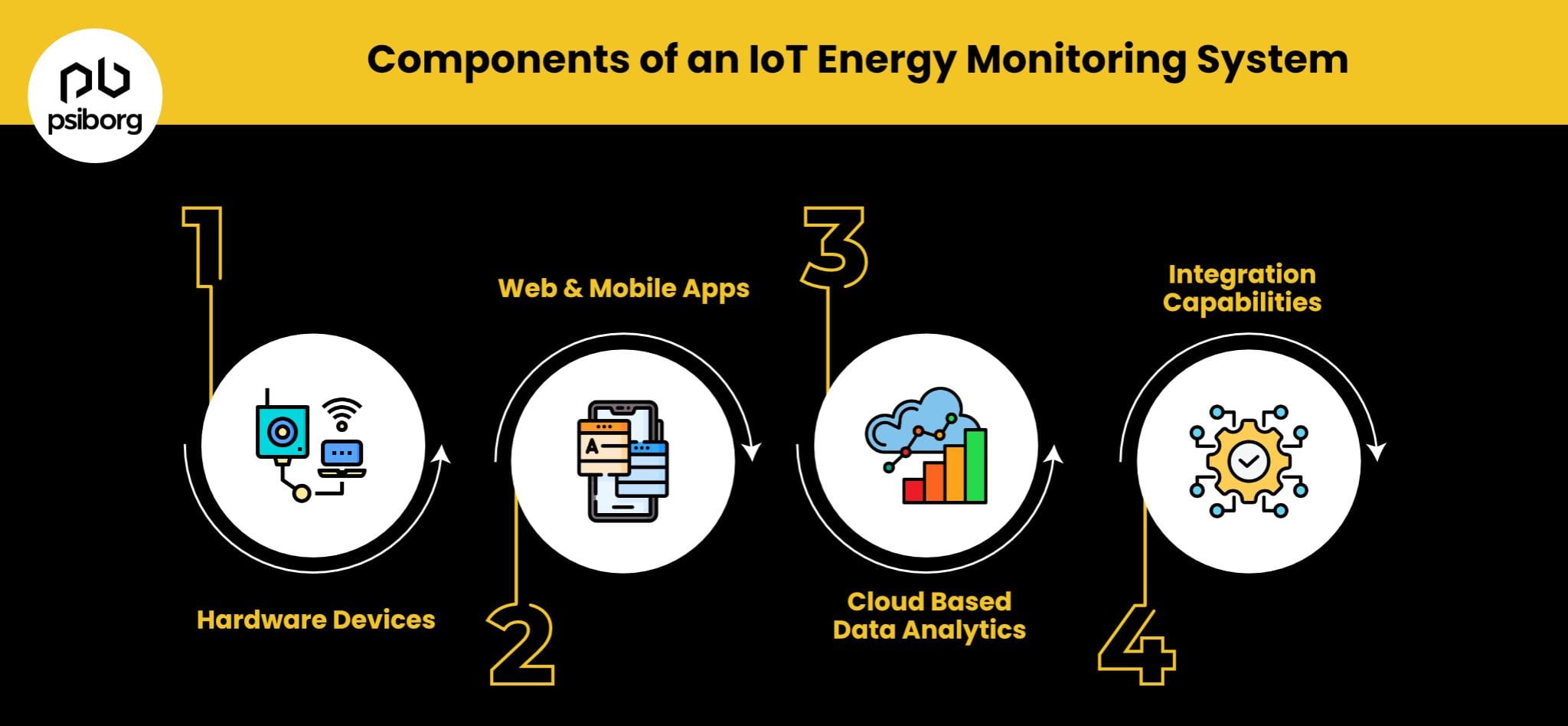
A Smart Grid is built from several interconnected components that enable real-time monitoring, control, and efficient power management.

(A) Smart Meters

  • Measure electricity in real time
  • Send data automatically
  • Support prepaid billing

(B) Sensors & Intelligent Devices

  • Detect faults
  • Monitor voltage and frequency
  • Examples: PMU, RTU

(C) Communication Network

  • Connects power plants, substations, and consumers
  • Uses:
    • Fiber optics
    • Wireless
    • IoT
    • Connects all grid components
    • Uses technologies like fiber optics, wireless, IoT, GSM
    • Enables fast data transfer and coordination

(D) SCADA System

  • Real-time monitoring
  • Remote control
  • Fast fault response
  • Central brain of the Smart Grid
  • Uses:
    • SCADA (Supervisory Control and Data Acquisition)
    • EMS (Energy Management System)
  • Performs monitoring, decision-making, and control

(E) Distributed Generation

  • Solar rooftop
  • Wind turbines
  • Biomass
  • Microgrids

(F) Energy Storage

  • Batteries
  • Pumped hydro
  • EV storage

(G) Demand Response

  • Consumers shift usage during peak time

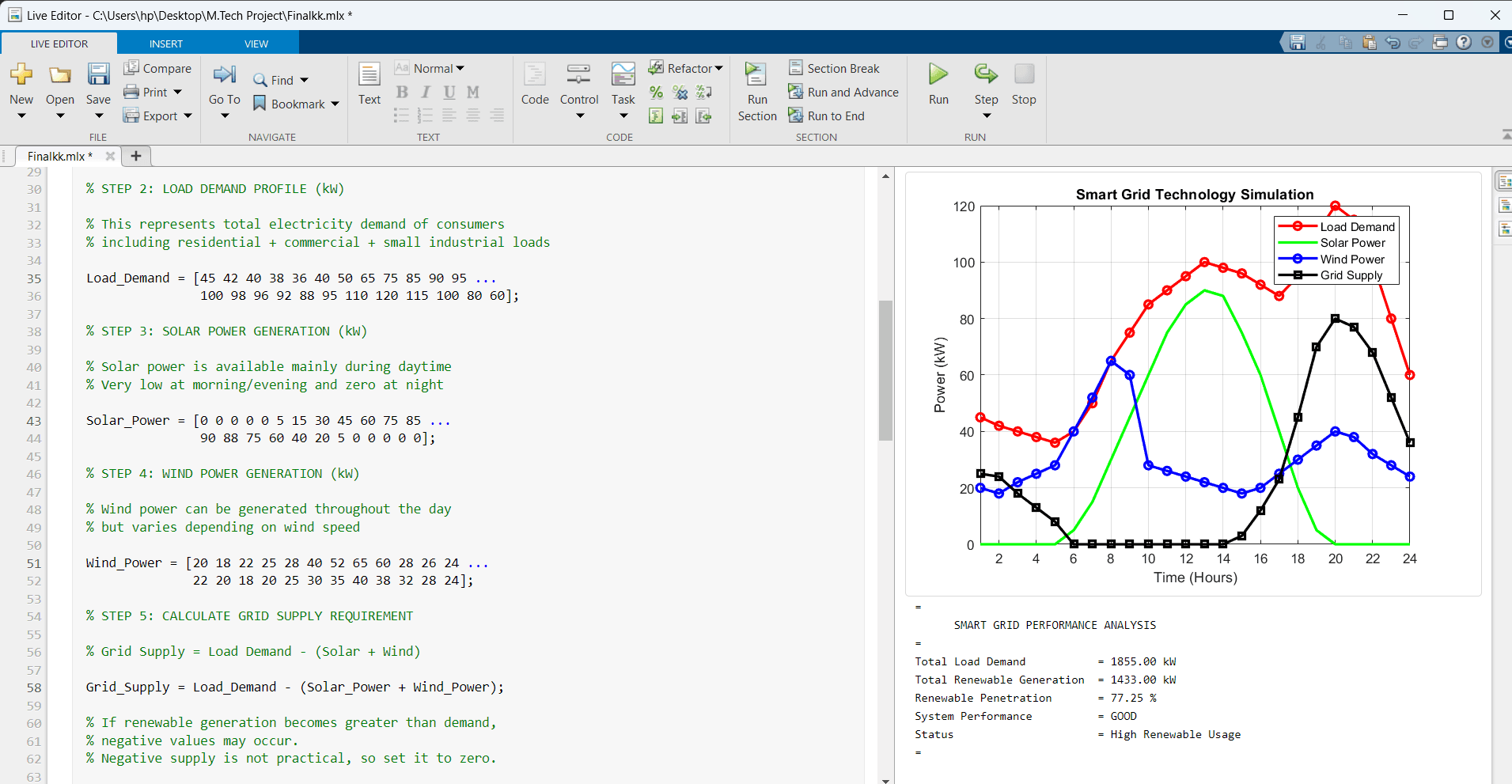
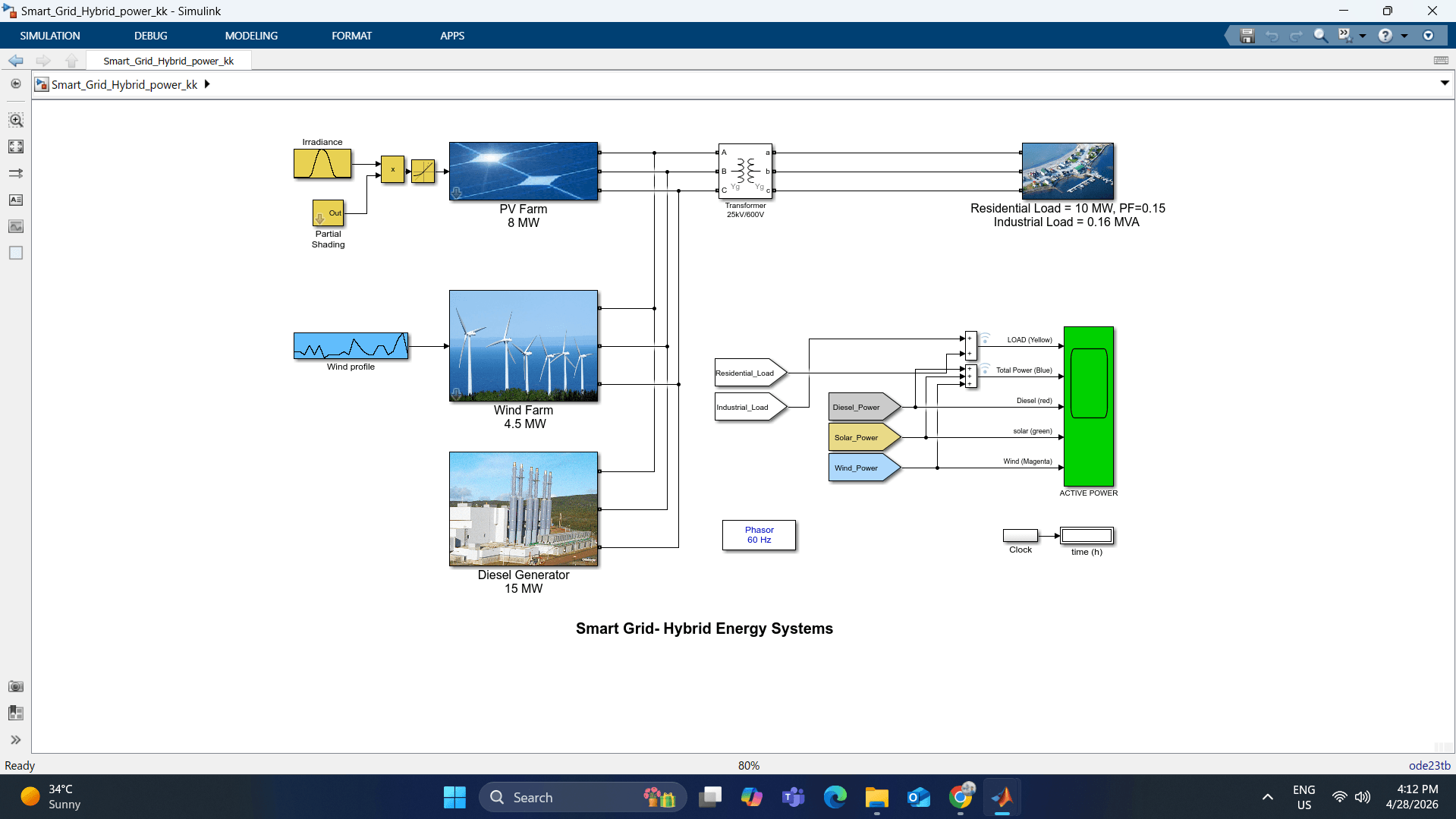
Mathematical Relation, MATLAB programming & Simulink
SMART GRID TECHNOLOGY

Pgrid​=Pload​−(Psolar​+Pwind​)

Where:

  • Pgrid​ = Power from grid
  • Pload​ = Total demand
  • Psolar​ = Solar power (PV)
  • Pwind​ = Wind power

Graphical Understanding

Smart Grid Technology: Future Intellengent of Energy/ohmsite

Case-wise Understanding

✅ Case 1: Renewable < Load Demand

  • Solar + Wind is less than demand
  • Grid supplies remaining power

👉 Example:

  • Load = 100 kW
  • Renewable = 60 kW
  • Grid = 40 kW

✅ Case 2: Renewable = Load Demand

  • Renewable fully meets demand
  • Grid supply = 0

👉 System becomes self-sufficient


✅ Case 3: Renewable > Load Demand

  • Extra power is generated
  • Grid supply = 0
  • Excess power is:
    • Stored (battery) OR
    • Sent back to grid (net metering)

Benefits of Smart Grid
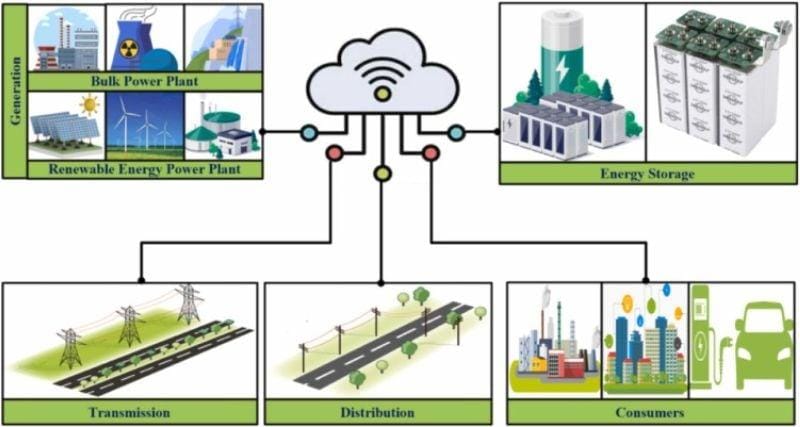
Smart Grid Technology: Future Intellengent of Energy/ohmsite

Smart Grid technology improves the traditional power system by making it intelligent, efficient, and reliable. Its benefits can be understood from technical, economic, and environmental perspectives.

Technical Benefits

  • Reduced losses
  • Better voltage control
  • Faster fault detection
  • High reliability

Economic Benefits

  • Lower operational cost
  • Reduced electricity theft
  • Efficient billing

Environmental Benefits

  • Supports solar & wind
  • Reduces pollution
  • Promotes clean energy

Consumer Benefits

  • Real-time usage info
  • Lower bills
  • Better service

Future Scope of Smart Grid
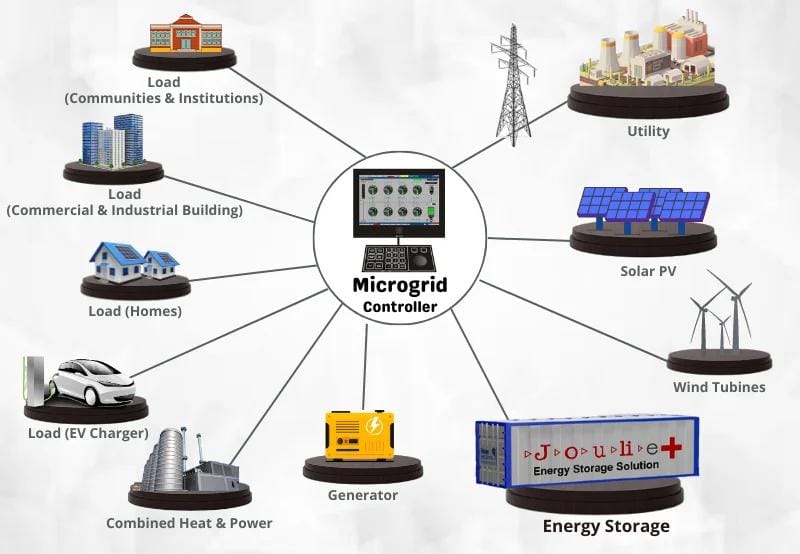
Smart Grid Technology: Future Intellengent of Energy/ohmsite

Smart Grid technology is the backbone of future power systems. With rapid advancements in digital technology and renewable energy, its scope is expanding globally.

High Renewable Energy Integration

  • Integration of solar, wind, and hybrid systems will increase
  • Smart Grid will manage intermittent energy sources efficiently
  • Supports the transition to clean and green energy

Development of Smart Cities

  • Smart Grid will be a core part of smart cities
  • Enables efficient lighting, transport, and energy systems
  • Improves urban living standards

Growth of Electric Vehicles (EVs)

  • EV charging will be integrated with the grid
  • Vehicle-to-Grid (V2G) technology will allow EVs to supply power
  • Helps in balancing demand and storage

Advanced Energy Storage Systems

  • Large-scale battery systems will store excess energy
  • Ensures power availability during peak demand
  • Improves grid stability and reliability

Use of Artificial Intelligence (AI) & IoT

  • AI will enable:
    • Load forecasting
    • Fault prediction
    • Automated decision-making
  • IoT will connect all devices for real-time communication

Decentralized Power Generation

  • Shift from centralized to distributed generation
  • Growth of microgrids and rooftop solar systems
  • Increased energy independence for consumers

Improved Cybersecurity

  • Development of advanced security systems
  • Protection against cyber threats
  • Ensures safe and reliable grid operation

Digitalization & Automation

  • Fully automated grid operations
  • Self-healing systems for fault detection
  • Reduced human intervention

Energy Efficiency & Demand Response

  • Consumers will actively manage energy usage
  • Use of smart appliances and pricing models
  • Reduction in peak demand

Global Expansion & Policy Support

  • Governments worldwide are investing in Smart Grids
  • Policies support renewable integration and digital infrastructure
  • Rapid adoption in developing countries like India

Smart Grid will support:

  • EV charging networks
  • AI-based control
  • Battery storage systems
  • Smart cities
  • Green hydrogen
  • Net-zero carbon Emmission
  • SDG-7

👉 It will become the backbone of future energy systems


Status of Smart Grid in India
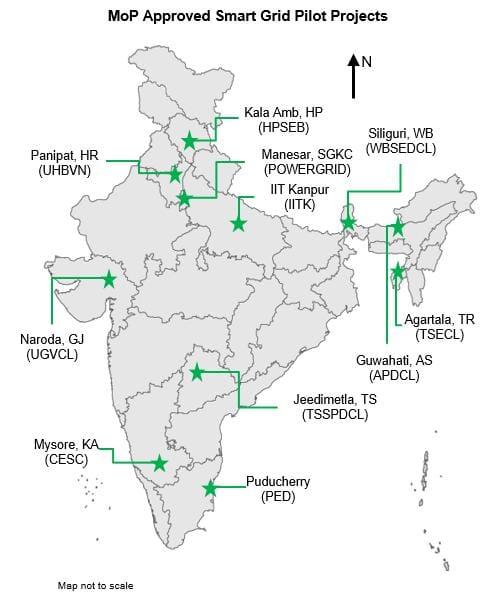
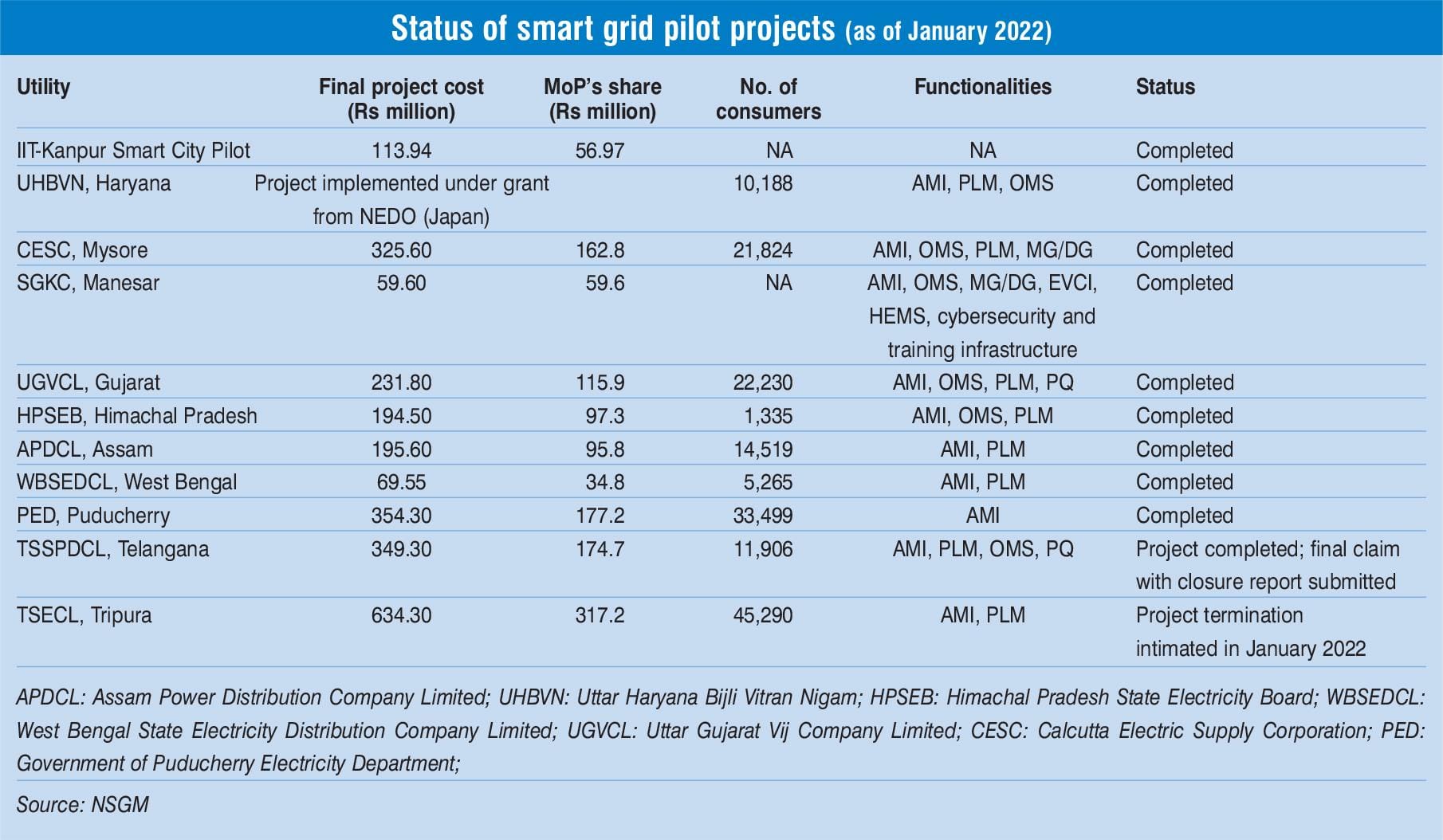
Smart Grid Technology: Future Intellengent of Energy/ohmsite

India is rapidly developing smart grids with support from:

  • Government programs
  • DISCOMs
  • Power sector organizations

Current Progress

  • Smart meters installation
  • Renewable integration
  • Smart substations
  • Green Energy Corridors

Smart Grid Implementation Programs in India

  • National Smart Grid Mission (NSGM)-Launched for modernization of Indian power systems.
  • RDSS Scheme(Revamped Distribution Sector Scheme)Supports:
    • Smart metering
    • Loss reduction
    • Distribution improvement
  • Smart City Mission- Includes smart electricity systems
  • Green Energy Corridor- Supports renewable energy transmission

Major Smart Grid Projects in India

  • Puducherry Smart Grid Pilot-One of the first pilot projects for smart meters and automation.
  • Mysuru Smart Grid Project-Focused on:
    • Smart metering
    • Consumer participation
    • Distribution automation
  • Chandigarh Smart Grid-Advanced smart metering and control.
  • Delhi Smart Meter Project-Large prepaid smart meter implementation.
  • Gujarat Renewable Smart Grid-Strong solar and grid integration.

Smart Grid Projects in World

  • USA → Advanced smart grid systems
  • China → Ultra-high voltage transmission
  • Germany → Renewable integration
  • Japan → Disaster-resilient grid
  • South Korea → Jeju Smart Grid

Existing Grid vs Smart Grid (Comparison)

ParameterExisting GridSmart Grid
Power FlowOne-wayTwo-way
CommunicationLimitedReal-time
MonitoringManualAutomatic
Fault DetectionSlowFast
ControlManualAutomated
ReliabilityLowHigh
Renewable IntegrationDifficultEasy

Simple Example

The existing grid has one-way power flow, manual monitoring, slow fault detection, and poor renewable integration. Smart Grid has two-way communication, smart meters, automation, fast fault detection, and better efficiency. Smart Grid is more reliable, flexible, and suitable for future energy systems

Existing Grid:

  • The old grid system mainly depends on:
    • Coal-based generation
    • Manual fault handling
    • Old transmission systems
    • Limited consumer interaction

    Problems:

    • High losses
    • Frequent outages
    • Poor monitoring
    • Difficult renewable integration

Smart Grid:

  • The smart grid uses:
    • Sensors
    • Smart meters
    • SCADA
    • Automation
    • AI and communication systems

    Advantages:

    • Better efficiency
    • Fast fault correction
    • Renewable energy support
    • Consumer participation

👉 Called Self-Healing System


Power Sector Data
Smart Grid Technology: Future Intellengent of Energy/ohmsite

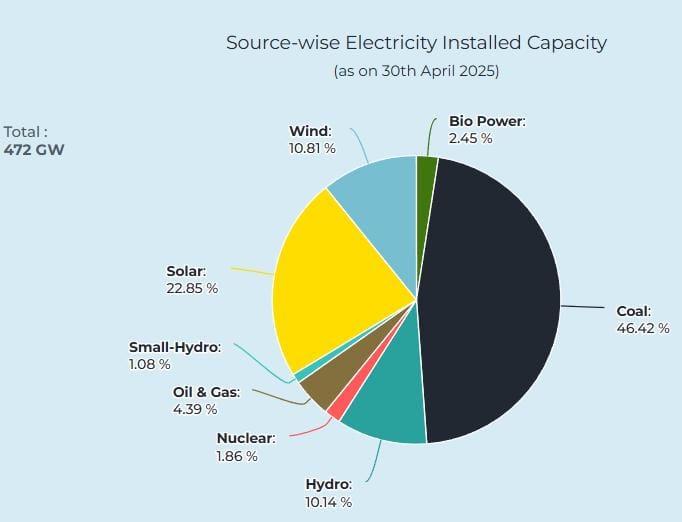
India Power Generation Capacity (Till March 2026)

According to Government of India data, total installed power generation capacity is around 520–533 GW (Gigawatt), depending on Jan–March 2026 reporting. As of 31 Jan 2026 it was 520.5 GW, and by March 2026 total non-fossil capacity reached 283.46 GW.

Source-wise Installed Capacity (Approx.)

SourceCapacity (GW)Share
Thermal (Coal + Gas + Lignite + Diesel)248–258~48%
Solar Power150.26~28%
Wind Power56.09~10.5%
Hydro Power (Large + Small)56.5~10%
Nuclear Power8.78~1.7%
Biomass + Waste-to-Energy~11.7~2%
Total~532 GW100%

Solar capacity reached about 150 GW, and wind crossed 56 GW by March 2026.

  • Total capacity: ~532 GW
  • Solar: ~150 GW
  • Wind: ~56 GW
  • Thermal: ~48% share

Demand vs Supply

  • Demand: 1869 BU
  • Supply: 1845.9 BU
  • Deficit: ~1.2%

👉 Peak demand: 250+ GW

Demand–Supply Position in India (Power Sector, FY 2025–26 up to March 2026)
Smart Grid Technology: Future Intellengent of Energy/ohmsite

The demand–supply position means the comparison between how much electricity consumers need (demand) and how much electricity power stations and the grid can provide (supply).

India’s power system is managed mainly by organizations such as Central Electricity Authority and Power Grid Corporation of India Limited.

  1. Electricity Demand in India

In FY 2025–26 (up to March 2026):

Total Energy Requirement (Demand)

1,869 Billion Units (BU) approx.

This includes demand from:

  • Domestic users
  • Industries
  • Agriculture
  • Railways
  • Commercial buildings
  • EV charging
  • Data centers

Demand is increasing every year because of:

  • Population growth
  • Industrial development
  • Urbanization
  • Air conditioners and cooling load
  • Electric vehicles
  • Digital infrastructure


  1. Electricity Supply in India

Total Energy Supplied

1,845.9 Billion Units (BU)

This supply comes from:

  • Thermal power plants
  • Hydro power plants
  • Solar parks
  • Wind farms
  • Nuclear stations
  • Biomass plants
  1. Power Deficit (Gap)

Energy Shortage

Deficit=1869−1845.9

≈ 23 BU

Percentage Deficit

% Deficit=(23/1869)*100

≈ 1.2%

This means India is close to balancing demand and supply, but peak-time shortages still occur.

  1. Peak Demand Position

Maximum Peak Demand Recorded

Around 250+ GW

During summer months, peak demand becomes very high due to:

  • Cooling load
  • Irrigation pumps
  • Industrial operation
  • Festival and commercial usage

Sometimes local shortages happen even if annual supply looks balanced.

  1. Demand–Supply Improvement Measures

Government is improving balance through:

  • Smart Grid implementation
  • Renewable energy integration
  • Battery Energy Storage Systems (BESS)
  • Green Energy Corridors
  • Ultra Mega Solar Parks
  • Transmission network expansion
  • Demand Side Management (DSM)

Issues in Present Grid System

The traditional power grid (conventional grid) faces several technical, operational, and economic problems due to increasing demand and lack of modern technologies.

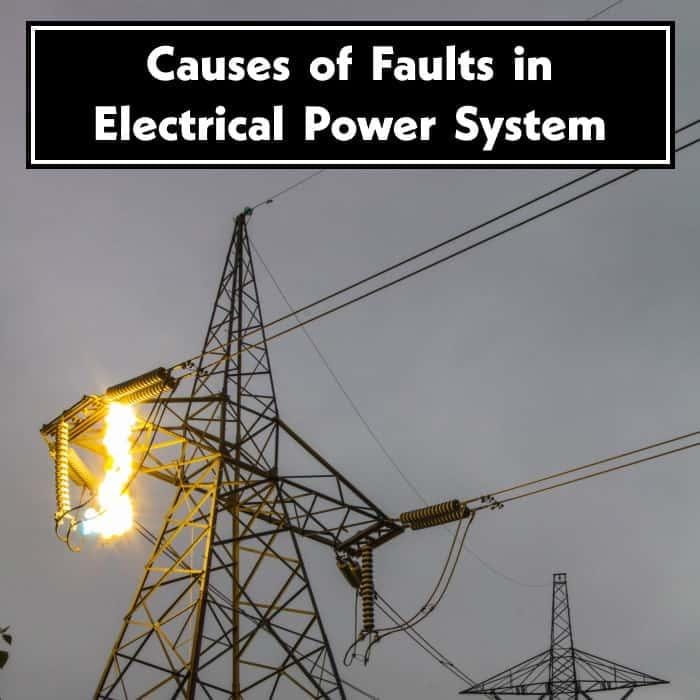
Power Outages and Blackouts
SMART GRID TECHNOLOGY

  • Frequent power cuts due to faults or overload
  • Slow fault detection and restoration
  • Large-scale blackouts can occur

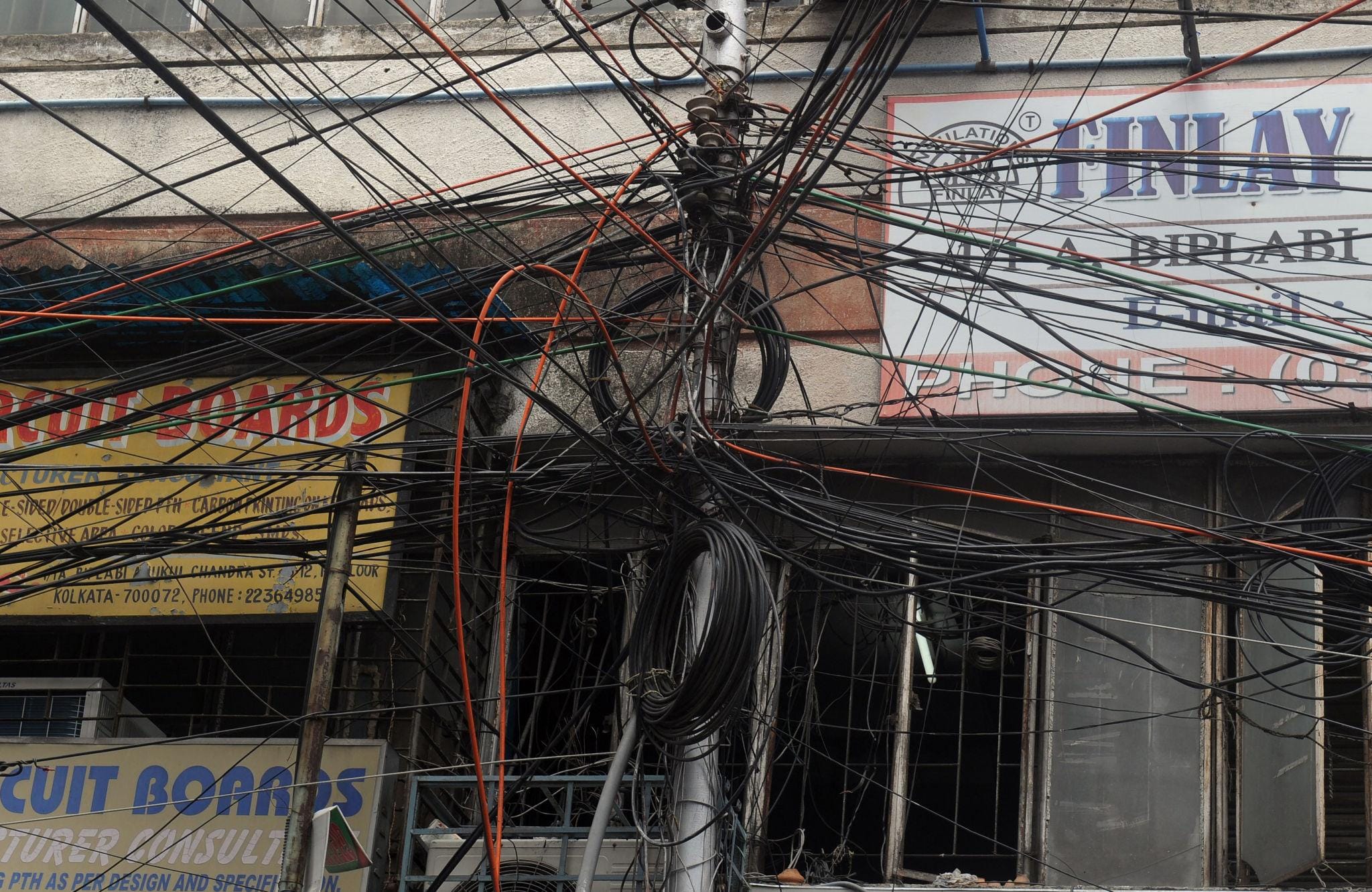
Energy Theft and Billing Issues
Smart Grid Technology: Future Intellengent of Energy/ohmsite

    1. Transmission and Distribution (T&D) Losses

    A large amount of electricity is lost during transmission and distribution because of:

    • Old transmission lines
    • Poor infrastructure
    • Overloaded transformers
    • Power theft
    • Technical losses

    This increases the cost of electricity.

    1. Frequent Power Outages

    Many areas still face:

    • Voltage fluctuations
    • Load shedding
    • Blackouts
    • Supply interruptions

    This affects industries, hospitals, and households.

    1. Aging Infrastructure

    Many substations, transformers, and transmission lines are old and need modernization.

    Problems include:

    • Low efficiency
    • High maintenance cost
    • Higher fault rate
    1. Difficulty in Renewable Energy Integration

    Sources like:

    • Solar power
    • Wind power

    are variable and intermittent.

    This creates problems in:

    • Frequency control
    • Voltage stability
    • Grid balancing
    1. Poor Demand Forecasting

    Sometimes electricity demand is not predicted correctly, causing:

    • Under-generation
    • Over-generation
    • System instability
    1. Lack of Real-Time Monitoring

    Traditional grids have limited monitoring and slow fault detection.

    This causes:

    • Delayed response
    • Longer outage duration
    • Poor system control

    Modern systems like SCADA help improve monitoring.

    1. Peak Load Problems

    During summer and festival seasons:

    • Demand becomes very high

    This causes:

    • Transformer overloading
    • Voltage drop
    • Grid stress
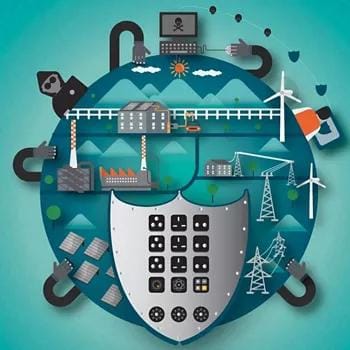
    1. Cybersecurity Risks Smart Grid Technology: Future Intellengent of Energy/ohmsite

    As grids become digital, risks increase from:

    • Hacking
    • Data theft
    • Control system attacks

    This is a major challenge for smart grids.

    1. Environmental Issues

    Heavy dependence on:

    • Coal-based thermal plants

    causes:

    • Air pollution
    • Carbon emissions
    • Climate impact

    This increases pressure to shift toward clean energy.

    1. High Operational Cost

    Fuel cost, maintenance cost, and infrastructure investment make grid operation expensive.
Solution Direction

These problems can be reduced by using:

  • Smart Grid Technology
  • Renewable Energy Integration
  • Energy Storage Systems
  • Advanced Metering Infrastructure (AMI)
  • Automation and AI-based control

Challenges in Smart Grid Technology

1. High Initial Cost

  • Smart grid requires advanced equipment like smart meters, sensors, communication systems, and automation devices.
  • The installation and upgrading of existing infrastructure demand huge capital investment.
  • Developing countries like India face budget constraints.

2. Cybersecurity Risks

  • Smart grids rely heavily on digital communication networks.
  • This makes them vulnerable to cyber-attacks, hacking, and data theft.
  • Ensuring secure communication and data privacy is a major concern.

3. Complex System Integration

  • Integration of renewable sources like solar and wind is difficult due to intermittent generation.
  • Combining old (conventional grid) and new (digital grid) technologies creates complexity.
  • Requires advanced control systems and real-time monitoring.

4. Lack of Standardization

  • Different manufacturers use different technologies and communication protocols.
  • Lack of universal standards leads to interoperability issues.
  • Difficult to ensure seamless communication between devices.

5. Data Management Issues

  • Smart grids generate huge amounts of data from smart meters and sensors.
  • Requires advanced storage, processing, and analysis systems.
  • Managing real-time data efficiently is a challenge.

6. Consumer Awareness and Acceptance

  • Many consumers are unaware of smart grid benefits.
  • Resistance to installing smart meters due to privacy or cost concerns.
  • Lack of user participation affects system efficiency.

7. Regulatory and Policy Challenges

  • Need for strong government policies and regulations.
  • Existing policies may not support advanced technologies.
  • Slow decision-making delays implementation.

8. Reliability and Maintenance Issues

  • Complex systems require skilled professionals for maintenance.
  • Fault detection and repair are more complicated than traditional grids.
  • System failures can have widespread impact.

Solutions to Challenges in Smart Grid

1. Reducing High Initial Cost

  • Use phased implementation (start with pilot projects, then expand).
  • Promote Public–Private Partnerships (PPP) to share investment.
  • Government can provide subsidies and financial incentives.
  • Use cost-effective technologies and local manufacturing.

2. Improving Cybersecurity

  • Apply advanced encryption techniques for data transmission.
  • Install firewalls and intrusion detection systems (IDS).
  • Regular security audits and updates.
  • Develop strong cybersecurity policies and trained personnel.

3. Handling System Integration Complexity

  • Use advanced control systems like Energy Management Systems (EMS).
  • Implement energy storage systems (battery, pumped hydro).
  • Adopt microgrid technology for localized control.
  • Use AI and real-time monitoring for better decision-making.

4. Standardization and Interoperability

  • Develop and adopt international standards (IEC, IEEE).
  • Ensure all devices follow common communication protocols.
  • Government and regulatory bodies should enforce standards.

5. Efficient Data Management

  • Use cloud computing and big data analytics.
  • Apply Artificial Intelligence (AI) for demand forecasting.
  • Develop efficient data storage and real-time processing systems.

6. Increasing Consumer Awareness

  • Conduct awareness campaigns and training programs.
  • Provide incentives for using smart meters and energy-efficient devices.
  • Promote demand response programs to involve consumers.

7. Strengthening Policies and Regulations

  • Government should create clear policies and long-term roadmaps.
  • Encourage investment through favorable regulations.
  • Faster approval processes for smart grid projects.

8. Improving Reliability and Maintenance

  • Use predictive maintenance techniques with sensors and AI.
  • Train skilled manpower for operation and maintenance.
  • Implement self-healing grid technology for automatic fault detection.


Importance of Smart Meter,Sensors,Net metering
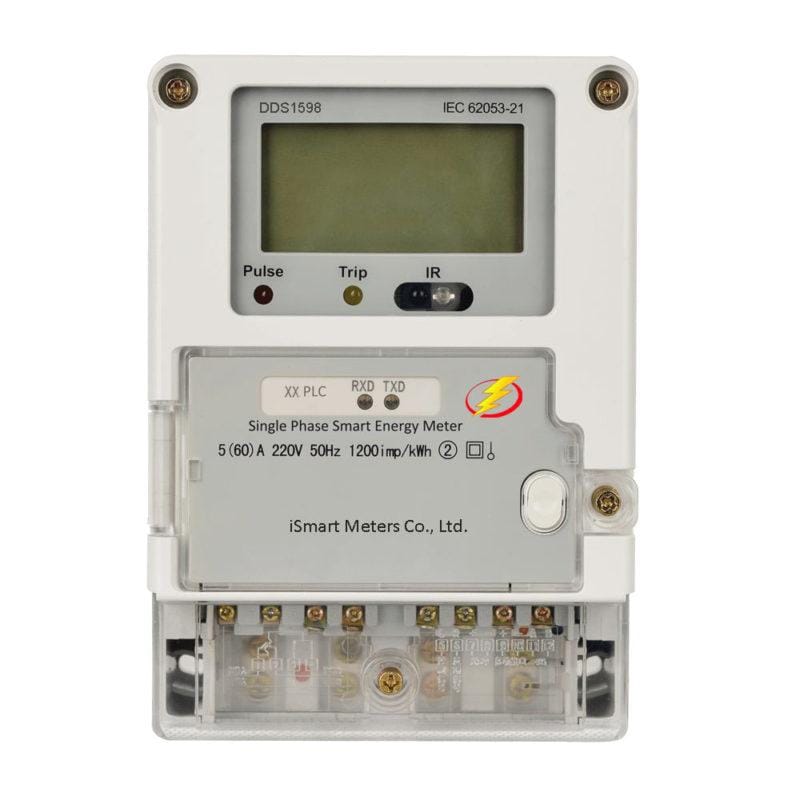
Smart Grid Technology: Future Intellengent of Energy/ohmsite

Sensors

  • Real-time monitoring
  • Accurate billing
  • Theft detection
  • Time-based tariff
  • Remote control

 Sensors

  • Fault detection
  • Real-time monitoring
  • Preventive maintenance
  • Voltage & frequency control

 Importance of Net Metering

  • Supports rooftop solar
  • Reduces electricity bill
  • Promotes clean energy

Formula

Net Bill = Imported Energy − Exported Energy

Example

  • Consumption = 500 units
  • Solar export = 300 units
  • Bill = 200 units

Role of AI, IoT & Data
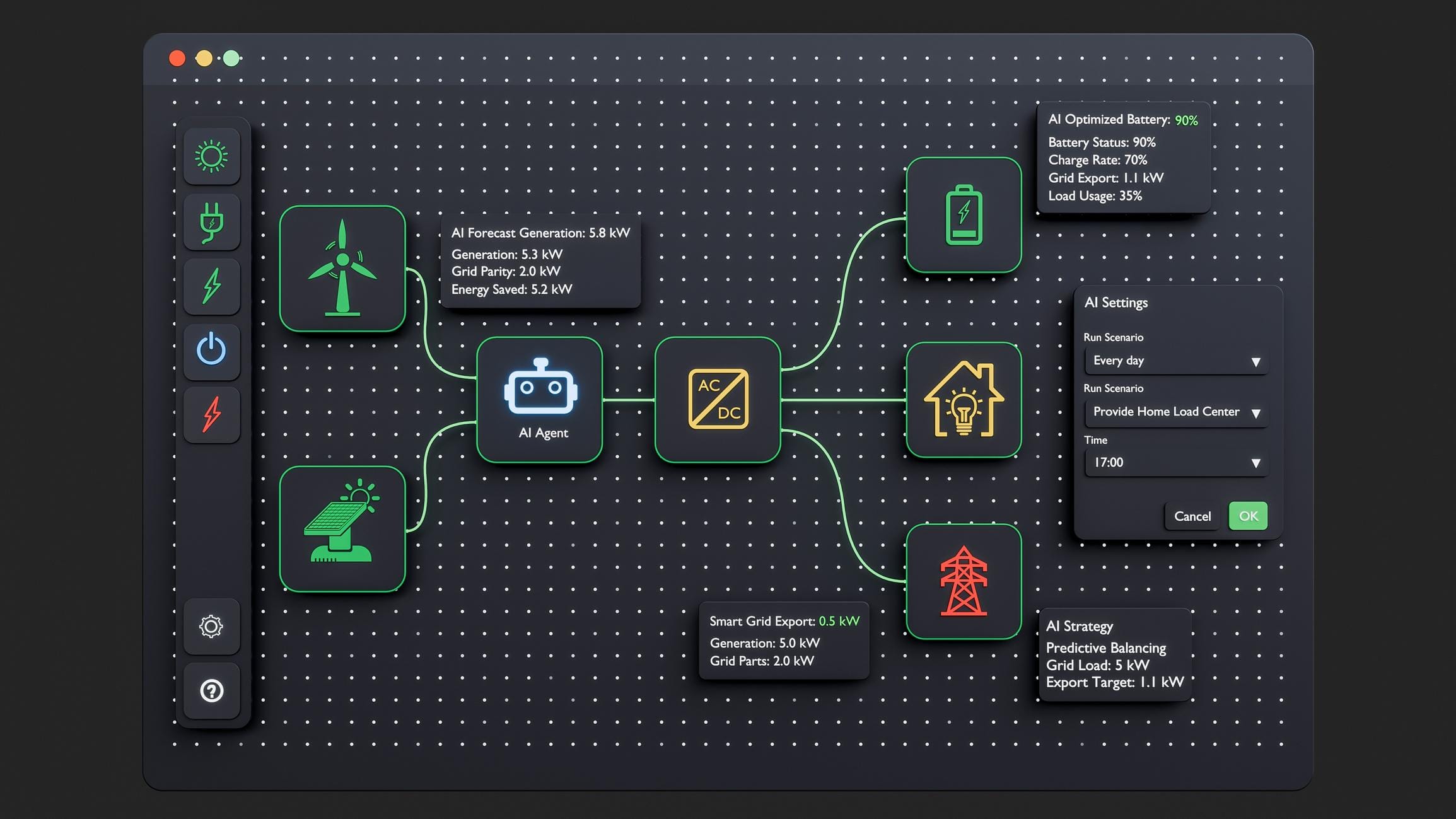
Smart Grid Technology: Future Intellengent of Energy/ohmsite

  • AI → Load forecasting, fault prediction
  • IoT → Real-time data collection
  • Big Data → Better decision making

Smart Grid is the future of power systems because it:

  • Improves efficiency
  • Reduces losses
  • Supports renewable energy
  • Enhances reliability

👉 It is essential for:

  • Energy security
  • Smart cities
  • Sustainable development

Conclusion of Smart Grid Technology

Smart Grid technology represents a major transformation of the traditional power system into a more intelligent, efficient, and reliable network. It enables real-time monitoring, two-way communication, and better integration of renewable energy sources like solar and wind.

Although there are challenges such as high initial cost, cybersecurity risks, system complexity, and lack of awareness, these issues can be effectively addressed through advanced technologies (AI, IoT, cloud computing), strong government policies, proper standardization, and consumer participation.

In the long run, Smart Grid plays a crucial role in:

  • Improving energy efficiency and reliability
  • Supporting sustainable and clean energy integration
  • Reducing power losses and operational costs
  • Empowering consumers with better control over energy usage

👉 Overall, Smart Grid is a key solution for the future of modern power systems, helping to build a sustainable, secure, and smart energy infrastructure for growing energy demands.


Frequently Asked Questions (FAQ) on Smart Grid Technology

1. What is a Smart Grid?

A Smart Grid is an advanced electricity network that uses digital technology, communication systems, and automation to monitor and manage power flow efficiently.


2. How is a Smart Grid different from a traditional grid?

A traditional grid has one-way communication, while a Smart Grid uses two-way communication, real-time monitoring, and automated control for better efficiency and reliability.


3. What are the main components of a Smart Grid?

  • Smart meters
  • Sensors (PMUs)
  • Communication networks
  • Control systems
  • Renewable energy sources
  • Energy storage systems

4. Why is Smart Grid important?

It improves efficiency, reduces power losses, integrates renewable energy, and ensures reliable electricity supply.


5. What is the role of smart meters?

Smart meters measure electricity consumption in real-time and help in accurate billing, demand management, and energy saving.


6. What is Net Metering?

Net metering allows consumers to send excess electricity (from solar panels) back to the grid and receive credits or payment.


7. How does Smart Grid support renewable energy?

It balances fluctuating renewable sources like solar and wind by using storage systems and intelligent control.


8. What happens when renewable generation is higher than load demand?

Excess energy is stored in batteries, sent back to the grid, or used for flexible loads.


9. What are the benefits of Smart Grid?

  • Improved reliability
  • Reduced outages
  • Better energy efficiency
  • Integration of renewable energy
  • Real-time monitoring

10. What are the challenges of Smart Grid?

  • High installation cost
  • Cybersecurity risks
  • Complex system management
  • Need for skilled workforce

11. What is the role of AI in Smart Grid?

Artificial Intelligence helps in load forecasting, fault detection, demand response, and optimizing grid operations.


12. What is IoT in Smart Grid?

IoT connects devices like meters and sensors to collect and share real-time data for better control and monitoring.


13. What is the status of Smart Grid in India?

India is developing Smart Grid through initiatives like the National Smart Grid Mission and smart meter programs.


14. What is a PMU (Phasor Measurement Unit)?

A PMU is a device that measures electrical waves in real-time to monitor grid stability and performance.


15. Can Smart Grid reduce power cuts?

Yes, Smart Grid can detect faults quickly and restore power faster, reducing outages.


16. What is Demand Response in Smart Grid?

Demand response adjusts consumer electricity usage based on supply conditions to maintain balance in the grid.


17. What is the future of Smart Grid?

Smart Grid will support smart cities, electric vehicles, and 100% renewable energy systems.


18. Is Smart Grid environmentally friendly?

Yes, it reduces carbon emissions by enabling renewable energy and efficient energy use.


19. What is the basic power balance in Smart Grid?

Pgeneration=Pload+Ploss+Pstorage​


20. Is Smart Grid useful for consumers?

Yes, it provides better control over energy usage, reduces electricity bills, and improves service reliability.
Filed Under: official, Tech Blogs

Smart Grid Technology: The Future of Intelligent Power Systems

April 22, 2026 By kundan Leave a Comment

Smart Grid Technology: Future of Energy


Introduction to Smart Grid Technology

Why Traditional Power Grids Are No Longer Enough

Smart Grid Technology: Future of Energy

The world’s electricity demand is growing faster than ever, and the old-fashioned power grid is struggling to keep up. Traditional grids were designed decades ago when electricity simply moved in one direction—from power plants to homes and industries. Back then, the system worked like a one-way road. Today, that road has become a crowded highway filled with solar panels, electric vehicles, wind farms, battery storage systems, and smart homes. The old grid was never built for this level of complexity.

Power outages, voltage fluctuations, transmission losses, and poor fault detection are common issues in conventional systems. Utilities often discover problems only after customers complain. That’s like finding out your car engine failed only after smoke starts coming out. Not very efficient, right? The need for a faster, smarter, and more flexible system has pushed the world toward smart grid technology, where electricity and information move together.

Governments and private companies are investing heavily in grid modernization because energy security is now directly linked to economic growth and climate goals. According to recent market reports, the global smart grid market is projected to grow from nearly USD 74.7 billion in 2026 to over USD 245.6 billion by 2034, showing how urgent this transformation has become. This is not just an upgrade—it is a complete redesign of how power systems operate.

The Rise of Digital Energy Infrastructure

Think of a smart grid as the “internet of electricity.” Just as smartphones transformed communication, smart grids are transforming energy systems. Instead of blindly sending power across the network, utilities can now monitor usage, detect faults instantly, predict failures, and optimize supply in real time. This shift makes the power system intelligent rather than reactive.

Digital infrastructure plays a huge role here. Sensors, communication networks, automation devices, and data analytics tools continuously collect and process information. Utilities can know exactly where energy is being wasted, where demand is rising, and where maintenance is needed. This improves both technical performance and customer satisfaction.

Renewable energy integration is another reason smart grids are rising fast. Solar and wind energy are naturally variable—sometimes the sun shines, sometimes it doesn’t. Smart grids help balance this uncertainty by using forecasting tools, storage systems, and demand response programs. Without smart grids, large-scale renewable adoption becomes much harder.

As energy systems become cleaner, more decentralized, and more digital, smart grids are no longer optional. They are becoming the backbone of modern civilization.


What Is Smart Grid Technology?

Core Definition and Working Principle

┌──────────────────────┐
│ Power Generation
│ (Solar/Wind/Thermal)
└─────────┬────────────┘
│
▼
┌──────────────────────┐
│ Transmission System
│ High Voltage Lines
└─────────┬────────────┘
│
▼
┌──────────────────────┐
│ Smart Substation
│ Sensors + Automation
└─────────┬────────────┘
│
▼
┌──────────────────────┐
│ Distribution Network
│ Smart Control System
└─────────┬────────────┘
│
▼
┌──────────────────────┐
│ Smart Meter (AMI)
│ Real-Time Monitoring
└─────────┬────────────┘
│
▼
┌──────────────────────┐
│ Consumer Side
│ Homes/Industry/EVs
└─────────┬────────────┘
│
▼
┌──────────────────────┐
│ Two-Way Communication
│ Utility ↔ Consumer
└──────────────────────┘

Smart grid technology refers to an advanced electricity network that uses digital communication, automation, sensors, and control systems to improve the generation, transmission, distribution, and consumption of electricity. Unlike the traditional grid, it supports two-way communication between utilities and consumers, making the entire system more responsive and efficient.

Imagine your electricity system behaving like a smart assistant. It knows when demand is high, where faults are happening, and how to balance supply automatically. That is the core idea behind a smart grid. It continuously monitors conditions and makes decisions based on real-time data. This reduces wastage, prevents blackouts, and improves energy reliability.

At the heart of this system are technologies like Advanced Metering Infrastructure (AMI), Supervisory Control and Data Acquisition (SCADA), Internet of Things (IoT), Artificial Intelligence (AI), and cloud-based analytics. These tools work together like the nervous system of the grid, sending information instantly across the network.

For example, if a transformer begins overheating, sensors detect it immediately. The system can isolate the fault, alert engineers, and even reroute electricity automatically before a major failure occurs. That level of intelligence changes everything in power system management.

Difference Between Conventional Grid and Smart Grid

The easiest way to understand the difference is to compare a regular bicycle with a self-driving electric car. Both move people, but one is basic while the other is intelligent, adaptive, and connected.

FeatureConventional GridSmart Grid
CommunicationOne-wayTwo-way
MonitoringManual and delayedReal-time
Fault DetectionSlowInstant
Renewable IntegrationLimitedHigh
Consumer ParticipationMinimalActive
Energy EfficiencyLowerHigher

Traditional grids mainly focus on delivering electricity. Smart grids focus on managing electricity intelligently. Consumers are no longer passive users; they become active participants. With smart meters, users can monitor their own consumption, shift usage to cheaper hours, and even sell solar-generated electricity back to the grid.

That’s why smart grids are often described as the future of energy rather than just a technical improvement.


Major Components of a Smart Grid

Smart Meters and Advanced Metering Infrastructure

One of the most visible parts of smart grid technology is the smart meter. Unlike traditional meters that simply record monthly consumption, smart meters provide real-time electricity usage data. They communicate automatically with utilities and allow both sides to monitor energy flow continuously.

This system is called Advanced Metering Infrastructure (AMI). It includes smart meters, communication networks, and data management systems. AMI removes the need for manual meter reading and reduces billing errors significantly. It also helps utilities detect theft, identify outages quickly, and improve customer service.

For consumers, smart meters are like having a fitness tracker for electricity. You can see when your home consumes the most power and adjust habits accordingly. Running heavy appliances during off-peak hours can lower bills and reduce stress on the grid.

Countries around the world are expanding smart meter deployment rapidly because it forms the foundation of digital energy management. Without accurate real-time data, smart grids cannot function effectively.

Sensors, Automation, and Control Systems

Sensors are the eyes and ears of the smart grid. They monitor voltage, current, temperature, frequency, and equipment health across the network. This information helps utilities maintain stability and prevent failures before they escalate.

Automation systems use this data to make fast operational decisions. For example, if a fault occurs on one feeder line, automation can isolate the problem and restore service through an alternative path within seconds. In older systems, this might take hours and require manual field inspection.

Control systems like SCADA and Distribution Management Systems (DMS) act as the brain of the operation. They process incoming data and coordinate actions across substations and distribution networks. This improves reliability and reduces downtime.

It’s similar to air traffic control at an airport. Without coordination, everything becomes chaotic. With intelligent control, movement becomes safe, smooth, and efficient.

Energy Storage and Distributed Energy Resources

Smart grids also depend heavily on Distributed Energy Resources (DERs) like rooftop solar panels, wind turbines, battery storage, and electric vehicles. These resources generate or store electricity closer to where it is used, reducing transmission losses and increasing resilience.

Battery energy storage systems are especially important because renewable sources are intermittent. Solar power disappears at night, but energy demand continues. Batteries help store excess energy and release it when needed, acting like a savings account for electricity.

Electric vehicles are becoming mobile energy assets too. In advanced systems, EVs can even send power back to the grid during peak demand through Vehicle-to-Grid (V2G) technology.

This decentralized model changes the power sector dramatically. Instead of relying only on giant power plants, energy can now come from millions of smaller sources working together intelligently.


Role of AI, IoT, and Big Data in Smart Grids

Real-Time Monitoring and Predictive Maintenance

Artificial Intelligence is turning smart grids from automated systems into learning systems. AI studies patterns in energy demand, equipment behavior, and weather conditions to make better operational decisions. Instead of reacting to failures, utilities can predict them before they happen.

IoT devices provide the raw data needed for this intelligence. Thousands of connected sensors across transformers, substations, and customer endpoints continuously report performance. This creates a living digital map of the grid.

Predictive maintenance is one of the biggest benefits. Rather than replacing equipment on fixed schedules, utilities can service assets exactly when needed. This saves money and prevents unexpected breakdowns. If a transformer shows unusual temperature patterns, AI can flag it weeks before failure.

This approach improves reliability and extends equipment life. It also reduces maintenance costs significantly, which is critical for large utilities managing thousands of assets.

Demand Response and Load Balancing

Electricity demand changes every hour. Morning usage, evening peaks, industrial cycles, and weather conditions all create fluctuations. Smart grids use AI and analytics to manage this dynamic environment through demand response and load balancing.

Demand response means encouraging consumers to reduce or shift electricity use during peak periods. For example, industries may delay non-critical processes, or households may run appliances later at night when electricity is cheaper.

Load balancing ensures supply matches demand without overloading the system. This becomes even more important with renewable energy sources. If cloud cover suddenly reduces solar generation, the grid must respond instantly.

AI helps make these decisions faster and more accurately than humans alone. It turns electricity management into something closer to real-time financial trading—constant, fast, and highly optimized.


Benefits of Smart Grid Technology

Reliability, Efficiency, and Sustainability

The biggest promise of smart grids is simple: better electricity for everyone. Reliability improves because faults are detected and corrected faster. Efficiency improves because power losses are reduced and demand is managed intelligently. Sustainability improves because renewable energy becomes easier to integrate.

Transmission and distribution losses are a major issue in many countries. Smart monitoring helps identify where energy is being wasted and allows targeted improvements. This means more electricity reaches consumers without building more power plants.

Environmental benefits are equally important. Smart grids support clean energy transitions by enabling solar, wind, and storage systems to work smoothly together. They also reduce reliance on fossil-fuel backup systems.

As energy expert Amory Lovins once said, “The cheapest energy is the energy you don’t need to use.” Smart grids help make that philosophy practical.

Consumer Empowerment and Cost Savings

Smart grids don’t just help utilities—they give power back to consumers, literally and financially. With real-time pricing and smart meters, users can control how and when they use electricity. This creates opportunities for lower bills and smarter decisions.

A household with rooftop solar can monitor production, optimize usage, and even sell extra electricity to the grid. Businesses can reduce peak demand charges by shifting operations strategically.

Consumers also benefit from faster outage restoration, better billing transparency, and improved service quality. The relationship between utility and customer becomes more interactive and less frustrating.

Instead of being passive bill-payers, consumers become energy managers. That psychological shift is one of the most powerful outcomes of smart grid adoption.


Challenges and Risks in Smart Grid Implementation

Cybersecurity and Data Privacy Concerns

Every smart system brings a smart risk. Because smart grids rely heavily on digital communication, they are vulnerable to cyberattacks. A successful attack on critical energy infrastructure could disrupt power supply, damage equipment, and create national security threats.

This is why smart grid security is becoming a major industry itself. Reports show the global smart grid security market is projected to grow from USD 9.55 billion in 2026 to USD 23.51 billion by 2034. Utilities must invest in encryption, secure communication protocols, and continuous monitoring.

Data privacy is another concern. Smart meters collect detailed usage patterns that can reveal personal behavior. Strong regulations are needed to ensure customer information is protected.

Technology without trust cannot succeed. Cybersecurity must be treated as a core design feature, not an afterthought.

High Initial Investment and Infrastructure Barriers

Smart grids save money in the long run, but the upfront cost is significant. Replacing meters, upgrading substations, building communication networks, and training staff require major investment.

Developing countries often face additional barriers such as aging infrastructure, policy delays, and limited technical expertise. Utilities may hesitate because returns are not immediate.

Interoperability is another issue. New technologies must work with older legacy systems, which is often more difficult than expected. It’s like trying to connect a modern smartphone to a machine built in 1980.

Strong government policy, regulatory support, and public-private partnerships are essential for overcoming these barriers.


Global Market Trends and Future Scope

Latest Market Statistics and Growth Forecast

The numbers show that smart grid technology is no longer a niche sector—it is a global priority. Market research indicates the global smart grid market is expected to rise from USD 73.8 billion in 2024 to USD 161.1 billion by 2029, growing at a CAGR of 16.9%. Other forecasts suggest even stronger long-term expansion beyond 2035.

North America currently leads adoption due to strong infrastructure investment and renewable integration. Europe follows closely with aggressive carbon neutrality goals. Asia-Pacific is emerging rapidly because of urbanization, industrial growth, and government-backed modernization programs.

The rise of AI data centers, electric mobility, and decentralized energy systems will push demand even further. Smart grids are becoming essential not just for sustainability but for economic competitiveness.

This market growth reflects a simple truth: the future economy runs on intelligent electricity.

Smart Grid Development in India

India is one of the most important smart grid growth markets in the world. Rising electricity demand, renewable energy targets, and urban expansion make modernization unavoidable. Government programs such as the Revamped Distribution Sector Scheme (RDSS) and smart metering initiatives are accelerating progress.

Cities are adopting smart substations, automated distribution systems, and digital billing platforms. Solar rooftop programs and EV charging infrastructure are also driving grid transformation.

Challenges remain—especially in rural connectivity, technical losses, and funding—but the direction is clear. India’s future energy security depends heavily on grid intelligence.

For a country balancing growth, affordability, and sustainability, smart grids are not a luxury. They are a national necessity.


Conclusion

Smart grid technology is reshaping the entire energy ecosystem. It transforms electricity from a simple supply service into an intelligent, responsive, and sustainable network. By combining automation, AI, IoT, renewable integration, and consumer participation, smart grids solve problems that traditional systems can no longer handle.

The journey is not easy. Cybersecurity risks, infrastructure costs, and regulatory complexity are real challenges. But the long-term benefits—better reliability, lower losses, cleaner energy, and empowered consumers—far outweigh the obstacles.

The world is moving toward electrification at an unprecedented pace. Electric vehicles, smart cities, renewable energy, and digital industries all depend on stronger grids. In that future, smart grid technology will not just support development—it will define it.

There are 5 Frequently Asked Questions

1. What is the main purpose of smart grid technology?

The main purpose is to improve electricity generation, transmission, distribution, and consumption using digital monitoring and automation for better efficiency, reliability, and sustainability.

2. How is a smart grid different from a traditional grid?

A traditional grid mainly supports one-way power flow, while a smart grid supports two-way communication, real-time monitoring, fault detection, and renewable energy integration.

3. Why are smart meters important in smart grids?

Smart meters provide real-time energy usage data, improve billing accuracy, support demand response programs, and help consumers manage electricity consumption effectively.

4. What role does AI play in smart grid systems?

AI helps with predictive maintenance, load forecasting, outage prevention, demand response, and efficient grid balancing by analyzing large volumes of real-time operational data.

5. Is smart grid technology important for India?

Yes, it is extremely important because India needs reliable, efficient, and renewable-friendly electricity systems to support economic growth, urbanization, and sustainability goals.

Filed Under: Electrical

How AI is Creating New Engineering Career Opportunities

February 22, 2026 By kundan Leave a Comment

How AI is Changing Engineering Jobs

Artificial Intelligence (AI) is no longer a futuristic concept — it is actively reshaping industries across the globe. From manufacturing plants to software development labs, AI is transforming how engineers design, analyze, build, and maintain systems.

But is AI replacing engineers? Or is it redefining their roles?

Let’s explore how AI is changing engineering jobs — and what it means for the future workforce.

The Rise of AI in Engineering

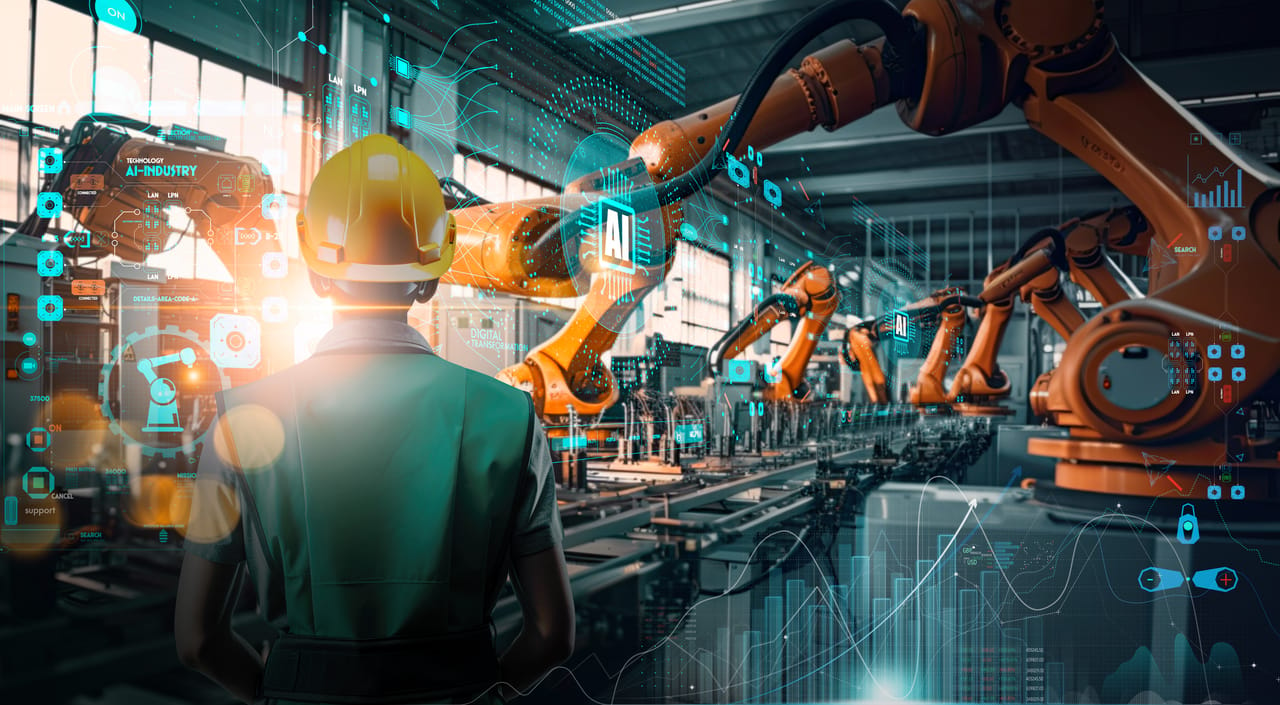
Predictive maintenance engineer and AI robot checking data at the factory

Artificial Intelligence refers to machines and software systems capable of performing tasks that normally require human intelligence — such as learning, decision-making, and pattern recognition.

In engineering, AI is being integrated into:

  • Design optimization

  • Predictive maintenance

  • Automation and robotics

  • Simulation and modeling

  • Data analysis and quality control

Instead of manually analyzing thousands of data points, engineers now use AI-powered tools that process complex datasets in seconds.

1️⃣ Automation of Repetitive Tasks

One of the biggest impacts of AI is automation.

Previously, engineers spent hours on repetitive tasks like:

  • Manual calculations

  • Testing multiple design variations

  • Reviewing inspection data

  • Generating reports

Today, AI-driven software automates these tasks, allowing engineers to focus on higher-level problem solving and innovation.

For example:

  • In mechanical engineering, AI optimizes design parameters automatically.

  • In civil engineering, AI analyzes structural health monitoring data.

  • In electrical engineering, AI helps in load forecasting and grid management.

2️⃣ Smarter Design and Simulation

Generative UI and Outcome-Oriented Design - NN/G

AI has revolutionized design through Generative Design and smart simulation tools.

Engineers now input design goals and constraints, and AI generates multiple optimized solutions automatically.

Benefits include:

  • Reduced material usage

  • Lower production cost

  • Improved performance

  • Faster product development

Digital twin technology, powered by AI, allows engineers to simulate real-world performance before building physical prototypes.

3️⃣ Predictive Maintenance & Reliability

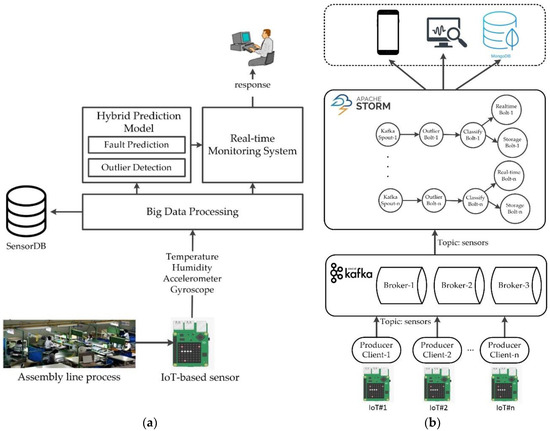
Performance Analysis of IoT-Based Sensor, Big Data Processing, and Machine  Learning Model for Real-Time Monitoring System in Automotive Manufacturing

AI analyzes sensor data to predict equipment failures before they happen.

Instead of reactive maintenance (fix after failure), industries now use predictive maintenance, which:

  • Reduces downtime

  • Saves repair costs

  • Improves safety

  • Extends equipment life

For example, AI can detect abnormal vibration patterns in turbines or transformers and alert engineers early.

This shift has created new job roles such as:

  • Reliability Engineer

  • AI Systems Engineer

  • Data-Driven Maintenance Analyst


4️⃣ Data-Driven Decision Making

Modern engineering projects generate massive amounts of data.

AI systems can:

  • Detect hidden patterns

  • Identify performance trends

  • Optimize energy consumption

  • Improve manufacturing efficiency

Engineers today must understand data analytics and machine learning basics to interpret AI-generated insights effectively.


5️⃣ New Engineering Roles Emerging

AI is not just replacing tasks — it is creating new opportunities.

New hybrid roles include:

  • AI Integration Engineer

  • Robotics Engineer

  • Machine Learning Engineer

  • Automation Specialist

  • Smart Grid Engineer

Engineering is becoming more interdisciplinary, combining:

  • Core engineering knowledge

  • Programming skills

  • Data science

  • AI fundamentals


6️⃣ Impact Across Different Engineering Fields

🔹 Mechanical Engineering

AI optimizes product design and manufacturing automation.

🔹 Electrical Engineering

AI improves smart grids, renewable energy forecasting, and fault detection.

🔹 Civil Engineering

AI supports traffic prediction, smart cities, and structural health monitoring.

🔹 Computer & Software Engineering

AI is central to application development, cybersecurity, and cloud systems.


Are Engineering Jobs at Risk?

AI may reduce some traditional repetitive roles, but it does not eliminate the need for engineers.

Why?

Because:

  • AI needs engineers to design and supervise it.

  • Complex decision-making still requires human judgment.

  • Ethical considerations and safety standards require human oversight.

AI acts more like a powerful assistant rather than a full replacement.


Skills Engineers Need in the AI Era

To stay competitive, engineers should develop:

  1. Basic understanding of Machine Learning

  2. Programming skills (Python, MATLAB, etc.)

  3. Data interpretation skills

  4. Automation and control knowledge

  5. Critical thinking and creativity

Soft skills such as communication and adaptability are becoming equally important.

The Future: Human + AI Collaboration

The Future of Manufacturing: How Digital Twins, 3D AI, Robotics Automation  and Immersive Reality Tech Are Modernizing Industries

The future of engineering is not “AI vs Humans” — it is “AI + Humans.”

AI handles:

  • Speed

  • Large-scale data

  • Pattern recognition

Engineers provide:

  • Creativity

  • Innovation

  • Ethical responsibility

  • System-level thinking

Together, they create smarter, safer, and more efficient systems.


Final Thoughts

Artificial Intelligence is transforming engineering jobs by automating routine tasks, enhancing design capabilities, improving predictive maintenance, and creating entirely new career paths.

Rather than eliminating engineering roles, AI is elevating them — shifting the focus from manual work to strategic thinking and innovation.

Engineers who adapt and learn AI-driven tools will not just survive — they will lead the next industrial revolution.

Tech Blog ..Read more…

Filed Under: Electrical, Tech Blogs

How Power Grids Work: From Electricity Generation to Your Home

February 22, 2026 By kundan Leave a Comment

How Power Grids Work: From Generation to Your Home

Electricity powers our modern world — from lighting homes and running industries to charging smartphones and driving electric vehicles. But have you ever wondered how electricity travels from a power plant to your home safely and reliably?

In this article, we’ll walk through the complete journey of electrical power — from generation to transmission, distribution, and finally into your household appliances.

1️⃣ Power Generation: Where It All Begins

Hydroelectric Power Plant

Electricity is produced at power plants using different energy sources. The main types include:

  • Thermal Power Plants – Burn coal, natural gas, or oil to produce steam that spins turbines.

  • Hydroelectric Power Plants – Use flowing water to rotate turbines.

  • Wind Farms – Use wind turbines to generate power.

  • Solar Power Plants – Convert sunlight directly into electricity using photovoltaic panels.

  • Nuclear Power Plants – Use nuclear reactions to generate heat and drive turbines.

No matter the source, most large-scale power plants generate electricity using the same principle:

Mechanical energy → Turbine rotation → Generator → Electrical energy

Electric generators work on electromagnetic induction, producing alternating current (AC).

2️⃣ Step-Up Transformers: Increasing Voltage for Efficiency

High voltage power transformer in electrical substation with cooling radiators, bushings and wiring on green frame, winter energy infrastructure and grid security concept

Electricity generated at power plants is typically between 11 kV and 25 kV. However, transmitting electricity over long distances at low voltage would cause major energy losses.

Power loss in transmission lines follows:

P=I2R

Where:

  • P = Power loss

  • I = Current

  • R = Resistance

👉 Increasing voltage reduces current for the same power, which dramatically reduces losses.

3️⃣ High-Voltage Transmission: The Power Highways

That’s why step-up transformers raise voltage to extremely high levels (132 kV, 220 kV, 400 kV or even higher) before transmission.

Once stepped up, electricity travels through high-voltage transmission lines supported by tall towers.

These lines:

  • Carry bulk power over long distances

  • Connect generating stations to substations

  • Form part of the national grid

  • Allow power sharing between states and regions

Modern power grids are interconnected systems that balance supply and demand in real time to maintain stable frequency (typically 50 Hz in many countries).

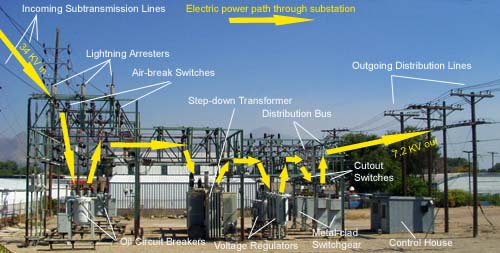
eTool : Electric Power Generation, Transmission, and Distribution - Illustrated Glossary - Substations | Occupational Safety and Health Administration

4️⃣ Substations: Voltage Reduction & Control

Before electricity reaches cities and towns, it passes through substations.

Substations perform key functions:

  • Step down voltage from transmission level (e.g., 220 kV → 33 kV)

  • Switch and protect power lines

  • Control and monitor grid performance

  • Isolate faults to prevent blackouts

Protection systems, circuit breakers, and relays ensure safe and reliable operation.

5️⃣ Distribution Network: Bringing Power to Neighborhoods

Staying safe around overhead lines

From substations, electricity enters the distribution network.

Typical steps:

  • 33 kV → 11 kV (local distribution lines)

  • 11 kV → 415/230 V (near your home using distribution transformers)

In most homes:

  • 230 V is supplied for single-phase loads

  • 415 V is used for three-phase supply (industries & large buildings)

This final voltage level is safe and suitable for household appliances.

6️⃣ Inside Your Home: Final Delivery

Electrical distribution board with circuit breakers and organized color-coded wiringOnce electricity reaches your home, it passes through:
  1. Energy Meter – Measures electricity consumption

  2. Main Distribution Board (DB) – Contains circuit breakers

  3. Wiring System – Distributes power to sockets and appliances

Circuit breakers protect your home from overloads and short circuits.

Understanding Basic Electrical Flow

Electric power in AC systems is calculated using:

P=VIP = V IP=VI

Where:

  • P = Power (Watts)

  • V = Voltage

  • I = Current

This relationship explains why high voltage and low current are used in transmission — to minimize losses while delivering the same power.

How the Grid Maintains Stability

Power grids must constantly balance generation and demand.

If demand suddenly increases:

  • Generators increase output

  • Frequency must stay stable (around 50 Hz)

If imbalance occurs:

  • Voltage fluctuations

  • Frequency drops

  • Possible blackouts

Modern grids use:

  • Smart monitoring systems

  • Automatic generation control (AGC)

  • Renewable energy integration

  • Energy storage systems


The Future of Power Grids

Power systems are evolving rapidly with:

  • Smart Grids

  • Solar rooftop integration

  • Electric vehicles

  • Battery storage

  • Decentralized microgrids

These innovations are making electricity cleaner, more reliable, and more efficient.


Final Thoughts

From massive power plants to the switch in your room, electricity travels through an incredibly sophisticated network of generators, transformers, transmission lines, substations, and distribution systems.

The next time you turn on a light, remember — it’s the result of a beautifully engineered system working seamlessly behind the scenes.

Future of Electrical Engineering Blog

Filed Under: Electrical, Tech Blogs

Future of Electrical Engineering Globally (2026 & Beyond)

January 19, 2026 By kundan Leave a Comment

Future of Electrical Engineering Globally (2026 and Beyond)

Electrical engineering has been a cornerstone of global technological progress for over a century. From electrification and industrial automation to digital communication and intelligent systems, the discipline continues to evolve with changing societal and technological needs. As the world moves toward clean energy, smart infrastructure, artificial intelligence, and electrified mobility, the future of electrical engineering globally beyond 2026 is set to become more advanced, interdisciplinary, and impactful than ever before.

This article explores global trends, emerging technologies, career opportunities, skill requirements, and challenges shaping the next era of electrical engineering.


Why Electrical Engineering Will Remain a Global Priority

Future of Electrical Engineering Globally (2026 & Beyond)

Electricity is the foundation of modern life. Every digital service, industrial process, transportation system, and communication network depends on efficient electrical systems. As global energy demand rises and sustainability becomes a priority, electrical engineers will be central to solving some of the world’s biggest challenges.

Key global drivers include:

  • Rapid urbanization and infrastructure development
  • Transition from fossil fuels to clean energy
  • Electrification of transportation and industries
  • Growth of data centers, cloud computing, and AI
  • Need for resilient and intelligent power systems

Electrical engineering is no longer confined to traditional power roles; it now intersects with software, data, and intelligent automation.


Global Technologies Shaping the Future

1. Renewable Energy and Energy Storage

Worldwide adoption of solar, wind, offshore wind, and hybrid energy systems is accelerating. Alongside generation, energy storage technologies such as lithium-ion batteries, solid-state batteries, hydrogen storage, and grid-scale storage systems are becoming critical.

Electrical engineers are essential in:

  • Grid integration of renewables
  • Power electronics and inverters
  • Energy storage management systems

2. Smart Grids and Digital Power Networks

Smart grids use sensors, communication systems, and AI-based controls to optimize power flow, reduce losses, and improve reliability. Countries across North America, Europe, and Asia are heavily investing in smart grid infrastructure.

Key focus areas:

  • Advanced metering infrastructure (AMI)
  • Cyber-secure power systems
  • Real-time monitoring and control

3. Electrification of Transportation

Electric vehicles, electric aviation concepts, high-speed rail, and charging infrastructure are transforming global transportation. Electrical engineers work on:

  • EV powertrains and charging systems
  • Battery management and fast charging technologies
  • Vehicle-to-grid (V2G) integration

This sector is expected to generate millions of engineering jobs worldwide.


4. Artificial Intelligence and Automation

AI is becoming deeply embedded in electrical systems:

  • Predictive maintenance in power plants
  • Load forecasting and energy optimization
  • Intelligent control systems and robotics

Electrical engineers with AI, machine learning, and data analytics skills will be highly valued globally.


5. Semiconductor and Power Electronics Advancements

The global demand for efficient power conversion has led to rapid growth in power electronics and semiconductor technologies, including wide-bandgap materials such as SiC and GaN.

Applications include:

  • EVs and fast chargers
  • Renewable energy systems
  • High-efficiency industrial drives

Global Career Opportunities for Electrical Engineers

Electrical engineers will find opportunities across multiple sectors worldwide:

  • Renewable energy and sustainability
  • Power generation, transmission, and distribution
  • Electric mobility and transportation systems
  • Robotics and industrial automation
  • Semiconductor and electronics industries
  • Aerospace and defense
  • Research, innovation, and academia

Electrical engineering offers strong global mobility, with demand in regions such as North America, Europe, the Middle East, and Asia-Pacific.


Skills Required for the Global Electrical Engineer

Technical Skills:

  • Power systems and power electronics
  • Control systems and automation
  • Renewable energy technologies
  • Embedded systems and IoT
  • Basics of AI, machine learning, and data analytics

Professional Skills:

  • Systems thinking and problem-solving
  • Interdisciplinary collaboration
  • Communication and technical documentation
  • Adaptability and continuous learning

Future engineers must be multidisciplinary professionals, not just domain specialists.


Salary and Global Job Outlook

Electrical engineering continues to be among the highest-demand and well-compensated engineering disciplines worldwide. Salaries vary by region, specialization, and experience, but engineers with expertise in renewables, EVs, AI-driven systems, and power electronics command premium compensation.

Long-term job growth is expected to remain strong due to global energy transition and digitalization.


Challenges and Future Responsibilities

Key Challenges:

  • Rapid technological change
  • Cybersecurity risks in power systems
  • Climate change and sustainability requirements

Engineer’s Role:

Electrical engineers will be responsible for designing safe, efficient, resilient, and sustainable systems that support global development while minimizing environmental impact.


The Role of Innovation and Research

Innovation will drive the future of electrical engineering. Research in areas such as smart materials, wireless power transfer, advanced batteries, and quantum technologies will open new frontiers.

Collaboration between academia, industry, and governments will be crucial for technological progress.


Final Thoughts

Globally, electrical engineering is entering a transformative era. The profession is evolving from traditional power engineering to a technology-integrated, sustainability-driven, and intelligence-enabled discipline.

The future belongs to electrical engineers who combine strong fundamentals with innovation, digital skills, and a global mindset.

As the world moves toward a cleaner, smarter, and more connected future, electrical engineers will continue to power progress—literally and strategically.


Frequently Asked Questions (FAQs)

Future of Electrical Engineering Globally (2026 and Beyond)

1. Is electrical engineering still a good career choice globally after 2026?
Yes. Electrical engineering remains one of the most future-proof careers worldwide due to global demand in renewable energy, electric vehicles, automation, AI-driven systems, and smart infrastructure.


2. Which countries will have the highest demand for electrical engineers in the future?
High demand is expected in countries investing heavily in clean energy and technology, such as the USA, Germany, Canada, Australia, UAE, Japan, South Korea, and rapidly developing economies in Asia.


3. What are the most in-demand specializations in electrical engineering globally?
Key high-demand areas include renewable energy systems, smart grids, power electronics, electric vehicles, energy storage, automation, robotics, and AI-integrated power systems.


4. Will artificial intelligence replace electrical engineers?
No. AI will not replace electrical engineers but will enhance their work. Engineers who learn to use AI tools for design, optimization, and predictive analysis will have a strong advantage.


5. What skills should future electrical engineers focus on?
Future-ready engineers should focus on power system software, renewable energy technologies, power electronics, embedded systems, basic AI and data analytics, along with strong problem-solving and communication skills.


6. Are global job opportunities available for electrical engineers?
Yes. Electrical engineering offers excellent global mobility. Engineers can work internationally in energy, manufacturing, transportation, automation, and technology sectors.


7. How important is renewable energy knowledge for electrical engineers?
Extremely important. Renewable energy and energy storage are central to global sustainability goals, making this knowledge essential for long-term career growth.


8. What role will electrical engineers play in climate change mitigation?
Electrical engineers design and optimize clean energy systems, smart grids, energy-efficient technologies, and electrified transportation, all of which are crucial for reducing carbon emissions.


9. Is higher education necessary for global career growth in electrical engineering?
While a bachelor’s degree is sufficient for many roles, higher education (M.Tech, MS, PhD) or specialized certifications can significantly improve career prospects, research opportunities, and leadership roles.


10. How can platforms like Ohmsite help electrical engineers?
Ohmsite simplifies complex technical concepts, shares future-focused insights, and helps engineers stay updated with global trends, emerging technologies, and practical knowledge essential for continuous learning.


11. What will define a successful electrical engineer in the future?
A successful future electrical engineer will combine strong fundamentals, continuous learning, interdisciplinary skills, adaptability, and a global perspective.


12. Is electrical engineering relevant outside the power sector?
Absolutely. Electrical engineers work in IT, robotics, aerospace, healthcare technology, semiconductors, automation, and data-driven industries, making the field highly versatile.


For more future-ready insights and simplified engineering knowledge, stay connected with Ohmsite.


Stay connected with Ohmsite for future-ready insights in electrical engineering, technology, and innovation.

Filed Under: Electrical, Tech Blogs

Trending Science in Modern Era

October 23, 2025 By kundan Leave a Comment

💡Trending Science in the Modern Era

Quantum Technologies


  1. EV Charging Infrastructure & Fast Charging Tech

    • How fast chargers work (technical)

    • Challenges in grid integration for EV charging stations

    • Smart charging for EV fleets

  2. Renewable Energy + Grid Stability

    • Methods to balance intermittency (storage, hybrid systems)

    • Role of battery storage, pumped hydro, thermal storage

    • Power electronics in solar & wind systems

  3. Smart Grids, IoT, and Automation

    • IoT sensors & feedback in power distribution

    • Real‐time load balancing using AI/ML

    • Cybersecurity in smart grids

  4. Quantum Technologies

    • Quantum sensing (applications, technique)

    • Quantum computing basics for beginners and their physics

    • Quantum materials like graphene, 2D materials, etc.

  5. Emerging Materials & Nanotechnology

    • Graphene and its new surprising properties (e.g. violations of classical laws) Popular Mechanics

    • Van der Waals heterostructures and how they work arXiv

    • Metamaterials (acoustic, photonic)

  6. Astrophysics / Cosmology Mysteries

    • Dark matter detection methods

    • Black hole information paradox

    • Gravitational waves & multi-messenger astronomy

  7. Physics Made Practical

    • Everyday applications of electromagnetism

    • How things like microwave ovens, inductive charging, wireless power transfer work

    • Demystifying relativity / quantum effects in lay-terms

  8. Science Experiments / DIY Electronics Projects

    • Step by step electronics builds (e.g. simple power supply, inverters, basic robotics)

    • Physics experiments you can do at home / lab

  9. Control Systems & Power Electronics

    • Basics: PWM, inverters, converters (buck/boost)

    • Modern control techniques: digital control, model predictive control

  10. Environ-Tech / Clean Tech

    • Green hydrogen production & physics behind it

    • Carbon capture technologies

    • Sustainable materials and energy efficiency

  11. Economic Load Dispatch Using Genetic Algorithm
  12. The DNA Designer: Exploring CRISPR-Cas9 and the Future of Genetics 🧬
  13. Biotechnology-Genetically modified organisms
  14. Nanotechnology: The Science of the Small with Endless Possibilities
  15. Artificial Intelligence: A Revolution in the Modern World
  16. What is a Defining Feature of the Metaverse
  17. What is Mr Deepfake AI Technology ?
  18. AI’s Ascendance: The Rise of Artificial Intelligence
  19. Electrifying Trends Shaping the Future 🔌🚀
  20. 21 Must-Have Electrical Gadgets You Won’t Believe Exist! 
  21. 🔌✨ Shocking Electrical Innovations! ⚡️🔬
  22. Power Up Your Career: Top 51+ Electrical Interview Questions Demystified
  23. Exploring Electrical and Electronics Sensors, Transducers and More..
  24. Unlocking the Secrets of Flipflops: A Journey into the World of Digital Electronics
  25. The Heartbeat of Electronics: Discovering the Versatility of the 555 Timer IC
  26. Operational Amplifier (Op-Amps)
  27. Filters: Understanding Low-Pass, High-Pass, Band-Pass, and More
  28. The Shocking Truth: Uncontrolled Rectifiers and Their Impact on Modern Electronics
  29. PMMC and Wattmeter: An In-Depth Explanation of Electrical Measurement Instruments
  30. Thyristor SCR-Silicon Controlled Rectifier Understanding the Basics and Applications
  31. Electrical Measuring Instruments
  32. Energy Meter and Galvanometer: Understanding Their Importance and Functionality
  33. Understanding the Cathode Ray Oscilloscope (CRO) and Cathode Ray Tube (CRT)
  34. Renewable Energy Conversion
  35. Power Generation An Efficient Energy
  36. Circuit Breaker-The Power of Circuit Breakers
  37. Rotor of Synchronous Machine
  38. Synchronous Machines
  39. DC Motor Work
  40. ⚡️ Electrical Safety in Your Home ⚡️
  41. Electrical Transformer : The Heart of Electrical Machine

———————————————————————————————————————————–

Read Tech Blog…

Filed Under: Electrical, M.Tech, Tech Blogs

Environ-Tech Explained: Green Hydrogen, Carbon Capture, and a Sustainable Future

October 23, 2025 By kundan Leave a Comment

Environ-Tech Explained: Green Hydrogen, Carbon Capture, and a Sustainable Future

Green Hydrogen, Carbon Capture, and a Sustainable Future

You hear the terms all the time: “climate change,” “net-zero,” “clean tech.” But what are the actual technologies behind the push for a greener planet? Welcome to the world of Environ-Tech (or Clean Tech)—the innovative field that’s using science and engineering to create a more sustainable future.

This isn’t just for scientists. Understanding these concepts helps us see the path forward. Let’s break down three key players: Green Hydrogen, Carbon Capture, and Sustainable Materials.

1. Green Hydrogen: The Clean Fuel of the Future

What is Hydrogen Energy?

First, hydrogen is a clean-burning fuel. When you use it, the only byproduct is water—no CO2 emissions. But the catch is how you produce the hydrogen in the first place.

The “Colors” of Hydrogen: Why “Green” is Key

Not all hydrogen is created equal. Think of it like a traffic light:

  • Grey Hydrogen: The most common type today. It’s made from natural gas, a process that releases a lot of CO2 into the atmosphere. This is the “bad” kind.

  • Blue Hydrogen: This is grey hydrogen, but with the CO2 emissions captured and stored (we’ll talk about that next!). It’s better, but not perfect.

  • Green Hydrogen: This is the gold standard. It’s produced using 100% renewable electricity, like from solar or wind farms.

The Simple Physics Behind Green Hydrogen: Electrolysis

So, how do you make hydrogen from water and sunlight? The process is called electrolysis, and it’s simpler than it sounds.

  1. The Setup: You have a tank of pure water (H₂O) and two electrodes (an anode and a cathode).

  2. The Power: You run renewable electricity through the water.

  3. The Reaction: The electrical energy forces a chemical reaction:

    • The water molecules (H₂O) split apart.

    • Oxygen (O₂) bubbles form at the anode.

    • Hydrogen (H₂) bubbles form at the cathode.

  4. The Result: You’ve created pure hydrogen gas, without any carbon emissions! This hydrogen can then be stored and used to power anything from factories to trucks, replacing fossil fuels.

2. Carbon Capture: Cleaning Up Our Past Mistakes

Green Hydrogen, Carbon Capture, and a Sustainable Future

What if we could vacuum CO2 right out of the air? That’s the goal of carbon capture technologies.

How Does Carbon Capture Work?

There are two main approaches:

A. Point Source Capture: This is like putting a filter on a smokestack. It captures CO2 emissions right at the source—from power plants or factories—before they can enter the atmosphere.

B. Direct Air Capture (DAC): This is the more futuristic version. DAC machines act like giant trees, pulling existing CO2 directly out of the ambient air. The captured CO2 can then be either:

  • Stored Deep Underground: Locked away in geological formations, permanently.

  • Utilized (Carbon Capture & Utilization – CCU): Used to make products like concrete, fertilizers, or even synthetic fuels.

While it’s not a license to keep polluting, carbon capture is a crucial tool for dealing with the emissions we can’t yet eliminate.

3. Sustainable Materials & Energy Efficiency: Using Less, Doing More

Green Hydrogen, Carbon Capture, and a Sustainable Future

True sustainability isn’t just about creating new energy; it’s about wasting less of the energy we already have.

Sustainable Materials

This involves re-thinking what we make things from:

  • Plant-based Plastics: Made from corn or algae instead of petroleum.

  • Mycelium Packaging: Using mushroom roots to create biodegradable protective foam.

  • Recycled Concrete: Drastically reducing the massive carbon footprint of new construction.

Energy Efficiency: The “Low-Hanging Fruit”

This is the simplest and most cost-effective form of clean tech. It means using less energy to achieve the same result.

  • Smart Grids: Electricity networks that can intelligently manage supply and demand, reducing waste.

  • LED Lighting & High-Efficiency Appliances: Using a fraction of the energy for the same light or cooling power.

  • Better Building Insulation: Designing homes and offices that need less heating and air conditioning.

How It All Fits Together: A Vision of a Clean Future

Imagine a system where:

  1. A wind farm provides renewable electricity.

  2. This electricity runs an electrolyzer to produce green hydrogen.

  3. The green hydrogen fuels a steel mill, while a carbon capture unit on the cement plant next door captures any remaining industrial emissions.

  4. All the new buildings are made from sustainable materials and are so energy efficient that they need very little power to begin with.

This interconnected system is the ultimate goal of Environ-Tech. It’s not about one magic solution, but about many solutions working in harmony.

Conclusion

The path to a sustainable future is being built today with real, tangible technology. From the simple physics of splitting water to the ambitious goal of scrubbing our atmosphere, Environ-Tech offers a hopeful and exciting vision. By understanding and supporting these innovations, we can all be part of the solution.


FAQs (Frequently Asked Questions)

Q1: What is the main difference between blue and green hydrogen?
A: The key difference is the energy source. Blue hydrogen is produced from natural gas, and the resulting CO2 is captured. Green hydrogen is produced from water using 100% renewable electricity, resulting in zero CO2 emissions from the production process.

Q2: Is carbon capture technology a real solution, or just a excuse to keep using fossil fuels?
A: Most experts agree it is a necessary tool, but not an excuse. We must rapidly phase out fossil fuels. However, carbon capture is crucial for dealing with emissions from hard-to-abate industries (like cement production) and for reducing the existing CO2 load in our atmosphere.

Q3: What is a simple example of a sustainable material I might use?
A: Bamboo is a great example! It grows incredibly fast, requires no pesticides, and can be used for everything from flooring to cutting boards, replacing slower-growing woods or plastic.

Q4: Why is energy efficiency considered a form of clean tech?
A: The cleanest, cheapest energy is the energy we never have to use. By improving efficiency, we reduce the demand for power plants, which means less fossil fuel burned and fewer renewables that need to be built. It’s the first and most important step in any climate plan.


MCQs (Multiple Choice Questions)

1. Green hydrogen is produced through a process called:
a) Combustion
b) Electrolysis
c) Fracking
d) Photosynthesis

2. The primary goal of Direct Air Capture (DAC) technology is to:
a) Generate electricity from the wind
b) Remove carbon dioxide (CO2) directly from the atmosphere
c) Split water molecules into hydrogen and oxygen
d) Create new types of biodegradable plastic

3. Which of the following is the BEST example of energy efficiency?
a) Building a new solar farm
b) Replacing an old gas-guzzling car with an electric vehicle
c) Installing smart thermostats and LED lights to use less electricity
d) Planting trees in a city park

4. What is the key ingredient, powered by renewables, needed to produce green hydrogen?
a) Natural Gas
b) Crude Oil
c) Water
d) Coal


Answer Key for MCQs:

  1. b) Electrolysis

  2. b) Remove carbon dioxide (CO2) directly from the atmosphere

  3. c) Installing smart thermostats and LED lights to use less electricity (This focuses on reducing demand, which is the core of efficiency).

  4. c) Water

Read Tech Blogs…

Filed Under: Electrical, Tech Blogs

Control Systems & Power Electronics: A Simple Guide to PWM, Inverters, and Digital Control

October 23, 2025 By kundan Leave a Comment

Control Systems & Power Electronics: A Simple Guide to PWM, Inverters, and Digital Control

Control Systems & Power Electronics: A Simple Guide to PWM, Inverters, and Digital Control

Ever wondered how your electric vehicle speeds up, how your solar panels power your home, or how a drone’s motor spins at just the right speed? The magic happens at the intersection of two fascinating fields: Control Systems and Power Electronics.

If those terms sound complicated, don’t worry! This guide will break down the essential concepts into simple, digestible pieces. Let’s dive into the building blocks that make modern technology possible.

The Core Concepts: It’s All About Control & Conversion

At its heart, Power Electronics is about efficiently converting and controlling electrical power. Think of it as a sophisticated, ultra-fast “power manager” for electronic devices.

A Control System is the “brain” that tells the power electronics how to manage that power. It makes decisions to ensure everything runs smoothly and efficiently.

Together, they create the systems that power our world.

Power Electronics Basics: The Key Players

Here are the fundamental components you need to know.

1. PWM (Pulse Width Modulation): The Power Dial

Control Systems & Power Electronics: A Simple Guide to PWM, Inverters, and Digital Control

Imagine you have a simple on/off switch for a light bulb. If you flip it on and off very quickly, the bulb will dim. If you leave it on for longer periods, it gets brighter. That’s the basic idea behind PWM.

  • What it is: PWM is a technique to create an analog-like signal (like variable voltage) using a digital on/off pulse.

  • How it works: By changing the width of the “on” pulse (the “Duty Cycle”), you control the average power delivered to a device.

  • Simple Analogy: It’s like pulsing the trigger of a water pistol. Short, quick pulses give a fine mist (low power). Holding the trigger down creates a steady stream (high power).

  • Where it’s used: Motor speed control, dimming LED lights, and as the foundation for more complex converters and inverters.

2. DC-DC Converters (Buck & Boost): The Voltage Adjusters

Control Systems & Power Electronics: A Simple Guide to PWM, Inverters, and Digital Control

These circuits take a DC voltage (like from a battery) and change it to a different DC voltage.

  • The Buck Converter: The Step-Down Transformer

    • Job: It reduces voltage. (e.g., from 12V to 5V to charge your phone from a car charger).

    • How it works: It uses a switch (like a transistor) and an inductor to “chop” the input voltage and smooth it out to a lower, stable output. Think of it as a step-down voltage regulator.

  • The Boost Converter: The Step-Up Transformer

    • Job: It increases voltage. (e.g., boosting a small battery voltage to power a higher-voltage component).

    • How it works: The inductor stores energy and then releases it, adding to the input voltage to create a higher output. Think of it as a step-up voltage regulator.

3. The Inverter: From DC to AC

Many of our power sources (batteries, solar panels) provide Direct Current (DC). But our homes and industries run on Alternating Current (AC). An inverter bridges this gap.

  • What it is: A circuit that converts DC power into AC power.

  • How it works: Using sophisticated switching (often with PWM), it creates a waveform that mimics the sine wave of AC grid power.

  • Where it’s used: Solar power systems, electric vehicle motor drives, and uninterruptible power supplies (UPS).

Modern Control Techniques: The Smart Brains

Control Systems & Power Electronics: A Simple Guide to PWM, Inverters, and Digital Control

The old way of controlling these systems used analog circuits. The modern way uses powerful, flexible digital control.

1. Digital Control

This is the standard today. Instead of physical resistors and capacitors making decisions, a microcontroller or a Digital Signal Processor (DSP) runs the show.

  • How it works: The digital controller reads sensor data (like voltage and current), runs a control algorithm in its software (like a PID controller), and then sends commands (like adjusting the PWM signal) to the power electronics.

  • Benefits: It’s highly flexible (you can change the code, not the hardware), precise, and can handle complex tasks easily.

2. Model Predictive Control (MPC): The Crystal Ball

This is one of the most advanced and exciting techniques in modern control systems.

  • The Simple Idea: MPC uses a mathematical “model” of the system it’s controlling (e.g., a model of a motor). It doesn’t just react to the present; it predicts the future.

  • How it works:

    1. It takes the current state of the system.

    2. It calculates many possible future outcomes over a short “prediction horizon” based on different control actions it could take.

    3. It chooses the action that leads to the best predicted outcome (e.g., the most efficient, the fastest response).

    4. It repeats this process millions of times a second.

  • Why it’s powerful: MPC is exceptionally good at handling complex systems with multiple constraints. It’s like a chess player, thinking several moves ahead to ensure victory.

Bringing It All Together

So, how does this work in a real device, like an Electric Vehicle?

  1. The Battery provides high-voltage DC power.

  2. An Inverter, controlled by a Digital Controller using PWM, converts that DC into precise AC to drive the motor.

  3. The Control System (likely using an advanced technique like MPC) constantly monitors the motor’s speed and adjusts the inverter’s output for optimal torque and efficiency.

  4. Separate Buck/Boost Converters might manage the lower-voltage systems, like the infotainment screen and lights.

Conclusion

From the simple on/off switching of PWM to the futuristic predictions of Model Predictive Control, these concepts form the backbone of our electrified world. Understanding the basics of converters, inverters, and digital control opens the door to understanding the technology that is shaping our future, from renewable energy to advanced robotics.


FAQs (Frequently Asked Questions)

Q1: What is the main difference between a Buck and a Boost converter?
A: The main difference is what they do to the voltage. A Buck converter is a step-down converter; it reduces the input DC voltage to a lower output voltage. A Boost converter is a step-up converter; it increases the input DC voltage to a higher output voltage.

Q2: Why is PWM so important in power electronics?
A: PWM is crucial because it allows for precise and efficient control of power without dissipating a lot of energy as heat (like a simple resistor would). It’s the fundamental technique used to create variable voltages and currents for controlling motor speed, light brightness, and is the core mechanism inside inverters and converters.

Q3: Can you give a simple example of where I might find an inverter in my daily life?
A: Absolutely! A common example is a solar power system for your home. The solar panels generate DC electricity, but your home appliances run on AC. The inverter’s job is to convert the DC power from the panels into usable AC power for your house. Another example is the charger for your laptop; the brick-like part often contains an inverter to help create the right type of power.

Q4: What is the biggest advantage of digital control over older analog control?
A: The biggest advantage is flexibility. With digital control (using a microcontroller or DSP), you can change the system’s behavior simply by updating the software code. With analog control, you would have to physically change resistors, capacitors, or other hardware components, which is much more difficult and less precise.

Q5: Is Model Predictive Control (MPC) better than a traditional PID controller?
A: It’s not always about being “better,” but about being more suitable for the task. A traditional PID controller is excellent for many standard applications and is simpler to implement. However, MPC is superior for complex systems where you need to anticipate future behavior and manage multiple constraints simultaneously (like in an electric vehicle’s motor drive or a complex chemical process). MPC is more computationally intensive but offers more optimal control.

Q6: What is the role of a control system in a power electronic device like a converter?
A: The control system acts as the brain. It constantly monitors the output of the converter (e.g., its voltage) and compares it to the desired value. If there’s a difference (an error), the control system adjusts the switching commands (like the PWM signal) to correct it, ensuring a stable and accurate output despite changes in load or input voltage.


MCQs (Multiple Choice Questions)

1. PWM is a technique used to:
a) Convert AC power to DC power
b) Create an analog-like signal using digital pulses
c) Store electrical energy in a magnetic field
d) Increase the frequency of a signal

2. If you need to power a 5V microcontroller from a 12V car battery, which type of circuit would you most likely use?
a) Boost Converter
b) Inverter
c) Buck Converter
d) AC-DC Rectifier

3. The primary function of an inverter is to:
a) Convert DC power to AC power
b) Step down a DC voltage
c) Control the speed of a DC motor
d) Step up a DC voltage

4. What is the key feature that distinguishes Model Predictive Control (MPC)?
a) It uses the lowest amount of processor power.
b) It is the oldest and most reliable control method.
c) It uses a model of the system to predict and optimize future behavior.
d) It only uses analog components.

5. In a digital control system, the algorithm that determines the control action runs on a:
a) Power transistor
b) Heatsink
c) Microcontroller or Digital Signal Processor (DSP)
d) Pulse Width Modulator

6. In a PWM signal, the “Duty Cycle” refers to:
a) The frequency of the pulses
b) The amplitude of the pulses
c) The percentage of time the signal is “on” compared to the total period
d) The cost of the component


Answer Key for MCQs:

  1. b) Create an analog-like signal using digital pulses

  2. c) Buck Converter (Because you need to step down from 12V to 5V)

  3. a) Convert DC power to AC power

  4. c) It uses a model of the system to predict and optimize future behavior

  5. c) Microcontroller or Digital Signal Processor (DSP)

  6. c) The percentage of time the signal is “on” compared to the total period


Read Tech Blog….

Filed Under: Electrical, Tech Blogs

Weather and Climate Patterns: Unraveling Monsoons, El Niño, and Jet Streams

October 18, 2025 By kundan Leave a Comment

Weather and Climate Patterns: The Powerful Forces Shaping Our Planet

Weather and Climate Pattern

Weather and climate patterns are the complex, dynamic engines that drive our planet’s atmospheric system. While weather tells you what to wear today, climate patterns predict the trends that shape ecosystems, agriculture, and economies over seasons and years. Understanding these forces is key to deciphering why some years are abnormally wet, dry, hot, or cold.

This guide demystifies the world’s most influential weather and climate patterns, breaking down how monsoons, the El Niño-Southern Oscillation (ENSO), and jet streams work, and why they matter to you.

Table of Contents

  1. The Monsoon: A Seasonal Deluge

  2. El Niño & La Niña: The Ocean’s Climate Seesaw

  3. Jet Streams: The Atmospheric Superhighways

  4. How These Patterns Interconnect

  5. Conclusion: A Delicate Balance


1. The Monsoon: A Seasonal Deluge

One of the most dramatic weather and climate patterns is the monsoon. It’s not just a heavy rainstorm; it’s a complete seasonal reversal of wind directions that brings a distinct wet season to tropical regions.

How Does a Monsoon Work?

The process is a giant sea breeze driven by temperature differences between land and sea:

  • Summer: Land masses heat up much faster than the ocean. The hot air over the continent rises, creating a region of low pressure. Meanwhile, the cooler air over the ocean, with higher pressure, rushes in to fill the void. This moisture-laden ocean air travels over the land, rises, cools, and condenses into massive thunderstorms and relentless rain.

  • Winter: The pattern reverses. The land cools down faster than the ocean, creating high-pressure over the land. Winds now blow from the land out to the sea, resulting in a dry season.

The most famous is the Asian Monsoon, vital for agriculture from India to Southeast Asia. Its failure can lead to drought and famine, while its intensity can cause devastating floods.

2. El Niño & La Niña: The Ocean’s Climate Seesaw

In the tropical Pacific Ocean, the most significant weather and climate pattern for predicting global changes is the El Niño-Southern Oscillation (ENSO). It has two opposite phases: El Niño and La Niña.

El Niño (The Warm Phase)

  • What Happens: The usual easterly trade winds weaken or even reverse. Instead of being pushed towards Asia and Australia, warm water sloshes back east towards the coast of South America.

  • Global Impacts:

    • Peru & Ecuador: Heavy rainfall and flooding.

    • Australia & Southeast Asia: Severe drought and increased wildfire risk.

    • North America: Can lead to a warmer, drier winter in the northern US and Canada and a wetter one in the southern US.

    • Atlantic Hurricane Season: Tends to suppress hurricane formation due to increased wind shear.

According to the National Oceanic and Atmospheric Administration (NOAA), El Niño events typically occur every 2-7 years.

La Niña (The Cool Phase)

  • What Happens: The trade winds are stronger than normal, pushing more warm water westward and causing more upwelling of cold, nutrient-rich water off the South American coast.

  • Global Impacts:

    • Australia & Southeast Asia: Wetter than average conditions, with increased flood risk.

    • Western Americas: Drier conditions in the southern U.S. and parts of South America.

    • Atlantic Hurricane Season: Tends to enhance hurricane formation by creating a more conducive environment.

This oscillation between warm and cool phases is a primary driver of seasonal climate variability worldwide, making it a critical focus for scientists at institutions like the NASA Jet Propulsion Laboratory.

3. Jet Streams: The Atmospheric Superhighways

Visual representation of global weather and climate patterns, showing a wavy jet stream

High up in the troposphere, between 5 and 9 miles above the Earth, are fast-flowing, narrow air currents known as jet streams. These are pivotal weather and climate patterns that steer weather systems around the globe.

Key Characteristics:

  • They are Fast: Winds can exceed 200 mph.

  • They Act as a Boundary: The Polar Jet Stream, for instance, forms at the boundary between cold polar air and warm tropical air.

  • They Steer Storms: Storms and weather fronts tend to follow the path of the jet stream.

How the Jet Stream Influences Your Weather

The shape of the jet stream is everything. A fast, straight jet stream leads to predictable, quick-moving weather. However, when it becomes wavy and “blocky,” it can cause extreme weather:

  • Ridges (Northward Bulges): Bring warm, dry, and calm weather. A persistent ridge can lead to heatwaves and drought.

  • Troughs (Southward Dips): Bring cold, stormy, and unsettled weather. A deep, stalled trough can cause prolonged cold spells and flooding.

4. How These Powerful Weather and Climate Patterns Interconnect

Diagram illustrating the weather and climate patterns of a monsoon, showing seasonal wind and rain shifts.

These systems do not operate in a vacuum. They are deeply interconnected. For example:

  • An El Niño event can alter the position and strength of the jet stream over the Pacific Ocean, which in turn influences temperature and precipitation patterns across North America.

  • A persistent jet stream pattern can either enhance or weaken the intensity of a monsoon season by blocking or steering moisture-carrying systems.

  • Some research suggests climate change may be increasing the frequency of extreme La Niña events, demonstrating how long-term climate shifts can influence shorter-term patterns.

Conclusion: A Delicate Balance

Understanding these major weather and climate patterns—the life-giving monsoons, the far-reaching influence of El Niño and La Niña, and the steering currents of the jet streams—is crucial for everything from farming and water management to disaster preparedness.

These patterns illustrate the delicate balance of Earth’s climate system. As our climate changes, the behavior of these patterns is also evolving, making their study more important than ever. By learning the language of these global forces, we can better anticipate the weather of tomorrow and the climate of the future.


Frequently Asked Questions (FAQs)

1. What is the basic difference between weather and climate?
Weather refers to short-term atmospheric conditions in a specific place and time (e.g., a rainy afternoon). Climate refers to the long-term average of weather patterns over a significant period (typically 30 years or more) in a region.

2. What is the main driver of the monsoon cycle?
The monsoon is primarily driven by the temperature difference between land and sea. In summer, land heats up faster than the ocean, causing air to rise over the land and draw in moist air from the ocean, resulting in heavy rains.

3. What does ENSO stand for?
ENSO stands for El Niño-Southern Oscillation. It is a recurring climate pattern involving changes in the temperature of waters in the central and eastern tropical Pacific Ocean, along with shifts in surface air pressure.

4. What is the key difference between El Niño and La Niña?
El Niño is the warm phase of ENSO, characterized by weakened trade winds and warm water pooling in the eastern Pacific. La Niña is the cool phase, with stronger-than-usual trade winds and cooler waters in the eastern Pacific.

5. How can an El Niño event in the Pacific affect hurricane season in the Atlantic?
El Niño tends to suppress Atlantic hurricane activity by increasing vertical wind shear, which tears apart developing storms. Conversely, La Niña reduces wind shear, creating a more favorable environment for hurricanes to form and intensify.

6. What are jet streams?
Jet streams are fast-flowing, narrow air currents located high in the troposphere. They act as “atmospheric superhighways” that steer weather systems and storms around the globe.

7. How does a “wavy” jet stream lead to extreme weather?
A wavy jet stream, with large northward bulges (ridges) and southward dips (troughs), can get stuck in place. Ridges lead to prolonged heatwaves and droughts, while troughs cause extended cold spells, storms, and flooding.

8. Are monsoons only found in India?
No, monsoons are not exclusive to India. While the Asian monsoon is the most famous, other major monsoon systems affect regions including West Africa, northern Australia, and parts of North America.

9. Can climate change influence these patterns like El Niño and the jet stream?
Yes, scientific research indicates that climate change can alter the intensity, frequency, and behavior of these patterns. For example, a warming planet may be linked to more frequent extreme La Niña events and can contribute to a more meandering jet stream.

10. Where can I find reliable updates on the status of El Niño or La Niña?
Reputable sources like the National Oceanic and Atmospheric Administration (NOAA) and NASA’s Jet Propulsion Laboratory (JPL) provide regular updates, forecasts, and detailed explanations on the state of the ENSO cycle.


Multiple Choice Questions (MCQs)

1. What is the primary cause of the seasonal monsoon winds?
a) The rotation of the Earth
b) The gravitational pull of the moon
c) The temperature difference between land and sea
d) Volcanic eruptions

2. During an El Niño event, what happens to the trade winds in the tropical Pacific?
a) They become much stronger.
b) They weaken or reverse direction.
c) They remain completely unchanged.
d) They shift to the north pole.

3. What type of weather is typically associated with a strong, persistent ridge in the jet stream?
a) Cold and stormy
b) Warm, dry, and calm (heatwaves)
c) Hurricane formation
d) Monsoon rains

4. The term “La Niña” refers to which of the following?
a) The warm phase of the Pacific Ocean temperature cycle
b) The cool phase of the Pacific Ocean temperature cycle
c) A type of monsoon in South America
d) A fast-flowing jet stream

5. How does La Niña typically affect weather in Australia and Southeast Asia?
a) It causes severe drought.
b) It leads to wetter-than-average conditions.
c) It has no significant impact.
d) It triggers a reversal of the monsoon.

6. What is the primary role of jet streams in global weather?
a) To cause precipitation directly
b) To heat the Earth’s surface
c) To steer weather systems and storms
d) To create the ozone layer

7. The El Niño-Southern Oscillation (ENSO) is a climate pattern centered in which ocean?
a) Atlantic Ocean
b) Indian Ocean
c) Pacific Ocean
d) Arctic Ocean

8. What is the most likely global impact of a strong El Niño event on the Atlantic hurricane season?
a) A significant increase in the number of hurricanes
b) A suppression of hurricane activity
c) It causes hurricanes to form in the Pacific instead.
d) It has no measurable impact.

9. Which of the following best describes a “trough” in the jet stream?
a) A northward bulge that brings warm weather
b) A southward dip that brings cold, stormy weather
c) The point where the jet stream is straightest
d) The boundary between two ocean currents

10. Why is understanding patterns like ENSO crucial for humanity?
a) It helps us predict the weather for a single day.
b) It is vital for long-term forecasting, agriculture, water management, and disaster preparedness.
c) It explains why the sky is blue.
d) It helps us locate jet streams.


Answer Key for MCQs:

  1. c

  2. b

  3. b

  4. b

  5. b

  6. c

  7. c

  8. b

  9. b

  10. b

Read Non-Tech Blog…

Filed Under: Geography, Non-Tech Blogs

DIY Science: Electronics Projects & Physics Experiments for Home

October 18, 2025 By kundan Leave a Comment

Spark Your Curiosity: DIY Electronics & Physics Experiments for Home & Lab

Tired of just reading about science? It’s time to roll up your sleeves and create it. The worlds of electronics and physics aren’t locked away in fancy laboratories—they’re accessible, thrilling, and waiting for you on your kitchen table.

This guide is your launchpad. We’ll walk through hands-on projects that transform abstract concepts into tangible, working devices. Let’s get building!

Part 1: DIY Electronics – Power Up Your Skills

 DIY Science: Electronics Projects & Physics Experiments for Home

Start with these foundational builds that teach you the core principles of circuitry and power.

Project 1: Build Your Own Simple Variable DC Power Supply

A power supply is the heart of any electronics workbench. Building your own is a rite of passage.

What You’ll Learn: Voltage regulation, the function of capacitors (smoothing), and how to use an LM317 voltage regulator.

Tools & Components:

  • LM317 Voltage Regulator IC

  • Transformer (12V AC output)

  • Bridge Rectifier (or 4x 1N4007 Diodes)

  • Capacitors (e.g., 1000µF, 10µF, 1µF)

  • Potentiometer (5kΩ)

  • Resistors (240Ω)

  • Voltmeter

  • Breadboard & Jumper Wires

  • Heatsink (for the LM317)

Step-by-Step Build:

  1. Step Down & Convert: The transformer steps down the 120V/240V AC from your wall to a safer 12V AC.

  2. Rectify to DC: The bridge rectifier converts the AC voltage into a pulsating DC voltage.

  3. Smooth it Out: The large capacitor (1000µF) acts like a reservoir, smoothing the pulsating DC into a more stable voltage.

  4. Regulate the Voltage: This is the LM317’s job. By adjusting the potentiometer, you change the resistance in its circuit, which allows you to variably control the output voltage (typically from ~1.25V to 10V).

  5. Final Filtering: The smaller capacitors (10µF, 1µF) filter out high-frequency noise, ensuring a clean DC output.

  6. Test: Connect your voltmeter to the output and turn the potentiometer. Watch the voltage change!

Safety First! Always be cautious when working with mains voltage. If you’re a beginner, start with a pre-made 12V AC wall adapter for the transformer stage.

Project 2: Create a Mini DC to AC Power Inverter

 DIY Science: Electronics Projects & Physics Experiments for Home

Power a small AC device from a battery! This simple inverter creates a square wave AC signal.

What You’ll Learn: The basic principle of DC-to-AC conversion (oscillation) and using transistors as switches.

Tools & Components:

  • CD4047 IC (or a 555 Timer IC)

  • Two MOSFETs (e.g., IRF540)

  • Resistors (e.g., 10kΩ, 100Ω)

  • Capacitor (0.1µF)

  • Center-tapped Transformer (12V-0-12V to 220V or 120V)

  • 12V Battery (e.g., a small lead-acid or LiPo)

  • Breadboard

Step-by-Step Build:

  1. Create the Oscillation: The CD4047 IC is an astable multivibrator. It generates a stable, high-frequency square wave (e.g., 50Hz or 60Hz) from the 12V DC battery input.

  2. Switch the Current: This square wave is fed into the gates of the two MOSFETs. They act as ultra-fast switches, alternately pushing and pulling current through the two halves of the transformer’s primary coil.

  3. Step Up the Voltage: The transformer does the magic in reverse. The alternating current in the primary (12V) side is stepped up to a higher voltage (110V/220V) on the secondary side.

  4. Output AC: You now have an AC output! This can power small devices like a low-wattage LED bulb or a phone charger (though a pure sine wave inverter is better for sensitive electronics).

Note: This creates a square wave, not the pure sine wave from the grid. It’s perfect for learning but not for all electronics.

Project 3: Assemble a Simple Light-Following Robot (Phototaxis Bot)

Dip your toes into basic robotics with this classic project.

What You’ll Learn: Sensor input (LDRs), differential drive systems, and basic analog control logic.

Tools & Components:

  • Two DC Gear Motors

  • Two Light Dependent Resistors (LDRs)

  • Two Transistors (e.g., BC547)

  • Resistors (e.g., 10kΩ)

  • Chassis (you can use a plastic container or 3D-print one)

  • 9V Battery

  • Wheels & Castor wheel

Step-by-Step Build:

  1. The “Eyes”: Mount an LDR on the left and right front sides of the chassis. Each LDR is connected to the base of a transistor.

  2. The “Brain”: The circuit is two identical halves. When light hits the left LDR, its resistance drops, allowing current to flow and triggering the left transistor.

  3. The “Muscles”: Each transistor acts as a switch for one of the DC motors. When the left transistor is triggered, it turns on the right motor.

  4. The Behavior: If a brighter light is on the LEFT, the RIGHT motor turns on, pushing the robot towards the light. This creates a simple, elegant light-seeking behavior without any code!

Part 2: Home Physics Lab – Uncover the Laws of Nature

You don’t need a lab to be a physicist. You just need curiosity.

Experiment 1: The Unbreakable Egg (Demonstrating Inertia)

Concept: Newton’s First Law – An object at rest stays at rest.

What You Need: A glass of water, a cardboard tube (toilet paper roll), a metal or plastic tray, and a raw egg.

The Setup:

  1. Place the tray on the glass.

  2. Place the tube vertically on the tray, directly over the glass.

  3. Carefully balance the egg on top of the tube.

The Action: Swiftly and horizontally smack the tray out of the way with your hand.

The “Aha!” Moment: The tray and tube fly away, but the egg, due to its inertia, drops straight down into the glass of water, saved! The force of your swipe wasn’t effectively transferred to the egg.

Experiment 2: Build a Homemade Electromagnet

Concept: Electromagnetism – Electric current creates a magnetic field.

What You Need: A large iron nail, insulated copper wire, a 9V battery, and paperclips.

The Setup:

  1. Tightly coil the copper wire around the nail 50-100 times. Leave long leads on each end.

  2. Strip the insulation from the ends of the wire.

The Action: Touch the two bare ends of the wire to the terminals of the 9V battery.

The “Aha!” Moment: Bring the tip of the nail close to the paperclips. You’ve created a magnet! The magnetic field magnetizes the iron nail, allowing it to pick up the clips. Disconnect the battery, and the magnetic field vanishes. This is the core principle behind everything from junkyard cranes to electric motors.

Experiment 3: Visualizing Centripetal Force

Concept: Centripetal force is the “center-seeking” force that keeps an object moving in a circle.

What You Need: A sturdy bucket with a handle and some water.

The Setup: Fill the bucket about one-third full with water.

The Action: Stand in an open space (outside is best!). Hold the bucket by the handle and swing it in a large, vertical circle.

The “Aha!” Moment: Even when the bucket is completely upside down at the top of the loop, the water doesn’t fall out. At that point, the centripetal force (the tension in your arm pulling the bucket inward) is greater than the force of gravity, pinning the water to the bottom of the bucket.


Safety is Your Most Important Component

  • Always have an adult supervise when using high heat, electricity, or chemicals.

  • Wear safety glasses for any project that could involve flying parts or sparks.

  • Be extremely cautious with mains voltage (120V/240V AC). Beginners should stick to battery-powered projects.

  • Disconnect power before modifying any circuit.

The thrill of seeing a circuit you built come to life, or a physical law you read about play out on your table, is unmatched. So, what are you waiting for? Pick a project and start your journey today.

Which project are you most excited to try? Have any questions about the steps? Share your thoughts in the comments below!


Read Tech Blog ….

Filed Under: Electrical, Tech Blogs

  • Page 1
  • Page 2
  • Page 3
  • Interim pages omitted …
  • Page 14
  • Go to Next Page »

Footer

Categories

Founder of ohmsite

kundan MIT

About us

Copyright © 2020 ohmsite.com