Environ-Tech Explained: Green Hydrogen, Carbon Capture, and a Sustainable Future
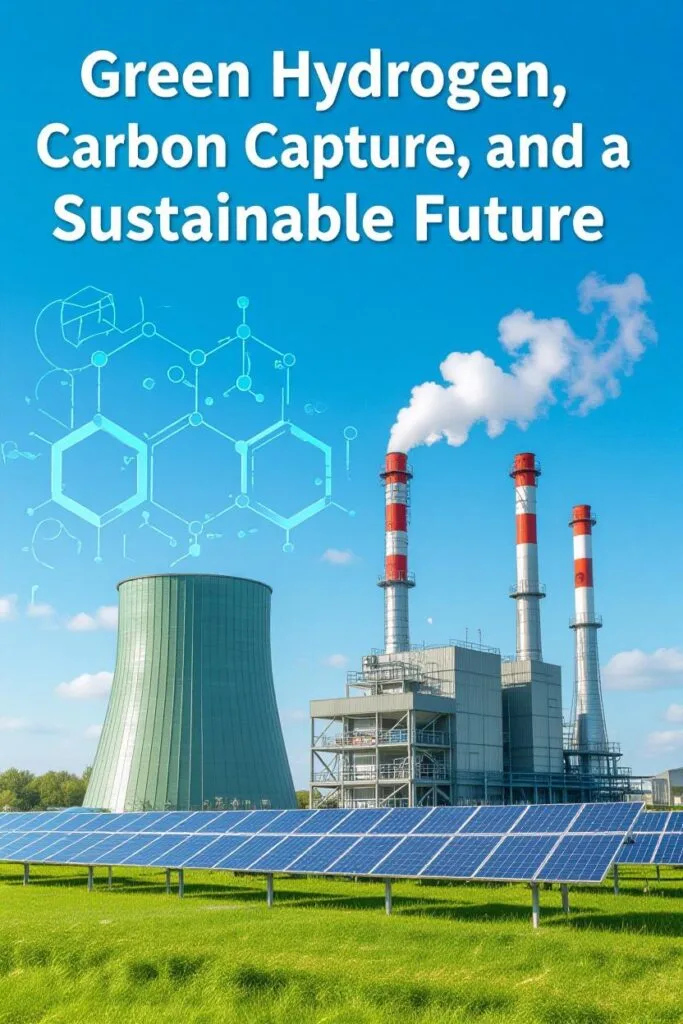
You hear the terms all the time: “climate change,” “net-zero,” “clean tech.” But what are the actual technologies behind the push for a greener planet? Welcome to the world of Environ-Tech (or Clean Tech)—the innovative field that’s using science and engineering to create a more sustainable future.
This isn’t just for scientists. Understanding these concepts helps us see the path forward. Let’s break down three key players: Green Hydrogen, Carbon Capture, and Sustainable Materials.
1. Green Hydrogen: The Clean Fuel of the Future
What is Hydrogen Energy?
First, hydrogen is a clean-burning fuel. When you use it, the only byproduct is water—no CO2 emissions. But the catch is how you produce the hydrogen in the first place.
The “Colors” of Hydrogen: Why “Green” is Key
Not all hydrogen is created equal. Think of it like a traffic light:
Grey Hydrogen: The most common type today. It’s made from natural gas, a process that releases a lot of CO2 into the atmosphere. This is the “bad” kind.
Blue Hydrogen: This is grey hydrogen, but with the CO2 emissions captured and stored (we’ll talk about that next!). It’s better, but not perfect.
Green Hydrogen: This is the gold standard. It’s produced using 100% renewable electricity, like from solar or wind farms.
The Simple Physics Behind Green Hydrogen: Electrolysis
So, how do you make hydrogen from water and sunlight? The process is called electrolysis, and it’s simpler than it sounds.
The Setup: You have a tank of pure water (H₂O) and two electrodes (an anode and a cathode).
The Power: You run renewable electricity through the water.
The Reaction: The electrical energy forces a chemical reaction:
The water molecules (H₂O) split apart.
Oxygen (O₂) bubbles form at the anode.
Hydrogen (H₂) bubbles form at the cathode.
The Result: You’ve created pure hydrogen gas, without any carbon emissions! This hydrogen can then be stored and used to power anything from factories to trucks, replacing fossil fuels.
2. Carbon Capture: Cleaning Up Our Past Mistakes
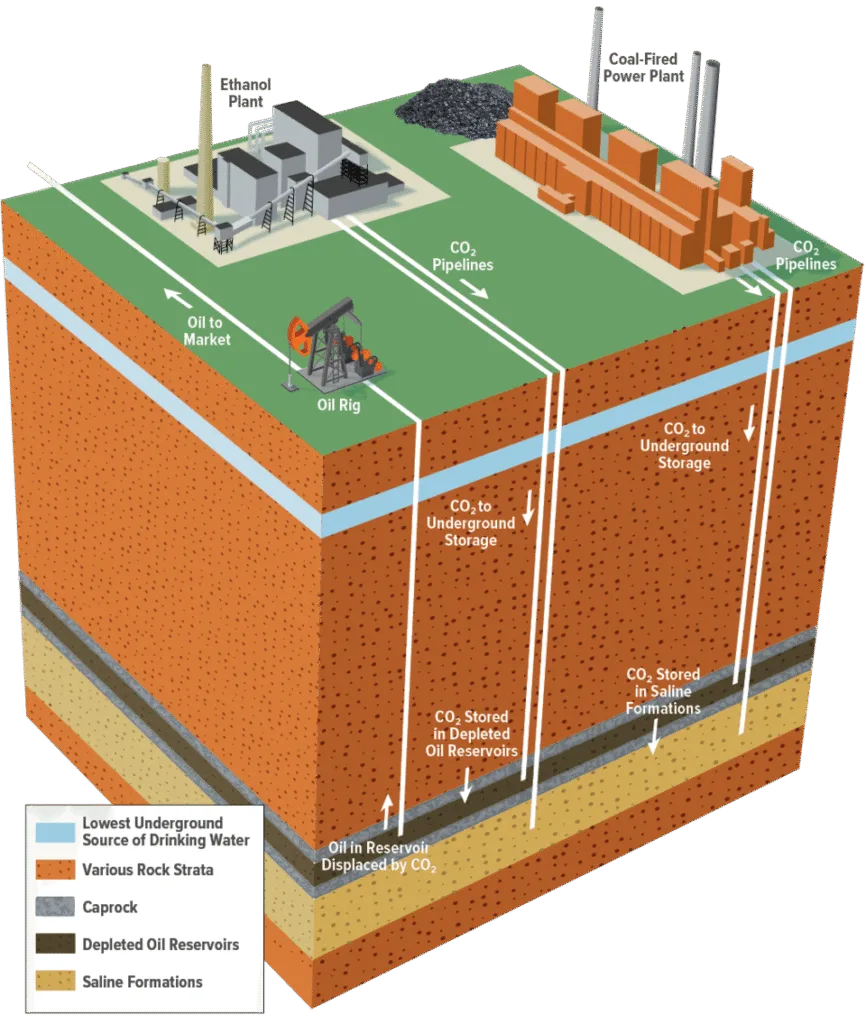
What if we could vacuum CO2 right out of the air? That’s the goal of carbon capture technologies.
How Does Carbon Capture Work?
There are two main approaches:
A. Point Source Capture: This is like putting a filter on a smokestack. It captures CO2 emissions right at the source—from power plants or factories—before they can enter the atmosphere.
B. Direct Air Capture (DAC): This is the more futuristic version. DAC machines act like giant trees, pulling existing CO2 directly out of the ambient air. The captured CO2 can then be either:
Stored Deep Underground: Locked away in geological formations, permanently.
Utilized (Carbon Capture & Utilization – CCU): Used to make products like concrete, fertilizers, or even synthetic fuels.
While it’s not a license to keep polluting, carbon capture is a crucial tool for dealing with the emissions we can’t yet eliminate.
3. Sustainable Materials & Energy Efficiency: Using Less, Doing More
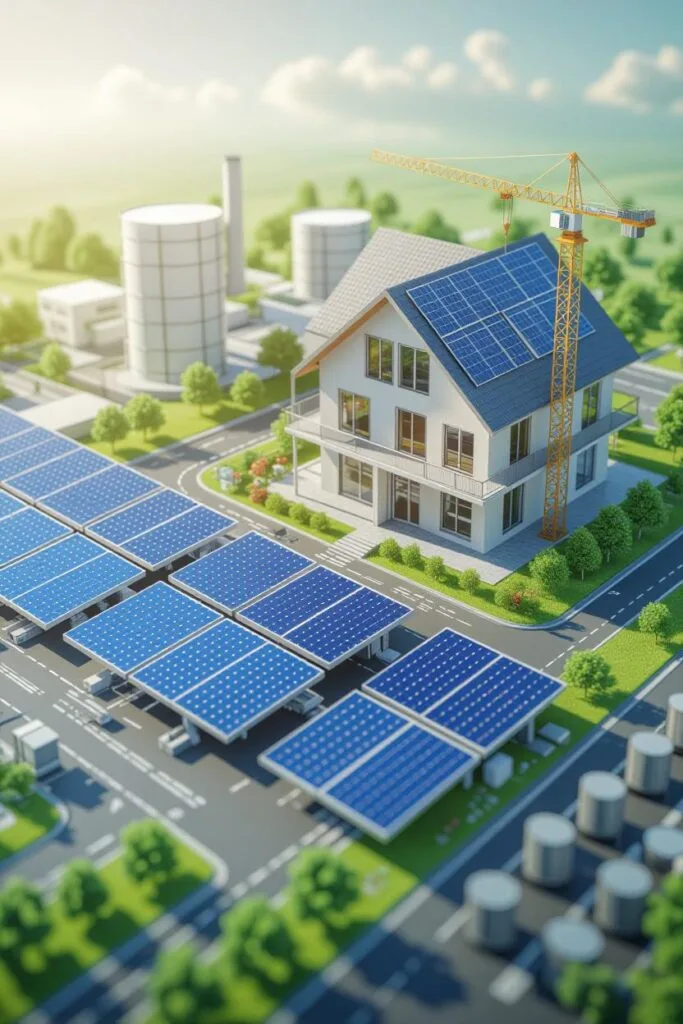
True sustainability isn’t just about creating new energy; it’s about wasting less of the energy we already have.
Sustainable Materials
This involves re-thinking what we make things from:
Plant-based Plastics: Made from corn or algae instead of petroleum.
Mycelium Packaging: Using mushroom roots to create biodegradable protective foam.
Recycled Concrete: Drastically reducing the massive carbon footprint of new construction.
Energy Efficiency: The “Low-Hanging Fruit”
This is the simplest and most cost-effective form of clean tech. It means using less energy to achieve the same result.
Smart Grids: Electricity networks that can intelligently manage supply and demand, reducing waste.
LED Lighting & High-Efficiency Appliances: Using a fraction of the energy for the same light or cooling power.
Better Building Insulation: Designing homes and offices that need less heating and air conditioning.
How It All Fits Together: A Vision of a Clean Future
Imagine a system where:
A wind farm provides renewable electricity.
This electricity runs an electrolyzer to produce green hydrogen.
The green hydrogen fuels a steel mill, while a carbon capture unit on the cement plant next door captures any remaining industrial emissions.
All the new buildings are made from sustainable materials and are so energy efficient that they need very little power to begin with.
This interconnected system is the ultimate goal of Environ-Tech. It’s not about one magic solution, but about many solutions working in harmony.
Conclusion
The path to a sustainable future is being built today with real, tangible technology. From the simple physics of splitting water to the ambitious goal of scrubbing our atmosphere, Environ-Tech offers a hopeful and exciting vision. By understanding and supporting these innovations, we can all be part of the solution.
FAQs (Frequently Asked Questions)
Q1: What is the main difference between blue and green hydrogen?
A: The key difference is the energy source. Blue hydrogen is produced from natural gas, and the resulting CO2 is captured. Green hydrogen is produced from water using 100% renewable electricity, resulting in zero CO2 emissions from the production process.
Q2: Is carbon capture technology a real solution, or just a excuse to keep using fossil fuels?
A: Most experts agree it is a necessary tool, but not an excuse. We must rapidly phase out fossil fuels. However, carbon capture is crucial for dealing with emissions from hard-to-abate industries (like cement production) and for reducing the existing CO2 load in our atmosphere.
Q3: What is a simple example of a sustainable material I might use?
A: Bamboo is a great example! It grows incredibly fast, requires no pesticides, and can be used for everything from flooring to cutting boards, replacing slower-growing woods or plastic.
Q4: Why is energy efficiency considered a form of clean tech?
A: The cleanest, cheapest energy is the energy we never have to use. By improving efficiency, we reduce the demand for power plants, which means less fossil fuel burned and fewer renewables that need to be built. It’s the first and most important step in any climate plan.
MCQs (Multiple Choice Questions)
1. Green hydrogen is produced through a process called:
a) Combustion
b) Electrolysis
c) Fracking
d) Photosynthesis
2. The primary goal of Direct Air Capture (DAC) technology is to:
a) Generate electricity from the wind
b) Remove carbon dioxide (CO2) directly from the atmosphere
c) Split water molecules into hydrogen and oxygen
d) Create new types of biodegradable plastic
3. Which of the following is the BEST example of energy efficiency?
a) Building a new solar farm
b) Replacing an old gas-guzzling car with an electric vehicle
c) Installing smart thermostats and LED lights to use less electricity
d) Planting trees in a city park
4. What is the key ingredient, powered by renewables, needed to produce green hydrogen?
a) Natural Gas
b) Crude Oil
c) Water
d) Coal
Answer Key for MCQs:
b) Electrolysis
b) Remove carbon dioxide (CO2) directly from the atmosphere
c) Installing smart thermostats and LED lights to use less electricity (This focuses on reducing demand, which is the core of efficiency).
c) Water

Leave a Reply