• Skip to primary navigation
  • Skip to main content
  • Skip to footer

OHMSITE

News Blogs

  • Home
  • Tech Blogs
  • Non-Tech Blogs
  • Finance
  • About us
    • Privacy Policy
    • Contact us
    • Terms & Conditions
    • Disclaimer
      • Login
        • login page

official

The Greenhouse Effect: How It Warms Our Planet

October 15, 2025 By kundan Leave a Comment

The Greenhouse Effect: How It Warms Our Planet

The Greenhouse Effect: How It Warms Our Planet

đŸŒ± Introduction

Have you ever wondered why Earth is warm enough to live on, while other planets like Mars are freezing? The answer lies in something called the greenhouse effect. It’s a natural process that keeps our planet’s temperature just right for life. But when this effect becomes too strong, it can lead to serious problems — like global warming and climate change.


☀ What Is the Greenhouse Effect?

The greenhouse effect is like wrapping Earth in a big, invisible blanket made of gases. When sunlight reaches Earth, part of it is absorbed by the ground, oceans, and plants. The rest bounces back toward space as heat (infrared radiation).

Now, gases in the atmosphere — such as carbon dioxide (CO₂), methane (CH₄), nitrous oxide (N₂O), and water vapor (H₂O) — trap some of this heat and keep it from escaping. These gases are called greenhouse gases because they work like the glass of a greenhouse, keeping heat inside.

Without It, Earth’s average temperature would be about -18°C instead of +15°C — too cold for humans, plants, or animals to survive.


💹 The Main Greenhouse Gases

  1. Carbon Dioxide (CO₂): Released by burning fossil fuels like coal, oil, and gas.

  2. Methane (CH₄): Comes from livestock, rice farming, and landfills.

  3. Nitrous Oxide (N₂O): Produced by fertilizers and industrial activities.

  4. Water Vapor (H₂O): The most abundant greenhouse gas, naturally present in the air.

  5. Ozone (O₃): Found in the upper atmosphere, it also traps some heat.


đŸ”„ When the Greenhouse Effect Becomes a Problem

While it is necessary for life, human activities are making it too strong. Since the Industrial Revolution, the amount of greenhouse gases in the atmosphere has increased sharply.

This enhanced it traps extra heat, causing global temperatures to rise. As a result:

  • Glaciers and ice caps are melting.

  • Sea levels are rising.

  • Weather patterns are becoming more extreme — with stronger storms, droughts, and heatwaves.

  • Wildlife habitats are being destroyed.


🌿 How We Can Reduce the Greenhouse Effect

How We Can Reduce the Greenhouse Effect

It’s not too late to make a difference. Here are a few ways to help:

  • Use renewable energy like solar, wind, or hydro power.

  • Plant trees — they absorb carbon dioxide from the air.

  • Use energy-efficient appliances and reduce electricity waste.

  • Use public transport, walk, or cycle instead of driving everywhere.

  • Reduce, reuse, and recycle to cut down on industrial emissions.


🌎 Conclusion

The greenhouse effect is both a gift and a challenge. It keeps our planet warm and alive, but when pushed beyond balance, it can turn into a threat. By understanding how it works and taking small steps to reduce our carbon footprint, we can protect the Earth for future generations.

Let’s keep our “blanket” comfortable — not too cold, and not too hot.


🌍 FAQs on the Greenhouse Effect

1. ❓What is the greenhouse effect?

It is a natural process that keeps the Earth warm. Certain gases in the atmosphere trap heat from the Sun, preventing it from escaping back into space. This helps maintain a temperature suitable for life on Earth.


2. ❓Why is it called the “greenhouse” effect?

It’s called the greenhouse effect because it works like a greenhouse used to grow plants. The glass of a greenhouse lets sunlight in and traps heat inside — the same way greenhouse gases trap heat in our atmosphere.


3. ❓Which gases are called greenhouse gases?

The main greenhouse gases are:

  • Carbon dioxide (CO₂)

  • Methane (CH₄)

  • Nitrous oxide (N₂O)

  • Water vapor (H₂O)

  • Ozone (O₃)


4. ❓Is the greenhouse effect good or bad?

The natural greenhouse effect is good — it keeps Earth warm enough for life.
However, the enhanced greenhouse effect, caused by human activities (like burning fossil fuels), makes Earth too warm and leads to global warming.


5. ❓How do humans increase the greenhouse effect?

Humans increase the GHG by:

  • Burning coal, oil, and gas for energy.

  • Cutting down forests (deforestation).

  • Using fertilizers and raising livestock.

  • Producing waste that releases methane.


6. ❓What are the effects of too much greenhouse gases?

Too many greenhouse gases cause:

  • Global warming and rising temperatures.

  • Melting glaciers and rising sea levels.

  • Extreme weather like heatwaves, floods, and droughts.

  • Disturbance in ecosystems and loss of biodiversity.


7. ❓How can we reduce the GHG?

We can reduce it by

  • Using renewable energy sources (solar, wind, hydro).

  • Planting more trees.

  • Saving electricity and using energy-efficient devices.

  • Reducing waste and recycling.

  • Choosing public transport or bicycles instead of cars.


8. ❓What is the difference between the greenhouse effect and global warming?

  • Greenhouse Effect: A natural process that keeps Earth warm.

  • Global Warming: The rise in Earth’s average temperature due to too much greenhouse effect caused by human activities.


9. ❓Can we completely stop It?

No, and we shouldn’t — because the natural greenhouse effect is essential for life. But we can control the extra greenhouse gases that cause harmful warming.


10. ❓Why should we care about tIt?

Because our climate, weather, food supply, and even health depend on it. If the greenhouse effect gets too strong, it can change life on Earth as we know it.

Filed Under: Geography, Non-Tech Blogs

Is Global Warming Fueling Our Extreme Weather?

October 15, 2025 By kundan Leave a Comment

Is Global Warming Fueling Our Extreme Weather? The Unavoidable Truth

Global Warming
Global Warming

It’s hard to miss the news these days: “Record-breaking heatwave hits the continent,” “Severe floods drown entire towns,” “Hurricanes stronger than ever.” If it seems like the weather is becoming more extreme and unpredictable, you’re right. The main reason behind all this is global warming.

For many years, global warming was seen as a problem of the future—something the next generation would deal with. But that future has already arrived. The Earth’s climate is changing right now, and we can see its effects everywhere—on the news and even outside our homes. The undeniable impact of global warming.

For decades, global warming was discussed as a future threat—a distant problem for the next generation. But the future is now. The Earth’s climate is changing, and the consequences are playing out in real time on our TV screens and, for many, on our doorsteps. This post will break down exactly how a warming planet is turning our weather more volatile and what it means for our future.

The Basics: What is Global Warming, Really?

Before we connect it to weather, let’s be clear on the core concept.

  • Global Warming: This is the long-term heating of Earth’s surface observed since the pre-industrial period (around 1850) due to human activities, primarily the burning of fossil fuels (like coal, oil, and gas).

  • The Mechanism: This burning releases vast amounts of greenhouse gases (GHGs), like carbon dioxide (CO2) and methane, into the atmosphere. These gases trap heat from the sun that would otherwise escape back into space, much like a blanket traps heat around the planet. This is the “greenhouse effect.”

The result? A steady rise in global average temperatures. But this average warming doesn’t just mean nicer summers; it fundamentally disrupts the planet’s complex climate systems, leading to the extremes we’re witnessing.

How a Warmer Planet Creates More Extreme Weather

Is Global Warming Fueling Our Extreme Weather?

1. More Intense Heatwaves and Droughts

This is the most direct link. As global temperatures rise, heatwaves become more frequent, last longer, and are more severe.

  • The Science: Higher baseline temperatures mean that what was once a rare heat event becomes common, and new, more extreme records are set.

  • The Impact: This leads to devastating droughts, crop failures, dangerous wildfires (like those seen in Australia and California), and thousands of heat-related deaths.

2. Stronger Storms and Hurricanes

Warmer ocean surfaces are like rocket fuel for storms.

  • The Science: Hurricanes and tropical cyclones draw their energy from warm ocean water. As sea surface temperatures rise, these storms have more energy to form, intensify rapidly, and carry more moisture.

  • The Impact: This results in more powerful Category 4 and 5 hurricanes that cause catastrophic wind damage and, crucially, much higher rainfall, leading to severe flooding.

3. Heavier Rainfall and Flooding

A warmer atmosphere can hold—and then release—more moisture.

  • The Science: For every 1°C (1.8°F) of warming, the atmosphere can hold about 7% more water vapor. This leads to more intense, heavy downpours when it rains.

  • The Impact: Increased risk of flash floods and river flooding, even in areas not traditionally prone to them, devastating communities and infrastructure.

4. Rising Sea Levels

This is a slow-moving but irreversible consequence that amplifies storm damage.

  • The Science: Sea levels are rising for two main reasons: 1) thermal expansion (warmer water takes up more space), and 2) the melting of land-based ice sheets and glaciers (in Greenland and Antarctica).

  • The Impact: Higher sea levels create more destructive storm surges during hurricanes and cyclones, pushing water further inland. They also lead to chronic “sunny day flooding” in coastal cities.

(Image: An infographic simply illustrating the four points above – a burning sun, a hurricane over warm water, dark clouds with heavy rain, and a wave hitting a city.)

The Evidence is In: What the Data Says

This isn’t just theory. The field of attribution science has advanced tremendously, allowing scientists to quantify global warming’s role in specific weather events. Studies have consistently found that:

  • The 2021 Pacific Northwest heatwave would have been “virtually impossible” without human-caused climate change.

  • Hurricane Harvey’s record-breaking rainfall over Houston in 201 was made three times more likely and 15% more intense by global warming.

What Can We Do? From Global Action to Personal Steps

The situation is serious, but it’s not hopeless. Addressing global warming requires a two-pronged approach:

  1. Systemic Change: This is the most critical part. We need a global transition to clean, renewable energy (solar, wind, geothermal) and strong government policies that prioritize reducing emissions.

  2. Individual Actions: While systemic change is key, our collective choices matter. You can:

    • Reduce your carbon footprint by conserving energy at home.

    • Consider your transportation (walk, bike, use public transit, or switch to an electric vehicle).

    • Reduce food waste and adopt a more plant-based diet.

    • Most importantly, use your voice. Vote for leaders who prioritize climate action and support businesses committed to sustainability.

Conclusion: A Crisis and an Opportunity

The link between global warming and extreme weather is no longer a future prediction; it is our present reality. The “new normal” is one of increasing volatility and risk. However, by understanding this connection, we are empowered to take action. The steps we take now to mitigate global warming—by cutting emissions and building more resilient communities—are not just about saving the planet for future generations; they are about safeguarding our way of life today.


What extreme weather event in your area has made you most concerned about climate change? Share your thoughts and experiences in the comments below. Let’s start a conversation.

Filed Under: Geography, Non-Tech Blogs Tagged With: Global Warming

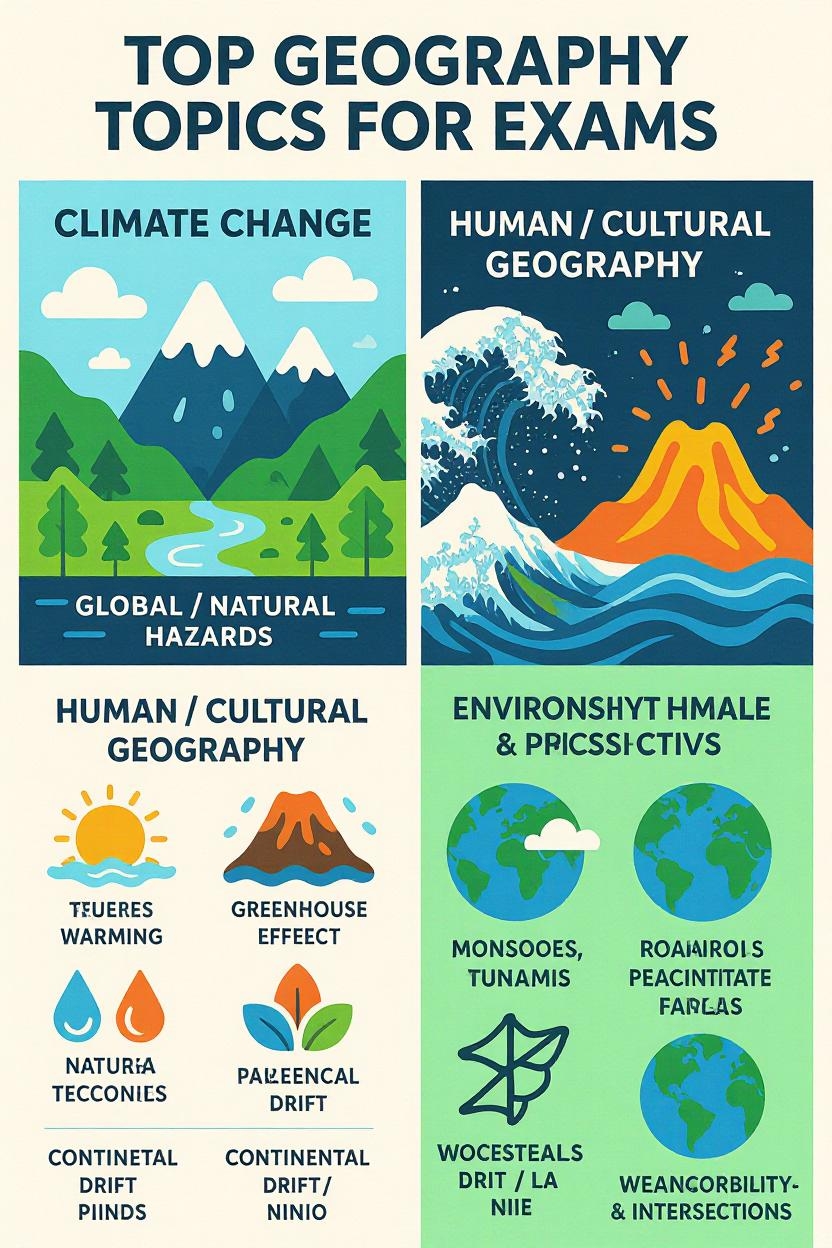
Top Geography Topics for all exams

October 15, 2025 By kundan Leave a Comment

Top Geography Topics for all exams

Physical Geography & Natural Hazards

Top Geography Topics for all exams

  • Climate change, Global warming, greenhouse effect.

  • Natural disasters: earthquakes, volcanoes, tsunamis, floods.

  • Plate tectonics, continental drift.

  • Weather and climate patterns: monsoons, el Niño / la Niña, jet streams.

  • Oceans, sea level rise.

  • Glaciers, ice caps, polar regions.

  • Rivers, lakes, watersheds, and water management.

  • Soil types, landforms, deserts, and mountain ranges.

Human / Cultural / Political Geography

  • Migration, urbanization, population distribution.

  • Cities, their growth, megacities, slums.

  • Economic geography: agriculture, industry, natural resources.

  • Cultural geography: languages, religions, ethnic groups.

  • Geopolitics: borders, territorial disputes, political divisions.

  • Tourism geography: Sustainable tourism and travel trends.

Environment, Sustainability & Intersections

  • Biodiversity loss, species extinction, and conservation.

  • Forests, mangroves, ecosystems.

  • Sustainable development, green energy, renewable resources.

  • Human–environment interaction: how humans affect the environment & vice versa.

  • Water scarcity and water resource management.

Trending / Popular “Hook” Geography Topics

  • Maps, map-reading, GIS (Geographic Information Systems).

  • “Mysteries” or unusual physical geography phenomena.

  • Impact of climate on everyday life (rising heat, extreme weather).

  • Geography in news: e.g., places mentioned in current affairs (natural disasters, newly discovered islands, territorial claims).

  • Food Security and Agriculture in Changing Climates


Physical Geography & Natural Hazards

1. Climate Change, Global Warming, Greenhouse Effect

  • Climate Change: A long-term shift in global or regional climate patterns (e.g., increased extreme weather).

  • Global Warming: The specific, long-term increase in Earth’s average surface temperature, a major driver of climate change.

  • Greenhouse Effect: A natural process where gases in the atmosphere (like CO2, Methane, Water Vapor) trap heat, keeping the Earth warm. Human activities (burning fossil fuels, deforestation) have enhanced this effect, leading to accelerated global warming.

2. Natural Disasters

  • Earthquakes: Caused by the sudden release of energy along fault lines in the Earth’s crust. Measured on the Richter scale.

  • Volcanoes: Openings in the Earth’s crust through which molten rock (lava), ash, and gases erupt. Often found at tectonic plate boundaries.

  • Tsunamis: Giant sea waves generated by undersea earthquakes, volcanic eruptions, or landslides.

  • Floods: An overflow of water that submerges land that is usually dry. Causes include heavy rainfall, storm surges, and river overflow.

3. Plate Tectonics & Continental Drift

  • Continental Drift: The theory (by Alfred Wegener) that continents were once joined in a supercontinent (Pangaea) and have since “drifted” to their current positions.

  • Plate Tectonics: The modern theory that the Earth’s lithosphere (crust and upper mantle) is divided into large, moving plates. Their interaction (converging, diverging, transforming) causes mountains, earthquakes, and volcanoes.

4. Weather and Climate Patterns

  • Monsoons: Seasonal reversal of wind patterns that bring heavy rainfall to regions like South and Southeast Asia.

  • El Niño / La Niña: Opposite phases of the El Niño-Southern Oscillation (ENSO) cycle in the Pacific Ocean.

    • El Niño: Unusually warm ocean temperatures, disrupting global weather (causing droughts in some areas, floods in others).

    • La Niña: Unusually cool ocean temperatures, often with opposite effects of El Niño.

  • Jet Streams: Fast-flowing, narrow air currents in the atmospheres of some planets, including Earth. They influence weather patterns by steering storms and separating warm and cold air.

5. Oceans & Sea Level Rise

  • Oceans: Cover about 71% of the Earth’s surface and regulate global climate.

  • Sea Level Rise: Primarily caused by thermal expansion (water expanding as it warms) and the melting of glaciers and ice sheets. Threatens coastal communities and ecosystems.

6. Glaciers, Ice Caps, Polar Regions

  • Glaciers & Ice Caps: Massive, slow-moving rivers of ice. Their melting contributes to sea-level rise.

  • Polar Regions (Arctic & Antarctic): Act as the Earth’s “air conditioners.” The Arctic is an ice-covered ocean, while Antarctica is a ice-covered continent. They are warming faster than the global average (Polar Amplification).

7. Rivers, Lakes, Watersheds, and Water Management

  • Watershed (Drainage Basin): The area of land where all precipitation drains into a single river or lake system.

  • Water Management: The control and movement of water resources to minimize damage to life and property and to maximize efficient use. Includes dams, reservoirs, and conservation.

8. Soil Types, Landforms, Deserts, and Mountain Ranges

  • Soil Types: Vary by region (e.g., Alluvial, Black, Laterite). Influenced by climate, parent rock, and topography.

  • Landforms: Natural features of the Earth’s surface (e.g., mountains, plateaus, plains, valleys).

  • Deserts: Arid regions with low rainfall. Can be hot (Sahara) or cold (Gobi).

  • Mountain Ranges: Formed primarily by tectonic forces. Major ranges include the Himalayas, Andes, and Rockies.


Human / Cultural / Political Geography

1. Migration, Urbanization, Population Distribution

  • Migration: Movement of people from one place to another (can be internal/international, voluntary/forced).

  • Urbanization: The increasing percentage of a population living in urban areas (cities and towns).

  • Population Distribution: The pattern of where people live. Often uneven, influenced by physical geography, resources, and economy.

2. Cities, Megacities, Slums

  • Megacities: A metropolitan area with a population of over 10 million (e.g., Tokyo, Delhi, Shanghai).

  • Slums: Heavily populated urban informal settlements characterized by substandard housing, squalor, and lack of security of tenure.

3. Economic Geography

  • Agriculture: The cultivation of crops and rearing of animals. Types include subsistence and commercial.

  • Industry: The production of goods or related services within an economy. Location is influenced by resources, labor, and transport.

  • Natural Resources: Materials from the Earth that are used to support life and meet people’s needs (e.g., water, minerals, forests).

4. Cultural Geography

  • Languages, Religions, Ethnic Groups: The spatial distribution and interaction of cultural elements across the world.

5. Geopolitics

  • Borders & Political Divisions: The lines that define the territorial limits of a state.

  • Territorial Disputes: A disagreement over the possession/control of land between two or more states.

6. Tourism Geography

  • Sustainable Tourism: Tourism that takes full account of its current and future economic, social, and environmental impacts, addressing the needs of visitors, the industry, the environment, and host communities.


Environment, Sustainability & Intersections

1. Biodiversity Loss & Conservation

  • Biodiversity: The variety of life in the world or in a particular habitat or ecosystem.

  • Species Extinction: The permanent loss of a species. The current rate is 100-1000 times higher than the natural background rate, largely due to human activity.

  • Conservation: The preservation and careful management of the environment and natural resources.

2. Forests, Mangroves, Ecosystems

  • Ecosystem: A biological community of interacting organisms and their physical environment.

  • Mangroves: Salt-tolerant trees and shrubs that grow in coastal intertidal zones. They act as crucial nurseries for fish and buffer coastlines against storms and erosion.

3. Sustainable Development & Green Energy

  • Sustainable Development: “Development that meets the needs of the present without compromising the ability of future generations to meet their own needs.” (Brundtland Report)

  • Renewable Resources: Energy sources that are naturally replenished, such as solar, wind, hydro, and geothermal.

4. Human-Environment Interaction

  • How humans affect the environment (e.g., pollution, deforestation, urbanization).

  • How the environment affects humans (e.g., natural hazards, climate change, resource availability).

5. Water Scarcity

  • The lack of sufficient available water resources to meet the demands within a region. It is caused by overuse, pollution, and climate change.


Trending / Popular “Hook” Geography Topics

1. Maps & GIS

  • GIS (Geographic Information Systems): A computer system for capturing, storing, checking, and displaying data related to positions on Earth’s surface. Crucial for modern planning and analysis.

2. Unusual Physical Phenomena

  • Topics like “Ring of Fire” (Pacific earthquake/volcano zone), “Midnight Sun” (in polar regions), or mysterious sinkholes.

3. Impact of Climate on Everyday Life

  • Direct links such as rising urban heat, increased frequency of extreme weather events (heatwaves, floods), and impacts on agriculture and food security.

4. Geography in News

  • Always relevant. Connect geographical concepts to current events:

    • A major earthquake or hurricane -> Plate tectonics / Natural Hazards.

    • A new territorial dispute -> Geopolitics.

    • A report on melting Arctic ice -> Climate Change / Polar Regions.

    • Discovery of a new island -> Volcanism / Landforms.

Climate change

Filed Under: Geography, Non-Tech Blogs, world facts Tagged With: Geography Topics

Economic Load Dispatch Using Genetic Algorithm

October 12, 2025 By kundan Leave a Comment

Economic Load Dispatch Using Genetic Algorithm


Economic Load Dispatch Using Genetic Algorithm

ELD-Using GA- Economic Load Dispatch (ELD) is an essential problem in power system operation that focuses on minimizing the total fuel cost of generating units while meeting the required load demand and operating constraints. Traditional mathematical optimization techniques often fail to handle the nonlinear and non-convex nature of modern power systems. It presents an efficient approach using the Genetic Algorithm (GA) — a powerful meta-heuristic optimization method inspired by natural evolution — to determine the optimal generation schedule of thermal power plants. The proposed method effectively reduces fuel costs and handles constraints with flexibility and robustness.


1. Introduction

In a modern power system, the total electrical demand must be supplied by several generating units operating in coordination. The Economic Load Dispatch (ELD) problem determines the most economical power output of each generator so that the total generation cost is minimized while satisfying system constraints such as power balance and generator limits.

Conventional methods such as Lambda Iteration, Gradient Search, or Newton-Raphson are often used for ELD. However, these methods may fail when dealing with complex systems having nonlinear fuel-cost functions, prohibited operating zones, and multiple local minima. To overcome these challenges, Genetic Algorithm (GA) offers a robust and flexible alternative.

The main aim of Economic Load Dispatch (ELD) using Genetic Algorithm (GA) is to determine the optimal power generation schedule of multiple generating units so that the total fuel cost is minimized while satisfying all operational constraints such as power balance, generator limits, and transmission losses.
In simple terms, it ensures that the electricity demand is met at the lowest possible cost while maintaining system reliability and efficiency.


2. Importance

  • Efficient Power Generation: ELD ensures economical operation of power plants, reducing fuel consumption and operating costs.

  • Resource Optimization: It helps allocate generation among available units in an optimal way.

  • System Stability: By maintaining load balance, it enhances the reliability and stability of the power system.

  • Environmental Benefits: Lower fuel usage leads to reduced emissions and improved sustainability.

  • Scalability: The GA-based method can handle large, complex systems better than classical methods.


3. Advantages of Using Genetic Algorithm

  • Global Optimization: GA can find global minima and avoid being trapped in local minima, which often occurs in nonlinear cost functions.

  • Nonlinearity Handling: Capable of solving non-smooth, non-convex, and discontinuous cost functions (such as valve-point effects).

  • Flexibility: Can easily incorporate additional constraints (like emission limits, prohibited operating zones).

  • Derivative-Free: Does not require gradient information or linear approximations.

  • Adaptability: Suitable for hybrid systems including thermal, wind, and solar generation.

  • Robust Performance: Performs well even when system parameters or demand vary.


4. Comparison with Traditional Methods

AspectTraditional Methods (e.g., Lambda Iteration, Newton-Raphson)Genetic Algorithm (GA)
Nature of SolutionDeterministic, may get stuck in local minimaStochastic, explores global solution space
Handling Nonlinear FunctionsPoor; requires smooth cost functionsExcellent; handles non-convex and discontinuous functions
Constraint HandlingLimited and complexSimple via penalty functions
Derivative RequirementNeeds derivative or incremental cost curveNo derivative required
Computational ComplexityLower but may be inaccurateSlightly higher but more accurate
FlexibilityDifficult to modify for new constraintsHighly flexible and adaptable
Result QualityMay not reach global optimumHigh chance of achieving global optimum

Conclusion:
GA provides a more reliable and flexible solution than traditional optimization techniques, especially in complex and realistic power system environments.


5. Objective of Economic Load Dispatch

The main objective of ELD is to:

  • Minimize the total fuel cost of generating units.

Economic Load Dispatch Using Genetic Algorithm


6. Key Features of GA-Based ELD

Economic Load Dispatch Using Genetic Algorithm

  1. Population-Based Search: Uses multiple solutions (chromosomes) simultaneously.

  2. Evolutionary Process: Applies selection, crossover, and mutation operators to evolve better solutions.

  3. Fitness Function: Based on minimizing fuel cost and penalty for power mismatch.

  4. Constraint Handling: Uses penalty methods to ensure power balance and generation limits.

  5. Termination Criteria: Stops when minimum cost or maximum generation number is reached.

  6. Adaptability: Easily adjustable for multi-objective problems such as cost-emission trade-offs.


7. Future Scope

Economic Load Dispatch Using Genetic Algorithm


  • Hybrid Algorithms: Combining GA with other techniques like Particle Swarm Optimization (PSO), Differential Evolution (DE), or Artificial Neural Networks (ANN) for improved performance.

  • Renewable Integration: Applying GA to systems with high penetration of solar and wind energy, where uncertainty is high.

  • Real-Time Optimization: Using GA in smart grids for dynamic and adaptive economic dispatch.

  • Multi-Objective Optimization: Simultaneously minimizing fuel cost, emissions, and transmission losses.

  • Cloud and IoT-Based Systems: Integrating GA with cloud computing and IoT sensors for data-driven power dispatch decisions.


8. Applications

Economic Load Dispatch Using Genetic Algorithm

  1. Power System Operation: Optimal allocation of load among generating units.

  2. Smart Grid Management: Real-time control and optimization under varying loads.

  3. Renewable Energy Integration: Balancing renewable and thermal generation.

  4. Microgrid Optimization: Managing distributed energy resources economically.

  5. Unit Commitment and Scheduling: Planning generation schedules over short-term or long-term periods.

  6. Combined Heat and Power (CHP) Systems: Economic scheduling of thermal and electrical outputs.


9. Challenges

  • Computational Time: GA can be slower for very large systems due to iterative population evaluation.

  • Parameter Tuning: Performance depends on proper selection of population size, crossover rate, and mutation rate.

  • Convergence Speed: May take many generations to reach optimal results.

  • Local Optima Avoidance: Though better than classical methods, GA may still occasionally converge to near-optimal solutions.

  • Practical Implementation: Integrating GA results into real-time dispatch control can be challenging due to communication delays and data uncertainties.

The use of Genetic Algorithm in Economic Load Dispatch offers a strong and flexible optimization tool capable of handling complex, nonlinear, and non-convex cost functions. It provides better accuracy, global optimality, and adaptability compared to traditional techniques. With advancements in computational intelligence and integration with renewable energy systems, GA-based ELD will play a vital role in achieving economical, efficient, and sustainable power system operation in the future.


FAQ on Economic Load Dispatch Using Genetic Algorithm


1. What is Economic Load Dispatch (ELD)?

Answer:
Economic Load Dispatch (ELD) is the process of determining the most economical way to distribute the total electrical load demand among available generating units while minimizing the total fuel cost and satisfying operational constraints.


2. Why is Economic Load Dispatch important?

Answer:
ELD is important because it helps reduce fuel consumption, minimize generation cost, maintain system stability, and ensure efficient use of available resources in power systems.


3. What is the objective of Economic Load Dispatch?

Answer:
The main objective of ELD is to minimize the total fuel cost of power generation while meeting the total load demand and maintaining generator operating limits.


4. What are the main constraints in ELD?

Answer:

  • Power balance constraint: Total generation = total demand + transmission losses.

  • Generator limits: Each generator must operate within its minimum and maximum power limits.


5. What is a Genetic Algorithm (GA)?

Answer:
Genetic Algorithm (GA) is an optimization technique inspired by the process of natural evolution. It uses operations like selection, crossover, and mutation to find the best solution to a problem.


6. Why is GA used for Economic Load Dispatch?

Answer:
GA is used for ELD because it can handle nonlinear, nonconvex, and discontinuous cost functions that are difficult for traditional methods to solve. It can also find global optima efficiently.


7. What are the main steps of a Genetic Algorithm?

Economic Load Dispatch Using Genetic Algorithm

Answer:

  1. Initialize population (random solutions)

  2. Evaluate fitness (based on fuel cost)

  3. Select the best solutions

  4. Apply crossover (combine parent solutions)

  5. Apply mutation (introduce random changes)

  6. Replace old population and repeat until best result is found


8. What is a fitness function in GA?

Answer:
The fitness function measures how good a solution is. In ELD, it is often the inverse of the total fuel cost, so lower cost means higher fitness.


9. What are the advantages of using GA for ELD?

Answer:

  • Can handle complex and nonlinear cost functions

  • Avoids local minima and finds near-global solutions

  • Flexible and easily adaptable

  • Does not need derivative information

  • Suitable for multi-objective optimization (cost + emission)


10. How does GA compare with traditional methods like Lambda Iteration?

Answer:
Traditional methods are simple but limited to smooth, convex cost functions. GA is more powerful, can handle nonlinearities, and does not require mathematical derivatives. However, GA may take longer computation time.


11. What are some applications of GA-based ELD?

Answer:

  • Thermal power plant optimization

  • Microgrid and smart grid control

  • Integration of renewable energy sources

  • Combined heat and power dispatch

  • Real-time generation scheduling


12. What are the challenges in using GA for ELD?

Answer:

  • High computation time for large systems

  • Sensitivity to parameter selection (population size, mutation rate)

  • May need fine-tuning to achieve faster convergence

  • Requires good initial settings for better performance


13. Can GA be combined with other optimization techniques?

Answer:
Yes, GA can be hybridized with other methods such as Particle Swarm Optimization (PSO), Differential Evolution (DE), or Neural Networks to improve accuracy and speed.


14. What software can be used to implement GA for ELD?

Answer:
MATLAB is commonly used, especially using the ga() function from the Optimization Toolbox. Other tools include Python (DEAP library), C++, and Java.


15. What is the future scope of GA in ELD?

Answer:
Future applications include multi-objective optimization (cost, emission, and loss minimization), integration of renewable sources, real-time control in smart grids, and AI-based adaptive ELD systems.


16. What makes GA suitable for renewable energy integration?

Answer:
GA can handle uncertainties and variability in renewable power outputs (like wind and solar) by continuously optimizing generation schedules in changing conditions.


17. How does GA ensure global optimization?

Answer:
By using a population of solutions and applying randomized operations (crossover and mutation), GA explores a wide search space, increasing the chance of finding the global optimum rather than being stuck in a local one.


18. What kind of cost function is used in ELD?

Economic Load Dispatch Using Genetic Algorithm


19. What are prohibited operating zones in ELD?

Answer:
Prohibited operating zones are specific power output ranges that generators must avoid due to mechanical or operational constraints. GA can handle these easily by penalizing those regions in the fitness function.


20. What are the real-world benefits of using GA-based ELD?

Answer:

  • Reduced operational costs

  • Efficient power distribution

  • Better use of renewable resources

  • Enhanced system reliability

  • Lower emissions and environmental impact

Filed Under: Electrical, M.Tech, Tech Blogs Tagged With: Economic Load Dispatch Using Genetic Algorithm

The DNA Designer: Exploring CRISPR-Cas9 and the Future of Genetics 🧬

June 9, 2025 By kundan Leave a Comment

What is CRISPR-Cas9 🧬?

CRISPR stands for Clustered Regularly Interspaced Short Palindromic Repeats and Cas9 is a protein enzyme (specifically a nuclease) that acts like a pair of scissors to cut DNA.

CRISPR-Cas9 is a gene-editing technology that allows scientists to make precise changes in the DNA of living organisms — including humans, animals, plants, and bacteria. It was discovered in bacteria as a natural defense system to fight viruses. Scientists adapted this mechanism to edit genes in a laboratory.

Think of CRISPR as the GPS that finds the right location on DNA and Cas9 as the scissors that cut the DNA at that spot.


How Does CRISPR-Cas9 Work?

crispr-cas9

The CRISPR-Cas9 system works in five simple steps:

1. Guide RNA Design

A guide RNA (gRNA) is created that matches the DNA sequence scientists want to change.

2. Cas9 Enzyme

Cas9 is combined with the guide RNA. The Cas9-gRNA complex is then introduced into the target cell.

3. DNA Search

The gRNA helps Cas9 find the matching DNA sequence in the cell’s genome.

4. DNA Cutting

Cas9 cuts the DNA at the exact target site.

5. DNA Repair

The cell tries to repair the break. Scientists can either:

  • Disable a gene

  • Fix a mutation

  • Insert a new gene

This process is fast, cheap, and accurate compared to older gene-editing techniques.


History and Discovery

  • 1987: First discovered in bacteria.

  • 2005: CRISPR sequences were found to be part of bacterial defense systems.

  • 2012: Jennifer Doudna and Emmanuelle Charpentier adapted CRISPR-Cas9 for genome editing.

  • 2020: Both scientists won the Nobel Prize in Chemistry.


Advantages of CRISPR-Cas9

crispr-cas9

1. High Accuracy

It can target specific DNA sequences with precision.

2. Cost-effective

CRISPR is cheaper than other gene-editing tools like ZFNs (Zinc Finger Nucleases) and TALENs (Transcription Activator-Like Effector Nucleases).

3. Easy to Use

It is easier and faster to design than older technologies.

4. Versatile

Works in nearly all organisms—humans, animals, plants, and microbes.

5. Permanent Results

Edits made to DNA are usually long-lasting or permanent.

6. Faster Research

It helps speed up scientific research in genetics, biology, and medicine.


Disadvantages and Limitations

1. Off-target Effects

Sometimes CRISPR may cut the wrong part of DNA, which could cause harmful mutations.

2. Incomplete Editing

Not all cells may be edited successfully, leading to mixed results.

3. Ethical Concerns

Editing human embryos or reproductive cells can have serious ethical implications.

4. Immune Reactions

Introducing Cas9 protein into the human body might trigger an immune response.

5. Unknown Long-term Effects

We still do not know all the long-term risks of gene editing.

6. Delivery Problems

It is difficult to deliver CRISPR components into certain cells inside the body.


Applications of CRISPR-Cas9

crispr-cas9

1. Human Health and Medicine

a. Gene Therapy

CRISPR can correct genetic defects causing diseases such as:

  • Sickle Cell Anemia

  • Cystic Fibrosis

  • Muscular Dystrophy

  • Hemophilia

b. Cancer Treatment

CRISPR is being used to:

  • Identify cancer-causing genes

  • Design immune cells (like CAR-T cells) that target cancer cells

c. Infectious Diseases

CRISPR has potential in fighting viruses like:

  • HIV

  • Hepatitis B

  • Herpes

d. Drug Development

It helps create better disease models for testing new medicines.


2. Agriculture and Food

a. Improving Crop Quality

  • Make crops resistant to pests, drought, or diseases

  • Increase nutritional value (like Vitamin A-rich rice)

  • Improve shelf life (like non-browning mushrooms)

b. Livestock Improvement

  • Disease-resistant pigs and chickens

  • Increased milk or meat production

  • Enhanced reproductive efficiency

c. Reducing Use of Chemicals

Less need for chemical pesticides and fertilizers, making farming eco-friendly.


3. Environmental Applications

a. Gene Drives

Used to control or eliminate pests and invasive species (e.g., malaria-spreading mosquitoes).

b. Bio-remediation

Genetically edited microbes can clean up pollutants like oil spills, plastic, or heavy metals.

c. Conservation

CRISPR could help save endangered species by correcting harmful mutations.


4. Industrial Biotechnology

  • Engineer microbes to produce:

    • Biofuels

    • Biodegradable plastics

    • Industrial enzymes

  • Used in fermentation and bio-manufacturing


5. Research and Education

  • CRISPR is a powerful tool in molecular biology labs.

  • Helps in understanding gene function by switching genes on or off.


Ethical Concerns

crispr-cas9

1. Germline Editing

  • Editing sperm, eggs, or embryos can pass changes to future generations.

  • Raises concerns about unintended consequences and human evolution.

2. Designer Babies

  • Potential misuse for selecting traits like intelligence, height, or appearance.

3. Accessibility and Inequality

  • If gene therapy becomes expensive, only the rich may benefit.

4. Animal Rights

  • Genetic modification in animals raises questions about animal welfare.

5. Religious and Cultural Views

Some cultures or religions may object to altering God-given traits.


Regulation Around the World

  • United States: Allows CRISPR in research and clinical trials under strict regulations.

  • China: Actively developing CRISPR but criticized for lack of ethical control (e.g., edited babies scandal).

  • Europe: Strict laws especially in agriculture.

  • India: Permits CRISPR in research; policy for agriculture and medicine is evolving.

Regulatory clarity is essential to ensure safety and fairness in CRISPR use.


Comparison with Other Gene-Editing Tools

ToolAccuracyCostEase of UseOff-target Risk
CRISPR-Cas9HighLowEasyModerate
TALENsHighHighModerateLow
ZFNsModerateHighDifficultModerate
MeganucleasesModerateHighDifficultLow

CRISPR-Cas9 stands out as the most cost-effective, simple, and versatile tool among them.


CRISPR in Action: Case Studies

CRISPR

1. Sickle Cell Anemia Treatment

In 2020, a patient in the U.S. was successfully treated using CRISPR to fix the mutation causing sickle cell anemia.

2. COVID-19 Testing

CRISPR was adapted to detect coronavirus RNA, helping in rapid and cheap testing.

3. Non-Browning Mushrooms

Researchers used CRISPR to edit a gene in mushrooms that causes browning, improving shelf life without labeling them as GMOs.

4. Mosquito Population Control

Scientists created mosquitoes with gene drives to reduce populations that spread malaria.


Future of CRISPR-Cas9

1. Next-generation CRISPR Tools

Newer versions like Cas12, Cas13, and base editors are being developed for higher precision and different applications.

2. Personalized Medicine

Treatments tailored to an individual’s genetic makeup will be more common.

3. Synthetic Biology

CRISPR will be used to create synthetic organisms that produce medicines, food, and fuels.

4. Global Health

CRISPR can help fight global health issues like malaria, HIV, and antibiotic resistance.

5. Education and Outreach

Public understanding is key. Schools, governments, and media should educate people on the benefits and risks.


CRISPR-Cas9 is a revolutionary gene-editing tool that has changed the face of science. Its ability to cut and change DNA with precision has opened doors in medicine, agriculture, environment, and industry. While it brings enormous potential, it also poses serious ethical, social, and safety questions that humanity must address together.

With proper regulation, ethical use, and inclusive access, CRISPR-Cas9 can help solve some of the biggest challenges we face today — from genetic diseases to climate change. The future is exciting, but it must be shaped with care, responsibility, and global cooperation.


Read more about Biotechnology


Filed Under: official, Tech Blogs

Biotechnology-Genetically modified organisms

May 26, 2025 By kundan Leave a Comment

Biotechnology

Biotechnology is a science that uses living organisms or their parts to make useful products or solve problems. It combines biology with technology. The term comes from two words — “bio” (life) and “technology” (use of scientific tools). Biotechnology has many applications in different fields like medicine, agriculture, environment, and industry. In this essay, we will understand what biotechnology is, its different types and dimensions, and how it is applied in the real world.


What is Biotechnology?

Biotechnology

Biotechnology means using living things such as bacteria, plants, animals, or cells to produce goods or services that benefit humans. It is a fast-growing area of science and engineering. For example, using yeast to make bread and alcohol is an ancient form of biotechnology. Today, modern biotechnology is more advanced and includes gene editing, cloning, making vaccines, producing biofuels, and much more.


History and Evolution of Biotechnology

Biotechnology is not a new science. Humans have been using natural biological processes for thousands of years. Some key developments in the history of biotechnology are:

  • Ancient Times: Fermentation was used to make bread, beer, wine, and yogurt.

  • 17th Century: The microscope was invented, allowing scientists to see microorganisms.

  • 19th Century: Gregor Mendel discovered the basic laws of genetics.

  • 1953: James Watson and Francis Crick discovered the structure of DNA.

  • 1970s: Genetic engineering and recombinant DNA technology were developed.

  • 21st Century: New tools like CRISPR have made it possible to edit genes with high precision.


Types of Biotechnology

Biotechnology is divided into different types based on the field of application. Each type is often identified by a color code. The main types of biotechnology are:


1. Red Biotechnology (Medical Biotechnology)

This type deals with health and medicine. It uses biotechnology to treat diseases and improve healthcare.

Applications:

  • Production of vaccines and antibiotics

  • Gene therapy

  • Stem cell research

  • Personalized medicine

  • Regenerative medicine


2. Green Biotechnology (Agricultural Biotechnology)

This type is used in agriculture to improve crops and farming practices.

Applications:

  • Genetically modified (GM) crops

  • Biofertilizers and biopesticides

  • Drought- and pest-resistant plants

  • Improved crop yields

  • Disease-free plant production using tissue culture


3. White Biotechnology (Industrial Biotechnology)

White biotechnology is used in industries for manufacturing products in an eco-friendly way.

Applications:

  • Production of biofuels (ethanol, biodiesel)

  • Enzymes for detergents, food, and textile industries

  • Bioplastics

  • Biomanufacturing and fermentation processes


4. Blue Biotechnology (Marine Biotechnology)

This branch deals with the use of marine and aquatic organisms for biotechnology applications.

Applications:

  • Extraction of useful compounds from sea organisms

  • Marine-based medicines and cosmetics

  • Aquaculture improvements

  • Environmental cleanup in oceans


5. Yellow Biotechnology (Food Biotechnology)

Yellow biotechnology focuses on the food industry and improving food production and quality.

Applications:

  • Fermentation to make yogurt, cheese, bread, and alcohol

  • Genetically enhanced food

  • Nutritionally enriched food (like Golden Rice)

  • Food safety testing using DNA tools


6. Grey Biotechnology (Environmental Biotechnology)

Grey biotechnology deals with the environment. It focuses on protecting nature and solving pollution problems.

Applications:

  • Bioremediation (cleaning oil spills, chemical waste)

  • Wastewater treatment using microbes

  • Recycling and composting

  • Biodiversity conservation


7. Brown Biotechnology (Desert Biotechnology)

This type is used in dry and desert areas to develop crops and technologies suited to harsh climates.

Applications:

  • Drought-resistant crops

  • Soil improvement in arid regions

  • Water-saving farming techniques


8. Violet Biotechnology (Legal and Ethical Aspects)

This type deals with the ethical, legal, and social issues related to biotechnology.

Applications:

  • Bioethics

  • Biotechnology law and regulation

  • Genetic privacy and data protection

  • Public awareness and education


9. Gold Biotechnology (Bioinformatics and Data)

Gold biotechnology involves the use of computer science and data to analyze biological information.

Applications:

  • DNA sequencing and analysis

  • Protein structure prediction

  • Drug discovery

  • Big data in genomics

Biotechnology

Biotechnology

Biotechnology is a broad field. It has several dimensions. These include scientific, medical, agricultural, industrial, environmental, social, ethical, and economic aspects. Let us explore each dimension in detail.


1. Scientific and Technological Dimension

Biotechnology

This is the core of biotechnology. It includes various scientific tools and techniques:

a. Genetic Engineering

This involves changing the DNA of living organisms to improve their qualities or create new features. For example, scientists can insert a gene from one plant into another to make it more nutritious or resistant to pests.

b. Recombinant DNA Technology

It is the process of combining DNA from two different organisms. It helps in making insulin, vaccines, and other useful products.

c. CRISPR-Cas9

CRISPR is a new tool used for gene editing. It allows scientists to cut and modify DNA at exact places. It is faster, cheaper, and more accurate than older methods.

d. Synthetic Biology

This is the creation of new life forms or biological systems that do not exist in nature.

e. Stem Cell Technology-

Stem cell technology is a modern field in biotechnology and medicine that focuses on using stem cells to treat, repair, or replace damaged tissues and organs in the body. Stem cells are special cells that have the ability to develop into many different types of cells, such as muscle cells, blood cells, or brain cells. This unique ability makes them very useful in research and medical treatments.


What Are Stem Cells?

Stem cells are the building blocks of life. They are unspecialized cells that can:

  1. Divide and renew themselves for long periods.

  2. Develop into specialized cells like skin, nerve, or heart cells.

There are two main types of stem cells:

1. Embryonic Stem Cells

  • Found in early-stage embryos.

  • Can become any type of cell in the body.

  • These are called pluripotent stem cells.

2. Adult Stem Cells (Somatic Stem Cells)

  • Found in adult tissues like bone marrow or skin.

  • Usually limited to becoming certain types of cells.

  • These are multipotent stem cells.

There is also a third type:

3. Induced Pluripotent Stem Cells (iPSCs)

  • These are adult cells that scientists reprogram to act like embryonic stem cells.

  • They help avoid ethical concerns related to embryo use.


Applications of Stem Cell Technology

1. Regenerative Medicine

  • Used to repair or replace damaged organs and tissues.

  • Example: Treating burns with skin cells grown from stem cells.

2. Treatment of Diseases

  • Can help in curing diseases like:

    • Leukemia and other blood cancers (using bone marrow transplants)

    • Parkinson’s disease

    • Diabetes

    • Heart disease

    • Spinal cord injuries

3. Drug Testing

  • Stem cells are used to test the safety and effectiveness of new drugs.

4. Understanding Human Development

  • Studying stem cells helps scientists understand how cells grow and become specialized.


Advantages of Stem Cell Technology

  • Offers hope to cure diseases with no current cure.

  • Reduces the need for organ transplants.

  • Helps in personalizing medicine.

  • Can be used to test drugs without using animals.


Challenges and Ethical Issues

  • Using embryonic stem cells raises ethical questions because it involves destroying embryos.

  • Risk of tumor formation if stem cells grow uncontrollably.

  • Immune rejection if cells are from a donor.

  • High cost and complex procedures.


Future of Stem Cell Technology

The future of stem cell technology is very promising. Scientists are working on:

  • Growing entire organs in labs.

  • Repairing the nervous system in paralyzed patients.

  • Treating aging-related diseases.

  • Making personalized therapies using a person’s own cell)s.


It uses stem cells to repair or replace damaged tissues or organs.

f. Bioinformatics

This is the use of computers and software to analyze biological data, such as DNA sequences and protein structures.


2. Medical and Healthcare 

Biotechnology

Biotechnology has made many contributions to medicine and health. Some of them are:

a. Biopharmaceuticals

Biotech helps in making drugs from living cells. Examples include insulin for diabetes and monoclonal antibodies for cancer treatment.

b. Vaccines

Vaccines made with biotechnology protect us from diseases like hepatitis B, COVID-19, and HPV.

c. Gene Therapy

This is a method of treating genetic disorders by replacing faulty genes with healthy ones.

d. Diagnostic Tools

Modern diagnostic tests like RT-PCR (used for COVID-19 detection) and genetic testing are biotech products.

e. Personalized Medicine

This approach uses a person’s genetic information to design treatments that are most effective for them.

f. Regenerative Medicine

This includes techniques like stem cell therapy and tissue engineering to repair damaged organs.


3. Application of Biotechnology in Agricultural 

Biotechnology

Biotechnology plays an important role in improving agriculture. It helps farmers grow better crops and protect them from diseases and pests.

a. Genetically Modified (GM) Crops

These are crops that have been changed using biotechnology to increase yield, resist pests, and tolerate harsh conditions. Examples include Bt cotton, Golden Rice, and herbicide-resistant soybeans.

b. Biofertilizers

These are natural fertilizers made using bacteria and other microbes that improve soil health.

c. Biopesticides

These are environmentally friendly pesticides made from natural materials.

d. Animal Biotechnology

This includes improving livestock through selective breeding and genetic techniques. It also includes making animal vaccines and improving milk or meat quality.

e. Plant Tissue Culture

This is a method of growing new plants from a small part of the parent plant under lab conditions.


4. Environmental Dimension

Biotechnology is also used to protect the environment and clean up pollution.

a. Bioremediation

This is the use of microbes to clean oil spills, heavy metal pollution, and chemical waste.

b. Bioenergy

Biotech is used to produce renewable energy sources such as bioethanol and biodiesel from plants and waste materials.

c. Waste Management

Organic waste like food and agricultural waste can be converted into compost or biogas using biotech.

d. Conservation Biotechnology

This helps in preserving endangered species using techniques like cloning, DNA banks, and assisted reproduction.


5. Industrial Dimension

Industrial biotechnology is used to make products in a cleaner and more sustainable way.

a. Enzymes in Industry

Enzymes made using biotechnology are used in making detergents, paper, leather, and textiles.

b. Fermentation Technology

Used for making alcohol, antibiotics, vitamins, and organic acids.

c. Bioplastics

Plastics made from plant-based materials are biodegradable and reduce pollution.

d. Biomining

This uses microbes to extract metals from ores.

e. Biomanufacturing

It is the use of living systems to produce materials at an industrial scale.


6. Economic Impact

Biotechnology also has a large impact on the economy.

a. Job Creation

Biotech industries provide employment to scientists, engineers, technicians, and many other professionals.

b. GDP Growth

Countries investing in biotech see growth in GDP due to innovation and new products.

c. Export Opportunities

Biotech products like medicines, vaccines, and seeds are exported to other countries.

d. Investment and Startups

Many investors are funding biotech startups which are working on new ideas and technologies.


7. Ethical and Legal Impact 

As with any powerful technology, biotechnology raises many ethical and legal issues.

a. Genetic Modification

Some people worry that changing the DNA of plants, animals, or humans can be dangerous or unnatural.

b. Human Cloning

There are serious debates about whether cloning humans should be allowed.

c. Animal Rights

Using animals for experiments or genetic modification raises concerns about animal welfare.

d. Intellectual Property Rights

Who owns a gene or a living organism? This question is important in biotech.

e. Data Privacy

In genetic testing, the protection of personal genetic data is a concern.

f. Access and Equity

Biotech treatments can be expensive. There is a need to make them available to all, not just the rich.


Applications of Biotechnology

Let us now summarize how biotechnology is applied in various fields.


Applications in Medicine:

  • Production of insulin, vaccines, and antibiotics.

  • Gene therapy for inherited diseases.

  • Tissue engineering and artificial organs.

  • Diagnosis of diseases using DNA tests.

  • Cancer treatments using monoclonal antibodies.


Applications in Agriculture:

  • GM crops with higher yield and resistance to pests.

  • Improved seeds with drought and heat tolerance.

  • Biofertilizers and natural pest control.

  • Better livestock through breeding and genetic tools.


Applications in Environment:

  • Cleaning oil spills and polluted water using microbes.

  • Generating biogas and biofuels from waste.

  • Managing plastic and industrial waste using bacteria.


Applications in Industry:

  • Enzymes in baking, brewing, and laundry.

  • Making biodegradable plastic and eco-friendly chemicals.

  • Using fermentation for large-scale product manufacturing.


Future of Biotechnology

Biotechnology has a bright future. Some of the exciting areas of development include:

  • Precision medicine using AI and genomics.

  • Agriculture 4.0 with smart farming and climate-proof crops.

  • Synthetic biology to build new life forms.

  • Bio-robotics where living cells and machines work together.

  • Carbon capture using algae and microbes to fight climate change.


Challenges in Biotechnology

Despite its potential, biotechnology faces several challenges:

  • Public fear and misinformation about GMOs.

  • Ethical issues in gene editing and cloning.

  • High cost of research and development.

  • Limited access to biotechnology in poor countries.

  • Risk of bioterrorism and misuse.


Conclusion

Biotechnology is a powerful tool that touches every part of our lives — from the food we eat and the medicines we take to the air we breathe. It offers solutions to some of the biggest problems facing the world today, such as hunger, disease, and pollution. However, it must be used wisely, keeping in mind ethical, social, and environmental responsibilities. With proper rules, education, and public awareness, biotechnology can lead us to a safer, healthier, and more sustainable future.


FAQ on Biotechnology


Q1. What is biotechnology?

Answer:
Biotechnology is a branch of science that uses living organisms, cells, or biological systems to develop useful products for healthcare, agriculture, industry, and the environment.


Q2. Who is known as the father of biotechnology?

Answer:
Karl Ereky, a Hungarian agricultural engineer, is considered the father of biotechnology. He first used the term “biotechnology” in 1919.


Q3. What are the main types of biotechnology?

Answer:
Biotechnology is divided into several types, including:

  • Red Biotechnology (Medical)

  • Green Biotechnology (Agriculture)

  • White Biotechnology (Industrial)

  • Blue Biotechnology (Marine)

  • Grey Biotechnology (Environmental)

  • Yellow Biotechnology (Food)

  • Gold Biotechnology (Bioinformatics)

  • Violet Biotechnology (Ethical/Legal issues)


Q4. What are some common applications of biotechnology?

Answer:

  • Developing vaccines and medicines

  • Producing genetically modified crops

  • Creating biofuels

  • Cleaning pollution (bioremediation)

  • Improving food quality and safety


Q5. What is genetic engineering?

Answer:
Genetic engineering is a biotechnology technique where the DNA of an organism is modified to change its characteristics, like making crops resistant to pests or creating insulin-producing bacteria.


Q6. What are genetically modified organisms (GMOs)?

Answer:
GMOs are organisms whose genetic material has been changed using biotechnology. They are used in agriculture, medicine, and research.


Q7. What is stem cell technology?

Answer:
Stem cell technology involves using stem cells to repair or replace damaged tissues. It is used in treating diseases like cancer, Parkinson’s, and diabetes.


Q8. Is biotechnology safe?

Answer:
Yes, when used responsibly. However, strict safety guidelines and ethical standards must be followed to avoid potential risks to health and the environment.


Q9. What are the advantages of biotechnology?

Answer:

  • Cures and treats diseases

  • Increases crop production

  • Reduces environmental pollution

  • Creates renewable energy

  • Improves food quality


Q10. What are the disadvantages of biotechnology?

Answer:

  • Ethical concerns (like cloning and embryo use)

  • High research costs

  • Risk of gene pollution or unexpected side effects

  • Limited access in poor countries


Q11. What is bioremediation?

Answer:
Bioremediation is the use of microorganisms to clean up pollutants from the environment, such as oil spills, chemical waste, and contaminated water.


Q12. What is CRISPR?

Answer:
CRISPR is a powerful gene-editing tool that allows scientists to precisely change DNA in cells. It is used in research, medicine, and agriculture.


Q13. What is the role of biotechnology in COVID-19?

Answer:
Biotechnology helped in developing COVID-19 vaccines, testing kits, and treatment methods through genetic sequencing and research tools.


Q14. What are biofuels?

Answer:
Biofuels are fuels made from biological materials like plants and algae. Examples include bioethanol and biodiesel.


Q15. What is bioinformatics?

Answer:
Bioinformatics combines biology, computer science, and information technology to analyze and understand biological data, such as DNA sequences.

Nanotechnology

Nanotechnology: The Science of the Small with Endless Possibilities

Filed Under: official, Tech Blogs Tagged With: Biotechnology

Nanotechnology: The Science of the Small with Endless Possibilities

May 21, 2025 By kundan Leave a Comment

The Science of the Nanotechnology

Nanotechnology is a rapidly advancing field focused on manipulating matter at the nanoscale (1–100 nanometers), where materials show unique properties. First coined by Norio Taniguchi in 1974 and inspired by Richard Feynman’s ideas, nanotechnology has grown from theory to real-world applications in medicine, electronics, energy, and more. This essay explores its origin, tools, uses, advantages, challenges, and future potential.Nanotechnology


Historical Background and Development

Nanotechnology’s foundation began with Richard Feynman’s 1959 lecture on manipulating atoms. The term “nanotechnology” was later introduced by Norio Taniguchi in 1974. A key breakthrough came in 1981 with the invention of the scanning tunneling microscope, enabling atomic-level observation. Over time, advanced tools and techniques turned nanotechnology into a practical scientific field.


Classification of Nanomaterials

Nanomaterials are commonly classified based on their dimensional structure and composition:

1. Based on Dimensionality

TypeDescriptionExamples
0D (Zero-dimensional)All dimensions are within nanoscale.Quantum dots, nanoparticles
1D (One-dimensional)One dimension is outside nanoscale.Nanotubes, nanorods, nanowires
2D (Two-dimensional)Two dimensions are outside nanoscale.Graphene, nanosheets
3D (Three-dimensional)All dimensions are larger, but contain nanostructures inside.Nanocomposites, bulk nanomaterials

2. Based on Composition.

a. Carbon-based Nanomaterials

  • Composed entirely or mainly of carbon.

  • Examples:

    • Fullerenes (C60)

    • Carbon nanotubes (CNTs)

    • Graphene

  • Applications: Electronics, energy storage, materials reinforcement.

b. Metal-based Nanomaterials

  • Contain metal atoms like gold, silver, iron, zinc, etc.

  • Types: Nanoparticles, nanorods, nanoshells.

  • Applications: Catalysis, medical imaging, antimicrobial coatings.

c. Polymer-based Nanomaterials

  • Made from natural or synthetic polymers.

  • Examples: Nanogels, Dendrimers.

  • Applications: Drug delivery, gene therapy, tissue engineering.

d. Ceramic-based Nanomaterials

  • Made of oxides, carbides, or nitrides.

  • Examples: Silica nanoparticles, titanium dioxide (TiO₂) nanoparticles.

  • Applications: Sunscreens, catalysts, sensors.

e. Composite Nanomaterials

  • Combination of two or more different types of nanomaterials.

  • Enhanced properties by blending.

  • Applications: Aerospace, automotive, defense materials.


Properties of Nanomaterials

Nanomaterials exhibit novel or enhanced properties due to their small size and large surface area:

  • Mechanical Strength: Stronger and more durable than bulk materials.

  • Optical Properties: Change color and behavior under light (e.g., quantum dots).

  • Electrical Conductivity: Enhanced in materials like graphene and CNTs.

  • Thermal Properties: Improved heat resistance or conductivity.

  • Chemical Reactivity: More reactive due to a higher surface-to-volume ratio.


Synthesis Methods

a. Top-Down Approach

  • Breaks down bulk materials into nanoscale.

  • Methods: Lithography, milling, etching.

b. Bottom-Up Approach- (important)

  • Builds nanomaterials from atoms or molecules.

  • Methods: Sol-gel, self-assembly, chemical vapor deposition (CVD).


Applications of Nanotechnology in Agriculture

Nanotechnology is playing an increasingly important role in transforming agriculture by offering innovative solutions to age-old challenges such as low crop yields, pest attacks, and inefficient resource use. By manipulating materials at the nanoscale, nanotechnology enhances agricultural productivity, improves resource management, and promotes sustainable farming.


1. Nano-Fertilizers

Nanotechnology in Agriculture

  • What they are: Fertilizers formulated with nanoparticles to improve nutrient delivery to plants.

  • Benefits:

    • Increases nutrient use efficiency.

    • Reduces fertilizer losses through leaching and volatilization.

    • Promotes better plant growth and higher yields.

  • Examples: Nano-urea, nano-phosphorus, nano-zinc fertilizers.


2. Nano-Pesticides

  • What they are: Pesticides encapsulated in nanoparticles or using nano-carriers for targeted delivery.

  • Benefits:

    • Reduces the quantity of chemicals needed.

    • Minimizes environmental pollution.

    • Provides controlled and sustained release of active ingredients.

  • Examples: Nano-encapsulated insecticides and herbicides.


3. Nano-Sensors for Soil and Crop Monitoring

  • What they are: Sensors that detect soil nutrients, moisture, temperature, and plant health in real time.

  • Benefits:

    • Supports precision farming.

    • Reduces waste and improves crop management.

    • Enables early detection of plant diseases and nutrient deficiencies.

  • Examples: Nano-biosensors, carbon nanotube-based sensors.


4. Seed Treatment and Genetic Improvement

  • Nano-coating of seeds: Seeds are coated with nanoparticles to improve germination and protect against pests and pathogens.

  • Nanoparticles in gene delivery: Used for genetic modification or enhancement without the need for traditional genetic engineering tools.


5. Water Purification and Irrigation

  • Nanotechnology-based filters: Remove contaminants like heavy metals, bacteria, and viruses from irrigation water.

  • Nano-membranes and nano-clays: Help in controlled water release and retention in soil.


6. Crop Protection and Disease Management

  • Nano-diagnostic tools: Detect pathogens at an early stage.

  • Nanoparticles with antimicrobial properties: Silver and copper nanoparticles are used to protect plants from fungal and bacterial infections.


7. Smart Packaging and Food Safety

  • Nano-packaging materials: Extend the shelf life of agricultural products.

  • Nanosensors in packaging: Detect spoilage, contamination, or temperature changes in stored produce.


8. Controlled Environment Agriculture

  • Nanomaterials in greenhouses: Enhance light diffusion and thermal control for better crop growth.

  • Smart delivery systems: Provide nutrients and growth stimulants based on plant needs.


9. Environmental Remediation

  • Nanoparticles for soil remediation: Remove pollutants like pesticides and heavy metals.

  • Improves soil health: Making land more productive for agriculture.


10. Livestock and Veterinary Applications

  • Nano-based supplements and feed additives: Improve animal growth and immunity.

  • Nano-vaccines and drug delivery systems: Used for disease prevention and treatment in livestock.


Applications of Nanotechnology in the Health Sector

Nanotechnology is transforming the healthcare and medical fields by enabling precise diagnosis, targeted drug delivery, advanced imaging, and effective treatment of diseases. By working at the molecular and cellular levels, nanotechnology enhances the efficiency, speed, and accuracy of medical interventions, leading to improved patient outcomes.


1. Targeted Drug Delivery

Nanotechnology in the Health Sector

  • What it is: Use of nanoparticles to deliver drugs directly to diseased cells without affecting healthy tissues.

  • Benefits:

    • Reduces side effects.

    • Enhances drug effectiveness.

    • Allows controlled and sustained release of medication.

  • Examples: Liposomes, dendrimers, and polymeric nanoparticles for cancer treatment.


2. Cancer Treatment

  • Nanoparticles are used to:

    • Deliver chemotherapy drugs directly to tumors.

    • Use gold nanoparticles for photothermal therapy (heating and destroying cancer cells).

    • Improve imaging for better tumor detection.

  • Benefits:

    • Minimally invasive.

    • Increases survival rate.

    • Reduces damage to healthy cells.


3. Diagnostic Tools and Imaging

  • Nanosensors and contrast agents are used in imaging techniques like MRI, CT scans, and ultrasounds.

  • Applications:

    • Early detection of diseases such as cancer, cardiovascular diseases, and infections.

    • Real-time monitoring of disease progression.

  • Examples: Quantum dots for fluorescence imaging, iron oxide nanoparticles for MRI.


4. Regenerative Medicine and Tissue Engineering

  • Nanomaterials help in:

    • Designing scaffolds for growing new tissues or organs.

    • Stimulating cell growth and repair.

  • Applications:

    • Wound healing, bone regeneration, nerve repair.

    • Artificial skin and organ regeneration.


5. Antimicrobial and Antiviral Agents

  • Silver and copper nanoparticles have strong antimicrobial properties.

  • Applications:

    • Coating of surgical instruments, medical devices, and wound dressings.

    • Prevents infections and improves hygiene.


6. Nano-based Vaccines

  • Nanoparticles serve as carriers for vaccine antigens.

  • Benefits:

    • Boosts immune response.

    • Improves vaccine stability and delivery.

  • Examples: mRNA COVID-19 vaccines used lipid nanoparticles to deliver genetic material.


7. Biosensors and Wearable Devices

  • Nanosensors detect biological markers in body fluids.

  • Applications:

    • Blood sugar monitoring.

    • Detection of infections or hormone levels.

    • Early warning for disease conditions.


8. Cardiovascular Disease Treatment

  • Nanoparticles are used to:

    • Deliver drugs to plaque in arteries.

    • Create stents with nano-coatings that reduce blood clotting and infection.


9. Neurological Applications

  • Nanoparticles can cross the blood-brain barrier, enabling treatment of brain disorders such as:

    • Alzheimer’s disease

    • Parkinson’s disease

    • Brain tumors


10. Dental Applications

  • Nanomaterials are used in:

    • Toothpaste and mouthwash for better cleaning and anti-bacterial action.

    • Dental implants and fillers with enhanced strength and longevity.


Applications of Nanotechnology in Electronics

Nanotechnology is revolutionizing the electronics industry by enabling the development of smaller, faster, and more efficient devices. By manipulating materials at the nanoscale, electronics manufacturers can create components with enhanced performance, lower power consumption, and new functionalities.


1. Nano-Transistors

  • Transistors are the building blocks of electronic circuits.

  • Using nanomaterials like carbon nanotubes and silicon nanowires, nano-transistors can be made much smaller and faster than traditional ones.

  • This leads to powerful microprocessors and memory chips with higher speed and lower energy use.


2. Quantum Dots

  • Quantum dots are semiconductor nanoparticles that emit light when energized.

  • Used in display technologies such as QLED TVs and monitors for brighter colors and better energy efficiency.

  • Also used in solar cells and photodetectors.


3. Nanoscale Memory Devices

  • Nanotechnology enables development of high-density memory storage like MRAM (Magnetoresistive RAM) and phase-change memory.

  • These devices offer faster data access, greater durability, and lower power consumption.


4. Flexible and Wearable Electronics

  • Nanomaterials like graphene and silver nanowires are used to make flexible circuits and electronic components.

  • Applications include wearable health monitors, bendable displays, and electronic textiles.


5. Nano-Sensors

  • Nano-sized sensors can detect physical, chemical, or biological changes with high sensitivity.

  • Used in smartphones, medical devices, environmental monitoring, and the Internet of Things (IoT).


6. Improved Batteries and Energy Storage

  • Nanotechnology enhances battery electrodes with nanostructured materials for higher capacity and faster charging.

  • Used in lithium-ion batteries, supercapacitors, and fuel cells powering portable electronics.


7. Optical Devices and Photonics

  • Nanostructures improve the performance of lasers, LEDs, and optical fibers.

  • Enables faster communication systems and better signal processing.


8. Integrated Circuits (ICs) and Chips

  • Nanofabrication techniques allow the creation of ICs with millions of nanoscale components on a single chip.

  • This miniaturization leads to more powerful, compact, and energy-efficient electronic devices.


9. Heat Management

  • Nanomaterials with high thermal conductivity like graphene help in cooling electronic devices.

  • Prevents overheating and improves device reliability and lifespan.


10. Spintronics

  • Uses the quantum property of electron spin rather than charge to store and process information.

  • Nanotechnology helps develop spintronic devices which offer faster, more efficient memory and logic circuits.

Nanotechnology is driving the next generation of electronic devices by enabling smaller, faster, and smarter components. From powerful microprocessors and vivid displays to flexible gadgets and energy-efficient batteries, nanotech is at the core of modern electronics innovation, paving the way for future breakthroughs.


Applications of Nanotechnology in Energy

Nanotechnology is playing a vital role in advancing energy technologies by improving efficiency, reducing costs, and promoting sustainable energy solutions. By manipulating materials at the nanoscale, nanotechnology helps develop better energy generation, storage, and conservation systems.


1. Solar Energy

Renewable Energy Sources

  • Nanomaterials in solar cells improve light absorption and conversion efficiency.

  • Examples:

    • Quantum dots and nanowires enhance the efficiency of photovoltaic cells.

    • Perovskite nanocrystals lead to low-cost, high-performance solar panels.

  • Benefits:

    • Increased energy conversion rates.

    • Flexible and lightweight solar panels.


2. Energy Storage

  • Nanotechnology improves batteries and supercapacitors.

  • Applications:

    • Nanostructured electrodes in lithium-ion batteries increase capacity and charging speed.

    • Nanomaterials enable supercapacitors with high power density and long cycle life.

  • Benefits:

    • Longer-lasting batteries.

    • Faster charging and discharging.


3. Fuel Cells

  • Nanocatalysts increase the efficiency of fuel cells by enhancing reaction rates.

  • Use of nanoparticles of platinum or other metals reduces the amount of catalyst needed.

  • Benefits:

    • More efficient and cost-effective fuel cells.

    • Cleaner energy production from hydrogen or other fuels.


4. Hydrogen Production and Storage

  • Nanotechnology aids in the efficient production of hydrogen through water splitting using nanophotocatalysts.

  • Nanomaterials help store hydrogen safely and compactly by increasing surface area.

  • Benefits:

    • Cleaner hydrogen fuel generation.

    • Improved storage and transport for hydrogen energy.


5. Energy Conservation

  • Nanocoatings and nanomaterials improve insulation and reduce energy loss.

  • Examples:

    • Nano-insulation materials for buildings reduce heating and cooling needs.

    • Smart windows with nanocoatings regulate light and heat.

  • Benefits:

    • Reduced energy consumption.

    • Enhanced thermal management.


6. Thermoelectric Devices

  • Nanostructured materials improve the efficiency of thermoelectric devices that convert waste heat into electricity.

  • Applications in industrial processes, automotive exhaust systems, and power plants.

  • Benefits:

    • Waste heat recovery.

    • Additional power generation from unused heat.


7. Catalysis for Energy Production

  • Nanocatalysts improve the efficiency of various energy-related chemical reactions, including biofuel production.

  • Increased surface area and active sites accelerate reaction rates.

  • Benefits:

    • Cleaner and more efficient fuel production.

    • Reduced environmental impact.


8. Lightweight and Strong Materials

  • Nanocomposites are used to develop lightweight materials for wind turbines and vehicles.

  • These materials enhance durability and reduce weight, leading to energy savings.

  • Benefits:

    • Improved performance and fuel efficiency.

    • Longer lifespan of energy equipment.

Nanotechnology is a key driver in the future of renewable energy by enhancing the efficiency, sustainability, and affordability of energy production, storage, and conservation. From advanced solar cells and batteries to fuel cells and insulation materials, nanotech innovations contribute to cleaner energy and a greener planet.

Perovskite Nanocrystals and Their Role in Solar Panels

What are Perovskite Nanocrystals?

Perovskites are a class of materials that share a specific crystal structure similar to the mineral calcium titanium oxide (CaTiO3). When these materials are engineered at the nanoscale—forming perovskite nanocrystals—they exhibit remarkable optical and electronic properties that make them ideal for solar energy applications.

Perovskite nanocrystals typically consist of organic and inorganic components arranged in a cubic lattice structure. This unique arrangement allows them to absorb sunlight efficiently and convert it into electricity.


Why Perovskite Nanocrystals Are Important for Solar Panels

1. High Light Absorption Efficiency

Perovskite nanocrystals absorb a broad range of the solar spectrum (visible light and even some near-infrared), allowing them to capture more sunlight than many traditional materials.

2. Excellent Charge Transport

These nanocrystals have excellent electrical properties that facilitate efficient transport of electrons and holes (charge carriers). This reduces energy loss during the conversion process, improving overall efficiency.

3. Tunability of Optical Properties

By changing the composition or size of the nanocrystals, scientists can tune the bandgap—the energy range in which the material can absorb sunlight. This means perovskite nanocrystals can be optimized to harvest sunlight more effectively under different conditions.

4. Solution Processability

Unlike traditional silicon solar cells that require expensive and complex manufacturing processes (high temperatures and vacuum conditions), perovskite nanocrystals can be processed from solution at low temperatures. This makes it possible to produce solar cells using printing or coating techniques, significantly reducing manufacturing costs.


Example: Perovskite Nanocrystals in Solar Cells

A typical perovskite solar cell consists of multiple layers, including a layer of perovskite nanocrystals that acts as the light-absorbing layer. When sunlight hits this layer:

  • Photons excite electrons in the perovskite material, creating electron-hole pairs.

  • These charge carriers are quickly separated and transported to the electrodes, generating electric current.

Thanks to the high absorption and charge transport properties of perovskite nanocrystals, these solar cells can achieve power conversion efficiencies exceeding 25%—comparable to or even surpassing traditional silicon-based solar panels.


Advantages of Perovskite Nanocrystal-Based Solar Panels

  • Lower Production Costs: Manufacturing requires simpler, low-temperature processes that can be scaled up using roll-to-roll printing.

  • Lightweight and Flexible: The thin layers of perovskite nanocrystals allow the production of flexible solar panels for portable or wearable applications.

  • Rapid Improvement: Since their introduction in the early 2010s, perovskite solar cells have seen a rapid increase in efficiency, demonstrating high potential for commercial viability.

  • Potential for Tandem Solar Cells: Perovskite layers can be combined with silicon or other materials to create tandem cells that capture more sunlight across the spectrum, boosting overall efficiency.


Challenges and Research Directions

  • Stability: Perovskite nanocrystals can degrade when exposed to moisture, heat, and UV light. Researchers are working on improving their stability through better encapsulation and material engineering.

  • Toxicity: Many perovskite materials contain lead, raising environmental and health concerns. Efforts are underway to develop lead-free perovskites or improve recycling methods.

Summary

Perovskite nanocrystals are revolutionizing solar technology by enabling low-cost, high-performance solar panels. Their excellent light absorption, charge transport, and easy manufacturing make them promising candidates for the next generation of solar energy devices, potentially making clean energy more accessible and affordable worldwide.


Applications of Nanotechnology in Environment

Nanotechnology offers innovative solutions for environmental protection, pollution control, and sustainable resource management. By utilizing materials at the nanoscale, scientists and engineers are developing efficient methods to monitor, clean, and conserve the environment.


1. Water Purification and Treatment

  • Nanomaterials such as carbon nanotubes, nanosilver, and titanium dioxide nanoparticles are used to remove contaminants from water.

  • Applications include:

    • Filtering heavy metals, bacteria, viruses, and organic pollutants.

    • Photocatalytic degradation of harmful substances using nanoparticles under sunlight.

  • Benefits:

    • Provides clean drinking water.

    • Reduces waterborne diseases.


2. Air Pollution Control

  • Nanotechnology-based filters and catalysts help capture and break down harmful gases and particles.

  • Nanocatalysts in automotive exhaust systems reduce toxic emissions like nitrogen oxides (NOx) and carbon monoxide (CO).

  • Nano-based sensors detect air pollutants at very low concentrations for real-time monitoring.


3. Soil Remediation

  • Nanoparticles can detoxify contaminated soil by breaking down hazardous chemicals or immobilizing heavy metals.

  • Zero-valent iron nanoparticles are commonly used for cleaning up industrial pollutants like chlorinated solvents.

  • This reduces soil toxicity and helps restore land for agriculture or construction.


4. Renewable Energy and Environmental Sustainability

  • Nanotechnology improves the efficiency of solar cells, batteries, and fuel cells, promoting clean energy use and reducing environmental impact.

  • Nanomaterials help in the development of biodegradable and eco-friendly products, reducing plastic pollution.


5. Environmental Monitoring

  • Nanosensors enable precise detection of pollutants in water, air, and soil.

  • They provide early warning systems for environmental hazards such as toxic spills or contamination.

  • Applications include monitoring heavy metals, pesticides, and greenhouse gases.


6. Waste Management

  • Nanotechnology can enhance recycling processes by separating materials more efficiently at the molecular level.

  • Nanocatalysts can accelerate the breakdown of hazardous waste and reduce landfill volumes.


7. Green Manufacturing

  • Use of nanomaterials reduces the amount of raw materials and energy needed in industrial processes.

  • Nanotechnology enables the creation of self-cleaning surfaces and coatings that reduce maintenance and chemical cleaning.

Nanotechnology provides powerful tools to tackle environmental challenges by improving pollution control, enhancing resource efficiency, and supporting sustainable practices. Its ability to work at the molecular level makes it an essential part of future environmental solutions for cleaner air, water, and soil.


Applications of Nanotechnology in Consumer Products

Nanotechnology is increasingly integrated into everyday consumer products, enhancing their performance, durability, safety, and functionality. By manipulating materials at the nanoscale, manufacturers can create products with improved features that provide greater convenience and better user experience.


1. Cosmetics and Personal Care

  • Nanoparticles are used in sunscreens to provide better UV protection without leaving a white residue on the skin.

  • Nano-sized ingredients improve the absorption and effectiveness of skincare products like moisturizers, anti-aging creams, and hair care items.

  • Examples include nano titanium dioxide and zinc oxide in sunscreens.


2. Textiles and Clothing

  • Nanotechnology enables fabrics to be stain-resistant, water-repellent, and wrinkle-free without compromising breathability.

  • Nanocoatings provide antimicrobial properties, reducing odor and increasing hygiene.

  • Examples: Nanoparticle-treated sportswear and self-cleaning fabrics.


3. Electronics and Gadgets

  • Nanomaterials improve battery life, screen resolution, and flexibility of smartphones, tablets, and wearable devices.

  • Nanoscale transistors and sensors increase device performance and reduce power consumption.

  • Examples: Nano-enabled touchscreens and flexible displays.


4. Food Packaging

  • Nanotechnology enhances packaging materials to improve barrier properties against oxygen, moisture, and bacteria.

  • Nanosensors embedded in packaging can detect spoilage or contamination, ensuring food safety.

  • Benefits include longer shelf life and reduced food waste.


5. Household Products

  • Nano-coatings are applied to surfaces like glass, tiles, and countertops to make them scratch-resistant, self-cleaning, and antimicrobial.

  • Nanoparticles improve detergents, making them more effective at lower temperatures.

  • Examples: Nano-silver in washing machines to kill bacteria.


6. Sports Equipment

  • Nanomaterials like carbon nanotubes and nanocomposites are used to make lighter, stronger, and more durable sports gear.

  • Examples include tennis rackets, golf clubs, bicycles, and helmets enhanced with nanotechnology for better performance.


7. Paints and Coatings

  • Nanoparticles provide paints with UV resistance, anti-corrosive properties, and self-cleaning ability.

  • These coatings increase the lifespan of surfaces and reduce maintenance costs.


8. Medical Devices and Wearables

  • Consumer health devices such as fitness trackers and smartwatches use nanosensors for precise monitoring of heart rate, glucose levels, and other health parameters.

  • Nanotechnology improves the sensitivity and accuracy of these devices.

Nanotechnology is transforming consumer products by making them smarter, safer, and more efficient. From cosmetics and clothing to electronics and household goods, nanotech innovations are enhancing everyday life with improved performance, durability, and convenience.

Risks and Concerns

While nanomaterials offer enormous benefits, there are concerns regarding:

  • Toxicity: Potential health risks when inhaled, ingested, or absorbed.

  • Environmental Impact: Unknown effects of nanoparticles in ecosystems.

  • Regulation: Lack of standardized testing and regulations.

Ongoing research is essential to evaluate and manage these risks responsibly.

Fundamental Principles of Nanotechnology

Nanotechnology operates at the intersection of physics, chemistry, biology, and engineering. At the nanoscale, materials often behave differently than their bulk counterparts due to quantum effects, surface area-to-volume ratio, and altered chemical reactivity.

1. Quantum Effects

At the nanoscale, quantum mechanics often dominates over classical physics. Quantum confinement leads to unique optical, electrical, and magnetic behaviors, particularly in materials like quantum dots and carbon nanotubes.

2. Surface Area and Reactivity

Nanoscale materials have a much higher surface area-to-volume ratio. This increased surface area improves catalytic activity and enhances the effectiveness of materials in chemical reactions, energy storage, and filtration.

3. Self-Assembly and Bottom-Up Manufacturing

Nanotechnology can be developed via top-down (shrinking existing structures) or bottom-up (building from atoms and molecules) approaches. Self-assembly refers to the process where molecules automatically arrange themselves into a useful structure without external guidance.


Tools and Techniques in Nanotechnology

Several tools are essential in creating, characterizing, and manipulating nanomaterials:

  • Scanning Electron Microscope (SEM) – Offers detailed images of nanostructures.

  • Transmission Electron Microscope (TEM) – Allows observation of internal structures at atomic resolution.

  • Atomic Force Microscope (AFM) – Measures surface topography at nanoscale.

  • Nanolithography – Enables patterning of surfaces at nanometer scale.

  • Molecular Beam Epitaxy (MBE) – Grows thin films with atomic precision.


Types of Nanomaterials

Nanomaterials can be classified based on their dimensions:

  • Zero-dimensional (0D) – Nanoparticles, quantum dots.

  • One-dimensional (1D) – Nanowires, nanotubes.

  • Two-dimensional (2D) – Graphene, nanosheets.

  • Three-dimensional (3D) – Nanocomposites, bulk nanostructured materials.

Each type has unique properties and potential uses across industries.


Applications of Nanotechnology

1. Medicine and Healthcare

  • Drug Delivery Systems: Nanoparticles can target specific cells (e.g., cancer cells), reducing side effects and increasing treatment efficiency.

  • Diagnostics: Nanosensors can detect diseases at very early stages through molecular markers.

  • Tissue Engineering: Nano-scaffolds are used to promote cell growth and tissue regeneration.

  • Nano-robotics: Although still in experimental stages, nano-robots could be deployed for precision surgeries or unclogging blood vessels.

2. Electronics and Computing

  • Nano-transistors: Smaller and more efficient than traditional ones, enabling faster and smaller devices.

  • Memory Storage: Nanostructured memory devices offer higher capacity and speed.

  • Quantum Computing: Leveraging quantum dots and superconducting nanomaterials for building the next generation of supercomputers.

3. Energy and Environment

  • Solar Cells: Nanomaterials like quantum dots and nanowires improve light absorption and energy conversion.

  • Fuel Cells and Batteries: Nanostructured electrodes enhance performance and durability.

  • Water Purification: Nano-filters and membranes can remove contaminants with high efficiency.

  • Pollution Control: Nanocatalysts break down pollutants in air and water.

4. Textiles and Consumer Goods

  • Smart Fabrics: Nano-coatings provide water resistance, UV protection, and stain resistance.

  • Cosmetics: Nano-encapsulated compounds improve delivery and absorption in skin care products.

  • Food Industry: Nano-packaging improves shelf life and detects spoilage.

5. Defense and Space

  • Lightweight Armor: Carbon nanotubes and nanocomposites offer better strength-to-weight ratio.

  • Sensors: Nanosensors detect chemical and biological threats in real-time.

  • Spacecraft Materials: Nanomaterials withstand extreme conditions in space exploration.


Benefits of Nanotechnology

  • Miniaturization: Enabling compact and efficient devices.

  • Efficiency: Improved energy storage, medicine, and industrial processes.

  • Cost Reduction: Long-term operational savings, especially in healthcare and energy.

  • Environmental Impact: Cleaner technologies, pollution control, and sustainable solutions.


Challenges and Risks

Despite its vast potential, nanotechnology comes with significant challenges:

1. Health and Safety Concerns

Nanoparticles may pose unknown risks if inhaled, ingested, or absorbed through the skin. Studies are ongoing to determine their toxicity and environmental persistence.

2. Ethical and Social Issues

The possibility of surveillance devices at nanoscale, enhancement of human capabilities, or economic disruption raises ethical questions.

3. Regulation and Standardization

There is a lack of global consensus on regulation, testing, and labeling of nano-products, leading to potential misuse or inconsistent safety standards.

4. Technical Barriers

Fabricating precise nanoscale devices in large quantities remains a technological challenge. Scalability and reproducibility are ongoing issues in nano-manufacturing.


Future Prospects of Nanotechnology

The future of nanotechnology is both promising and expansive. Researchers are exploring molecular manufacturing, where machines build complex structures atom-by-atom. Areas like nanobiotechnology, nanomedicine, and nanoelectronics are expected to merge and produce unprecedented innovations.

The Internet of Nano Things (IoNT) could revolutionize communication, logistics, healthcare, and environmental monitoring. Personalized nanomedicine, artificial organs, and neural implants may become realities in the coming decades.

In agriculture, nano-fertilizers, nano-pesticides, and soil quality sensors could enhance crop yields and reduce environmental impact. In space, nanomaterials will likely play a pivotal role in building lighter and more resilient spacecraft.

Nanotechnology stands at the forefront of a new industrial and scientific revolution. Its ability to manipulate matter at atomic and molecular levels opens doors to solutions for some of humanity’s biggest challenges, from curing diseases and producing clean energy to creating sustainable environments and enhancing computing power. However, with great power comes great responsibility. Proper regulation, ethical oversight, and continued research are crucial to ensure that nanotechnology develops in a way that benefits society as a whole without causing harm.

As science advances, the boundaries between science fiction and reality continue to blur. Nanotechnology, once a speculative dream, is now a vital part of our present and an integral force shaping our future.

FAQ on Nanotechnology

1. What is nanotechnology?

Nanotechnology is the science and engineering of manipulating matter at the nanoscale (1 to 100 nanometers) to create new materials, devices, and systems with unique properties and applications.


2. Why is the nanoscale important?

At the nanoscale, materials often exhibit different physical, chemical, and biological properties compared to their larger-scale counterparts, enabling new functionalities and improved performance.


3. Who first proposed the idea of nanotechnology?

The concept was first introduced by physicist Richard Feynman in his 1959 lecture titled “There’s Plenty of Room at the Bottom.” The term “nanotechnology” was later coined by Norio Taniguchi in 1974.


4. What are some common types of nanomaterials?

Common nanomaterials include nanoparticles, nanowires, nanotubes (like carbon nanotubes), quantum dots, and nanofilms.


5. Where is nanotechnology used?

Nanotechnology is used in various fields such as medicine, electronics, energy, agriculture, environment, cosmetics, and consumer products.


6. How does nanotechnology benefit medicine?

Nanotechnology enables targeted drug delivery, early disease detection, improved imaging techniques, and the development of new therapies at the molecular level.


7. Is nanotechnology safe?

While nanotechnology offers many benefits, concerns about the environmental and health impacts of nanoparticles exist. Research is ongoing to ensure safe production and use.


8. Can nanotechnology improve renewable energy?

Yes, nanotech enhances solar cell efficiency, battery storage capacity, and fuel cell performance, supporting the development of clean and sustainable energy solutions.


9. What are quantum dots?

Quantum dots are semiconductor nanocrystals that emit light of specific colors when energized, used in displays, solar cells, and bio-imaging.


10. How is nanotechnology impacting electronics?

Nanotechnology enables the creation of smaller, faster, and more energy-efficient electronic devices like transistors, sensors, flexible displays, and memory storage.


11. Are there consumer products with nanotechnology?

Yes, many everyday products like sunscreens, stain-resistant fabrics, sports equipment, and electronics incorporate nanomaterials to enhance their features.


12. What challenges does nanotechnology face?

Challenges include ensuring safety, controlling costs, addressing ethical concerns, improving stability of nanomaterials, and scaling up manufacturing processes.


13. What is the future of nanotechnology?

Nanotechnology is expected to revolutionize many industries, driving advances in personalized medicine, sustainable energy, environmental protection, and smart materials.

Filed Under: Electrical, Tech Blogs Tagged With: Nanotechnology: The Science of the Small with Endless Possibilities

Artificial Intelligence: A Revolution in the Modern World

May 21, 2025 By kundan Leave a Comment

Artificial Intelligence: A Revolution in the Modern World

In recent years, one of the most exciting and rapidly growing areas of science and technology is Artificial Intelligence (AI). It has transformed the way we live, work, communicate, and think. From voice assistants like Siri and Alexa to recommendation systems on Netflix and Amazon, AI has become an invisible but powerful part of our daily lives.

Artificial Intelligence is not just a buzzword anymore; it is a revolution that is reshaping industries and human society. In this essay, we will explore what AI is, its history, types, applications, advantages, challenges, and the future it holds. The language will be kept simple so that even beginners can understand the core ideas.


What is Artificial Intelligence?

Artificial Intelligence

Artificial Intelligence, often called AI, refers to the ability of machines to mimic human intelligence. It means that a computer or a robot can think, learn, solve problems, and make decisions, just like humans.

In other words, AI is a field of computer science that creates systems or machines that can perform tasks that normally require human intelligence. These tasks include understanding language, recognizing images, driving a car, playing games, or even writing an essay.


Brief History of AI

The idea of machines thinking like humans is not new. It has been part of science fiction for over a century. However, the actual field of AI began in the 1950s.

  • 1950 – British scientist Alan Turing proposed a test (Turing Test) to see if a machine can think like a human.

  • 1956 – The term “Artificial Intelligence” was first used by John McCarthy during a conference at Dartmouth College.

  • 1970s–80s – AI faced slow progress due to lack of computer power and data. This period is called the “AI Winter.”

  • 1997 – IBM’s Deep Blue defeated world chess champion Garry Kasparov.

  • 2010s onwards – Rapid growth in computing power, big data, and machine learning led to amazing AI developments like Google Translate, self-driving cars, and ChatGPT.


Types of Artificial Intelligence

AI can be divided into three categories based on its capabilities:

1. Narrow AI (Weak AI)

  • This type of AI is designed for a specific task.

  • It cannot perform tasks outside its area.

  • Examples: Siri, Google Assistant, facial recognition, spam filters.

2. General AI (Strong AI)

  • This AI can perform any intellectual task that a human can do.

  • It can learn, reason, and adapt in different situations.

  • Still under research and not yet achieved.

3. Super AI

  • This is a hypothetical AI that surpasses human intelligence.

  • It can think, plan, and solve problems better than humans.

  • Often discussed in science fiction and raises ethical concerns.


Key Technologies in AI

Artificial Intelligence
Artificial Intelligence 

Some important technologies and branches that support the development of AI include:

  • Machine Learning (ML): AI systems learn from data and improve over time.

  • Deep Learning: A subfield of ML that uses neural networks (like the human brain) to process data.

  • Natural Language Processing (NLP): Helps machines understand and generate human language.

  • Computer Vision: Allows machines to see and interpret images or videos.

  • Robotics: Combines AI with mechanical systems to create intelligent robots.


Applications of AI

Artificial Intelligence


AI is now used in almost every sector. Let’s look at some major areas:

1. Healthcare

  • AI helps doctors in diagnosing diseases, predicting health risks, and providing personalized treatment.

  • Example: AI tools detect cancer in X-rays or MRI scans.

Applications of AI in Healthcare

Artificial Intelligence (AI) is playing a major role in transforming the healthcare industry. It is helping doctors, hospitals, and researchers provide better and faster care to patients. Below are some key applications of AI in healthcare:

1. Disease Diagnosis

AI systems can analyze medical data such as X-rays, MRIs, and blood reports to detect diseases like cancer, diabetes, heart conditions, and more. AI tools often detect illnesses at an early stage, sometimes more accurately than humans.

2. Medical Imaging

AI is widely used in medical imaging to identify patterns and abnormalities. It helps radiologists in interpreting scans faster and more accurately, improving the chances of early treatment.

3. Personalized Treatment

AI can study a patient’s medical history and suggest personalized treatment plans. It considers the patient’s unique condition and recommends the most effective therapies.

4. Drug Discovery

AI helps pharmaceutical companies in discovering new medicines faster. It analyzes chemical combinations and predicts which ones are most likely to work, reducing both time and cost.

5. Virtual Health Assistants

AI-powered chatbots and virtual assistants help patients by answering health-related questions, reminding them to take medicines, or booking appointments. This reduces the burden on hospitals.

6. Remote Patient Monitoring

With the help of wearable devices and AI, doctors can monitor patients’ health from a distance. This is especially useful for elderly or chronic disease patients who need regular supervision.

7. Predictive Analytics

AI can predict disease outbreaks or identify patients at risk of certain health problems by analyzing health records, environment, and lifestyle data.

8. Robotic Surgery


AI-powered robots assist doctors in performing complex surgeries with high precision. These surgeries are often less invasive and lead to faster recovery.

Pages: Page 1 Page 2 Page 3 Page 4 Page 5 Page 6

Filed Under: official, Sci. & Tech., Tech Blogs

Gender Equality in Digital Transformation

May 16, 2025 By kundan Leave a Comment

Essay on World Telecommunication & Information Society Day – Theme: Gender Equality in Digital Transformation
(Approx. 1000 Words)


Introduction

World Telecommunication and Information Society Day (WTISD) is celebrated every year on 17th May. This important day is observed to raise awareness about the possibilities that the use of the Internet and other information and communication technologies (ICTs) can bring to societies and economies. It also highlights the need to bridge the digital divide. The day marks the anniversary of the signing of the first International Telegraph Convention in 1865 and the creation of the International Telecommunication Union (ITU).

Each year, WTISD is celebrated with a specific theme that focuses on a major issue concerning ICTs and society. **The theme for this year is “Gender Equality in Digital Transformation.” This theme is very important in today’s world as digital technology is expanding rapidly, but the benefits are not equally shared among all sections of society, especially women and girls.


What is Digital Transformation?

Gender Equality in Digital Transformation

Digital transformation refers to the integration of digital technology into all areas of life and business. It changes how people live, learn, work, communicate, and even think. Technologies like the internet, smartphones, artificial intelligence, digital banking, online learning, and e-governance have become a part of daily life. However, not everyone has equal access to these technologies.


Understanding Gender Equality in the Digital World

Gender equality means that women and men should have equal rights, responsibilities, and opportunities. In the digital world, this means both genders should have equal access to digital devices, internet connectivity, technical education, digital jobs, and decision-making roles in the tech industry.

However, in many parts of the world, especially in developing countries, women face challenges in accessing digital tools and skills. Some of these challenges include:

  • Lack of education and digital literacy.

  • Social and cultural restrictions that limit internet use by women.

  • Economic barriers, where families prioritize digital access for male members.

  • Safety concerns, such as online harassment or cyberbullying.

  • Fewer job opportunities in the technology sector for women.


Why Gender Equality in Digital Transformation Matters

  1. Boosting Economic Growth
    When women participate equally in the digital economy, it increases productivity and boosts national income. A digitally skilled female workforce can contribute to sectors like IT, e-commerce, and digital services.

  2. Inclusive Development
    Digital inclusion ensures that everyone can benefit from services like e-health, online education, digital banking, and social protection schemes. When women are digitally empowered, the whole family and community benefit.

  3. Bridging the Digital Gender Gap
    Currently, millions of women around the world are offline. Bridging this gap can ensure more voices are heard online, and women can become active contributors in society and governance.

  4. Improved Decision-Making
    Digital tools allow women to access information, connect with others, and participate in public life. This leads to better decision-making at the household and community level.


Global Initiatives for Gender Equality in Digital Technology

Many international organizations and governments are working to promote digital inclusion for women:

  • ITU’s EQUALS Global Partnership: A global initiative to bridge the digital gender divide.

  • UN Women’s Digital Initiatives: Programs to increase women’s access to technology and online safety.

  • Digital Skills for Life Programs: Focused on training girls and women in coding, cybersecurity, and digital literacy.

  • Affordable Internet Policies: Making devices and internet services cheaper and more accessible for women.


India’s Efforts for Gender Equality in Digital Space

India is also taking many steps to promote gender equality in digital transformation:

  • Digital India Mission: Aims to empower every citizen with digital services, with a focus on rural and female participation.

  • PMGDISHA (Pradhan Mantri Gramin Digital Saksharta Abhiyan): A scheme to make 6 crore rural households digitally literate, especially targeting women.

  • Mahila E-Haat: An online marketing platform to help women entrepreneurs sell their products.

  • STEM Education for Girls: Government initiatives to promote Science, Technology, Engineering, and Mathematics among girls.

Despite these efforts, challenges still remain. A significant number of Indian women, especially in rural areas, do not have access to smartphones or the internet. More work is needed to make the digital revolution inclusive.


Challenges That Still Exist

  • Digital Illiteracy: Many women, especially older ones, are not aware of how to use smartphones, computers, or the internet.

  • Affordability: Devices and data plans are still expensive for low-income families.

  • Lack of Content in Local Languages: Most digital content is in English, which is a barrier for many rural women.

  • Fear of Online Safety: Cyberbullying, harassment, and privacy issues discourage many women from using the internet freely.

  • Stereotypes and Mindsets: In many families, digital gadgets are considered unnecessary for girls.


How We Can Promote Gender Equality in Digital Transformation

  1. Education and Training
    Girls should be taught digital skills from a young age. Digital education should be part of school curriculums, especially in rural areas.

  2. Affordable Devices and Connectivity
    Governments and private companies should work together to make smartphones and internet services affordable and accessible.

  3. Safe Online Environment
    Strong laws and quick actions against cybercrimes can make women feel safe online.

  4. Encouraging Women in Tech Jobs
    Women should be encouraged and trained to join careers in IT, AI, robotics, and digital entrepreneurship.

  5. Community Awareness Campaigns
    Awareness programs should be conducted to break social taboos and encourage families to support women’s digital participation.


Conclusion

The theme “Gender Equality in Digital Transformation” for this year’s World Telecommunication and Information Society Day is a reminder that technology must be for all. Women and girls should not be left behind in the digital age. By ensuring equal access, safety, and opportunities in the digital world, we not only empower women but also build a stronger and more inclusive society.

The future is digital—and it should be equally shared. Let us commit to making technology a tool of empowerment for every woman and girl, ensuring no one is left behind in the journey toward a connected, equal, and progressive world.


🔌✹ Shocking Electrical Innovations! âšĄïžđŸ”Ź

Filed Under: Academic, Essay, Essay, Tech Blogs Tagged With: Gender Equality in Digital Transformation

Women Empowerment

May 16, 2025 By kundan Leave a Comment

Women Empowerment 

Women empowerment is one of the most important topics in today’s world. It means giving women the right to make decisions about their life, education, job, and family. It also includes giving equal opportunities to women in all fields such as education, employment, politics, and social life. Women empowerment is necessary not only for the progress of women but also for the development of society and the country as a whole.

Importance of Women Empowerment

Women form almost half of the population. If women are not given equal opportunities, then the nation cannot progress fully. When women are educated and empowered, they contribute to the economy, health, and education of the family and society. Empowered women can take better care of their children and family. They can also stand up against injustice and raise their voice against domestic violence, dowry, child marriage, and other social evils.

Ways to Empower Women

Women Empowerment

  1. Education: Education is the most powerful tool for empowering women. An educated woman knows her rights and can take informed decisions. She can also help in educating her children and contributing to the growth of the nation.

  2. Employment Opportunities: Women should be given equal opportunities in jobs. Financial independence gives them confidence and the power to take decisions. Companies and governments should support women entrepreneurs and workers.

  3. Awareness of Rights: Many women are unaware of their legal and constitutional rights. Awareness campaigns should be organized in rural and urban areas to educate women about their rights and the laws that protect them.

  4. Skill Development: Training women in various skills such as tailoring, computer education, teaching, handicrafts, etc., helps them earn a living and become self-reliant.

  5. Political Participation: Women should participate actively in politics and decision-making. Reservation of seats for women in panchayats and elections is a positive step toward this.

  6. Safe Environment: Women need a safe environment at home, in public, and at the workplace. Strict laws against sexual harassment, domestic violence, and other crimes must be implemented effectively.

Challenges in Women Empowerment

Although many steps have been taken, there are still several challenges:

  • Patriarchal Society: Our society is still male-dominated in many areas. People believe men are superior to women, which leads to discrimination.

  • Illiteracy and Lack of Education: In rural areas, many girls do not get a chance to complete their education due to poverty or early marriage.

  • Gender Discrimination: Women are often paid less than men for the same work. They are also not considered for leadership roles.

  • Violence Against Women: Domestic violence, sexual harassment, and dowry deaths are still common in many parts of the country.

Government Initiatives for Women Empowerment

The Indian government has launched many schemes and laws to promote women empowerment:

  • Beti Bachao Beti Padhao – To save and educate the girl child.

  • Sukanya Samriddhi Yojana – A savings scheme for the education and marriage of girl children.

  • Ujjwala Yojana – Provides free LPG connections to rural women.

  • One Stop Centres – For helping women who are victims of violence.

  • Reservation in Panchayats – One-third of the seats are reserved for women.

There are also several laws to protect women such as:

  • Protection of Women from Domestic Violence Act

  • Dowry Prohibition Act

  • Sexual Harassment of Women at Workplace Act

  • Maternity Benefit Act

Role of Society and Family

Family and society play a big role in empowering women. Families should treat boys and girls equally. Parents should encourage their daughters to study, work, and follow their dreams. Society should change its mindset and stop judging women based on what they wear or what job they do. Media and educational institutions can also help in spreading positive messages about women empowerment.

Success Stories

Today, many Indian women are achieving great success in various fields. Kalpana Chawla, the astronaut; Mary Kom, the boxer; Kiran Bedi, the first woman IPS officer; and Sudha Murty, the social worker and author, are some examples of empowered women who inspire millions.

Conclusion

Women empowerment is not just about giving rights to women, but about creating a world where women can live with dignity, equality, and freedom. It requires support from the government, society, and most importantly, from women themselves. When women are empowered, the whole society benefits. A nation can only progress when its women are strong, educated, and independent. Therefore, we must all work together to empower women and ensure a brighter future for all.


Essay on Gender Discrimination 

Filed Under: Essay, Essay, Non-Tech Blogs Tagged With: Women Empowerment

  • « Go to Previous Page
  • Page 1
  • Page 2
  • Page 3
  • Page 4
  • Page 5
  • Interim pages omitted …
  • Page 14
  • Go to Next Page »

Footer

Categories

Founder of ohmsite

kundan MIT

About us

Copyright © 2020 ohmsite.com