• Skip to primary navigation
  • Skip to main content
  • Skip to footer

OHMSITE

News Blogs

  • Home
  • Tech Blogs
  • Non-Tech Blogs
  • Finance
  • About us
    • Privacy Policy
    • Contact us
    • Terms & Conditions
    • Disclaimer
      • Login
        • login page

kundan

Renewable Energy Systems- 6 Questions

May 15, 2025 By kundan Leave a Comment

Q1: (A) Difference between Conventional and Renewable Energy Sources

Conventional EnergyRenewable Energy
Comes from fossil fuels like coal, oil, and natural gas.Comes from natural sources like sun, wind, water, biomass.
Limited in quantity and non-renewable.Naturally replenished and unlimited.
Causes pollution and greenhouse gases.Eco-friendly and clean energy source.
Expensive and difficult to extract as resources deplete.Cheaper in long-term and sustainable.

(B) Availability of Renewable Energy Sources in India

Renewable Energy

  • Solar Energy: Abundant in Rajasthan, Gujarat, Tamil Nadu, etc.

  • Wind Energy: High potential in coastal areas like Tamil Nadu, Gujarat, Maharashtra.Renewable Energy Systems- 6 Questions

  • Hydro Energy: Available in Himalayan and Western Ghats regions.

Hydro Power Plant

  • Biomass Energy: Found in rural areas with agricultural waste.

  • Geothermal Energy: Limited spots in Ladakh, Himachal Pradesh.

  • Tidal Energy: Potential in coastal states like Gujarat and West Bengal.


Q2: (A) Difference between Beam Radiation and Diffuse Radiation

Beam RadiationDiffuse Radiation
Direct sunlight reaching the surface without scattering.Sunlight scattered by clouds, dust, or atmosphere.
Strong and focused, used in solar concentrators.Weak and spread, used in flat plate collectors.
Available on clear sunny days.Available even on cloudy days.

(B) Principle of Pyrheliometer with Neat Sketch

Pyrheliometer

  • A Pyrheliometer measures beam solar radiation.

  • It has a collimating tube to allow only direct sunlight.

  • A blackened thermopile at the end absorbs solar energy.

  • The temperature difference is converted to an electrical signal.

(Draw a simple sketch showing collimator, thermopile, and sun rays.)


Q3: (A) Principle of Fresnel Lens Collector

Fresnel Lens Collector

  • Fresnel lens is a flat, thin lens that focuses sunlight.

  • It concentrates solar rays onto a small receiver or pipe.

  • Used in solar thermal systems to generate high temperature.

  • Made of concentric grooves to reduce weight and cost.


(B) Principle of Solar Flat Plate Collector

Solar Flat Plate Collector

  • A flat plate collector absorbs both beam and diffuse radiation.

  • It consists of:

    • Absorber plate (black coated),

    • Transparent glass cover,

    • Insulated casing.

  • Water flows through pipes attached to absorber and gets heated.

  • Used for solar water heating in homes and industries.


Q4: (A) Components of Wind Energy Conversion System (WECS)

Wind Energy


Typical wind turbine components:

  1. Foundation
  2. Connection to the electric grid
  3. Tower
  4. Access ladder
  5. Wind orientation control (yaw control)
  6. Nacelle
  7. Generator
  8. Anemometer
  9. Electric or mechanical brake
  10. Gearbox
  11. Rotor blade
  12. Blade pitch control
  13. Rotor hub


  1. Rotor blades – capture wind energy.
  2. Nacelle – houses gearbox and generator.

  3. Gearbox – increases rotation speed.

  4. Generator – converts mechanical to electrical energy.

  5. Tower – supports turbine at high altitude.

  6. Yaw mechanism – aligns rotor with wind direction.

  7. Controller – monitors operation and safety.


(B) Factors Affecting Site Selection for WECS

  1. Wind Speed and consistency.

  2. Open land without obstructions.

  3. Accessibility for transport and maintenance.

  4. Grid connection availability.

  5. Environmental impact.

  6. Land ownership and government regulations.


Q5: (A) Methods of Obtaining Energy from Biomass

  1. Direct Combustion – Burning wood or waste for heat.

  2. Gasification – Converting biomass to producer gas.

  3. Anaerobic Digestion – Producing biogas from organic waste.

  4. Fermentation – Producing ethanol from sugar crops.

  5. Pyrolysis – Heating biomass in absence of oxygen to produce oil, gas, and char.


(B) Factors Affecting Biogas Production

  1. Temperature – Optimal range is 35–40°C.

  2. pH Level – Should be neutral (6.8 to 7.4).

  3. Feedstock type – Cow dung, kitchen waste, etc.

  4. Retention time – How long waste stays in digester.

  5. Mixing and agitation – For uniform digestion.

  6. Carbon to Nitrogen ratio – Ideal C:N is about 25–30:1.


Q6: Write Brief Notes on Any Two

(A) Open Cycle MHD Generator

  • MHD = Magneto-Hydro-Dynamics.

  • Converts hot ionized gas (plasma) into electricity using a magnetic field.

  • No moving parts, high efficiency.

  • Used in high-temperature power plants.

(B) Floating Drum Type Biogas Plant

  • Made of two parts:

    • Digester tank (fixed underground),

    • Floating gas holder (moves with gas level).

  • Organic waste is added and digested anaerobically.

  • Biogas collects in the drum for use in cooking or power.

(C) Thermoelectric Power Converter

  • Works on Seebeck effect.

  • Converts temperature difference into electric voltage.

  • No moving parts, reliable for remote power.

  • Used in spacecraft and remote sensors.


Electrifying Trends Shaping the Future 

Filed Under: Electrical, M.Tech, Tech Blogs Tagged With: Renewable Energy Systems

Ultimate Guide to Aurora Borealis and Aurora Australis: Nature’s Dazzling Light Shows Unveiled

May 21, 2024 By kundan Leave a Comment

Aurora Borealis and Aurora Australis: Nature’s Dazzling Light Shows


Aurora Borealis and Aurora Australis

Auroras, also known as the northern lights (Aurora Borealis) and southern lights (Aurora Australis), are mesmerizing natural light displays in Earth’s sky. Let’s see about it

  1. Solar Wind: The sun ejects charged particles from its corona, creating a stream of solar wind.
  2. Interaction with Earth: When this solar wind collides with Earth’s ionosphere (a layer of charged particles in the upper atmosphere), it produces the auroras.
  3. Hemispheric Difference: In the Northern Hemisphere, we see the northern lights (Aurora Borealis), while in the Southern Hemisphere, it’s the southern lights (Aurora Australis). This hemispheric asymmetry is due to the sun’s magnetic field interacting with Earth’s magnetic field.


The night sky holds many mysteries, but few are as captivating as the auroras. These natural light displays, known as the Aurora Borealis and Aurora Australis, paint the heavens with vibrant colors and intricate patterns. Let’s dive into the mesmerizing world of auroras, exploring their science, beauty, and significance.

What are Auroras?

Auroras are natural light displays predominantly seen in high-latitude regions around the Arctic and Antarctic. These phenomena occur when charged particles from the sun interact with the Earth’s magnetic field, resulting in stunning visual displays in the sky.

Read about- Mysteries of Halley’s Comet: History, Science, and Spectacle

Aurora Borealis


Aurora Borealis and Aurora Australis

What is Aurora Borealis?

The Aurora Borealis, or Northern Lights, is primarily visible in the northern hemisphere. Known for its spectacular green, pink, and purple hues, this natural wonder has fascinated people for centuries.

Geographical Locations for Viewing

Prime locations to witness the Aurora Borealis include northern Canada, Alaska, Norway, Sweden, and Finland. These regions offer clear, dark skies away from city lights, providing the perfect backdrop for this celestial display.

Historical Significance

Throughout history, the Aurora Borealis has been a source of inspiration and awe. Ancient civilizations often attributed mystical and divine significance to these lights, believing them to be omens or messages from the gods.

Aurora Australis


Aurora Borealis and Aurora Australis

What is Aurora Australis?

The Aurora Australis, or Southern Lights, graces the skies of the southern hemisphere. While less frequently discussed, it offers an equally breathtaking spectacle, with similar colors and patterns to its northern counterpart.

Geographical Locations for Viewing

To see the Aurora Australis, head to places like Tasmania, New Zealand, Antarctica, and the southern parts of Argentina and Chile. These remote locations provide ideal conditions for aurora viewing.

Historical Significance

Like the Aurora Borealis, the Southern Lights have played a role in the cultural narratives of indigenous peoples in the southern hemisphere, inspiring myths and legends about their origins and meanings.


The Science Behind Auroras


Aurora Borealis and Aurora Australis

How Auroras are Formed

Auroras are created when solar winds, streams of charged particles emitted by the sun, collide with the Earth’s magnetic field. These collisions cause energy emissions in the form of light, creating the aurora.

Role of the Sun and Solar Winds

The sun’s activity, particularly during solar storms, intensifies the auroras. When solar winds are strong, more particles reach the Earth, resulting in brighter and more dynamic displays.

Interaction with Earth’s Magnetic Field

The Earth’s magnetic field directs the solar particles towards the poles, where they interact with gases in the atmosphere, such as oxygen and nitrogen, producing the characteristic colors of auroras.


Colors and Patterns of Auroras


Aurora Borealis and Aurora Australis

Why Auroras Have Different Colors

The variety of colors in auroras is due to the type of gas molecules they interact with and the altitude at which these interactions occur. Oxygen typically emits green and red light, while nitrogen can produce blue and purple hues.

Common Patterns and Shapes

Auroras can appear as arcs, curtains, rays, or spirals. These shapes result from the complex movements of particles within the Earth’s magnetic field.

Best Times to View Auroras

Seasonal Variations

Auroras are most visible during the winter months when nights are longest. In the northern hemisphere, this means late autumn to early spring, while in the southern hemisphere, it’s from late March to September.

Optimal Viewing Conditions

Clear, dark skies away from city lights are crucial for aurora viewing. Additionally, periods of high solar activity increase the chances of seeing vivid auroras.

Mythology and Folklore

Aurora Borealis in Mythology

The Northern Lights have inspired countless myths. For instance, Norse mythology describes the lights as the reflections from the armor of the Valkyries, warrior maidens who chose those who may die and those who may live.


Aurora Australis in Mythology


Indigenous Australian cultures often see the Southern Lights as spirits of their ancestors, while Maori traditions in New Zealand regard them as fires of the celestial realm.

Photographing Auroras


Tips for Capturing the Perfect Shot

Aurora Borealis and Aurora Australis

Capturing the auroras requires a camera with manual settings, a sturdy tripod, and a wide-angle lens. Use long exposure times to gather more light and highlight the aurora’s colors and movements.

Recommended Equipment

A DSLR or mirrorless camera with good low-light performance, a fast lens (f/2.8 or lower), and a remote shutter release are ideal for photographing auroras.

Aurora Tourism

Popular Destinations

Aurora tourism is booming, with popular destinations including Tromsø in Norway, Yellowknife in Canada, and the South Island of New Zealand. These places offer guided tours and accommodations tailored to aurora chasers.

Travel Tips and Advice

When planning an aurora trip, check the aurora forecast, book accommodations well in advance, and prepare for cold weather with appropriate clothing.

Environmental Impact of Auroras

Effects on Wildlife

Auroras can influence animal behavior, particularly migratory patterns and navigation. Birds and marine animals that rely on the Earth’s magnetic field may experience disruptions during intense auroral activity.

Impacts on Human Activities

Auroras can affect satellite operations and GPS systems. During strong solar storms, the increased electromagnetic activity can cause communication outages and power grid disturbances.

Scientific Research on Auroras


Current Studies and Findings

Scientists are continually studying auroras to understand their formation and impact better. Recent research focuses on the relationship between solar activity and auroral patterns, as well as their effects on the Earth’s atmosphere.

Future Research Directions

Future research aims to predict auroral activity more accurately and understand how space weather impacts our technology and daily lives.

Auroras and Technology

Impact on Satellites and Communication

Auroras can cause geomagnetic storms that interfere with satellite operations, disrupting communication and navigation systems. Engineers are developing technologies to mitigate these effects.

Protective Measures

To protect satellites and communication systems, scientists monitor solar activity and use forecasting models to predict and prepare for potential disruptions.

Personal Stories and Experiences

Accounts from Aurora Chasers

Aurora chasers, those dedicated to witnessing and photographing auroras, share incredible stories of their adventures. From braving freezing temperatures to traveling across the globe, their passion for the auroras is inspiring.

Memorable Viewing Experiences

Many people describe their first aurora sighting as a life-changing experience, characterized by awe and wonder at nature’s beauty. These personal accounts highlight the emotional impact of witnessing an aurora.

Auroras, both Borealis and Australis, offer a breathtaking glimpse into the dynamic interactions between our planet and the sun. Whether viewed from the northern or southern hemispheres, these light shows remind us of the beauty and complexity of nature. From the science behind their formation to the myths they inspire, auroras continue to captivate and intrigue us.

FAQs


Aurora Borealis and aurora australis UPSC

What Causes Auroras?

Auroras are caused by the interaction of solar winds with the Earth’s magnetic field, leading to the emission of light in the upper atmosphere.

Where Can I See the Aurora Borealis?

The Aurora Borealis can be seen in northern regions such as Canada, Alaska, Norway, Sweden, and Finland.

When is the Best Time to See Auroras?

The best time to see auroras is during the winter months when nights are longest and skies are darkest.

How Can I Photograph Auroras?

To photograph auroras, use a camera with manual settings, a tripod, and a wide-angle lens, and set a long exposure time.

Are Auroras Dangerous?

While auroras themselves are not dangerous, the geomagnetic storms that cause them can affect satellites and power grids.

Aurora Borealis and Aurora Australis


Read more about it 

MBBS: Demystifying the Full Form and Its Importance

Filed Under: Sci. & Tech., Tech Blogs

Unlocking the Mysteries of Halley’s Comet: History, Science, and Spectacle

May 7, 2024 By kundan Leave a Comment

Mysteries of Halley’s Comet

Halley Comets

Halley’s Comet, also known as Comet Halley or simply Halley, is a remarkable celestial visitor. It belongs to the category of short-period comets, which means it has an orbit lasting 200 years or less. Unlike long-period comets, which have orbits lasting thousands of years, Halley’s orbit period averages around 76 Earth years. This corresponds to an orbital circumference around the Sun of about 7.6 billion miles (12.2 billion kilometers).

Halley’s periodic returns to the inner Solar System have been observed and recorded by astronomers around the world since at least 240 BC. However, it was not until 1705 that the English astronomer Edmond Halley understood that these appearances were reappearances of the same comet. As a result of this discovery, the comet is named after him. Halley’s Comet is consistently visible to the naked eye from Earth, appearing approximately every 75–79 years.

It last appeared in the inner parts of the Solar System in 1986 and is expected to make its next appearance in mid-2061

During its 1986 visit to the inner Solar System, Halley’s Comet became the first comet to be observed in detail by spacecraft. These observations provided the first data on the structure of a comet nucleus and the mechanism of coma and tail formation. The missions confirmed some longstanding hypotheses about comet construction, including Fred Whipple’s “dirty snowball” model, which predicted that Halley would be composed of a mixture of volatile ices (such as water, carbon dioxide, and ammonia) and dust.


How can I observe Halley’s Comet when it returns?

Halley Comets


Observing Halley’s Comet during its return can be an exciting astronomical experience! Here are some steps to help you observe this celestial visitor:

  1. Know the Next Appearance Date:
    • Halley’s Comet is expected to return to the inner Solar System around 2061. Mark your calendar for this event!
    • Keep an eye on astronomy news and updates to stay informed about its exact arrival time.
  2. Find a Dark Sky Location:
    • To observe the comet, choose a location away from city lights. Light pollution can hinder visibility.
    • Parks, rural areas, or high-altitude spots are ideal.
  3. Use Binoculars or a Telescope:
    • While Halley’s Comet is visible to the naked eye, using binoculars or a small telescope will enhance your view.
    • Look for the comet’s fuzzy, elongated tail.
  4. Timing and Direction:
    • Halley’s Comet will be visible in the pre-dawn sky or shortly after sunset.
    • Look toward the eastern horizon during the predawn hours or the western horizon after sunset.
    • The comet’s position will change as it moves through the sky, so check star charts or astronomy apps for accurate information.
  5. Patience and Persistence:
    • Observing comets requires patience. They may not always be immediately visible.
    • Spend time scanning the sky, and be prepared for multiple viewing sessions.
  6. Learn the Constellations:
    • Halley’s Comet will pass through different constellations during its journey.
    • Familiarize yourself with the constellations it will be near, such as Orion, Taurus, or Gemini.
  7. Capture the Moment:
    • If you’re into astrophotography, consider capturing images of the comet.
    • Use a tripod and a camera with manual settings to take long-exposure shots.

Remember that Halley’s Comet is a rare visitor, so take advantage of the opportunity when it returns! 🌠✨


How can I learn more about astronomy?

Halley Comets

Certainly! Astronomy is a captivating field that allows us to explore the wonders of the universe. Whether you’re a beginner or looking to deepen your knowledge, here are some ways to get started:

  1. Stargazing Basics:
    • Learn the Night Sky with the Unaided Eye:
      • Begin by observing the night sky without any equipment. Familiarize yourself with constellations, bright stars, and the Moon.
    • Thinking Telescope?
      • While telescopes are fantastic, you don’t need one initially. Start with naked-eye observations.
    • Dive into Maps and Guidebooks:
      • Use star charts, apps, or guidebooks to identify celestial objects.
    • Ransack Your Public Library:
      • Borrow astronomy books to expand your understanding.
    • Keep an Astronomy Diary:
      • Record your observations, thoughts, and discoveries.
    • Seek Out Other Amateurs:
      • Join local astronomy clubs or online forums to connect with fellow enthusiasts.
    • When It’s Time for a Telescope, Plunge in Deep:
      • If you decide to invest in a telescope, research and choose one that suits your interests1.
  2. Pick Your Stargazing Spot:
    • You can stargaze from anywhere—your window, balcony, backyard, or a remote location.
    • Use the Bortle scale to determine your location’s darkness level. Even in city skies (Class 9), there’s plenty to see.
    • Look up your location’s Bortle class using tools like clearoutside.com2.
  3. Learn Sky Orientation:
    • Understand north, east, south, and west from your viewpoint.
    • Planets rise in the east and set in the west, similar to the Sun.
    • Learn shortcuts for estimating sky positions (e.g., degrees, outstretched fists).
    • Bright planets are easy to spot, even in cities.
  4. Choose Your Equipment:
    • Smartphone Apps:
      • Use astronomy apps to identify stars, planets, and constellations.
    • Binoculars:
      • Binoculars enhance your view of the night sky.
    • Telescope (Optional):
      • When ready, explore deeper with a telescope2.
  5. Online Astronomy Courses:
    • Consider taking online courses from universities like Harvard, Stanford, or MIT. They offer certificates and cover various topics in astronomy3.

Remember, the universe is waiting to reveal its secrets. Enjoy your journey into the cosmos! 🌠🔭✨

Technical Blogs . Read more – Click Here

Filed Under: Sci. & Tech., Tech Blogs Tagged With: Halley Comets

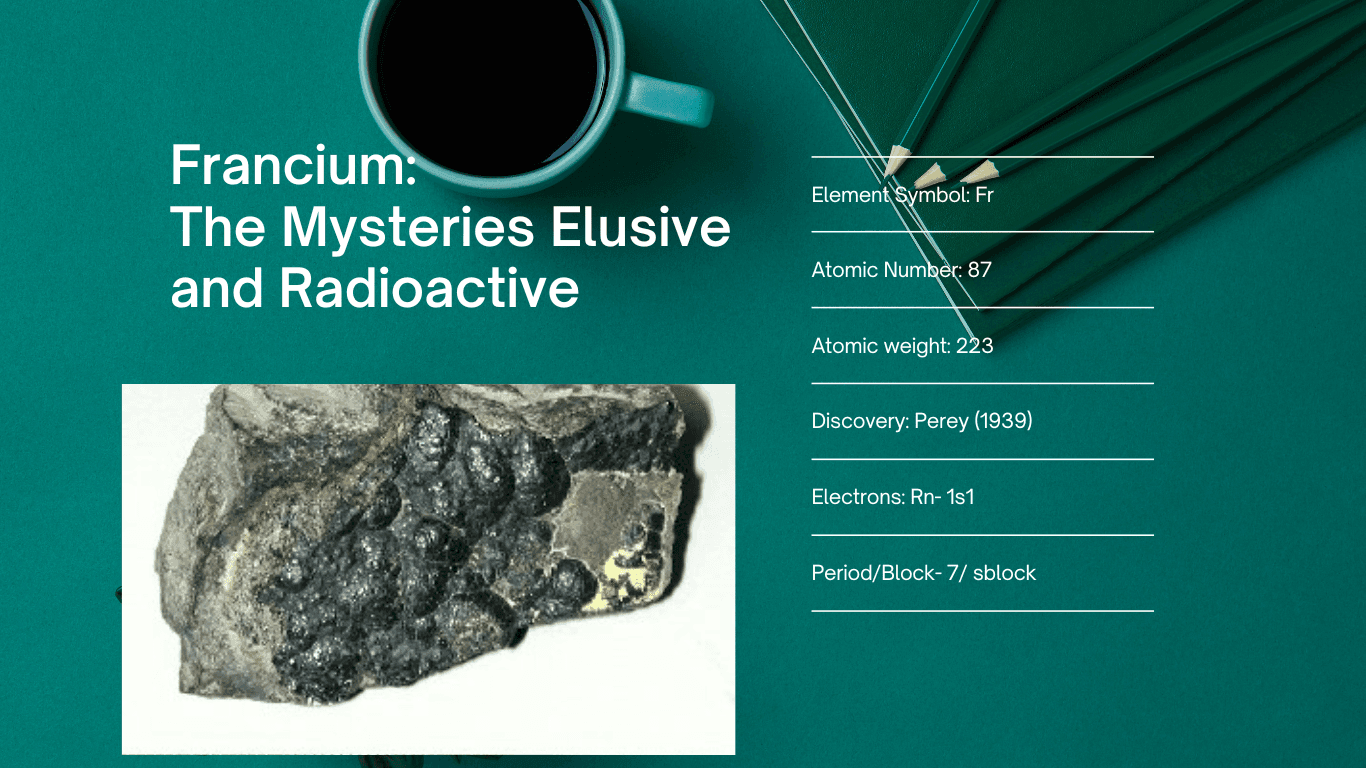
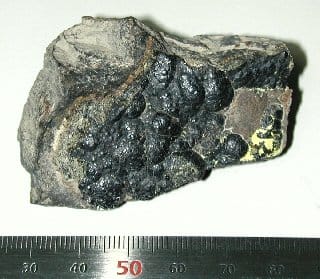
Francium: The Mysteries Elusive and Radioactive Element

February 28, 2024 By kundan Leave a Comment

Francium: The Elusive and Radioactive Element

Francium

Francium, with the symbol Fr and atomic number 87, is a fascinating, yet challenging element to study due to its unique properties:

Extreme Rarity: Francium is the second rarest naturally occurring element on Earth, even scarcer than astatine. Only about 30 grams exist at any given time, making it difficult to isolate and study in larger quantities.

High Radioactivity: All known isotopes of francium are radioactive, meaning their nuclei spontaneously decay into other elements, releasing energy in the form of radiation. The most stable isotope, francium-223, has a half-life of only 22 minutes, meaning it takes 22 minutes for half of the atoms in a sample to decay.

Alkali Metal Characteristics: Despite its rarity and radioactivity, francium belongs to the alkali metal group in the periodic table. This means it shares some properties with its more common cousins like sodium and potassium, such as having a single valence electron and being highly reactive.

Predicted Properties: Due to its extreme rarity, some properties of francium remain unexplored experimentally. However, scientists can predict its behavior based on its position in the periodic table and its electronic structure. For example, francium is expected to be the most reactive alkali metal and have a violent reaction with water.

No Practical Applications: Unfortunately, francium’s short half-life and scarcity render it impractical for any commercial use.

Discovery and Naming: The element was discovered in 1939 by Marguerite Perey in France, hence the name “francium.” It was the last of the naturally occurring elements to be discovered, filling a gap in the periodic table.

Overall, francium remains an enigmatic element in the scientific world, offering a glimpse into the fascinating realm of radioactive elements and the complexities of nature.


Francium price // 1 gram francium price // francium price in india

Due to its extreme rarity and short half-life, francium cannot be commercially bought or sold in the traditional sense. It doesn’t have a set price per gram like other elements. Here’s why:

  • Difficult to Isolate: The scarcity of francium makes its isolation incredibly challenging. Extracting significant amounts for commercial purposes is currently impossible.
  • Rapid Decay: Even if isolation were possible, the element’s radioactivity means it would decay rapidly, rendering it practically useless within a matter of minutes.

However, if hypothetically one could produce a gram of francium, its cost is estimated to be in the billions of US dollars. This estimation considers the complex and expensive procedures required for its synthesis, containment, and handling.

It’s important to remember that francium has no practical applications due to its limitations. Therefore, despite its astronomical estimated price, it holds no real market value and isn’t commercially available.


Electronic Configuration of francium

Francium: The Mysteries Elusive and Radioactive Element

The electron configuration of francium can be written in two ways:

1. Full configuration:

1s² 2s² 2p⁶ 3s² 3p⁶ 4s² 3d¹⁰ 4p⁶ 5s² 4d¹⁰ 5p⁶ 6s² 4f¹⁴ 5d¹⁰ 6p⁶ 7s¹

This detailed configuration showcases the distribution of all 87 electrons of francium across its various orbitals, following the Aufbau principle.

2. Condensed configuration (using noble gas core):

[Rn] 7s¹

This condensed form is a more efficient way to represent the configuration for larger elements like francium. It uses the symbol [Rn] to represent the electron configuration of the noble gas radon (Rn), which has the configuration [Xe] 4f¹⁴ 5d¹⁰ 6p⁶. Essentially, it “borrows” the configuration of radon, which shares the same core electrons as francium, and only shows the remaining electron in the outermost 7s orbital.

Both forms are correct and represent the same electron configuration for francium. The condensed form is typically preferred for its brevity and clarity.


Francium: Unraveling the Mysteries of the Elusive Element

Francium, an enigmatic alkali metal, stands as one of the rarest and least understood elements on the periodic table. Discovered in 1939 by Marguerite Perey, this highly reactive element has captured the imagination of scientists and researchers alike. In this article, we delve into the depths of Francium, exploring its history, properties, applications, and the ongoing quest to understand its mysteries.

Francium

Brief history and discovery

Francium’s discovery can be traced back to Marguerite Perey, a French chemist, who isolated this element from actinium. Despite its importance, Francium remains one of the least studied elements due to its extreme scarcity.

Properties and characteristics

As an alkali metal, Francium shares similarities with cesium and rubidium. Its atomic number is 87, making it the second rarest naturally occurring element.

Natural Occurrence and Availability

Scarcity in nature

Francium’s scarcity is due to its short half-life and the rarity of its parent elements. Its presence in the Earth’s crust is minimal, adding to the challenges of studying this elusive element.

Methods of obtaining Francium

Obtaining Francium involves complex processes, often relying on the decay of heavier elements. The element’s fleeting existence adds a layer of difficulty to experimental endeavors.

Chemical Properties

Reactivity and instability

Francium’s high reactivity stems from its desire to achieve a stable state. Its instability makes studying its chemical properties a delicate task.

Alkali metal characteristics

Being part of the alkali metal group, Francium exhibits typical characteristics, such as low melting points and a strong tendency to form ions.

Applications in Research

Use in scientific experiments

Francium’s unique properties make it valuable in various scientific experiments, particularly those in nuclear physics and high-energy particle research.

Contributions to nuclear physics

Researchers leverage Francium to study nuclear reactions, providing insights into the fundamental forces governing the universe.

Health and Safety Concerns

Radioactive nature

The radioactive nature of Francium raises concerns about its safety. Proper handling precautions are crucial in any research involving this element.

Handling precautions

Scientists working with Francium must adhere to strict safety protocols, minimizing the risks associated with its radioactive decay.

Isotopes of Francium

Different isotopes and their significance

Various isotopes of Francium exist, each with distinct properties. Understanding these isotopes is vital for researchers studying the element’s behavior.

Half-life variations

The short half-life of Francium isotopes poses challenges in experimental setups but also offers unique opportunities for scientific exploration.

Notable Experiments with Francium

Important experiments in the field of physics

Researchers have conducted groundbreaking experiments using Francium, shedding light on nuclear structure and decay processes.

Key findings and contributions

Francium’s involvement in experiments has led to crucial discoveries, contributing to our understanding of atomic and nuclear physics.

Comparison with Other Alkali Metals

Contrasting Francium with cesium, rubidium, etc.

While Francium shares properties with other alkali metals, its extreme reactivity and scarcity distinguish it from its counterparts.

Unique characteristics and similarities

Examining Francium in comparison with other alkali metals reveals both unique characteristics and shared traits within the group.

Potential Future Uses

Emerging applications in technology

Ongoing research hints at potential applications of Francium in advanced technologies, though challenges remain in harnessing its properties.

Research possibilities

Scientists continue to explore the untapped potential of Francium, seeking new avenues for its application in various fields.

Myths and Misconceptions

Common misunderstandings about Francium

Francium’s rarity has given rise to myths and misconceptions. Dispelling these misunderstandings is essential for accurate scientific understanding.

Clarifying misconceptions

Separating fact from fiction, this section addresses prevalent misconceptions surrounding Francium and its properties.

Francium in Popular Culture

Mentions in literature, movies, or art

Despite its scarcity, Francium occasionally finds its way into popular culture. Exploring these references adds a unique dimension to its significance.

Cultural significance if any

Understanding how Francium is portrayed in various forms of media provides insights into its cultural impact, albeit limited.

The Quest for Stable Francium

Scientific efforts to isolate stable Francium

The pursuit of stable Francium is ongoing, with researchers exploring ways to extend its half-life for practical applications.

Challenges and ongoing research

Numerous challenges hinder the quest for stable Francium, yet the scientific community remains undeterred, pushing the boundaries of knowledge.

Environmental Impact

Effects on the environment due to Francium

While Francium’s natural occurrence is minimal, its impact on the environment, when present, requires careful consideration.

Mitigation efforts and concerns

Implementing measures to minimize environmental impact is crucial, especially as research involving Francium advances.

Educational Significance

Francium in academic curriculum

Including Francium in educational curricula enhances students’ understanding of rare elements and their contributions to scientific knowledge.

Educational importance in chemistry and physics

Studying Francium provides a unique opportunity to engage students in the fields of chemistry and physics, fostering


Read more about Deepfake

Filed Under: Tech Blogs Tagged With: Francium: The Mysteries Elusive and Radioactive Element

What is a Defining Feature of the Metaverse

December 20, 2023 By kundan Leave a Comment

Unveiling the Defining Feature of the Metaverse

In the ever-evolving landscape of Feature of the Metaverse technology , the metaverse stands out as a revolutionary concept, redefining the way we interact with digital realms. As we delve into this immersive virtual space, let’s uncover what truly sets the metaverse apart and makes it a defining feature of the digital age.

Feature of the Metaverse

The Seamless Integration of Virtual Realms

At the core of the metaverse lies its ability to seamlessly integrate diverse virtual realms. Unlike traditional online spaces, Feature of the Metaverse transcends boundaries, offering a cohesive experience where users can navigate various digital environments without interruptions. This fluid integration is made possible by cutting-edge technologies, including blockchain and augmented reality, creating a unified and interconnected digital universe.

Decentralization: The Metaverse’s Cornerstone

Decentralization emerges as a defining feature, positioning the metaverse as a paradigm shift from conventional online structures. In the metaverse, power is distributed across a network of nodes, eliminating the need for a central authority. This not only enhances security but also fosters a more inclusive and democratic virtual environment where users have greater control over their digital experiences.

Immersive Virtual Reality Experiences

One of the standout characteristics of the metaverse is its commitment to delivering immersive virtual reality experiences. Through advanced technologies such as VR headsets and haptic feedback systems, users can transcend the boundaries of traditional screen-based interactions. This level of immersion brings a sense of realism that was previously unimaginable, blurring the lines between the physical and digital worlds.

NFTs: Empowering Digital Ownership

Enter the realm of Non-Fungible Tokens (NFTs), a groundbreaking feature that empowers users with true digital ownership. In the metaverse, NFTs enable individuals to possess unique digital assets, from virtual real estate to exclusive digital art. This not only adds intrinsic value to virtual items but also introduces a new era of digital collectibles and asset management.

The Evolution of Social Interaction- Feature of the Metaverse

Beyond the confines of conventional social media, the metaverse introduces a new era of social interaction. Users can engage in virtual events, conferences, and social gatherings, transcending geographical limitations. The metaverse becomes a space for meaningful connections, fostering a sense of community and collaboration that goes beyond the constraints of physical proximity.

Economic Opportunities within the Metaverse

As the metaverse gains prominence, it brings forth a plethora of economic opportunities. Feature of the Metaverse’s applications are Virtual economies emerge, allowing users to monetize their skills, services, and creations. From virtual businesses to metaverse jobs, this digital frontier presents a new economic landscape where creativity and innovation are rewarded.

The Role of AI in Shaping the Metaverse

Feature of the Metaverse

Artificial Intelligence (AI) plays a pivotal role in shaping the metaverse, driving innovation and enhancing user experiences. From intelligent virtual assistants to AI-driven content creation, the metaverse leverages cutting-edge AI technologies to create a dynamic and responsive digital environment.

Challenges and Future Outlook

While the metaverse showcases immense potential, it is not without its challenges. Issues related to privacy, security, and the digital divide must be addressed to ensure a sustainable and inclusive metaverse. Looking ahead, continuous advancements in technology and a collaborative effort across industries will shape the future trajectory of the metaverse.

The metaverse emerges as a defining Feature of the Metaverse of our digital landscape, offering a seamless integration of virtual realms, decentralization, immersive virtual reality experiences, NFT-driven digital ownership, evolved social interactions, economic opportunities, and the significant role of AI. As we navigate this digital frontier, the metaverse opens up a world of possibilities, transforming the way we connect, create, and experience the digital realm.


FAQ

What is the metaverse?

Imagine a 3D version of the internet, where you can socialize, work, play, and even shop, all within a virtual world. That’s the metaverse in a nutshell! Think of it as an immersive, interconnected network of virtual spaces you can explore and interact with using your avatar.

 What’s an example of the metaverse?

Right now, the metaverse is more of a concept than a single, unified world. But there are platforms like Fortnite, Roblox, and Decentraland that offer metaverse-like experiences where you can interact with others and participate in virtual activities.

 Who owns the metaverse?

No one! The metaverse is envisioned as an open and decentralized space, not owned by any single company or government. This means anyone can create content, build experiences, and participate in the virtual world.

 What technology powers the metaverse?

Virtual reality (VR) and augmented reality (AR) are key players, letting you experience the metaverse in immersive ways. But other technologies like blockchain, artificial intelligence, and advanced internet infrastructure also play crucial roles.

 How do I get into the metaverse?

It depends on the specific metaverse platform you want to experience. Some, like Fortnite, are accessible through web browsers or gaming consoles. Others may require VR headsets or AR glasses.

 What will the metaverse be like?

That’s the exciting part! The possibilities are endless. We can imagine attending virtual concerts with friends across the globe, working in shared virtual offices, or even exploring historical landmarks in immersive VR experiences.

 What the heck is the metaverse, anyway?

Think of it as the next evolution of the internet, blurring the lines between the physical and digital worlds. It’s a chance to connect, create, and experience things in ways never before possible.

 What is the metaverse in real life?

While the metaverse itself is virtual, its impact on the real world could be significant. It has the potential to revolutionize everything from education and work to entertainment and social interaction.

 How to access the metaverse?

The entry points are already here! Popular platforms like Fortnite, Roblox, and Decentraland offer metaverse-like experiences, while VR headsets and AR glasses are opening doors to even more immersive worlds.

Filed Under: Tech Blogs Tagged With: #DigitalInnovation, #Metaverse, #Metaverse world, #TechRevolution, Feature of the Metaverse

Navigating Deepfake AI: Unveiling Security Risks in the Business Landscape

November 27, 2023 By kundan Leave a Comment

Deepfake AI Technology: Security Risks in the Business

In the rapidly evolving landscape of technology, deepfake AI has emerged as both a fascinating and concerning innovation. As businesses increasingly integrate artificial intelligence into their operations, the security risks associated with deepfake technology have become a focal point of discussion and apprehension.

Understanding Deepfake AI

Deepfake AI Technology: Security Risks in the Business

What is Deepfake?

Deepfake refers to the use of advanced artificial intelligence algorithms to create realistic yet entirely fabricated audio and video content. These sophisticated manipulations can convincingly depict individuals saying or doing things they never did, leading to potential misinformation and reputational damage.

The Pervasive Threat

Businesses, regardless of their size or industry, face a pervasive threat from deepfake AI. As the technology becomes more accessible, the risk of malicious actors exploiting it for fraudulent activities, corporate espionage, or spreading false information about a business escalates.

Security Risks in Business

Corporate Identity Theft

One of the most significant concerns businesses have with deepfake AI is the potential for corporate identity theft. Attackers can use manipulated content to impersonate key executives, creating confusion and wreaking havoc on internal and external communications.

Fraudulent Financial Transactions

Deepfake technology poses a direct threat to financial security. By imitating the voices or images of executives, malicious actors can manipulate employees into authorizing fraudulent financial transactions, causing substantial monetary losses for the organization.

Reputational Damage

In an era where brand reputation is paramount, deepfake AI introduces a new dimension of risk. A well-crafted deepfake video can tarnish a company’s image by portraying its leaders engaging in inappropriate behavior or making false statements.

Mitigating the Risks

Advanced Authentication Measures

To combat the threat of deepfake AI, businesses must invest in advanced authentication measures. Multi-factor authentication, biometric verification, and other cutting-edge security protocols can add layers of protection against unauthorized access and identity theft.

Employee Training and Awareness

Creating a culture of cybersecurity awareness is imperative. Regular training sessions can educate employees on identifying potential deepfake threats, minimizing the risk of falling victim to malicious activities.

Collaborative Industry Efforts

Given the widespread nature of the deepfake threat, collaboration within industries is crucial. Businesses should actively participate in sharing threat intelligence and best practices to stay ahead of evolving deepfake techniques.

Legal Implications and Regulatory Landscape

Deepfake AI Technology: Security Risks in the Business

Legislative Responses

Governments worldwide are recognizing the urgency of addressing deepfake risks. Legislation is evolving to impose stricter penalties on those who use deepfake technology for malicious purposes. Businesses must stay informed about these legal developments to ensure compliance and proactive risk management.

Data Protection Compliance

Deepfake AI Technology: Security Risks in the Business

Deepfake technology often involves the manipulation of personal data, raising concerns about data protection compliance. Businesses must align their practices with evolving data protection regulations to safeguard the privacy of individuals depicted in manipulated content.

Conclusion

As businesses navigate the intricate landscape of technological advancements, the specter of deepfake AI looms large. Understanding the security risks and implementing proactive measures is essential to safeguard corporate integrity, financial stability, and brand reputation.

In a world where information is power, businesses must stay vigilant, adaptive, and collaborate to mitigate the evolving threats posed by deepfake AI technology.


What are the security risks of Deepfake AI in business?

Deepfake AI poses various security risks in business, including the manipulation of audio and video content to deceive employees or customers. This can lead to misinformation, reputational damage, and compromised communication channels.

How can businesses protect against Deepfake AI threats?

Businesses can protect against Deepfake AI threats by implementing robust cybersecurity measures, conducting employee training on identifying deepfakes, and deploying advanced AI-based detection tools. Regularly updating security protocols and staying informed about emerging threats is also crucial.

Are there real-world examples of Deepfake AI impacting businesses?

Yes, there have been instances where Deepfake AI impacted businesses, such as fake videos or audio messages misrepresenting executives or spreading false information about a company’s products or services.

What measures can companies take to secure their operations from Deepfake attacks?Companies can secure their operations by implementing multi-factor authentication, encrypting sensitive communications, educating employees about Deepfake risks, and employing cutting-edge AI solutions for detecting and preventing deepfake incidents.

Are there regulatory guidelines for addressing Deepfake AI security risks in business?

While specific regulations may vary, some countries and industries are developing guidelines to address Deepfake AI security risks. It’s important for businesses to stay informed about and comply with relevant regulations to enhance their cybersecurity posture.

What industries are most vulnerable to Deepfake AI technology?

Industries that heavily rely on public perception and trust, such as finance, politics, and entertainment, are particularly vulnerable to Deepfake AI technology. However, the threat is evolving, and businesses across various sectors should remain vigilant.

How can employees be trained to identify and prevent Deepfake attacks in the workplace?Employee training programs should include awareness sessions on recognizing signs of deepfakes, verifying the authenticity of information, and reporting suspicious activities. Simulated exercises can also be valuable in preparing employees for potential threats.

What technologies are available for detecting and mitigating Deepfake threats in business environments?

Various AI-based technologies, including deepfake detection tools, facial recognition systems, and behavioral analysis software, can help businesses detect and mitigate Deepfake threats. Regularly updating these technologies is essential to stay ahead of evolving threats.

What are the potential financial consequences of a Deepfake AI security breach for a business?Financial consequences of a Deepfake AI security breach can include loss of customer trust, legal liabilities, regulatory fines, and damage to the company’s reputation. The overall financial impact depends on the severity and scale of the breach.

Are there insurance options for businesses to protect against Deepfake-related losses?Some insurance providers offer policies that cover losses related to cybersecurity incidents, including those involving deepfakes. Businesses should explore and invest in comprehensive cyber insurance to mitigate potential financial losses resulting from Deepfake-related incidents.


Click Here to know more about-

Deepfake: Solution of Security Risks in the Business

What is Mr Deepfake AI Technology

Filed Under: News Tagged With: AI

Project Tiger in India: A Comprehensive Guide to Conservation Success and Challenges

November 27, 2023 By kundan Leave a Comment

Preserving Majesty: Unraveling the Success Story of Project Tiger in India

What is Project Tiger

The inception of “Project Tiger” in 1973 marked a significant wildlife conservation endeavor in India, specifically aimed at safeguarding the Bengal tiger, the country’s designated national animal. Distinguished as one of the most triumphant wildlife conservation initiatives globally, Project Tiger stands as a testament to India’s commitment to preserving its rich biodiversity.

Project Tiger in India: A Comprehensive Guide

  1. Project Tiger Overview: Explore the impactful wildlife conservation initiative, Project Tiger, launched in 1973 in India. Credited with doubling the tiger population from 1,411 (2006) to 4,098 (2022), this project focuses on safeguarding the Bengal tiger.
  2. Extensive Tiger Reserves Network: Learn about Project Tiger’s establishment of 52 tiger reserves spanning 70,000 sq km across India. Discover how these reserves serve as secure habitats, providing safe havens for both tigers and their prey.
  3. Proactive Anti-Poaching Measures: Delve into the project’s commitment to combat poaching, utilizing advanced technology and deploying additional rangers. Understand how these efforts have successfully reduced poaching, a major threat to the tiger population.
  4. Community Engagement and Awareness: Uncover the project’s role in raising awareness about tiger conservation through public education campaigns, school programs, and community involvement. See how these initiatives contribute to a broader understanding of the importance of tiger preservation.
  5. Support for Tiger Research: Explore Project Tiger’s significant role in supporting tiger research, contributing to a deeper understanding of tigers and their habitats. Learn how this research has been instrumental in developing effective conservation strategies.
  6. Tangible Achievements and Ongoing Challenges: Acknowledge Project Tiger’s success in doubling the tiger population in India, but also recognize the persistent endangerment of tigers. Understand the continuous need for conservation efforts to ensure the long-term survival of these magnificent creatures.
  7. Preserving the Bengal Tiger: Discover how Project Tiger plays a crucial role in the conservation of the Bengal tiger, an apex predator vital to the Indian ecosystem. Learn how this initiative has been instrumental in preventing the extinction of this endangered species.
  8. Safeguarding Tiger Habitat: Explore the establishment of a network of tiger reserves by Project Tiger, creating secure environments for tigers and their prey. Understand how these reserves contribute to the protection of essential forests and habitats necessary for the survival of the Bengal tiger.
  9. Economic Advantages through Tourism: Uncover the economic benefits generated by tiger conservation through tourism. Learn how tourists worldwide are drawn to witness tigers in their natural habitat, contributing to local communities and enhancing economic prospects for India.
  10. Cultural Symbolism: Recognize the cultural significance of the tiger as a symbol of India’s rich heritage. Project Tiger’s efforts extend beyond conservation, contributing to the preservation of this cultural symbol for the benefit of future generations.
  11. Environmental Preservation: Understand the environmental benefits of tiger conservation. Tigers, as apex predators, help regulate prey populations, preventing overgrazing and mitigating environmental challenges. Explore how Project Tiger contributes to the overall health and balance of ecosystems.

Project Tiger in india

When was project tiger launched ? || project tiger upsc

“Project Tiger” initiated in 1st April 1973 in India, stands as a pioneering wildlife conservation effort aimed at safeguarding the Bengal tiger, the nation’s iconic species. Noteworthy for its global success, the project was prompted by the alarming decline in the Indian tiger population, which had dwindled to an estimated 2,000–2,500 individuals. The primary threats at the time encompassed poaching, driven by the demand for tiger skins and bones in traditional Chinese medicine, as well as habitat loss due to deforestation and agricultural expansion.

A pivotal achievement of Project Tiger has been the doubling of the tiger population in India, now estimated at around 4,000 individuals. This commendable outcome is attributed to several strategic measures, including:

Establishment of Tiger Reserves: These protected areas prioritize the conservation of tigers. Presently, India boasts 50 tiger reserves, covering a vast expanse of over 70,000 square kilometers.

Intensification of Anti-Poaching Efforts: Rigorous anti-poaching patrols have been instrumental in mitigating the threat to tiger populations.

Mitigation of Human-Tiger Conflict: Collaborative efforts with local communities have been undertaken to foster coexistence with tigers, thereby minimizing conflicts between humans and these majestic creatures.

Awareness Campaigns: Project Tiger has actively engaged in raising awareness about the critical importance of tiger conservation, contributing to a broader understanding of the ecological significance of preserving this species.

While Project Tiger has achieved considerable success, it remains an ongoing initiative confronted by persistent challenges. Poaching continues to pose a threat, and the loss of tiger habitat due to various factors remains an issue. Nevertheless, the project stands as a monumental success story, not only in bolstering the tiger population but also in elevating awareness regarding the crucial need for conservation.

Key Achievements of Project Tiger in India: A Comprehensive Guide 


Doubled Tiger Population: The initiative has effectively doubled the tiger population in India since its inception.

Leading in Tiger Reserves: India now leads the world with the highest number of tiger reserves, totaling 50.

Significant Reduction in Poaching: Project Tiger has substantially curbed poaching activities, contributing to the protection of tiger populations.

Elevated Conservation Awareness: The project has successfully raised awareness about the importance of tiger conservation, fostering a sense of responsibility towards preserving these majestic creatures.


Project Tiger was started in which National Park

The initiation of Project Tiger took place within the confines of Jim Corbett National Park in 1973. Positioned in the Nainital district of Uttarakhand, India, and nestled in the foothills of the Himalayas, Jim Corbett National Park holds the distinction of being India’s oldest national park. Renowned as one of the world’s most celebrated tiger reserves, the park serves as the habitat for a diverse array of wildlife, featuring species such as tigers, elephants, leopards, and rhinos.

Project Tiger in india

How many tiger project in india

Presently, India boasts 54 tiger reserves distributed across 18 states. Encompassing a sprawling expanse of over 73,000 square kilometers, these reserves serve as habitats for an estimated population of 4,000 tigers.

Where is the tiger project in India?


“Project Tiger” spans across India, establishing tiger reserves in 18 diverse states. The top 10 tiger reserves in the country, based on tiger population, are as follows:

Tiger ReserveStateTiger Population
Bandipur National Park, KarnatakaKarnataka103
Kanha National Park, Madhya PradeshMadhya Pradesh102
Nagarhole National Park, KarnatakaKarnataka91
Corbett National Park, UttarakhandUttarakhand83
Tadoba National Park, MaharashtraMaharashtra86
Sunderbans National Park, West BengalWest Bengal76
Pench National Park, Madhya PradeshMadhya Pradesh75
Periyar National Park, KeralaKerala52
Valmiki National Park, BiharBihar49
Ranthambore National Park, RajasthanRajasthan49

These tiger reserves encompass diverse ecosystems, including forests, grasslands, and wetlands. In addition to fostering the conservation of tigers, they provide essential habitats for a wide array of wildlife, such as elephants, leopards, rhinos, and deer.

Here’s a summary of tiger population estimates under Project Tiger up to 2023:

  • 2014: 2,226

  • 2018: 2,967

  • 2022: 4,000

Project Tiger in india

Which state is tiger project in India?


Certainly! Here is the information presented in a table format:

StateTiger Reserves
Andhra PradeshNagarjunsagar-Srisailam Tiger Reserve
Arunachal PradeshNamdapha National Park, Kamlang Wildlife Sanctuary, Pakke Tiger Reserve
AssamKaziranga National Park, Manas National Park, Nameri National Park, Orang National Park
BiharValmiki National Park
ChhattisgarhAchanakmar Tiger Reserve, Indravati National Park, Udanti-Sitanadi Tiger Reserve
GoaMhadei Wildlife Sanctuary
JharkhandPalamau Tiger Reserve
KarnatakaBandipur National Park, Bhadra Tiger Reserve, Biligiri Rangaswamy Temple Tiger Reserve, Dandeli-Anshi Tiger Reserve, Nagarahole National Park
KeralaParambikulam Tiger Reserve, Periyar National Park
Madhya PradeshBandhavgarh Tiger Reserve, Kanha National Park, Panna National Park, Pench National Park, Satpura Tiger Reserve, Sanjay Dubri National Park, Tigergarh National Park
MaharashtraMelghat Tiger Reserve, Navegaon-Nagzira Tiger Reserve, Tadoba Andhari Tiger Reserve, Pench Tiger Reserve, Sahyadri Tiger Reserve
MizoramDampa Tiger Reserve, Mouling National Park, Phawngpui National Park, Mizoram Wildlife Sanctuary
OdishaSimlipal National Park
RajasthanRanthambore National Park, Sariska National Park
Tamil NaduAnamalai Tiger Reserve, Kalakkad-Mundanthurai Tiger Reserve, Sathyamangalam Tiger Reserve
Uttar PradeshCorbett National Park, Dudhwa National Park, Jim Corbett National Park, Pilibhit Tiger Reserve, Rajaji National Park, Ranipur Wildlife Sanctuary
UttarakhandCorbett National Park, Rajaji National Park
West BengalBuxa Tiger Reserve, Jaldapara National Park, Sunderbans National Park

These states house various tiger reserves, contributing significantly to the conservation efforts for this majestic species.

The success of Project Tiger


Project Tiger stands as a remarkable success in the realm of wildlife conservation. Since its initiation in 1973, the tiger population in India has more than doubled, surging from an estimated 2,000-2,500 individuals to over 4,000 today. This achievement can be chiefly ascribed to the project’s focused endeavors, including:

  1. Establishing and Managing Tiger Reserves: Designated protected areas have proven pivotal, offering critical habitat for tigers and shielding them from poaching and habitat loss.
  2. Enhancing Anti-Poaching Measures: Rigorous enforcement of wildlife laws, community engagement, and advanced patrolling techniques have substantially curbed poaching incidents.
  3. Minimizing Human-Tiger Conflict: Collaborative efforts with local communities have played a crucial role in reducing conflict situations between humans and tigers, fostering peaceful coexistence.
  4. Raising Awareness and Generating Support: Public awareness campaigns and educational initiatives have cultivated a strong sense of conservation among the Indian populace.

Challenges Confronting Project Tiger


Despite the considerable progress, Project Tiger confronts challenges jeopardizing the long-term survival of tigers in India. These challenges include:

  1. Habitat Loss and Fragmentation: Ongoing deforestation and encroachment on tiger habitats disrupt movement patterns and reduce prey availability.
  2. Poaching for Illegal Wildlife Trade: The demand for tiger parts in traditional medicine and exotic wildlife markets fuels poaching activities, posing a severe threat to tiger survival.
  3. Human-Tiger Conflict: As human populations expand and encroach on tiger habitats, instances of human-tiger conflict arise, posing risks to both humans and tigers.
  4. Funding Constraints: Ensuring adequate financial resources for anti-poaching patrols, habitat management, and community engagement remains an ongoing challenge.

Other Wildlife Conservation Projects in India

Alongside Project Tiger, India has undertaken several noteworthy wildlife conservation projects:

  1. Project Rhino: Launched in 1984 to protect the endangered Indian rhinoceros, this project has significantly increased the rhino population.
  2. Project Elephant: Initiated in 1992 to conserve the endangered Asian elephant, focusing on habitat conservation, conflict mitigation, and community development.
  3. Snow Leopard Project: Established in 2009 to protect the elusive snow leopard, addressing threats in its high-altitude habitats.
  4. Great Indian Bustard Project: Launched in 2013 to conserve the critically endangered Great Indian Bustard, focusing on habitat restoration, captive breeding, and community engagement.

Individual Contributions to Project Tiger


Individuals can actively contribute to Project Tiger and tiger conservation efforts by:

  1. Spreading Awareness: Educate others about the importance of tiger conservation and the challenges they face.
  2. Supporting Organizations: Donate to or volunteer with organizations dedicated to tiger conservation, such as the World Wildlife Fund (WWF) or the Wildlife Conservation Society (WCS).
  3. Reducing Environmental Impact: Make conscious choices to minimize your carbon footprint, supporting sustainable practices that contribute to overall habitat protection.
  4. Choosing Ethical Products: Avoid purchasing products involving tiger parts or contributing to habitat destruction.
  5. Spreading Positivity: Promote positive attitudes towards tigers and wildlife conservation, encouraging others to join the cause.

The Current Status of Tigers in India


According to the latest tiger census conducted in 2018, India’s tiger population is estimated to be around 4,000 individuals. This signifies a substantial increase from the estimated 2,000-2,500 tigers in the early 1970s, indicating the success of Project Tiger and other conservation efforts.

Despite this positive trend, tigers in India still confront significant threats from poaching, habitat loss, and human-tiger conflict. Continued conservation efforts, community engagement, and public support remain crucial for ensuring the long-term survival of tigers in India.”

under the Wildlife (Protection) Act of 1972. This act provides legal safeguards for wildlife, including tigers.

FAQ on Project Tiger in India: A Comprehensive Guide


When was Project Tiger initiated in Madhya Pradesh?

Project Tiger was launched in Madhya Pradesh in 1973.

When and why was Project Tiger initiated?

Project Tiger was introduced in India in 1973 to safeguard the nation’s diminishing tiger population. The project was a response to the alarming decline in tiger numbers, which had plummeted to an estimated 2,000-2,500 individuals by the early 1970s. This decline was predominantly attributed to habitat loss and poaching.

Which state lacks a tiger reserve?

As of 2023, no states in India are without tiger reserves. Each of the 18 tiger range states hosts at least one tiger reserve.

What is India’s largest tiger reserve?

Corbett National Park in Uttarakhand is India’s largest tiger reserve, covering an expansive area of 1,318 square kilometers.

Which country boasts the highest number of tigers?

India claims the title of having the largest tiger population globally, with an estimated 4,000 individuals.

Which state harbors the highest number of tigers in India?

Madhya Pradesh houses the highest tiger population in India, with an estimated 526 individuals.

Identify the smallest tiger reserve in India.

Navegaon-Nagzira Tiger Reserve in Maharashtra holds the distinction of being the smallest tiger reserve in India, covering an area of 216.32 square kilometers.

What is the primary goal of Project Tiger?

The primary goal of Project Tiger is to conserve India’s tiger population and its habitat. The project focuses on:

  1. Establishing and managing tiger reserves, prioritizing these areas for the protection of tigers.
  2. Mitigating poaching and human-tiger conflicts.
  3. Promoting awareness about the crucial importance of tiger conservation.

Is Project Tiger still active?

Yes, Project Tiger remains an active initiative. It is an ongoing project that has played a pivotal role in reversing the decline of tiger populations in India.

Under which act does Project Tiger operate?

Project Tiger functions within the framework of the Wildlife (Protection) Act of 1972. Critical provisions of the Wildlife (Protection) Act that lend support to Project Tiger encompass:

Protection of Wildlife: The act emphasizes the safeguarding of wildlife, providing a legal foundation for initiatives like Project Tiger aimed at the protection and conservation of specific species.

Establishment of Protected Areas: The legislation facilitates the establishment of designated protected areas, ensuring the creation of spaces where wildlife, including tigers, can thrive under legal safeguards.

Anti-Poaching Measures: The act includes provisions dedicated to combating poaching, enforcing stringent measures to deter illegal activities that threaten the welfare of wildlife, a pivotal aspect for Project Tiger.

Community Engagement: Recognizing the importance of involving local communities in conservation efforts, the act supports initiatives like Project Tiger in fostering collaboration with residents living in and around tiger habitats.

Awareness and Education: The Wildlife (Protection) Act underscores the significance of raising awareness and educating the public about wildlife conservation. This aligns with Project Tiger’s goals of promoting understanding and support for tiger conservation.


Latest news click here

Filed Under: News Tagged With: news

Deepfake Security Risk

November 17, 2023 By kundan 1 Comment

Deepfake AI Technology: Security Risks in the Business


How deepfakes affect businesses? || What is the impact of deepfakes in business? || Deepfake Security Risk

There are some impacts of deepfakes ai on business such as following

  1. Reputation Damage
  2. Extortion
  3. Fraud
  4. Social Unrest
  5. Disruption of Operations

Deepfakes AI Technology, a form of manipulated media that convincingly simulates real content, present a considerable threat to businesses across various dimensions. The following outlines the principal impacts of deepfakes on enterprises:


Reputation Damage: Deepfakes can disseminate false information, harming a company’s reputation and undermining customer trust. For instance, a fabricated video featuring a CEO making damaging statements could lead to a loss of investor confidence and a subsequent decline in stock prices.

Deepfake AI Technology: A Security Risks

Extortion: Extortion becomes a viable threat with deepfakes. A manipulated video portraying a CEO engaging in illicit activities can be used as leverage to coerce the company into paying a ransom.

Fraud: There are a tool for committing fraud. For example, a falsified audio recording of a CEO authorizing a significant financial transaction could be used to siphon funds from the company.

Disruption of Operations: There have the potential to disrupt business operations by creating confusion or chaos. A video depicting a CEO giving false instructions could lead to misunderstandings among employees and disrupt the workplace.

In addition to these specific threats, “Deepfakes” can erode trust in online information, making it challenging for businesses to effectively communicate with stakeholders.

To safeguard against these risks, “businesses” can adopt the following preventive measures:

Employee Education: Educate employees about deepfakes, enabling them to recognize and respond effectively to potential threats.

Robust Cybersecurity Measures: Ensure that the company’s cybersecurity systems are updated and capable of detecting and preventing deepfakes from compromising sensitive data or systems.

Social Media Monitoring: Regularly monitor social media and other online platforms for deepfakes that could tarnish the company’s reputation.

Response Plan Development: Develop a comprehensive plan for responding to deepfakes, encompassing strategies for identification, investigation, and remediation in the event of an attack.


Deepfake security concerns


Deepfake AI Technology: Security Risks in the Business is most concert topic for all

Deepfakes encompass manipulated videos, audio recordings, or other media content altered using artificial intelligence, creating a false impression of individuals engaging in actions they never performed. The potential harm to individuals and businesses is significant, raising several security concerns that necessitate attention.

Security Concerns Associated with Deepfakes: Spread of Misinformation: Deepfakes can disseminate false information, impacting public opinion and potentially influencing elections through the spread of misinformation and disinformation.

Fraudulent Activities: Deepfakes pose a threat to financial security, with the potential for fraudulent activities such as using manipulated audio recordings to simulate CEOs authorizing large financial transactions.

Reputation Damage: The creation of deepfake content, such as videos portraying celebrities engaging in illegal or unethical behavior, can harm reputations and tarnish public perception.

Social Unrest: Deepfakes have the capability to incite social unrest by creating fabricated content, like videos depicting political leaders making inflammatory statements.

Mitigation Strategies for Deepfake Security Risks:

Deployment of Detection Technologies: Develop and deploy deepfake detection technologies to identify manipulated content before it reaches a wider audience, mitigating the potential harm caused by the spread of deepfakes.

Public Education: Educate the public about deepfakes to foster critical thinking and reduce vulnerability to deceptive content, empowering individuals to discern authentic information from manipulated media.

Strengthened Cybersecurity Measures: Enhance cybersecurity measures by employing strong passwords, keeping software up to date, and promoting cautious online information sharing to fortify defenses against potential deepfake threats.

Clear Policies and Procedures: Establish clear organizational policies and procedures for dealing with deepfakes, enabling swift and effective responses to instances where deepfakes are used against businesses or individuals.

By implementing these measures, the risks associated with deepfakes can be mitigated, promoting responsible use of technology and minimizing the potential for harm caused by malicious manipulation of media content.


Are Deepfakes really a Security Threat? Deepfake AI Technology: A Security Risks of Modern Era


Certainly, deepfakes present a significant security threat in various ways. They can be employed to:

Spread Misinformation and Disinformation: Deepfakes have the capability to generate fabricated videos or audio recordings depicting individuals engaging in actions or making statements they never actually did. These manipulated media can be disseminated online to propagate false information, potentially affecting political figures with misleading statements or involving celebrities in endorsements they never endorsed.

Commit Fraud: The impersonation potential of deepfakes extends to committing fraud. By creating convincing videos, perpetrators may simulate high-ranking individuals, such as CEOs, authorizing financial transactions or extracting sensitive information from unsuspecting victims.

Damage Reputations: Deepfakes can tarnish the reputations of individuals by fabricating offensive content. This may involve creating videos of celebrities making inappropriate statements or generating audio recordings of politicians uttering discriminatory remarks, leading to reputational harm.

In addition to these specific threats, deepfakes pose a broader menace to trust and security. As deepfake technology advances, distinguishing between reality and falsehood becomes increasingly challenging, risking a breakdown in trust. This, in turn, may facilitate criminal activities such as fraud.

Several measures can be taken to mitigate the risks associated with deepfakes:

Developing Improved Deepfake Detection Tools: Researchers are actively working on enhancing tools to detect deepfakes. These tools analyze subtle cues in audio or video, such as lighting inconsistencies or facial expression irregularities, to identify manipulated content.

Raising Awareness: Promoting awareness is crucial to educating the public about the dangers of deepfakes. This involves understanding how deepfakes are crafted, their potential for spreading misinformation, and implementing safeguards to avoid deception.

Establishing Clear Legal and Ethical Guidelines: Currently, there is a lack of well-defined legal and ethical frameworks governing the use of deepfakes. Establishing clear guidelines is essential to hold individuals accountable for creating or sharing deepfakes that cause harm.

Active Threat Example of Deepfake Campaigns using Artificial Intelligence (AI) || The Best and Scariest Examples of AI enabled deepfakes


The rapid advancement of deepfake technology in recent years has significantly lowered the barriers, making it more accessible and affordable for individuals to produce convincing fake videos or audio recordings. This surge in deepfake capabilities has, in turn, led to a rise in deepfake attacks that leverage artificial intelligence (AI) to disseminate misinformation, perpetrate fraud, and harm reputations.

Recent instances of active deepfake threats include:

Deepfake AI Technology: A Security Risks

Cryptocurrency Scam (2021): A deepfake video featuring Elon Musk was employed to promote a cryptocurrency scam. The fabricated video depicted Musk endorsing a new cryptocurrency and was widely shared on social media, resulting in substantial financial losses for unsuspecting individuals.


False Health Information (2022): In 2022, a deepfake audio recording of a US politician circulated on social media, spreading false information about the politician’s health. The recording, seemingly authentic, led to widespread belief in the misinformation, forcing the politician to publicly refute the claims made in the manipulated audio.


CEO Impersonation and Wire Transfer Fraud (2023): A deepfake video of a CEO was utilized to deceive employees into authorizing a wire transfer of funds. The video, appearing highly convincing, showed the CEO seemingly approving the transfer, leading to significant financial losses for the company.

These examples illustrate the growing prevalence of deepfake attacks, and as the technology evolves, we can anticipate even more sophisticated and potentially dangerous incidents in the future.

To safeguard against deepfake attacks, consider the following precautions:

Maintain Skepticism: Approach online content with skepticism, particularly if it appears too good to be true. Question the authenticity of information before accepting it as factual.

Verify Information Sources: Before sharing content online, verify the credibility of the source. Ensure that the information comes from a reliable and trustworthy origin.


Recognize Signs of Deepfakes: Deepfakes often exhibit subtle cues such as inconsistencies in lighting or facial expressions. Being vigilant for these signs can help identify potentially manipulated content.

Utilize Deepfake Detection Tools: Take advantage of available deepfake detection tools that can assist in identifying fake videos and audio recordings. These tools leverage technological advancements to distinguish between authentic and manipulated content.

Report Suspected Deepfakes: If you come across a deepfake that you believe is harmful or misleading, promptly report it to the relevant authorities. Reporting can contribute to efforts in addressing the misuse of deepfake technology.

Applications of deepfake technology


Deepfake technology, a fusion of artificial intelligence (AI) and machine learning (ML), has gained substantial momentum in recent years, facilitating the generation of hyperrealistic videos and audio recordings through the seamless amalgamation of existing media content. Its applications span diverse industries, encompassing entertainment, education, healthcare, and business.

Entertainment

Deepfakes have sparked a revolution in the entertainment industry, introducing a myriad of creative possibilities. They are prominently utilized to:

Craft humorous videos and parodies: Deepfakes have become a prevalent tool for generating comedic content, frequently substituting celebrities into established scenes or incorporating their voices into amusing scenarios.

Develop immersive storytelling experiences: Deepfakes enhance movies and TV shows by breathing life into characters in innovative ways. For instance, they can portray historical figures or create lifelike avatars for fictional characters.

Personalize fan experiences: Deepfakes contribute to the creation of personalized video messages from celebrities or characters, fostering a stronger connection between fans and their favorite entertainers.

Education

In the realm of education, deepfakes are reshaping traditional approaches, offering inventive tools for teaching and learning. Their applications include:

Creation of interactive learning materials: Deepfakes facilitate the development of engaging educational simulations, enabling students to interact with historical figures or scientific phenomena in a virtual setting.

Personalization of learning experiences: Deepfakes support the creation of personalized tutorials or explanations, adapting to individual learning styles and paces.

Enhancement of language learning: Deepfakes contribute to the development of realistic language practice scenarios, aiding students in improving fluency and pronunciation in various languages.

Healthcare

Deepfakes are emerging as valuable assets in healthcare, providing unique applications for patient education and professional training. Their roles encompass:

Creation of personalized patient education videos: Deepfakes assist in producing personalized videos explaining medical procedures or conditions, incorporating a patient’s face or voice for enhanced understanding.

Development of realistic training simulations for medical professionals: Deepfakes enable the creation of lifelike simulations for medical scenarios, allowing healthcare professionals to hone their skills in a secure environment.

Protection of patient privacy in medical videos: Deepfakes support the anonymization of patients in medical videos, ensuring privacy while still disseminating valuable educational content.

Business

In the business domain, deepfakes are carving out applications in marketing, product development, and customer service, offering novel opportunities


Disadvantage of Deepfake AI Technology


Despite the potential advantages of deepfake AI technology, it brings forth several drawbacks that demand careful consideration

Misinformation and Disinformation: Deepfakes can generate fabricated videos or audio recordings portraying individuals engaging in actions or making statements they never did. These manipulated media can be shared online, contributing to the spread of misinformation or disinformation. For instance, a deepfake might create a video of a politician making a false statement about their opponent.


Privacy Violations: Deepfakes can be used to produce non-consensual pornography or defamatory content, intruding upon individuals’ privacy and damaging reputations. This includes creating offensive videos of celebrities or audio recordings of politicians making discriminatory remarks.


Identity Theft: Deepfakes can facilitate impersonation for fraudulent purposes, such as creating videos of CEOs authorizing financial transactions or audio recordings of customers providing sensitive information like credit card details.

Erosion of Trust: The constant exposure to fake news and disinformation through deepfakes can lead to a decline in trust in institutions, individuals, and the media. This erosion of trust may result in decreased civic engagement.


Psychological Harm: Victims of deepfake manipulation can suffer psychological harm, experiencing distress, anxiety, depression, or even facing financial losses. In some cases, deepfakes have been utilized for blackmail or extortion.


Legal and Ethical Challenges: Deepfakes present numerous legal and ethical challenges due to the absence of clear laws governing their creation or distribution. This lack of legal framework makes it challenging to hold individuals accountable for using deepfakes to harm others.


Technological Limitations: As a relatively new technology, deepfakes face technological limitations that need addressing. Challenges include their difficulty to detect, as well as the expense and time required for their creation.

Potential for Weaponization: Deepfakes hold the potential to be weaponized by malicious actors for various purposes, such as spreading propaganda, disrupting elections, or undermining national security.


FAQs About Deepfakes


Are deepfakes a legitimate security threat?

Yes, deepfakes pose a significant security threat, leveraging manipulated content to deceive and potentially harm individuals, organizations, and society.

What are the adverse effects of deepfake technology?

Deepfake technology can lead to misinformation, identity theft, reputational damage, and the spread of false narratives, impacting individuals and organizations negatively.

To what extent can deepfakes threaten an organization?

Deepfakes can pose a considerable threat to organizations by facilitating impersonation, spreading disinformation, and manipulating content to compromise the integrity of communications.

How do deepfakes influence society?

Deepfakes can erode trust, contribute to the spread of misinformation, and potentially manipulate public perception, impacting the social fabric and the trustworthiness of digital content.

Are there instances of positive impacts from deepfakes?

While largely associated with risks, some beneficial uses of deepfakes include entertainment, creative expression, and advancing virtual experiences in various industries.

What is the impact of deepfakes on the fashion industry?

Deepfakes can be misused in the fashion industry to create fabricated images or videos, potentially leading to false endorsements or misrepresentation of products and brands.

In what ways are deepfakes commonly misused?

Deepfakes are often misused for malicious activities such as spreading false information, committing fraud, and manipulating content for illicit gains.

How do deepfakes affect cybersecurity?

Deepfakes introduce new challenges to cybersecurity by enabling sophisticated impersonation attacks, social engineering, and the creation of convincing but false narratives.

What measures are being taken to prevent deepfakes?

Efforts include developing advanced detection algorithms, promoting media literacy, enhancing platform policies, and exploring legal frameworks to deter the creation and dissemination of deepfakes.

What are the potential solutions to avoid deepfakes?

Possible solutions involve the development and implementation of advanced detection technologies, promoting awareness, fostering a culture of skepticism, and exploring regulatory measures to deter malicious use.


Click Here for : Solution of Security Risks in the Business against Deepfake AI Technology

Click Here To Know about whats is mr deepfake

Filed Under: Business, News, Sci. & Tech. Tagged With: #Artificial Intelligence, Artificial Rain in New Delhi

Guarding Against Deepfake Threats: Solutions for Enhanced Business Security

November 17, 2023 By kundan 2 Comments

 Deepfake AI Technology: Solution of Security Risks in the Business


How can we protect against Deepfakes?

There are some points to security protect against Deepfake are following 

  1. Exercise Skepticism
  2. Evaluate Information Sources
  3. Detect Manipulation Clues
  4. Utilize Fact-Checking Tools
  5. Acknowledge Personal Biases
  6. Promote Awareness
  7. Digital Watermarks
  8. Algorithm Development
  9. Educational Initiatives
  10. Digital Verification Tools
  11. Multi-Step Authentication
Deepfake: Solution of Security Risks in the Business

Deepfakes pose a significant risk to the integrity of information, as they involve manipulated videos or audio recordings designed to portray individuals engaging in actions or making statements they never actually did. Safeguarding oneself from the potential pitfalls of deepfakes involves a combination of critical thinking, source evaluation, and technical measures. Here are several strategies to protect against the threat of deepfakes:

There are following tips of Deepfake: Solution of Security Risks in the Business

Exercise Skepticism: Approach online content with a critical mindset. Just because information is accessible online doesn’t guarantee its accuracy. Verify details through multiple sources to ensure reliability.

Evaluate Information Sources: Assess the credibility of the source providing the information. Trusted news organizations and reputable websites are more reliable than unfamiliar sources or those with a track record of disseminating misleading information.

Detect Manipulation Clues: Scrutinize videos or audio recordings for signs of manipulation, such as inconsistencies in lighting, audio quality, or background elements. Pay attention to discrepancies between facial expressions and spoken words.

Utilize Fact-Checking Tools: Leverage fact-checking tools and websites equipped with various techniques, including image and audio analysis, to authenticate information and identify potential deepfakes.

Acknowledge Personal Biases: Recognize personal biases that may influence the acceptance of information that aligns with pre-existing beliefs. Remain open to considering perspectives that challenge your views.

Promote Awareness: Foster open discussions about deepfakes to increase general awareness. The more people understand the threat posed by deepfakes, the better equipped they become to recognize and counteract them.


Additionally, Technical measures can be implemented to enhance protection against deepfakes:

Digital Watermarks: Embed unique identifiers into videos and audio recordings using digital watermarks. This facilitates the identification of deepfakes by comparing the watermark in the original recording with that in manipulated versions.

Algorithm Development: Work on developing algorithms capable of detecting deepfakes based on subtle variations in facial features and voice characteristics. Although still in development, these algorithms hold promise for effectively identifying manipulated content.

Educational Initiatives: Educate individuals about the existence and potential dangers of deepfakes. Provide guidance on how to recognize them and encourage reporting to the appropriate authorities.


By combining critical thinking with technical tools and education, individuals can better safeguard themselves against the deceptive nature of deepfakes and contribute to a more informed and resilient society.

Some of the Ways Through which Businesses Can Protect Against Deepfakes?


Educate your workforce on the risks associated with deepfakes:

Deepfake: Solution of Security Risks in the Business

Increase Awareness: Ensure that employees are well-informed about the potential dangers of deepfakes and educate them on how to recognize such deceptive content.

Reporting Procedures: Train employees on the proper procedures for reporting instances of deepfakes to the relevant authorities, fostering a proactive approach to combating this threat.

Online Skepticism: Encourage a healthy level of skepticism among employees when encountering online content, particularly if it originates from unfamiliar sources. Instill the habit of critically evaluating information.

Digital Verification Tools: Implement digital verification tools to authenticate both videos and audio recordings. These tools play a crucial role in identifying deepfakes by comparing watermarks in the original recording with those present in manipulated versions.

Secure Communication Channels: Utilize encrypted communication channels for all business interactions, especially those involving sensitive information. This precautionary measure serves to mitigate the risk of deepfakes being exploited for stealing confidential data or impersonating employees.

Media Content Backup: Establish a robust system for backing up all media content, encompassing videos and audio recordings. This practice provides a reliable reference point in the event that a deepfake is generated using the original content.

Collaboration and Intelligence Sharing: Foster collaboration by encouraging participation in industry-specific groups or forums dedicated to deepfake detection and defense. Sharing intelligence within these communities enables businesses to stay abreast of the latest threats and effective defense strategies.

Promote a Culture of Skepticism: Cultivate a workplace environment where employees are empowered to double-check unusual requests or unexpected communications, particularly those related to financial transactions. Foster a culture where reporting suspicious activities is not only encouraged but also embraced.

Multi-Step Authentication: Enforce the use of multi-factor authentication for accessing sensitive systems and data. This added layer of security makes it more challenging for attackers to gain unauthorized access and create deepfakes.

Stay Informed: Stay vigilant by monitoring news and industry publications for updates on emerging deepfake threats. Regularly update software with the latest security patches to fortify defenses against evolving risks.


By incorporating these measures, businesses can fortify their defenses against the pervasive threat of deepfakes, promoting a resilient and secure organizational environment.

What is the solution for deepfakes?


 Addressing the challenge of deepfakes is a multifaceted and continually evolving task, with various promising approaches emerging to tackle this threat. These approaches fall into two overarching categories: technological and social.

Technological Approaches:

Detection: Active research is underway to develop algorithms capable of automatically detecting deepfakes. These algorithms leverage advanced techniques such as image and audio analysis, continually improving in their ability to identify manipulated content.

Watermarking: Digital watermarks, when embedded into videos and audio recordings, serve as unique identifiers. These watermarks enable the verification of content authenticity and the detection of any manipulations.

Provenance Tracking: Blockchain technology offers a transparent record of the creation, editing, and sharing of videos and audio recordings, aiding in identifying deepfakes and holding responsible parties accountable.


Social Approaches:

Media Literacy: Essential for fostering a resilient society, educating the public about deepfakes involves teaching individuals how to identify them and providing guidance on reporting such instances to the appropriate authorities.

Transparency and Accountability: Social media platforms and content publishers should enhance transparency regarding their policies for handling deepfakes. They must also be accountable for promptly removing deepfakes from their platforms and taking action against those involved in their creation and dissemination.

Regulation: Governments may need to explore new regulations to counter the deepfake threat, potentially criminalizing the creation or sharing of deepfakes. Such regulations could also mandate that companies take preventive measures to curb the spread of manipulated content.


In addition to these specific strategies, fostering a general culture of skepticism and critical thinking is paramount. It is crucial for individuals to be cognizant of the potential for manipulation in the digital realm and take proactive steps to verify the information they consume.

FAQs About Deepfakes


What measures are being taken to prevent deepfakes?

Efforts include developing advanced detection algorithms, promoting media literacy, enhancing platform policies, and exploring legal frameworks to deter the creation and dissemination of deepfakes.

What are the potential solutions to avoid deepfakes?

Possible solutions involve the development and implementation of advanced detection technologies, promoting awareness, fostering a culture of skepticism, and exploring regulatory measures to deter malicious use.


Click Here to know more about

 mr deepfake

 Deepfake is a security risk

Protect against Deepfake 

Filed Under: News, Sci. & Tech. Tagged With: #Artificial Intelligence

What is Mr Deepfake AI Technology ?

November 14, 2023 By kundan 4 Comments

What is Mr Deepfake AI Technology ? || Is mrdeepfake.com Safe? || mr deepfake


Mr Deepfake AI

MrDeepfakes is an online platform that enables users to generate manipulated videos, known as deepfakes, featuring themselves or others. Deepfakes involve altering video content to make it appear as though an individual is engaged in actions or uttering statements they never actually did. The generation of these videos on MrDeepfakes relies on artificial intelligence, resulting in remarkably realistic outcomes.

Criticism has been directed at MrDeepfakes due to concerns about its potential misuse for spreading misinformation and fabricating fake news. The platform has also faced allegations of facilitating the creation of non-consensual explicit content featuring individuals without their consent.

In response to these concerns, MrDeepfakes asserts its commitment to preventing the misuse of its technology for harmful purposes. The platform has communicated ongoing efforts to develop mechanisms for detecting and thwarting the production of deceptive videos.

The ethical dimensions surrounding the use of deepfakes are intricate and multifaceted. Users are urged to exercise caution and responsibility, recognizing the potential hazards associated with this technology. It is crucial to remain mindful of the ethical implications and use such tools judiciously.

Is mrdeepfake.com Safe?


Mr Deepfake AI

No, mrdeepfake.com poses significant safety risks. The platform has been implicated in the generation and distribution of non-consensual explicit content, a serious criminal offense. Furthermore, the website permits users to produce deepfakes of individuals without their consent, fostering the potential for disseminating misinformation and fabricating fake news.

Beyond content-related concerns, mrdeepfake.com has faced criticism for its lack of transparency and accountability. The platform refrains from disclosing information about its creators or the inner workings of its technology, making it challenging to hold the website responsible for its actions.

Given these apprehensions, it is advisable to refrain from using mrdeepfake.com. Alternative platforms providing deepfake creation services with a more ethical and responsible approach should be explored.

To ensure responsible use of deepfake technology, consider the following safety guidelines:

Only create deepfakes with explicit consent from yourself or others.
Be cognizant of the potential misuse of deepfakes for spreading misinformation or fabricating fake news.
Avoid employing deepfakes for harassment or bullying purposes.
Exercise critical judgment when evaluating online information, particularly if it originates from unfamiliar sources.


FAQ


What are Deepfakes?

Deepfakes represent a form of artificial intelligence (AI) employed in the fabrication of counterfeit videos or audio. These are crafted through a process known as deep learning, a subset of machine learning that leverages artificial neural networks to acquire knowledge from data. The notable aspect of deepfakes lies in their ability to convincingly replicate the facial expressions, gestures, and voice of an actual person.

The applications of deepfakes are diverse, encompassing both malevolent and benign purposes. On the negative side, deepfakes can be misused for disseminating misinformation, generating fake news, and producing non-consensual explicit content. Conversely, on a positive note, deepfakes find utility in harmless activities such as crafting satire and parody, as well as contributing to educational and training initiatives.


What are the Risks of Deepfake AI?

The applications of deepfakes are diverse, encompassing both malevolent and benign purposes. On the negative side, deepfakes can be misused for disseminating misinformation, generating fake news, and producing non-consensual explicit content. Conversely, on a positive note, deepfakes find utility in harmless activities such as crafting satire and parody, as well as contributing to educational and training initiatives.


Is Deepfake illegal? || Is it illegal to use Deepfakes?

The legal landscape surrounding deepfakes is intricate and dynamic. Most countries lack explicit laws expressly forbidding the creation or dissemination of deepfakes, but these creations could potentially transgress existing regulations such as those pertaining to fraud, defamation, and copyright infringement.

In the United States, for instance, crafting or sharing a deepfake portraying someone engaging in actions or making statements they never did might be deemed a form of fraud or false advertising. If the deepfake is utilized to harm an individual’s reputation, it could constitute defamation. Additionally, if the deepfake infringes upon someone’s copyright, it may be considered a case of copyright infringement.

Beyond existing legislation, there is a growing push for new laws tailored to address the challenges posed by deepfakes. Some lawmakers advocate for laws making it illegal to create or disseminate deepfakes without the depicted person’s consent, while others propose legislation mandating clear labeling of deepfakes.

The legal status of deepfakes is anticipated to undergo further changes as technology advances and the potential for misuse becomes more evident. Staying informed about developments in this field is crucial to understanding the legal ramifications associated with the creation or sharing of deepfakes.

Additional legal considerations related to deepfakes include:

Right to Privacy: Deepfakes have the potential to infringe upon an individual’s right to privacy by using their likeness without their explicit consent.

Right to Publicity: Deepfakes may violate an individual’s right to publicity by employing their name or likeness without authorization, especially for endorsing products or services.

Right to Freedom of Expression: Deepfakes could potentially be protected under the right to freedom of expression, particularly when used for purposes such as satire or parody.


Is Downloading deepfakes illegal?

The legality of downloading deepfakes hinges on the specific circumstances and the legal framework of the jurisdiction involved. Generally, there is no universally applicable law explicitly forbidding the act of downloading deepfakes. However, several existing laws could potentially be invoked, depending on the nature of the deepfake and the context of the download.

Copyright Infringement: Downloading a deepfake that constitutes a derivative work of copyrighted material without the copyright holder’s consent may be deemed copyright infringement.

Defamation: If a downloaded deepfake is defamatory, it could be viewed as aiding and abetting defamation.

Obscenity: Downloading a deepfake that is deemed obscene may be construed as the possession of obscene material.

Distribution of Child Pornography: If a deepfake involves a minor in a sexually explicit manner, downloading it may be considered possession or distribution of child pornography.

In addition to these existing laws, there is a growing push for new legislation tailored to address the unique challenges posed by deepfakes. Some lawmakers propose laws that would criminalize the downloading of deepfakes without the depicted person’s consent, while others advocate for mandatory labeling of deepfakes.

The legal landscape surrounding the downloading of deepfakes is expected to evolve as technology advances and potential misuse becomes more apparent. Staying informed about these developments is crucial to understanding the legal implications associated with downloading deepfakes.

Additional considerations regarding the legality of downloading deepfakes include:

Intent of the Downloader: If a person downloads a deepfake with malicious intent, such as spreading misinformation or creating fake news, they could potentially face criminal charges.

Availability of the Deepfake: The ease of access to a deepfake online may impact the difficulty of prosecuting someone for downloading it. Private channels of distribution may present different legal challenges.

Jurisdictional Variances: Laws governing the downloading of deepfakes vary from one jurisdiction to another, underscoring the importance of awareness regarding the legal landscape in the specific location.

In summary, the legality of downloading deepfakes is a complex and nuanced issue, and seeking legal advice is recommended for specific inquiries related to the jurisdiction in question.

How to identify deepfake videos?

Identifying deepfake videos poses a challenge due to their growing sophistication, but there are discernible indicators that can aid in recognizing their artificial nature.

Facial Expressions and Movements: Look for irregularities in facial expressions and movements. Deepfakes often exhibit unnatural features, such as excessive or insufficient blinking, or mismatches in lip-sync.

Audio Quality: Pay attention to the audio for inconsistencies, such as unnatural pauses, gaps in speech, or a distinct deviation in the voice.

Lighting and Background: Examine the lighting and background for potential disparities or incongruities with the person’s typical environment.

Plausibility: Exercise skepticism toward videos that seem excessively sensational or improbable, as they are more likely to be fake.

Reverse Image Search: Utilize reverse image search to identify other instances of the video or images incorporated in the deepfake.

Source Evaluation: Critically assess the video’s source. Is it from a reputable news organization, or does it emanate from a known origin of misinformation?

Deepfake Detection Tools: Explore available deepfake detection tools. While not infallible, these tools can serve as a valuable starting point in the identification process.

Additional Tips:

Watch in High-Definition: Deepfakes are often more conspicuous in high-definition videos.

Slow Down the Video: Slowing down the video can facilitate the detection of inconsistencies in facial expressions and movements.

Check for Signs of Editing: Scrutinize for signs of editing, such as abrupt cuts or glitches.

Acknowledge Biases: Be mindful of personal biases, which can influence belief or skepticism. Strive for objectivity when evaluating a video.

It is crucial to recognize that deepfake technology is advancing, and no method guarantees foolproof detection. Nevertheless, by staying vigilant for telltale signs and applying the provided tips, you can enhance your ability to identify potentially deceptive deepfake content.

Tools name that can help detect deepfakes

FakeCatcher: Developed by Intel, FakeCatcher is a cloud-based tool utilizing artificial intelligence to scrutinize facial blood flow patterns, boasting an accuracy exceeding 96%.

Microsoft Video Authenticator: This Microsoft tool employs various techniques, including the analysis of facial features, audio patterns, and scene consistency. It is accessible as both a web application and an API.

SensityAI Deepfake Detection: SensityAI’s tool combines machine learning with human analysis to identify deepfakes, asserting an accuracy rate surpassing 99%.

Resemble Detect: This tool from Resemble incorporates multiple methods, including the analysis of facial features, audio patterns, and lighting consistency. It is available as both a web application and an API.

Deeptrace Deepfake Detection: Tailored for enterprises, Deeptrace’s tool amalgamates machine learning with human analysis to detect deepfakes in both videos and images.

These are just a few examples of the diverse array of tools designed for deepfake detection. The most suitable tool for your needs will hinge on your specific requirements.


Artificial Rain Click here to Read more

Filed Under: News, Tech Blogs Tagged With: #Artificial Intelligence, #Machine Learning, Artificial Rain in New Delhi

  • « Go to Previous Page
  • Page 1
  • Page 2
  • Page 3
  • Page 4
  • Page 5
  • Page 6
  • Interim pages omitted …
  • Page 16
  • Go to Next Page »

Footer

Categories

Founder of ohmsite

kundan MIT

About us

Copyright © 2020 ohmsite.com